
Johnson E, Konicek C, Lamb N, Fishbein J, Jhaveri R, Cohran V. J Pediatr Gastroenterol Nutr. 2026; 83: 675-680. Effectiveness of rifaximin in reducing central line-associated bloodstream infections in pediatric intestinal failure
Methods: This was a retrospective cohort study of patients (n=33) with IF managed at a single pediatric center between January 2010 and December 2022. Patients in the cohort had at least 1 CLABSI prior to initiation of rifaximin. Rifaximin was prescribed one to two times a day for 2 weeks a month, every month; median dose was 22 mg/kg/day. Rifaximin was not administered concurrently with other antimicrobials.
Key findings:
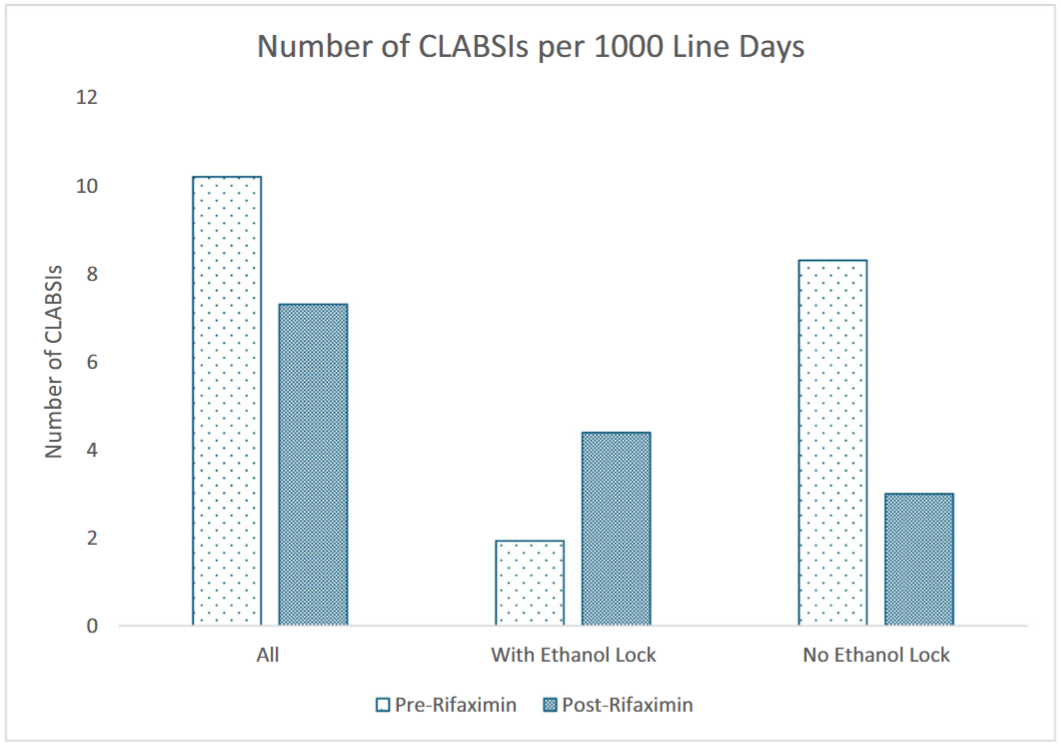
- The observed incidence of CLABSI for all patient, before and after rifaximin initiation, was 10.2 (8.2, 12.7) and 7.3 (5.8, 9.2) per 1000 central line days, respectively, p = 0.03.
- Subgroup analysis showed patients who received rifaximin without ethanol lock therapy had significant reduction in CLABSIs, 8.3 versus 3.0 (p < 0.001).
- There were no statistically significant differences in the proportion of gram-positive or gram-negative bacteria or yeast isolated before and after rifaximin.
Discussion:
- “Cole et al. showed a correlation between SIBO, intestinal permeability, bacterial translocation,and an increase in bloodstream infections. Patients with IF and SIBO had seven-fold higher odds of having a bloodstream infection than those with IF without SIBO.” However, this was a very small study with only 10 patients with SBS; 5 of the 10 were determined to have SIBO. In addition, there may have been a selection bias as there was a high rate of CLABSI in this study (80%). Ref: Cole CR, et al. The rate of bloodstream infection is high in infants with short bowel syndrome: relationship with small bowel bacterial overgrowth, enteral feeding, and inflammatory and immune responses. J Pediatr. 2010;156(6):941‐947.e1.
- An important limitation of this retrospective study was the lack of correlation with the presence of SIBO. While studies have shown correlation of CLABSI with SIBO, presumably related to intestinal translocation, the exact mechanisms for how CLABSI occur in children with intestinal failure remain speculative. Intestinal translocation has been shown in animals but not proven to cause CLABSI in humans.
My take: The degree of CLABSI reduction seen in this rifaximin study indicates it is a reasonable option when central locks are unavailable. However, it may be difficult to get covered. In addition, a liquid preparation requires compounding of crushed pills. For most patients, meticulous line care is likely more important than SIBO treatment in preventing CLABSI.
Related blog posts:
- Sodium Bicarbonate Locks to Prevent Central Line Infections
- Dr. Danielle Wendel: Management of Short Bowel Syndrome (2026)
- Dr. Valeria Cohran: Short Bowel Syndrome/Intestinal Failure in Pediatrics 2026
- Data Insufficient to Recommend Immobilized Lipase Cartridge Use in Children with Short Bowel Syndrome
- Practical Intestinal Rehabilitation (Part 1)
- Practical Intestinal Rehabilitation (Part 2)

Disclaimer: This blog, gutsandgrowth, assumes no responsibility for any use or operation of any method, product, instruction, concept or idea contained in the material herein or for any injury or damage to persons or property (whether products liability, negligence or otherwise) resulting from such use or operation. These blog posts are for educational purposes only. Specific dosing of medications (along with potential adverse effects) should be confirmed by prescribing physician. Because of rapid advances in the medical sciences, the gutsandgrowth blog cautions that independent verification should be made of diagnosis and drug dosages. The reader is solely responsible for the conduct of any suggested test or procedure. This content is not a substitute for medical advice, diagnosis or treatment provided by a qualified healthcare provider. Always seek the advice of your physician or other qualified health provider with any questions you may have regarding a condition.

