
AA Jastreboff et al. NEJM 2026; DOI: 10.1056/NEJMoa2604169.
Retatrutide, a Triple Hormone Receptor Agonist, for Treatment of Obesity
Background: Retatrutide (LY3437943) is an agonist of the glucose-dependent insulinotropic polypeptide, glucagon-like peptide 1, and glucagon receptors.
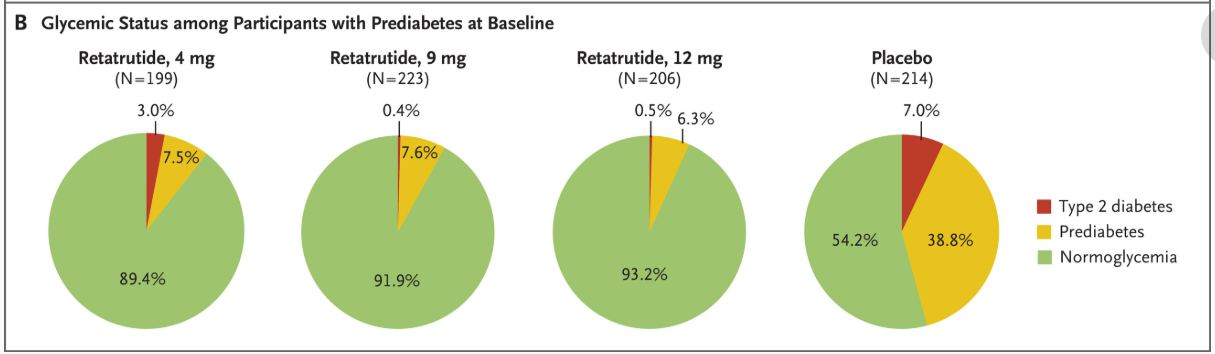
In 2023, “a phase 2 trial involving participants with obesity, once-weekly subcutaneous retatrutide (at a dose of 12 mg) resulted in a mean weight reduction of 24.2% at 48 weeks24 and improved multiple cardiometabolic measures, including waist circumference, systolic and diastolic blood pressure, glycated hemoglobin, and lipid levels.” This randomized, double-blind phase 3 trial examined a larger cohort (n=2339) with respect to obesity as well as knee osteoarthritis and obstructive sleep apnea in participants with obesity without diabetes.
Key findings:
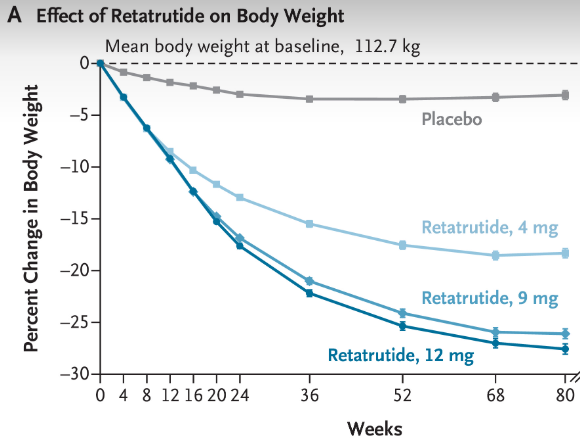
- Obesity at 80 weeks: The mean percent change in body weight in the retatrutide groups at 80 weeks was −17.6% (4-mg dose), −23.7% (9-mg dose), and −25.0% (12-mg dose) versus −3.9% in the placebo group. The 12 mg dose resulted in a mean change of -28.3% (according to the efficacy estimand) at 80 weeks
- Obesity at 104 weeks: In the extension phase of the trial, retatrutide treatment was associated with a mean weight reduction of up to 29.9% (treatment-regimen estimand) and 30.3% (efficacy estimand) at 104 weeks
- Osteoarthritis: the mean change in the WOMAC pain subscale score (in points) at week 80 for the knee osteoarthritis basket was −3.5 and −3.6 with retatrutide 9 mg and 12 mg, respectively, and −1.9 with placebo. Treatment with retatrutide resulted in a reduction in pain of up to 61.6%
- Obstructive sleep apnea: the mean change in the AHI events per hour at week 80 was −34.3 and −31.7 with retatrutide 9 mg and 12 mg, respectively, and −9.9 with placebo; this resulted in a mean decrease in AHI events per hour of up to 57.3% (hybrid-treatment estimand)
- Limitations of the trial include the absence of an active comparator, which may have contributed to greater attrition in the placebo group,
My take: Retatrutide was so effective, even at lower doses, that use of the lowest effective dose to achieve treatment goals may be a useful strategy rather than expecting to maximize the dose in all individuals. While the results are terrific, access and affordability remain important issues with these newer obesity medications.
- Related blog posts:
- Another Promising Medication (Retatrutide) for Obesity
- GLP-1 Receptor Agonists vs. Bariatric Surgery in Youth
- “GLP-1 Receptor Agonists and Eating Disorders — Cause for Concern”
- Reduced Dosing of GLP-1 RAs May Work for Maintenance Treatment of Obesity
- GLP-1 Use Associated with Lower Risk of Colon Cancer
- Beneficial GI Effect of GLP-1 Receptor Agonists: Lower Risk of Peptic Ulcer Disease
- More Pediatric Data Supporting GLP-1 RA Efficacy for MASLD
- Two Pediatric MASLD Publications: Call for Action and Use of GLP-1 RAs
- The Risks and Absolute Risks of GLP-1 RAs and Gastrointestinal Adverse Events
Disclaimer: This blog, gutsandgrowth, assumes no responsibility for any use or operation of any method, product, instruction, concept or idea contained in the material herein or for any injury or damage to persons or property (whether products liability, negligence or otherwise) resulting from such use or operation. These blog posts are for educational purposes only. Specific dosing of medications (along with potential adverse effects) should be confirmed by prescribing physician. Because of rapid advances in the medical sciences, the gutsandgrowth blog cautions that independent verification should be made of diagnosis and drug dosages. The reader is solely responsible for the conduct of any suggested test or procedure. This content is not a substitute for medical advice, diagnosis or treatment provided by a qualified healthcare provider. Always seek the advice of your physician or other qualified health provider with any questions you may have regarding a condition.

