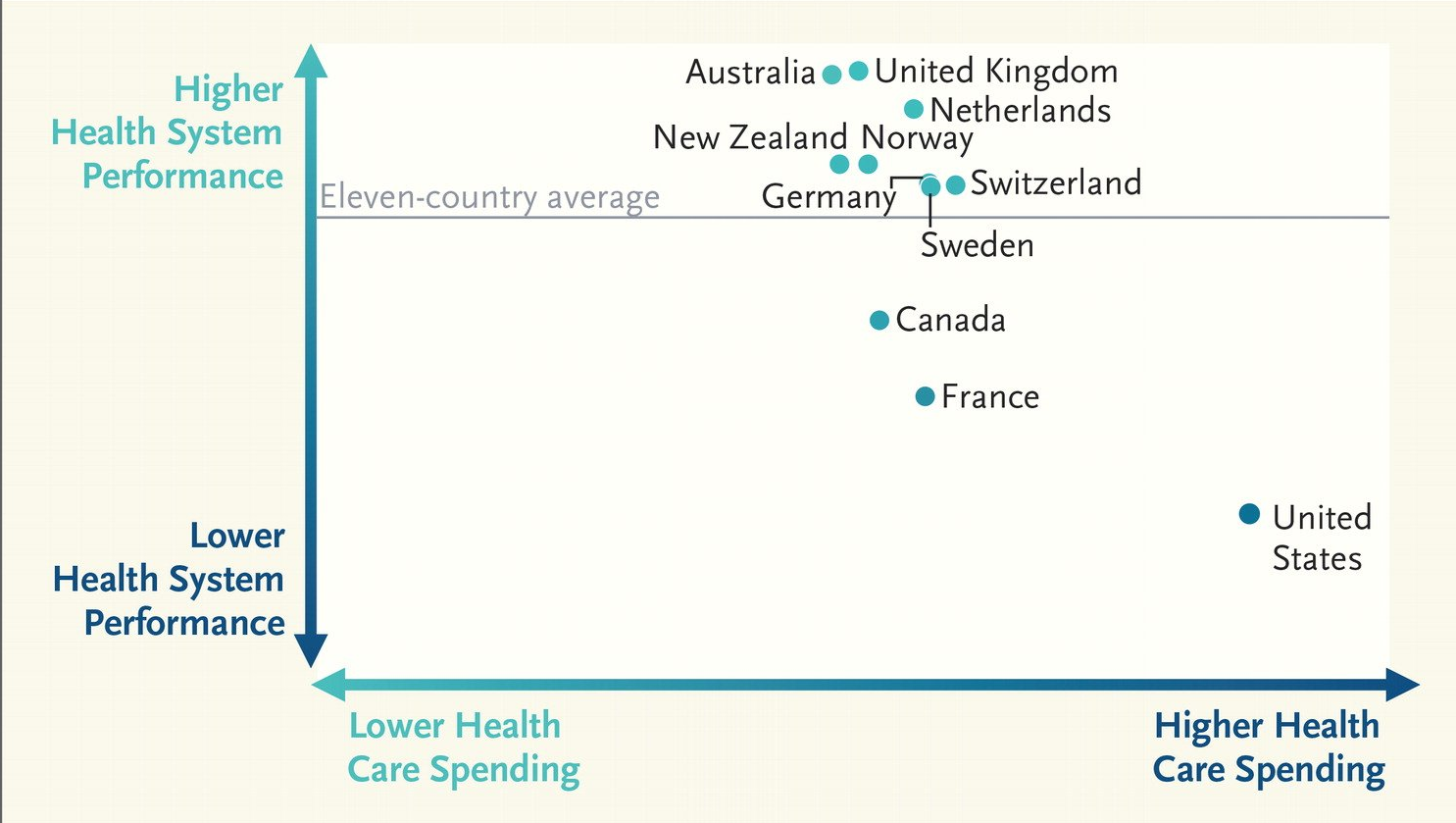
What a 5-Star Online Evaluation Means

Bloomberg news: Don’t Yelp Your Doctor. Study Finds Ratings Are All Wrong.

Here’s an excerpt:

If you’re looking for the best doctor, online ratings are unlikely to be much help.

That’s the determination of researchers at Cedars-Sinai Medical Center in Los Angeles, who compared reviews of 78 of the medical center’s specialists on five popular ratings sites with a set of internal quality measures and found there was essentially no correlation…

Brennan Spiegel, a gastroenterologist and co-author of the study, said that may be the right way to think about reviews — as gauges of things the patient can observe.

“It may be that these ratings are a good measure of the front-office service or the interpersonal style of the physician,” said Spiegel, a professor and director of health services research at Cedars-Sinai. “We’re not saying that there’s no value to these online ratings — we’re saying don’t confuse those ratings in any way, shape or form with the actual technical skill.”

The study, published online on Friday in the Journal of the American Medical Informatics Association, compared measures developed by Cedars-Sinai with users’ ratings on five sites: Healthgrades, Yelp, Vitals, RateMDs and UCompareHealthCare. The internal performance metrics include reviews from doctors’ colleagues and administrators, how often patients are readmitted and how long they remain in the hospital, and adherence to practice guidelines.

My take: I’ve been told that the key to patient care are the 3 A’s: availability, affability, and ability.  Online evaluations likely can help assess the first two A’s; in addition, these sites allow for constructive criticisms but they need to evolve to include other measures of physician performance.  Nevertheless, ignoring online evaluations (eg. digital reputation)  would be a mistake for physicians –they are here to stay.

Related blog posts:


Physician Burnout Spreading (Part 2)

A recent article (JC Anderson et al. Am J Gastroenterol 2017; 112:1356–1359; doi: 10.1038/ajg.2017.251; published online 8 August 2017) also addresses the topic of physician burnout with a focus on gastroenterology, link: Strategies to Combat Physician Burnout

Excerpts:

  • Physician burnout has reached epidemic proportions, with 54.4% of physicians reporting at least one burnout symptom in 2014, an increase from 45.5% 3 years earlier
  • A Medscape survey in 2016 showed a burnout rate among gastroenterologists of 49%, up from 41% the year before
  • Key drivers of burnout are excessive workload, an inefficient environment and
    inadequate support, problems with work life integration, loss of value and meaning in work, and the loss of autonomy, flexibilityand control in work 
    The cost of burnout is high, as these physicians are more likely to leave medicine, retire early, make more medical errors, and have lower patient satisfaction scores

Combating Physician Burnout:

  • Leadership : Having good leaders affects the well-being ansatisfaction of physicians in health care organizations
  • Reducing Administrative tasks -scribes, mid-level providers 
  • Control over workflow and work hours
  • “Peer support is crucial, nothing else can replace it.
  • “Physicians who spend at least 20% otheir total effort in an activity that they find most meaningful are at a lower risk for burnout”
  • Self-care: Stress management and mindfulness can reduce burnout

Related blog posts:

Physician Burnout Spreading (Part 1)

Last week, I went to our integrated health care network meeting.  Among the topics was physician burnout.  Lately, this is a “hot” topic with a lot of publicity regarding this increasingly-common problem.

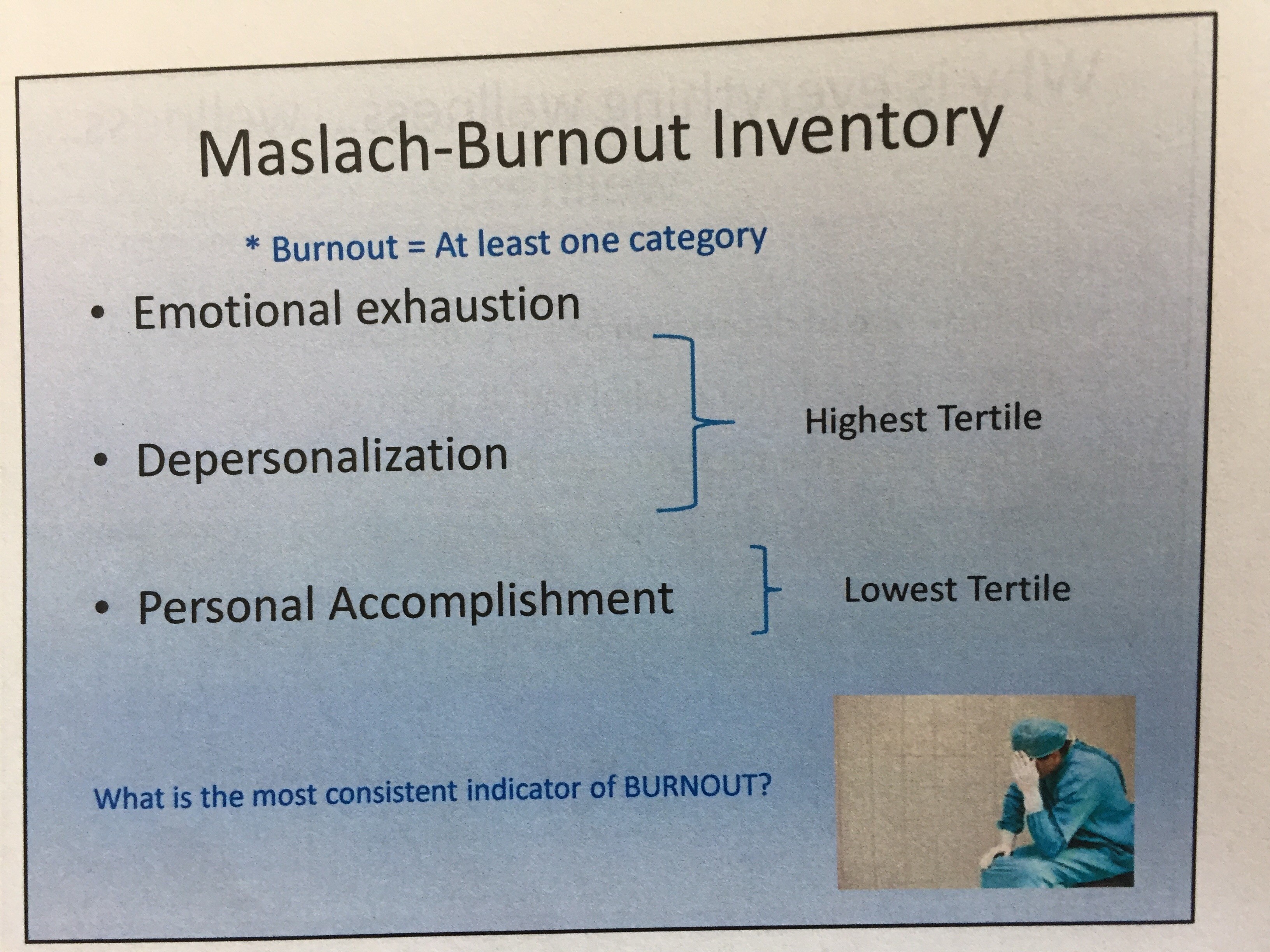
At our meeting, some of the keep points -noted below & in the slides that follow:

  • Physician burnout rate is increasing based on most recent studies
  • Many physicians, 42%, would not choose medicine as their career today
  • Manifestations of burnout include “compassion” fatigue

Physicians may be more at risk for burnout due to the following:

  • Frequent personality characteristics: workaholics, accustomed to delayed gratification
  • Practice aspects: long hours, huge responsibilities

How to Prevent Burnout:

  • Lower stress –recharge with outside activities: hobbies, excursions, charitable work, physical activities, and emotional/spiritual
  • Resources: Stop Physician Burnout, Burnout Prevention Matrix  both by  Dike Drummond


Related blog post: Quality Care = Work Satisfaction for Physicians

Related blog posts:


Overtreatment –Physician Perspective

From NY Times: Overtreatment is Common, Doctors Say

An excerpt:

Researchers surveyed 2,106 physicians in various specialties regarding their beliefs about unnecessary medical care. On average, the doctors believed that 20.6 percent of all medical care was unnecessary, including 22 percent of prescriptions, 24.9 percent of tests and 11.1 percent of procedures. The study is in PLOS One.

Reasons for overtreatment that were cited:

  • Fear of malpractice “that fear is probably exaggerated, the authors say”
  • Patient demand
  • Financial incentive

My take: It takes more time explaining why a test/medicine/procedure is a waste of time than to order it; even then, many patients/families are unhappy if the physician does not order the test/medicine/procedure that they think is necessary.  Changing this dynamic is not easy.

Related blog posts:

How Healthy are “Healthy Volunteers?”

A recent study (V Takyar et al. Hepatology 2017; 66: 825-33) examined a total of 3160 subjects enrolled in 149 clinical trials from 2011-2015.  These patients were derived from the NIH Clinical Center, ≥18 years, had ALT and BMI measurements available. Presumed NAFLD (nonalcoholic fatty liver disease) was classified if patient had elevated ALT (≥20 for women and 31≥ for men) along with BMI >25 kg/m-squared.

Key findings:

  • 27.9% (n=881) of these healthy volunteers had presumed NAFLD.  These patients also had higher triglycerides, low-density lipoprotein, cholesterol and HbA1c (P<0.001 for all)
  • The authors note that the presence of these presumed NAFLD as controls “likely” affected the study validity in 10 studies and “probably” affected another 41 studies.

My take: This study shows that patients with presumed NAFLD are often enrolled in research studies as healthy controls.  Furthermore, this can affect study outcomes.

Related blog posts:

Lover’s Leap, NC -Appalachian Trail

Erythema Ab Igne

A few years ago I saw a patient with a similar rash (BF Curtis et al. Gastroenterol 2017; 153: 355-6) and texted a picture to a dermatology colleague who quickly asked me whether my patient was using heating packs/heating pads on her abdomen.

This rash, termed, “erythema ab igne,” develops due to excessive heat exposure.  Also, it has been called “toasted skin syndrome.”  Over time, if heat is not continued to abdomen, in most cases, the skin reverts to normal in this benign asymptomatic condition.


FDA Warning for Obesity Devices: Intragastric Balloons

FDA Warning: Five Die While Using Obesity Devices (Intragastric Balloons)

An excerpt:

At least five people have died soon after being fitted with balloons aimed at helping them lose weight, the Food and Drug Administration said Thursday.

The FDA says it doesn’t know if the devices or the surgery to implant them is to blame but issued an alert to doctors to closely monitor patients who get them.

Related blog post: In the News: Weight Loss Intragastric Balloons

One in Three Americans Used Prescription Opioids in 2015

NBC News: One in Three Americans Took Prescription Opioid Painkillers in 2015

An excerpt: How many Americans are using prescription opioid painkillers? About one in three.

That’s the stunning number in a new survey released Monday from the National Institute on Drug Abuse, which calculated that a whopping 91.8 million Americans used drugs like OxyContin or Vicodin in 2015.

And nearly five percent of the adults surveyed told researchers they took these drugs without their doctor’s permission, the study reported.  They didn’t get their meds from some seedy drug dealer, either.

“The most commonly reported sources were friends and relatives for free,” the study reported. “Or a physician.”