Diarrhea Mortality Improving

A  recent story from NPR indicates that globally diarrhea deaths are on the decline, ~30%, from 2005-2015.  In wealthy countries, there has been a mild increase, likely related to Clostridium difficile infection and the use of antibiotics.  The article cautions that data from some parts of the world are questionable due to upheaval.

Full Link: A Good News Story About Diarrhea -With One Surprising Exception

An excerpt:

An infection by E. coli, Cryptosporidium, Shigella or rotavirus, and the resulting diarrhea, is often a death sentence in much of the world. In 2005, about 1.6 million people died from diarrhea-related diseases, and roughly 770,000 of them were kids under 5. But that number has been steadily dropping, as a new study points out…

Published this month in The Lancet, the study shows diarrhea-related deaths have declined about 20 percent from 2005 to 2015 for all ages to 1.3 million people, and 35 percent for children under 5 to about 500,000 children during the same time period.

NEJM: Senate Effort to Scale Back Health Care Coverage

This is a concise summary on the potential effects of the U.S. Senate’s efforts to ‘repeal and replace’ Obamacare: from NEJM: Health, Wealth, and the U.S. Senate

Here’s an excerpt:

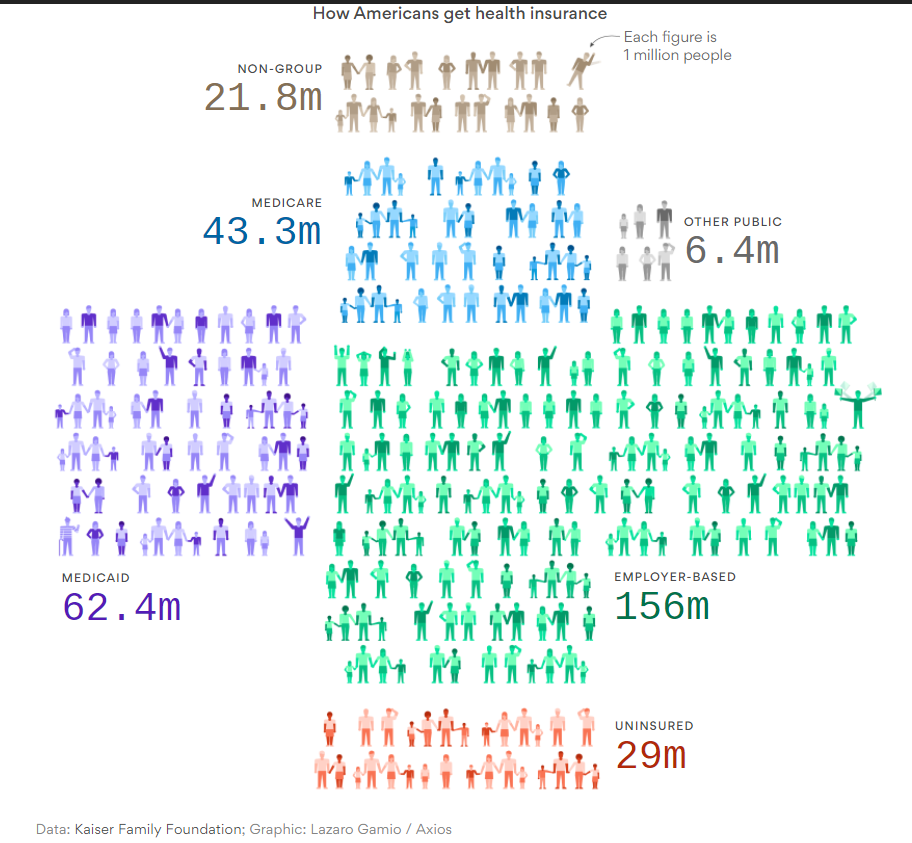
The Better Care Reconciliation Act (BCRA), as the U.S. Senate calls the health care bill released by a small working group of Republican senators last week, is not designed to lead to better care for Americans. Like the House bill that was passed in early May, the American Health Care Act (AHCA), it would actually do the opposite: reduce the number of people with health insurance by about 22 million, raise insurance costs for millions more, and give states the option to allow insurers to omit coverage for many critical health care services so that patients with costly illnesses, preexisting or otherwise, would be substantially underinsured and saddled with choking out-of-pocket payments — all with predictably devastating effects on the health and lives of Americans. What would get “better” under the BCRA is the tax bill faced by wealthy individuals, which would be reduced by hundreds of billions of dollars over the next decade — about $5,000 per year for families making over $200,000 per year and $50,000 or more for those making over $1 million, according to analysis of the AHCA, which included a similar set of tax provisions.1 We believe that that trade-off is not one to which we — physicians, patients, or American society — should be reconciled.

Related blog post: Five Reasons Why Medical Groups Oppose the Senate’s AHCA

St. Vitus Cathedral, Prague


Little Evidence to Support Dietary Intervention in Autism Spectrum Disorders

Thanks to Kipp Ellsworth Twitter feed for reference:  Nutritional and Dietary Interventions for Autism Spectrum Disorder: A Systematic Review N Sathe Pediatrics 2017; vol 139.

Abstract:

CONTEXT: Children with autism spectrum disorder (ASD) frequently use special diets or receive nutritional supplements to treat ASD symptoms.

OBJECTIVES: Our objective was to evaluate the effectiveness and safety of dietary interventions or nutritional supplements in ASD.

DATA SOURCES: Databases, including Medline and PsycINFO.

STUDY SELECTION: Two investigators independently screened studies against predetermined criteria.

DATA EXTRACTION: One investigator extracted data with review by a second investigator. Investigators independently assessed the risk of bias and strength of evidence (SOE) (ie, confidence in the estimate of effects).

RESULTS: Nineteen randomized controlled trials (RCTs), 4 with a low risk of bias, evaluated supplements or variations of the gluten/casein-free diet and other dietary approaches. Populations, interventions, and outcomes varied. Ω-3 supplementation did not affect challenging behaviors and was associated with minimal harms (low SOE). Two RCTs of different digestive enzymes reported mixed effects on symptom severity (insufficient SOE). Studies of other supplements (methyl B12, levocarnitine) reported some improvements in symptom severity (insufficient SOE). Studies evaluating gluten/casein-free diets reported some parent-rated improvements in communication and challenging behaviors; however, data were inadequate to make conclusions about the body of evidence (insufficient SOE). Studies of gluten- or casein-containing challenge foods reported no effects on behavior or gastrointestinal symptoms with challenge foods (insufficient SOE); 1 RCT reported no effects of camel’s milk on ASD severity (insufficient SOE). Harms were disparate.

LIMITATIONS: Studies were small and short-term, and there were few fully categorized populations or concomitant interventions.

CONCLUSIONS: There is little evidence to support the use of nutritional supplements or dietary therapies for children with ASD.

Related blog post: Gluten-free, Casein-free -No improvement in Autism

Bayeux, France

Camp Oasis 2017: Don’t Tell Me the Sky’s the Limit

For many years, our group has helped out at Camp Oasis, a week-long camp for children with inflammatory bowel disease.  Among our physicians, Dr. Larry Saripkin has devoted more time than anyone else for about 15 years and he does such a great job. Over the years, our nurses and many other office staff have participated as well. Here are a couple photos from this year’s camp:


Don’t Tell Me the Sky’s the Limit When There are Footsteps on the Moon!  –one of many painted rocks

Ft Yargo State Park (location of Camp Oasis)

POWER — Practice Guide on Obesity and Weight Management, Education, and Resources

Recently, the American Gastroenterological Association (AGA) has published a large amount of information regarding obesity and the potential role for gastroenterologists.  In addition to publishing an entire Special Issue supplement of Gastroenterology (152: (7): 1635-1801, the AGA has published a “white paper” (Clin Gastroenterol Hepatol 2017; 15: 631-49).  The AGA has also addressed coding issues and episodic care issues: Clin Gastroenterol Hepatol 2017; 15: 650-64.

Some useful points from these articles:

  • “Severe obesity [as classified by] the American Heart Association…BMI>120% of the 95% for age and sex or a BMI ≥35” (“class 2 obesity in adults”) Class 3 obesity is BMI >140% of 95% for age and sex or a BMI ≥40.
  • Intensive lifestyle interventions ‘average weight losses of up to 8 kg in 6 months’ but maintaining weight loss has been a challenge. “However, both the DPP and Look AHEAD have shown that weight loss, followed by substantial weight regain, was associated with greater improvements in health than not having lost weight at all.”
  • Good idea to review medications that affect weight.  Medications associated with weight gain include antidiabetics, some antihypertensives (eg. nadolol, propranolol), antidepressants (eg. lithium, mirtazapine, SSRIs, tricyclic antidepressants), antipsychotics (clozapine, olanzapine, quetiapine, risperdione), some antieleptics (carbamazepine, gabapentin, pregabalin, valproic acid), 1st generation antihistamines and glucocorticoids.
  • Is there a best diet? On this topic, the authors (pg 1749 of supplement): “there appears to be little weight loss advantage or difference in metabolic health outcomes between dietary approaches and improvements in health are relative to degrees of weight loss.  Caloric restriction is the fundamental premise of every successful weight loss strategy, whether that is achieved by lowering fat or carbohydrate, fasting, or using meal replacements...the best diet ultimately is the one you can stick to long enough

The information available in these publications are overlapping and cannot be summarized adequately in a short post.  The white paper, in particular, does an excellent job of summarizing the reasons for obesity, the steps a clinician should take, identification of comorbidities, management (diet, exercise, pharmacologic agents, endoscopic therapies, and surgery), and outcomes.

My take (borrowed from the authors):  “obesity is possibly the greatest health care issue of our day…Although lifestyle changes, including an individualized reduced-calorie diet and physical activity, are the cornerstones of treatment, new medications and bariatric endoscopic therapies and surgery can be effective tools.”

Related blog posts:

Mural Near Sullivan’s Island


NPR: Handshake-Free Zones to Decrease Spreading Germs

NPR recently detailed a study to reduce germs by implementing a handshake-free zone at a neonatal intensive care unit.

Here’s the link: Handshake-Free Zones Target Spread of Germs

An excerpt:

In a survey of staff and family members about the experience, Sklansky and his colleagues found that establishing handshake-free zones does reduce the frequency of handshakes. And most health care workers support the idea.

The findings were published in the American Journal of Infection Control. The survey didn’t determine whether avoiding handshakes actually reduced the rate of infections, but Sklansky hopes to answer that question in a future study.

The formal experiment is now over, but the signs in the NICUs remain. And doctors and nurses still discourage handshakes.

It’s is an effective way to decrease the spread of germs, says Maureen Shawn Kennedy, editor-in-chief of the American Journal of Nursing…

Although there is no data to prove that reducing handshakes limits hospital infections, one study showed that bumping fists was more hygienic than shaking hands.

However, some infectious disease specialists believe health care workers don’t need to stop shaking hands. They just need to scrub better.

“The problem isn’t the handshake: It’s the hand-shaker,” says Herbert L. Fred, a Houston physician and associate editor of the Texas Heart Institute Journal.

In a 2015 editorial he urged doctors to ensure their hands are clean before touching patients. After all, he wrote, “If we ban the handshake, we might as well ban the physical examination. Both practices can spread germs,” — if you don’t wash your hands properly.

My take: The bigger message of this article is that hand hygiene needs to be improved to decrease the spread of infections.  I doubt stopping handshakes will be particularly helpful.

Related blog posts:

Musee d’Orsay

NPR: Safety Problems in 1/3rd of New Medications

From NPR: Safety Problems in 1/3rd of New Medications After FDA Approval

From 2001-2010:

Seventy-one of the 222 drugs approved in the first decade of the millennium were withdrawn, required a “black box” warning on side effects or warranted a safety announcement about new risks to the public, Dr. Joseph Ross, an associate professor of medicine at Yale School of Medicine and colleagues reported in JAMA on Tuesday. The study included safety actions through Feb. 28…

It took a median of 4.2 years after the drugs were approved for these safety concerns to come to light, the study found, and issues were more common among psychiatric drugs, biologic drugs, drugs that were granted “accelerated approval” and drugs that were approved near the regulatory deadline for approval…

“In the 21st Century Cures Act, there’s a push to have the FDA move to further support the use of surrogate markers … [but] they’re more likely to have concerns in the post-market setting.”…

The study included market withdrawals of three drugs: The anti-inflammatory drug Bextra; a drug called Zelnorm that was used to treat irritable bowel syndrome; and the psoriasis drug Raptiva. Bextra and Zelnorm were withdrawn over cardiovascular risk, and Raptiva was withdrawn because of increased risk of a rare and fatal infection that causes brain damage.

My take: FDA approval does not guarantee safety.  All medications have potential risks along with their benefits.


Update: Florida Physician Gag Rule Overturned

In a previous blog post, Politics and Limiting Physician Speech, I discussed the Florida Gag Rule intended to prevent physicians from discussing firearm safety with patients. At the time, I expressed outrage that “there are laws curtailing a physician’s free speech and efforts to dictate practice based on political philosophy.”

It looks my views have been vindicated.  NEJM report (full text): Physicians, Firearms, and Free Speech

An excerpt:

In February, the full U.S. Court of Appeals for the Eleventh Circuit issued its long-awaited ruling in Wollschlaeger v. Governor, State of Florida, invalidating parts of Florida’s Firearm Owners’ Privacy Act (FOPA) and affirming that the First Amendment applies to the speech between physicians and patients. The decision ensures that physicians may continue to make efforts to protect their patients from gun-related injuries, many of which are fatal and which in aggregate account for approximately as many deaths annually as do motor vehicle accidents….

the majority affirmed that laws regulating physician speech must be designed to enhance rather than harm patient safety. The majority took this mandate seriously and required the state to show some meaningful evidence that the regulation was apt to serve the state’s interest in protecting patients.

The state could not do so for two reasons. First, the decision to keep a gun in the home substantially increases the risk of death for all household members, especially the risk of death by suicide, and particularly so when guns are stored loaded and unlocked, as they are in millions of homes where children live.3 Second, the majority of U.S. adults who live in homes with guns are unaware of the heightened risk posed by bringing guns into a home.4 Indeed, by providing accurate information about the risks created by easy access to firearms, as well as ways to modify that risk (e.g., by storing guns unloaded and locked up, separate from ammunition), a physician’s counseling can not only enhance a patient’s capacity for self-determination, but also save lives…

The fact is that most clinicians, including those who routinely encounter suicidal patients, rarely, if ever, provide firearm-safety counseling.5 This reticence predated the FOPA and has persisted since its passage..The court has done its duty. It’s now the physicians’ turn.

Related blog posts:

Capers Island

Science in a Hyperpartisan Age

Two recent commentaries (L Rosenbaum. NEJM 2017; 376: 1607–09; DJ Hunter et al. NEJM 2017; 376: 1605–7) discuss the intersection of science and politics.

Some key points from the first commentary:

  • “When doubt is wrapped up in one’s cultural identity or powerful emotions, facts often not only fail to persuade, but may further entrench skepticism.”  This is referred to as “biased assimilation.”
  • People with “higher levels of science comprehension are actually also the most adept at dismissing evidence that challenges their beliefs.”  Liberals, “for instance, are far more likely than conservatives to dismiss science suggesting that genetically modified foods are safe.”
  • “It’s easy to forget that most scientific facts, and related policies, don’t induce tribalism. You don’t see partisan battles over treatment for myocardial infarction.”
  • Dan Kahan, an expert on the way emotion and identity affect our interpretation of scientific facts says that our president “is our science communication environment polluter in chief.”  Such polluters “cunningly incite cultural battles that ultimately heighten distrust of science.”
  • For vaccine skeptics, if criticized, will try to elicit a backlash against the “academic elite.”

The second commentary focuses on the issue of climate change.  Key points:

  • “Average temperatures have increased by 1.3 to 1.9 degrees F over the past century…and increases have accelerated in recent years…the three hottest years recorded in the U.S. were 2012, 2015, and 2016.”
  • Summer heat waves increase mortality, worsen mosquito-related diseases, jeopardize crop production, increase ozone which worsens lung function, and contribute to forest fires.  Increases in “extreme heat leads to more aggression and violence.”
  • Climate change increases severe storms like hurricanes and cause indirect effects like waterborne-disease outbreaks.
  • The authors advocate for the CDC’s Building Resilience against Climate Effects (BRACE) (https://cdc.gov/climateandhealth/)
  • “U.S. leadership is critical to global action. Jobs in the renewable energy sector…already outnumber those in power generation from coal, natural gas, and oil combined.”
  • “Climate change has become unnecessarily politicized.” Tools for discussing this topic: http://climateforhealth.org/lets-talk -1 hour webinar available and links to specific ways to make an impact.

My take:  While I concede that I am not an expert on this topic, it is clear that climate change is having effects on population health and there are ways to reduce the future impact. Please don’t call me an elitist.


Immigrant Doctors Blocked by New Rules Too

With the U.S. government’s heightened emphasis on stopping immigration into the U.S., there have been noted declines in border crossings; however, it is anticipated that there will be billions in lost income in reduced tourism coincident with the implementation of these policies.

Along with the efforts to curb illegal immigration, new related policies may result in a significant decline in foreign medical graduates allowed to stay in the U.S. through expedited processing of H-1B visas.  This is likely to further strain the care available in rural communities.

From CNN Money: What Trump’s latest H-1B Move Means for Workers and Business

An excerpt:

Thousands of doctors from abroad need H-1B visas to continue working in the U.S. after the expiration of their J-1 visas — which permit them to complete a residency program…

Once they complete their residency, physicians can either return to their home country for two years before becoming eligible to reenter the U.S. through a different immigration pathway, such as an H-1B visa, or they can apply for a J-1 visa waiver.

In the last 15 years, H-1B visas have allowed 15,000 foreign doctors to come to American to work in underserved communities.

“The lack of premium processing would mean that there would be a delay for the doctors to start working in the communities they wish to serve, which have a lack of physicians in the first place,” said Ahsan Hafeez, a doctor who is in Pakistan awaiting approval of his H-1B so he can begin working in Arkansas.

From Internal Medicine News: Foreign doctors may lose US jobs after visa program suspension

An excerpt:

Starting April 3, U.S. Citizenship and Immigration Services (USCIS) is temporarily suspending its expedited processing of H-1B visas, a primary route used by highly skilled foreign physicians and students to practice and train in the United States…

In the meantime, many foreign medical students and physicians will lose top training spots and jobs as their H-1B applications linger in the system, said Jennifer A. Minear, a Richmond, Va.–based attorney and national treasurer for the American Immigration Lawyers Association.

“As a practical matter, the percentages of physicians coming into the U.S. who are accepted into residencies or fellowships, those are the top of the top for medical graduates around the world,” Ms. Minear said in an interview. “Most of them who stay afterward wind up working in underserved areas of the United States. It really doesn’t make much sense as a policy matter to create obstacles to attracting those people to the United States that would prevent them from getting here, obtaining U.S. education, and then remaining in the U.S. and providing urgently needed care to populations that would otherwise go without.”

Related blog posts: