
Transoral Fundoplication for Refractory Gastroesophageal Reflux

A new endoscopic technique’s efficacy has recently been reported (Gastroenterol 2015; 148: 324-33).  Since this technique is not likely to be broadly applicable to the pediatric population for some time, I will not delve into all of the details.

In essence, a carefully selected group (n=129 from a screened group of 696) of adult patients with persistent regurgitation underwent transoral fundoplication; this eliminated troublesome regurgitation in 67% compared to 45% who were randomized to sham/PPI.  Severe complications were rare.

Here is a picture of the technique:
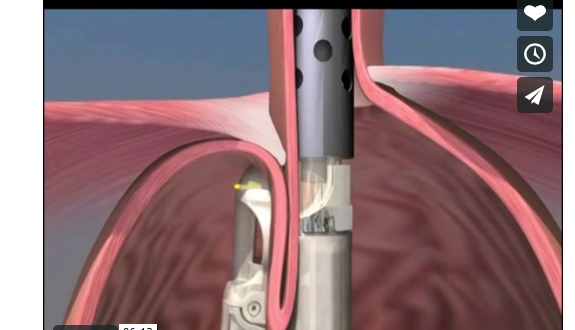
Transoral Fundoplication

Transoral Fundoplication

Link: Description and a video animation of the procedure

Bottomline: This endoscopic procedure along with the Stretta procedure and the LINX device (using magnets) offer alternatives to surgical fundoplication in carefully-selected patients with refractory gastroesophageal reflux symptoms.

New drugs approved by FDA:

Ceftolozane (Zerbaxa) -combines a cephalosporin with a beta-lactamase inhibitor (tazobactam).  Indications: complicated intra-abdominal infections (in combination with metronidazole), and complicated urinary tract infections. From FDA: FDA approves new antibacterial drug Zerbaxa

Viekira Pak -combination of 3 new drugs: ombitasvir, paritaprevir, and dasabuvir along with  older drug: ritonavir.  Indications: Hepatitis C genotype 1. From FDA: FDA approves Viekira Pak to treat hepatitis C

Related blog posts to fundoplication:

The Future is Now (for Hepatitis C)

Three more impressive hepatitis C (HCV) studies have been published (in print):

  1. NEJM 2014; 370: 1973-82
  2. NEJM 2014; 370: 1983-92
  3. NEJM 2014; 370: 1993-2001

In the commentary on these three studies (pages 2043-47), the authors note that only a year ago, they had “speculated that highly effective interferon-free regimens would be available and should revolutionize the treatment of HCV infection…Now, we would have to say that the future is here.”

In the first study, “TURQUOISE-II,” 380 patients with Child-Pugh class A cirrhosis received either 12 weeks or 24 weeks of ritonavir (ABT-450/r), ombitasvir (ABT-267), dasabuvir (ABT-333) and ribavirin.  In the 12 week group, the sustained virologic response (SVR) was 91.8% whereas the 24 week group had an SVR of 95.9%.

In the second study, “PEARL-III and PEARL-IV,” 419 patients with genotype Ib and 305 patients with genotype 1a received 12 weeks of ritonavir, ombitasvir, dasavuvir, and ribavirin (or placebo) for 12 weeks.  For genotype 1b, SVR were 99.5% with ribavirin and 99% without ribavirin.  For genotype 1a, SVR were 97% and 90.2% respectively.

In the third study, “VALENCE,” among 419 patients with genotype 2 or 3 (21% with cirrhosis, and 58% previous interferon-based treatment), patients were treated with sofusbuvir-ribavirin or placebo for 12 weeks; the genotype 3 patients treatment was extended to 24 weeks (unblinded) after data emerged indicating a need for longer treatment course.  For the genotype 2 patients, SVR was met in 93%.  For genotype 3 patients, 85% who received a 24 week course had an SVR.

Key Points (from editorial):

  • In the first two studies, SVR was approximately 96% in untreated and treated patients without cirrhosis.
  • Patients with cirrhosis had a response rate of approximately 90%.
  • Ethnicity, IL28B, and baseline HCV RNA were not important factors in predicting response.
  • “In the era of potent DAA (direct-acting antivirals), …response-guided therapy is no longer necessary” because by week 4 of treatment, 99% of patients had non-quantifiable HCV RNA.
  • Drug resistance against these DAAs is common in preclinical studies; therefore, combination regimens are important.  “In the case of sofosbuvir and ledipasvir, a two-drug combination is sufficient…Sofosbuvir seems to have a high genetic barrier to resistance.”
  • “Perhaps the more important achievement of these interferon-free regimens is the lower rate and severity of side effects.”

Related (recent) blog posts: