There are several insightful and concise articles that highlight the reasons for increased U.S. healthcare costs as well as challenges: corporitization of health care, private equity, and health-harming corporations.
A Mollica, AW Mathews. WSJ 4/6/26: Why the U.S. Spends So Much on Healthcare
An excerpt:
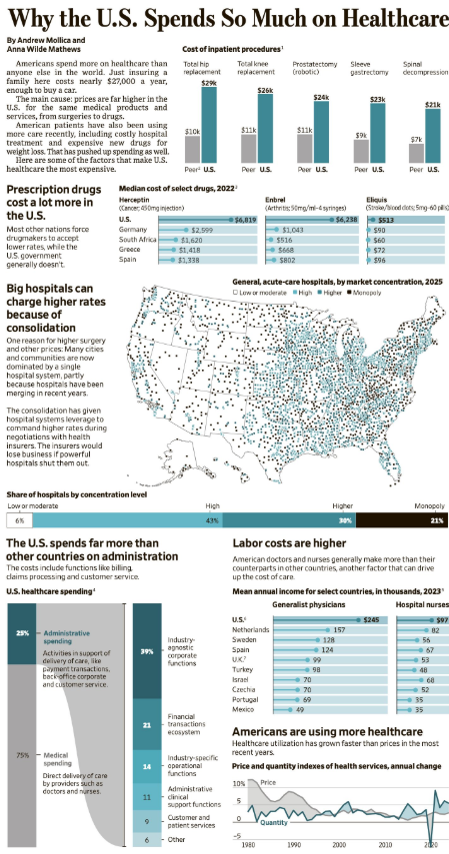
“Americans spend more on healthcare than anyone else in the world. Just insuring a family here costs nearly $27,000 a year, enough to buy a car. The main cause: Prices are far higher in the U.S. for the same medical products and services, from surgeries to drugs.
American patients have also been using more care recently, including costly hospital treatment and expensive new drugs for weight loss.”
- Prescription drugs cost a lot more in the U.S.
- Big hospitals can charge higher rates because of consolidation
- The U.S. spends far more than other countries on administration
- Labor costs are higher
- Americans are using more healthcare
LP Casalino. N Engl J Med 2026;394:1249-1251. Physicians, Corporatization, and the Unmeasured Quality of Care
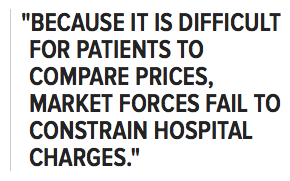
This article notes that historically, in economic experiments, physicians have acted more altruistically than members of the general population and this results in better outcomes for patients. However, “extreme size and corporate ownership are leading to the widgetization of care. It is difficult or impossible for a large organization, even one with well-intentioned leaders, to avoid treating its physicians and staff like interchangeable widgets whose behavior can be monitored and controlled to maximize profit….Physicians who feel like widgets are more likely to behave like widgets…there is evidence that corporatization is leading to higher prices, higher health care spending, and unchanged quality or poorer quality.”
R Yearby, M Alson. N Engl J Med 2026;394:937-940. Private Equity’s Transformation of American Medicine — Implications for Health Equity
An excerpt:
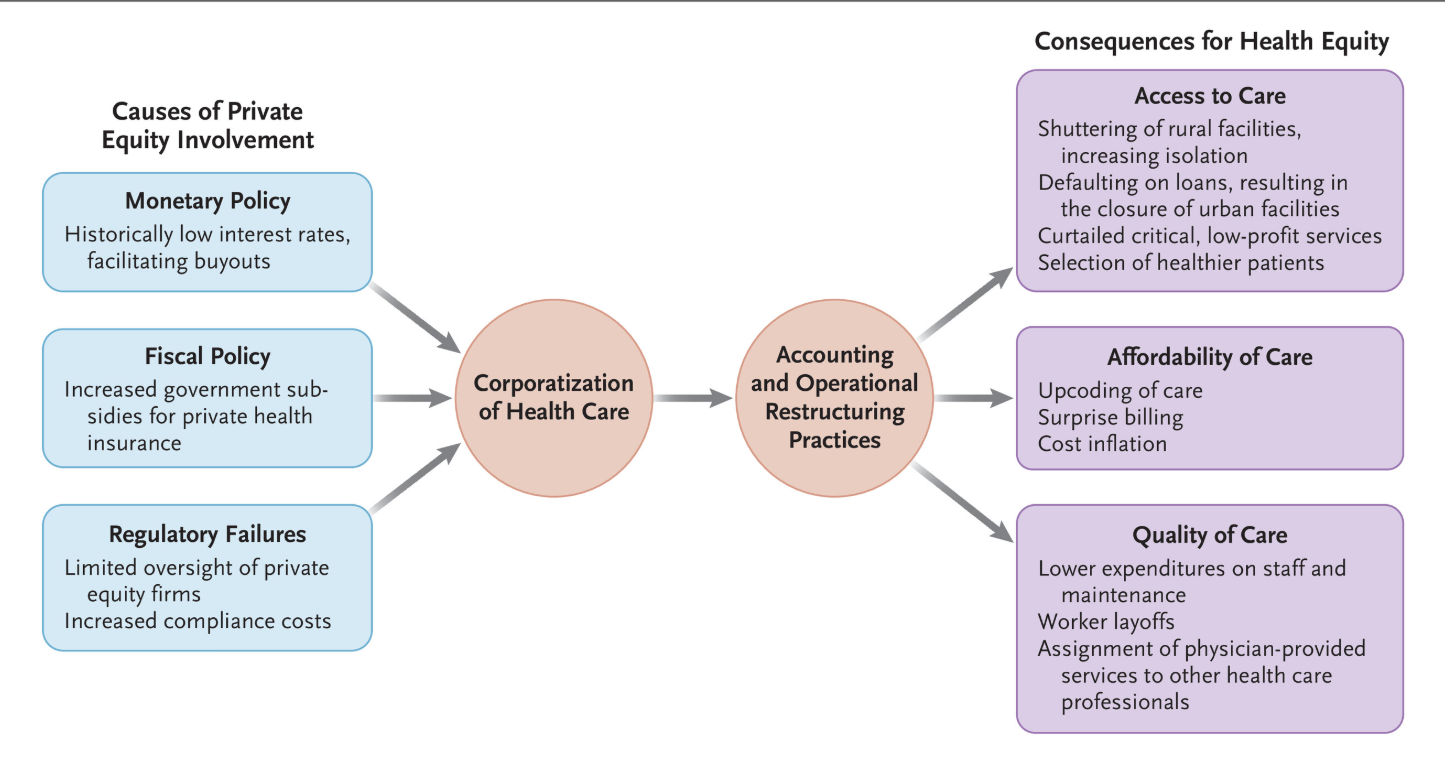
“Accumulating evidence presented in scholarly articles and government reports indicates that the proliferation of PE in health care has reduced access to care, increased costs, and compromised quality of care…PE firms often extract value using tactics that obscure a health care system’s profitability while maximizing financial returns for the firm and its investors. These tactics include sale–leaseback transactions, in which facilities are sold to entities affiliated with a firm and then leased back to the seller at inflated rates. Another strategy is dividend recapitalization, whereby fund managers take on additional debt to pay partners instead of putting money toward staff, critical maintenance, or supplies…
PE investors achieve cost savings by laying off workers, reducing salaries and the number of full-time employees, assigning services previously provided by physicians to other health care professionals, and cutting critical but low-profit services…
Cream skimming — selectively caring for healthier (i.e., lower-cost) patients — is another widely used PE practice. This tactic limits access to care for older and sicker patients, leaving them worse off after PE investment.2 Despite this behavior, hospital acquisitions by PE firms have been associated with increases in emergency department deaths and deaths after emergency surgeries.3,5“
Consortium of the Center to End Corporate Harm, University of California, San Francisco. N Engl J Med 2026;394:1231-1237. Corporate Vectors of Chronic Disease — Using Internal Industry Documents to Craft Counterstrategies
An excerpt:
“Health-harming corporations use common tactics to corrupt scientific data, including influencing research questions, attacking and discrediting independent science and scientists who do not support the industry’s position, suppressing scientific data on the health harms of their products, and sponsoring research that downplays those harms.27,28
For example, the primary U.S. manufacturers of perfluoroalkyl and polyfluoroalkyl substances (PFAS) — DuPont and 3M — used multiple tactics to downplay evidence of PFAS toxicity, including successfully suppressing for more than 20 years internal studies showing adverse effects of PFAS…
Corporations have various tactics for influencing the public’s beliefs about their products’ benefits and harms. These include sophisticated and pervasive advertising and marketing campaigns; use of public relations companies, front groups, and think tanks; and capture of consumer groups.
For example, opioid manufacturers deployed particularly insidious advertising strategies for marketing opioids to vulnerable populations, such as recruiting youth coaches and school nurses to encourage opioid use by children, developing unbranded initiatives encouraging adolescents to ask clinicians for pain medications, promoting “safe opioids” for untreated pain in women, and distorting policy discussions of unmet needs for pain medication…
Make America Healthy Again initiative highlights the roles of toxic chemicals and pesticides, ultraprocessed foods, and corporate influence on science in harming children’s health.47 But…the administration has appointed former lobbyists and scientists from the chemical and petroleum industries to lead EPA offices responsible for regulating air pollution, toxic chemicals, and pesticides48,49 — and plans to eliminate regulatory and other measures, which will lead to increased exposure to toxic chemicals and air pollutants, thereby increasing child health risks.50,51
My take: Poorly-regulated capitalism is not good for patients. Insurers, private equity, hospitals, pharmaceutical companies and many providers may prioritize profits over care.
Related blog posts:
- “The Broken Promises of Profit-Driven Medicine”
- “Commercial Insurance Isn’t in the Health Care Business. It’s in the Financial Business.”
- Healthcare: “Where the Frauds Are Legal”
- Why Corporatization Occurs in Health Care -What Motivates Hospitals
- Why Corporatization Occurs in Health Care
- Rising Prescription Drug Denials by Health Insurers
- Longevity Gap Present Even in Wealthy Americans
- No One Would Design U.S. Healthcare System This Way
- Have Nonprofit Hospitals Lost Their Mission?
- NY Times: America can afford a world-class health system. Why don’t we have one?
- “Commercial Insurance Isn’t in the Health Care Business. It’s in the Financial Business.”
- How Insurance Companies Save Millions in Denying Care
- NY Times: ‘What’s My Life Worth?’ The Big Business of Denying Medical Care
- Worse Outcomes After Hospital Mergers
- Unpacking Health Care Corporatization in the U.S. (has links to more than 20 related blog posts)
- The Guardian: UnitedHealth Secretly Paid Nursing Homes to Reduce Hospital Transfers
- Exploring Walgreens’ Collapse: The Role of PBMs
- Mark Cuban: Disrupting American Healthcare