Rule of Two’s No Longer Valid For Diagnosis of Meckel’s Diverticulum

Polachek A, Mehta MS, Shalaby A, Vadsariya A, Zong W, Troendle DM.J Pediatr Gastroenterol Nutr. 2026; 83: 658-664. Reevaluating the rule of two’s: age and epidemiological variations in Meckel’s diverticulum.

Background: “Meckel’s diverticulum (MD) is traditionally considered a disease of early childhood and is commonly summarized by the “Rule of Twos”; presenting before the age of 2 years, found 2 ft. from the ileocecal valve, approximately 2 in. in length, and present in roughly 2% of the population.” (I was taught an additional rule that it takes 2 physcians to diagnose)

Methods: A total of 1004 patients with a primary diagnosis of MD were identified from the Kids’ Inpatient Database (KID) for 2016 and 2019 in this retrospective review. In addition, 147 patients identified in the single-center cohort.

Key findings:

  • More than half were diagnosed after 5 years of age (n = 648, 64.8%) in the KID group and 63% in the single-center cohort
  • In the single-center cohort, patients ≤5 years more commonly presented with painless rectal bleeding (38.9%, p = 0.017) and underwent Meckel’s scintigraphy more frequently (48.1%, p < 0.005). In contrast, patients >5 years more often presented with abdominal pain (61.3%) or vomiting (54.8%) and were more likely to undergo abdominal computed tomography (68.9%, p < 0.0001).

My take: This study shows the “Rule of Two’s” for the diagnosis of Meckel’s is not helpful; nearly two-thirds of patients present after 5 years of age. The authors note that “overreliance on age-based assumptions and presenting symptoms associated with this paradigm may lead to missed or delayed diagnoses, especially in patients who present with atypical features.”

Related blog posts:

Glymur Waterfall. This is the second tallest waterfall in Iceland
with a 198-meter (650-foot) drop into a narrow basalt canyon.

Meckel’s Scan: “Who are you going to believe, me, or your lying eyes?”

The title quote is generally attributed to Groucho Marx. YD Neugut, I Novak. J Pediatri 252; 30. Open Access! The Continued Importance of the Meckel Scan (50 Years Ago in The Journal of Pediatrics)

This brief article is a quick review of the continuing importance of the Meckel scan, 50 years after the publication: Jaros R, Schussheim A, Levy LM. Preoperative diagnosis of bleeding Meckel’s diverticulum utilizing 99m technetium pertechnetate scinti-imaging. J Pediatr 1973;82:45-9.

However, I take exception to this one line (hence this post’s title): “Now, premedication with H2 antagonists often is used to enhance tracer uptake into gastric tissue, and a Meckel scan has high sensitivity and specificity, both approaching 100%.3“

On planet Earth, the test’s sensitivity does NOT approach 100%. It would be more accurate to cite several references regarding the test’s sensitivity. For example, Kwak et al, in a retrospective review of 360 children (368 scans), found a sensitivity of only 65% (J Nuclear Med 2013; 54 (supplement 2) 535. Utility of Meckel’s scan: Retrospective review of 368 cases).

My take: A Meckel’s scan is very helpful when it is abnormal due to its high specificity. However, its sensitivity is suboptimal and many children need surgery for a Meckel’s diverticulum even with a negative scan.

Related blog posts:

Legacy bicycle trail in Sarasota, FL.

Where Did the Blood Go? Case Report

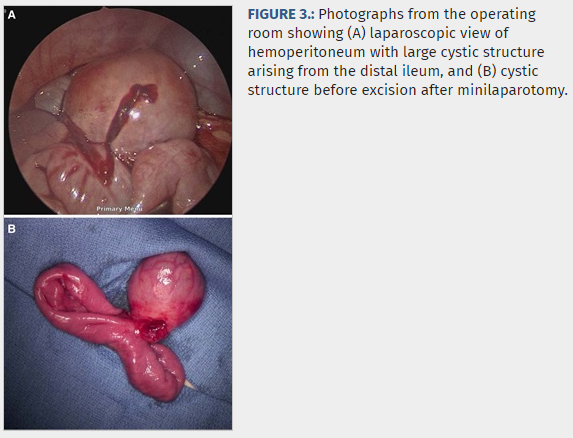
M Tracy et al. JPGN Reports 2021; Free Access: Where Did the Blood Go?: A Meckel’s Diverticulum Bleed Without Hematochezia or Melena doi: 10.1097/PG9.0000000000000119

In this case report, a 2 yo with acute anemia along with acute on chronic abdominal pain was diagnosed with a Meckel’s diverticulum. After diagnostic studies, “a blood-filled mass arising from the ileum was identified and resected by the surgical team. Pathology was consistent with Meckel’s diverticulum with heterotopic gastric mucosa.”

My take: This is a rare presentation of a Meckel’s diverticulum. Besides bleeding, per the authors, “common presentations of Meckel’s diverticulum include diverticulitis/perforation (16%-20%), bowel obstruction (about 14%), and intussusception (12%).” 

Related blog post: NASPGHAN Postgraduate Course (2017): Strictures, GI Bleeding Pancreatic Fluid Collections