Rope-A-Dope with Hepatitis C

Methods: The authors developed an agent-based model (ABM) “simulating the dynamics of HCV transmission and demographic changes from 2006 to 2030, using data from Ontario, Canada.14 Predicted long-term health outcome effects for current HCV policies (status quo) and those following the implementation of various scale-up interventions were compared to the elimination goals set by the WHO.”

Key findings:

  • Under the current status quo of risk-based screening, we predict the incidence of CHC-induced decompensated cirrhosis, HCC, and liver-related deaths would decrease by 79.4%, 76.1%, and 62.1%, respectively, between 2015 and 2030
  • However, chronic hepatitis C (CHC) incidence would only decrease by 11.1% (WHO goal by 2030 is a reduction of 80%)

From the editorial:

“According to the study by Tian et al,3 the future incidence of HCV infection will be mainly related to HCV transmission, stressing the fact that harm reduction strategies, in addition to the highest treatment rate, are paramount to reducing the further HCV spread and reinfection risk, especially in marginalized populations. In high‐income countries, HCV treatment rates among people who use drugs remain inadequate due to a lack of simplified HCV testing, scale‐up of harm reduction‐based HCV treatment programs, and numerous additional barriers to HCV services.”

It is not just a matter of time until high-income countries get rid of HCV infection. The ongoing mass screening campaign in Italy shows that having political will and financial coverage is insufficient to achieve the HCV elimination targets. In high-income countries, encouraging and convincing people to get tested is among the most challenging and underrated.”

My take: The development of highly effective HCV treatments has been a remarkable feat, reducing the rate of death and complications from HCV. Nevertheless, it has not brought about a big improvement in HCV transmission. To achieve this, it looks like a vaccine will be necessary. Until then, our fight against HCV is akin to the ‘rope a dope‘ boxing strategy –we are not getting a knock-out anytime soon against this opponent.

Related blog posts:

Canyonlands National Park, Utah

Do You Know When Hepatitis C Virus Transmission Peaked?

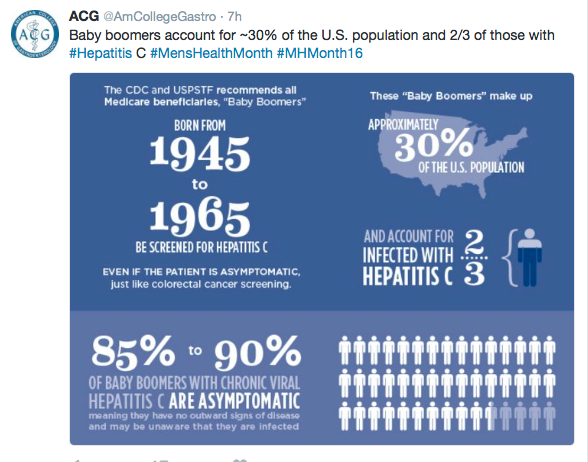
According to a recent study (AC Spaulding, LS Miller. Lancet Infect Dis. 2016 Mar 30. doi: 10.1016/S1473-3099[16 …), peak transmission of hepatitis C virus (HCV) peaked about 1950, likely due to reuse of metal and glass syringes.

This study counters the idea that HCV transmission was “primarily due to injection drug use, unsafe tattooing, high-risk sex, and travel to high endemic areas during youth,” according to the researchers. Here’s the link: Apportioning blame in the North American Hepatitis C virus epidemic

My take: Will this take away some of the stigma of HCV infection? Probably not.  But, hopefully as the costs for treatment reduce, more individuals can be infection-free and avoid complications related to infections.

HCV Infections

Precise Identification of C difficile Transmission

A recent study uncovers some useful information about C difficile by using whole-genome sequencing on 1250 separate C difficile cases (NEJM 2013; 369: 1195-205).

Between 2007-2011, the authors used genetic sequencing to determine the similarity of C difficile cases.  They were able to successfully sequence 1223 (98%) of the identified cases.  Of these isolates, 71% were from inpatients, 25% from outpatients, and 4% from patients at other hospitals. To determine similarity, they compared single-nucleotide variants (SNVs) between the isolates.  If isolates were related, it was anticipated that there would be 0 to 2 SNVs between transmitted isolates (95% prediction if less than 124 days apart).

This study was from the Oxford University Hospitals which provide all acute care and 90% of hospital services in Oxfordshire, United Kingdom (~600,000 population).

Results:

  • Only 35% of cases were genetically related to at least one previous case.
  • Of the 333 (35%) with ≤2 SNVs (consistent with transmission), and 126 (38%) had close hospital contact with another patient, 120 (36%) had no hospital or community contact with another patient.
  • 13% of cases were genetically related (≤2 SNVs) but without any evidence of plausible contact.
  • 45% of C difficile cases were genetically distinct (>10 SNVs from any previous case) from all previous cases.  This indicates that the source of the infection was not from another symptomatic case; most likely these cases were acquired from asymptomatic persons or an environmental reservoir.
  • There were reductions in the rate of C difficile infection during the 4-year study.  The authors relate this to changes in antibiotic prescribing behavior, specifically the restriction of fluoroquinolones and cephalosporins.

Aspects of the setting may limit some of the conclusions.  For example, the study was conducted in a nonoutbreak setting and the hospitals had established measures to limit transmission from symptomatic patients.  These included the following:

  • isolation of patients with suspected C difficile
  • daily hypochlorite disinfection
  • monitoring of compliance

These measures will decrease nosocomial transmission.  However, at the same time, some of the genetically distinct cases could still have been acquired in the hospital setting from asymptomatic hospital sources. While the authors concede a number of limitations, this study is quite helpful in understanding the role of hospitals in controlling C difficile infection.

Take-home message: the fact that only 35% of cases were related to other symptomatic cases indicates that hospital control measures by themselves will not be effective.  The most important aspect in reducing C difficile infection will be optimizing antibiotic usage.

Related news media: On the same day of that I read this study, there was an article in the Atlanta Journal Constitution (“PLEASE wash your hands … Please.”) which describes a first-hand account of C difficile infection which contributed to a slow recovery from intestinal surgery.  The article contained some questionable assertions including that C difficile was “impossible to eradicate” and that her immune system trapped C difficile in peritoneal abscesses which required drainage (these abscesses were more likely related to the initial operation). However, the article is a stark reminder that many hospital staff do not follow basic hand washing recommendations.  The article is really bad PR for the named hospital.

Related blog posts: