
A Strom et al. Clin Gastroenterol Hepatol 2026; 24: 1960-1969. Perianal Disease in Pediatric-Onset Crohn’s Disease: Incidence, Disease Course, and Long-Term Outcomes
Methods: In this nationwide Danish registry, a pediatric-onset CD cohort from 1980 to 2022 was identified. Outcomes for patients with and without perianal disease were examined.
Key findings:
- There were 2356 patients with pediatric-onset CD, of whom 769 (32.6%) developed perianal CD. The cumulative incidence of perianal CD was 14.0%, 21.1%, and 28.1% after 1, 5, and 10 years. After 30 years, the incidence rate was 45.2%.
- A stoma was required in 308 (40.1%) and 147 (9.3%) patients with and without perianal disease, respectively (aHR, 2.8).
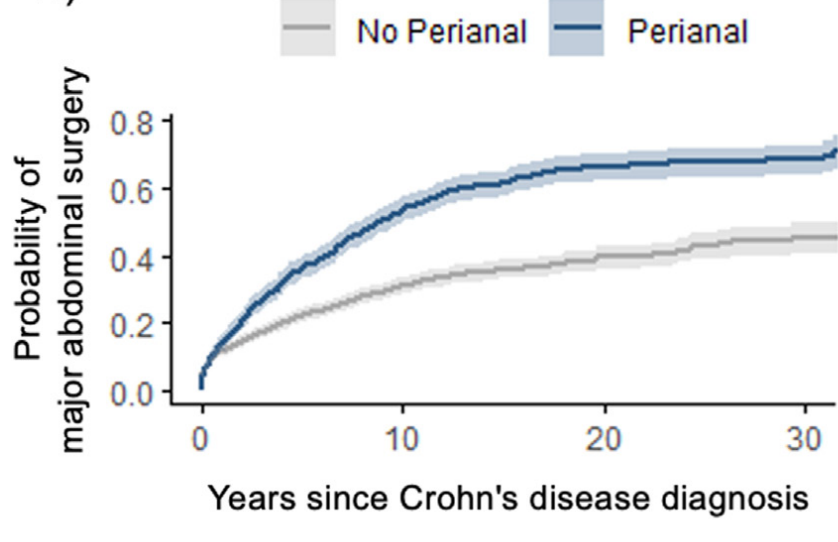
- When comparing patients with/without perianal disease, the aHR for major abdominal surgery, cancer, and mortality were 1.5, 0.8, and 1.5 , respectively.

- When comparing patients with/without perianal disease, the aHR for mortality was 1.5. Of mortalities, 35 had perianal disease (4.6%; mortality rate, 2.2/1000 person-years) and 33 did not (2.1%; mortality rate, 1.4/1000 person-years). However, the confidence interval was 0.9-2.7) indicating the precision of this finding is low.
Discussion: “In our study, patients without perianal disease were diagnosed with CD more frequently in recent decades than patients with perianal disease. The differences in distribution of CD diagnosis over calendar years may be due to shorter follow-up among patients diagnosed with CD in recent decades, improved treatment delaying disease progression, and increased detection of milder CD phenotypes over time.”
My take: This study reinforces and quantitates the view that having perianal Crohn’s disease portends an increased risk for severe complications. With improving treatments, perhaps the outcomes will be more favorable now and in decades hence.
Related blog posts:
- High Frequency of Asymptomatic Perianal Crohn’s Disease at Diagnosis
- Upadacitinib’s Effectiveness for Perianal Fistulizing Crohn’s Disease
- Toronto Consensus for Perianal Fistulizing Crohn’s Disease
- Do Setons Improve Outcomes in Anti-TNF Treatment for Fistulas?
- ADMIRE CD II: Stem Cell Therapy NOT More Effective Than Placebo for Complex Perianal Fistulas in Crohn’s Disease
- ENTERPRISE Study: Vedolizumab for Perianal Fistulizing Crohn’s Disease

