
Ma C, Ford A, Hashash J et al. Gastroenterology, 2026; 171, 504-520. Open Access! Recommendations for the Evaluation and Management of Inflammatory Bowel Disease With Irritable Bowel Syndrome–Like Symptoms: A Joint Rome Foundation and International Organization for the Study of IBD (IOIBD) Consensus
Background:
- “A substantial proportion of persons with inflammatory bowel disease (IBD) in remission continue to experience abdominal pain, altered bowel habits, and bloating that resemble irritable bowel syndrome (IBS). Lack of standardized definitions and evidence-based management strategies leads to diagnostic ambiguity and potentially unnecessary escalation of IBD therapy. A joint Rome Foundation/International Organization for the Study of Inflammatory Bowel Disease Working Team developed consensus recommendations on nomenclature, evaluation, and treatment of IBD with IBS-like symptoms.”
- “A meta-analysis of 27 studies demonstrated that 1 in 3 individuals with IBD reported
coexisting IBS, although estimates were heterogeneous and few studies objectively excluded active disease (11.2% to 63.6%).[1] Among those with endoscopic or histologic
remission, 1 in 4 reported IBS-like symptoms.”
Methods: A multidisciplinary international panel applied a modified RAND/UCLA Appropriateness Method and determined recommendations for evaluation and management of these patients.
Terminology:
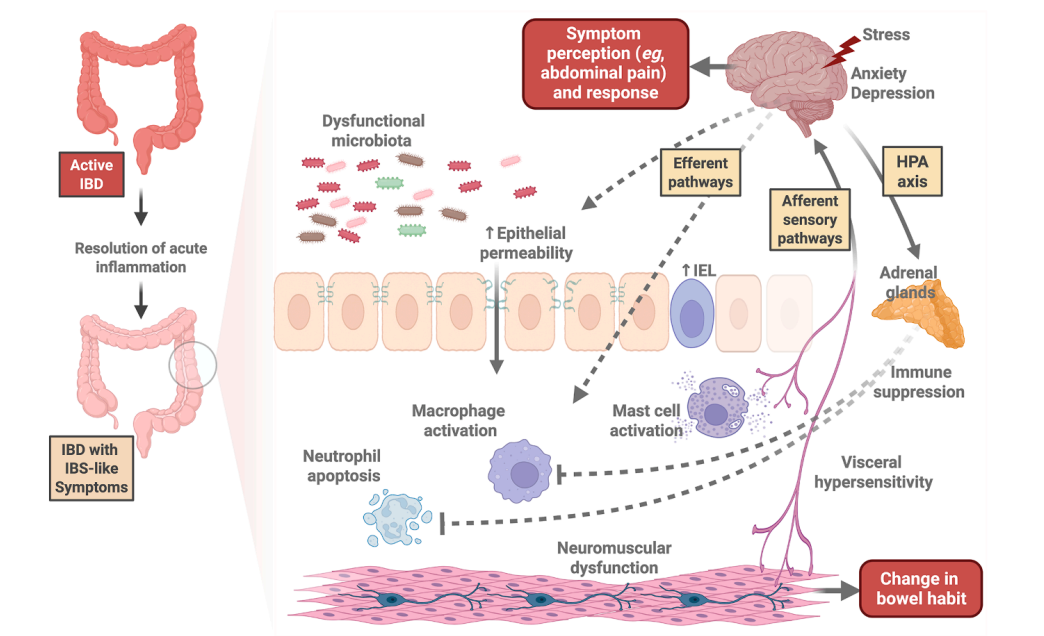
- “The preferred term was “IBD with IBS-like symptoms,” defined as abdominal pain, bowel habit change, and/or bloating not explained by active inflammation or structural disease.”
Pathophysiology:

Key points:
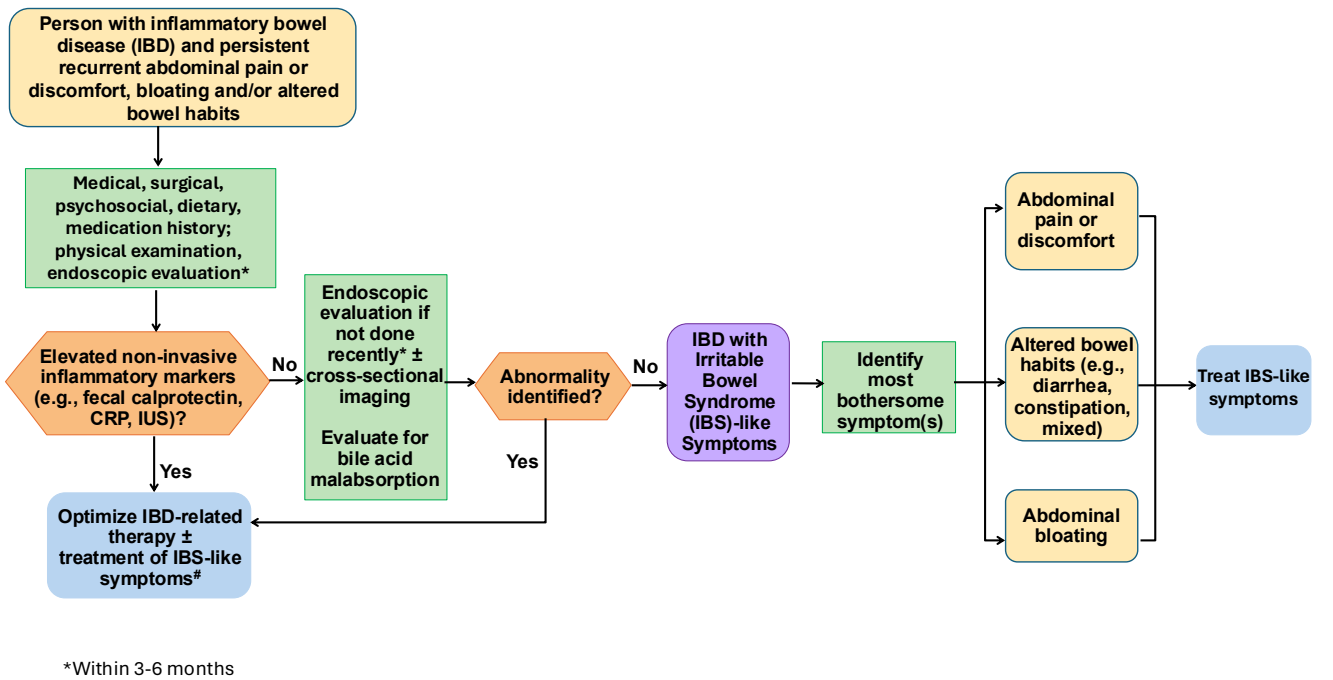
- “An FC [fecal calprotectin] below 150 μg/g is considered normal, but persons with IBD with ongoing symptoms may require endoscopic evaluation even with a normal FC, especially in the setting of small bowel involvement or after surgery in CD.”
- “In clinical care, the diagnosis of IBD with IBS-like symptoms can be supported using the Rome Clinical Diagnostic Criteria (having symptoms sufficiently bothersome to seek health care for at least the prior 8 weeks or when other conditions have been excluded).”
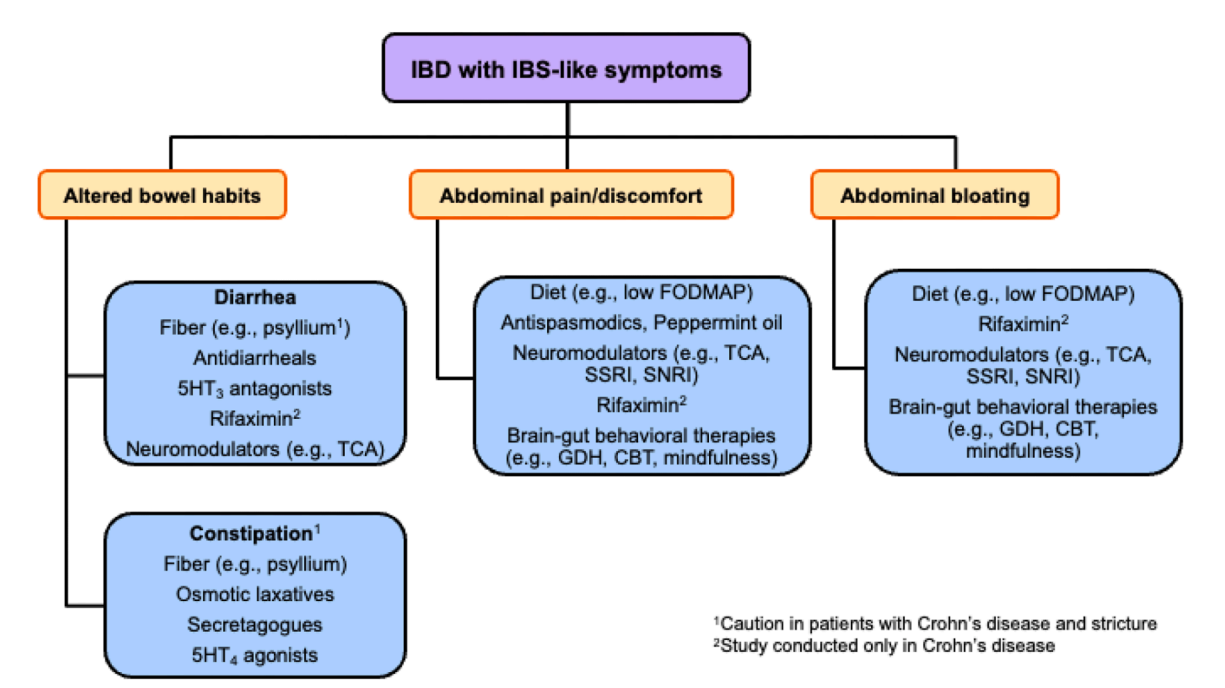
- Dietary treatments of IBS symptoms were recommended including psyllium and a trial of a low FODMAP diet.
- Medication treatments of IBS symptoms were recommended including TCAs, SSRIs, SNRIs, antidiarrheals (e.g. loperamide), antispasmotics, peppermint oil, osmotic laxatives, 5-HT4 receptor agonists and secretagogues (e.g. linaclotide).
- Behavior therapies including GI-focused cognitive behavioral therapy and gut-directed hypnotherapy were recommended
My take: Overall, this expert panel endorsed a broad-range of current IBS treatments for patients with well-controlled IBD experiencing ongoing GI distress. This paper focuses attention to this difficult clinical problem in which many patients, historically, have received escalating IBD therapy rather than IBS therapies. Part of the problem is that it is difficult to be certain that a patient’s IBD is well-controlled and that there are no structural problems (e.g. strictures). In addition, many patients have very mild findings and it can be hard to know if these findings are enough to account for the symptoms. The opposite problem can also occur in which patients have very active IBD yet have few clinical complaints.
Related blog posts:
- Treatment Guidelines for Pediatric Irritable Bowel Syndrome
- Rome V: Lower GI Tract and Biliary Disorders of Gut-Brain Interaction in Pediatrics (Part 1)
- Rome V: Lower GI Tract and Biliary Disorders of Gut-Brain Interaction in Pediatrics (Part 2)
- AGA Guidelines for Pharmacologic Therapy of IBS-D and IBS-C (2022)
- ACG IBS Clinical Guidelines
- The Link Between Ultra-Processed Foods and Irritable Bowel
- Low FODMAPs Diet for Inflammatory Bowel Disease?
- A Randoized Trial of Peppermint Oil for Pediatric Irritable Bowel Syndrome
Disclaimer: This blog, gutsandgrowth, assumes no responsibility for any use or operation of any method, product, instruction, concept or idea contained in the material herein or for any injury or damage to persons or property (whether products liability, negligence or otherwise) resulting from such use or operation. These blog posts are for educational purposes only. Specific dosing of medications (along with potential adverse effects) should be confirmed by prescribing physician. Because of rapid advances in the medical sciences, the gutsandgrowth blog cautions that independent verification should be made of diagnosis and drug dosages. The reader is solely responsible for the conduct of any suggested test or procedure. This content is not a substitute for medical advice, diagnosis or treatment provided by a qualified healthcare provider. Always seek the advice of your physician or other qualified health provider with any questions you may have regarding a condition.


Pingback: The Tricky Problem of IBD with IBS-like symptoms – Reviewer4you