
O Duru et al. BMJ 2026; 392: e086384. Open Access! Long term use of proton pump inhibitors and risk of stomach cancer: population based case-control study in five Nordic countries
Background: “A recent systematic review on the topic concluded that although the literature suggests a positive association between proton pump inhibitor use and gastric cancer, the studies are hampered by major methodological limitations, such as low statistical power, short and incomplete follow-up, inclusion of proton pump inhibitor exposure shortly before the gastric cancer was diagnosed (protopathic bias), differences in classification of cases (methodological heterogeneity), and inability to adjust for Helicobacter pylori infection and other relevant confounders.11″
Methods: Population based case-control study using prospectively collected data from multiple complete nationwide registries in five Nordic nations. The study included 17,232 cases of gastric (non-cardia) adenocarcinoma and 172,297 controls. Long term proton pump inhibitor use occurred in 1766 (10.2%) cases and 16 312 (9.5%) controls.
Key findings:
- No association was found between long term proton pump inhibitor use and gastric adenocarcinoma (adjusted odds 1.01); the risk was similar for histamine-2-receptor antagonist use (adjusted odds ratio 1.03
- Multiple sources of error that led to a false positive association were identified—inclusion of proton pump inhibitor use shortly before the gastric adenocarcinoma diagnosis, short term use of proton pump inhibitors, cardia adenocarcinoma, and lack of adjustment for Helicobacter pylori related variables
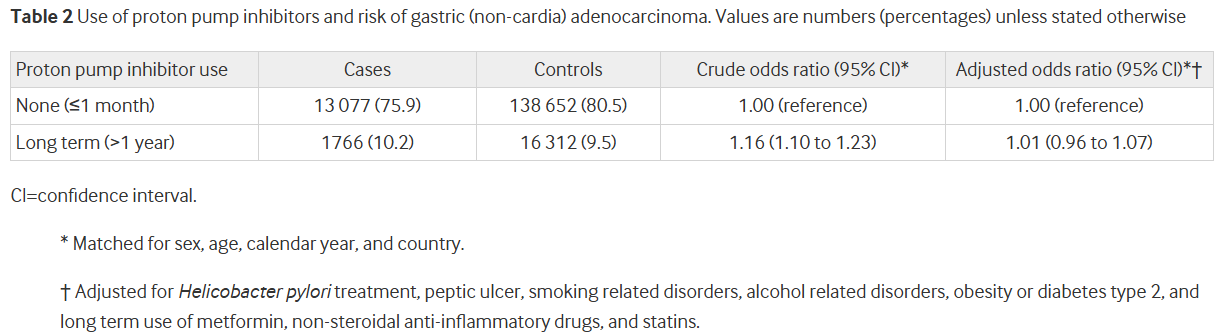
My take: This study indicates that long-term PPI use is not associated with higher incidences of gastric adenocarcinoma.
Related blog posts:
- Thanks: Updated Long-Term PPI Use Smartphrase
- Meta-Analysis: PPIs Did Not Increase Risk of Cardiovascular Events
- PPIs: Good News on Safety (Part 2)
- PPIs: Good News on Safety
- Worrisome Report: PPI Use and Early Onset Colorectal Cancer
- Austin Bradford Hill, PPIs and IBD
- Long-term Effects on Bone Health of PPIs in Infancy?
- Study: PPIs Did Not Cause Dementia in Older Adults

