Vaccination Can Lower the Risk of a Childhood Cancer

From NY Times: How a Childhood Vaccine Reduces the Risk of a Cancer

An excerpt:

Young children are routinely vaccinated against Haemophilus influenza type B, or HiB, a bacterium that can cause meningitis and other serious problems. But the HiB vaccine has an added benefit: It reduces the risk for acute lymphoblastic leukemia, or ALL, the most common childhood cancer, and now scientists know why.

Dr. Markus Müschen, the senior author of a new study published in Nature Immunology,… using a mouse model … found that in some cases, the HiB virus triggers a vigorous immune reaction that activates two enzymes. These enzymes can cause mutations in certain types of blood cells, driving them into malignancy. When this happens, children are more likely to develop leukemia when they are 5 to 7 years old.

Dr. Müschen, a professor of medicine at the University of California, San Francisco, said that the effect of the vaccine was a 20 percent reduction in risk for leukemia. “This seems small,” he said. “But it’s highly significant in large populations. Whatever activates the immune system early in life reduces the risk for ALL.”

Turner Field,  June 6th

Turner Field, June 6th

Do You Know How Long to Use Antibiotics for Intraabdominal Infections?

Since 2010, there have been published guidelines for complicated intraabdominal infections which recommend a treatment course of 4 to 7 days. These include guidelines from the Surgical Infection Society (SIS) and the Infectious Diseases Society of America (IDSA). Now, a new study (Sawyer RG et al. NEJM 2015; 372: 1996-2005, editorial 2062-63) provides additional support for a short course of antibiotics when there is adequate source control. The study termed “Study to Optimize Peritoneal Infection Therapy” or STOP-IT included 23 institutions from the U.S. and Canada.

Video Summary (1:33): Trial of Short-Course Antimicrobials

Rationale: While traditional therapy of 10-14 days has been based on the premise that ongoing fever and leukocytosis indicate ongoing infection, “more recent experimental data, however, suggest that a prolonged SIRS [systemic inflammatory response syndrome] may be more a reflection of host immune activity than an indication of the presence of viable microorganisms.”

Design: 518 patients were randomly assigned to either a fixed 4-day course of antibiotics or to a control group that received antibiotics for 2 days after resolution of fever, leukocytosis, and ileus (max of 10 days).  The median number of days in the control group was 8 days.

Study characteristics:

  • Mean age 52 years
  • 34% of the infections originated in colon/rectum, 14% in small bowel, and 14% in the appendix
  • 11% had cancer, 10% had inflammatory bowel disease

Source-control procedures: “defined as procedures that eliminate infectious foci, control factors that promote ongoing infection, and correct or control anatomical derangements to restore normal physiological function”

  • Percutaneous drainage 33.1%
  • Resection and anastomosis or closure 26.5%
  • Surgical drainage alone 21.2%
  • Resection and proximal diversion 10.4%
  • Simple closure 7.7%
  • Surgical drainage and diversion 1.2%

Results:

  • Surgical site infection, recurrent intraabdominal infection, or death occurred in 21.8% of the experimental 4-day group compared with 22.3% of the control group. Death occurred in 3 experimental patients and 2 control patients.
  • No significant differences were found between the two groups in terms of primary or secondary outcomes.

Limitations:

  • 18% of the experimental group and 27% of the control group deviated from the protocol.  In the control group, this included 26 patients who received less than 10 days of therapy but more than 2 days longer than the resolution of the physiological findings.
  • Patients without adequate source control were excluded

The editorial notes that if these findings are incorporated into clinical practice, more than $97 million would be saved on antibiotic costs alone; in addition, there would be less diarrhea and phlebitis.  The editorial suggests that the reason why more than 20% of both groups had complications is likely related to source control.  If inadequate course of antibiotics was the culprit, “we would have expected still more complications after treatment in the short-course therapy group.”

(From editorial): “We have encouraging data from the STOP-IT trial that suggest cost savings and improved safety.”

Take-home message Because of years of practice patterns, it is going to be difficult to stop antibiotics at 4 days when patients are still having fevers, especially since 20% will not have resolution of their infection. These data should, however, make it easier to shorten antibiotic courses.

Related blog posts:

Zoo Atlanta

Zoo Atlanta

Clindamycin or Trimethoprim-Sulfamethoxazole for skin infections?

It turns out that both clindamycin and trimethoprim-sulfamethoxazole are good choices for uncomplicated skin infections (NEJM 2015; 372: 1093-103).

In this prospective, randomized trial with 524 patients (children and adults), outpatients with uncomplicated skin infections (cellulitis and abscesses) were treated with either clindamycin or trimethoprim-sulfamethoxazole (TMP-SMX) for 10 days.  Abscesses underwent initial incision and drainage.  Both groups had a similar rate of MRSA: 31.8% and 31.9% respectively.

Key findings:

  • The proportion of patients cured was similar in both groups.  Among those with adequate followup, 89.5% of clindamycin group were cured compared with 88.2% of TMP-SMX.
  • Adverse effects were similar as well.  Diarrhea was the most common adverse event and occurred in 9.7% and 10.1% respectively.

Limitations: trial excluded patients with serious coexisting conditions, involved only outpatients, and followup was for 1 month.

The associated editorial (pg 1164-65) suggests that the design of the study may obscure the likelihood that TMP-SMX might be preferred for empirical treatment of skin abscess (if I&D alone is insufficient) and that clindamycin might be more effective for cellulitis.

Take-home point: With the changes in skin infections, including MRSA, this trial indicates that both clindamycin and TMP-SMX are good options for treating uncomplicated skin infections.

Commentary from NEJM Journal Watch, by Larry Baddour, Chair, Division of Infectious Diseases at Mayo Clinic College of Medicine:  “For most patients, however, β-lactam antibiotics with activity against β-hemolytic streptococci and S. aureus (e.g., cephalexin or dicloxacillin) remain the first-line empirical treatment options for nonpurulent cellulitis. Epidemiologic and host factors, however, should continue to influence this decision.”

Another Big Study: No Link between MMR vaccine and Autism (Plus one)

In a study with 95,727 children, there was no link between receipt of the MMR (measles, mumps, rubella) vaccine and autism, even in children at high risk (eg. sibling with autism).

Here’s a summary from USA Today: No link between MMR and Autism

Original JAMA article (free & entire article)

Related blog: “Too many vaccines and autism” is debunked | gutsandgrowth

An unrelated commentary, “Social Distancing and the Unvaccinated,” (NEJM 2015; 372: 1481-83) notes that a recent ruling (Phillips v City of New York) upholds the state’s authority to bar unvaccinated children from school during outbreaks.  This practice is referred to as social distancing to lessen likelihood of further transmission. This “reiterated the Supreme Court decision in the 1905 case Jacobson v. Massachusetts, which clearly found vaccine mandates constitutional.”

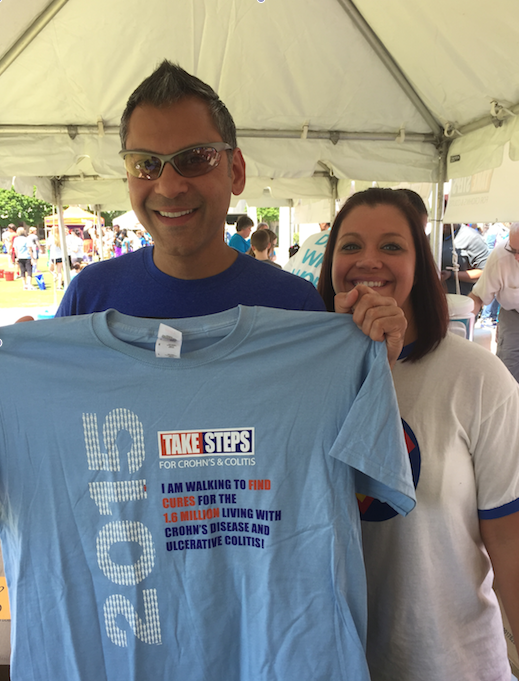
GI Care For Kids: Our group has been very supportive of the Crohn’s and Colitis Foundation of America (CCFA) and especially active in staffing the yearly Camp Oasis for more than 20 years.  Throughout the year, there are a number of other events to support CCFA.  This past weekend many of us participated in “Taking Steps.”  Here are a few pictures:

Super Poopers: Ben Gold, Larry Saripkin, Dinesh Patel, Seth Marcus, and Jay Hochman

Super Poopers: Ben Gold, Larry Saripkin, Dinesh Patel, Seth Marcus, and Jay Hochman

Dr. Spandorfer’s team raised a great deal of money (50K) and he/his family were featured in the Atlanta Journal Constitution (Local Family Takes Big Steps to Raise Awareness).  His son, Jack, spoke at the event, and was honored as this year’s hero.  They also had pretty clever T-shirts

With 'Pip" Spandorfer (whose team raised $50,000)

With ‘Pip” Spandorfer (whose team raised $50,000)

Dinesh Patel and Kimberly Sheats

Dinesh Patel and Kimberly Sheats


Briefly Noted: E-Cigarette Use Increasing Rapidly in Kids & Gilead Profits

From NPR (accessed 4/24/15): The statistical findings, published in this week’s issue of Morbidity and Mortality Weekly Report, come from the CDC’s National Youth Tobacco Survey. The latest survey found that the use of e-cigarettes increased from 1.1 percent in 2013 to 3.9 percent in 2014 among middle school students, and from 4.5 percent to 13.4 percent among high school students. That translates to a total of 450,000 middle school students now using e-cigs, alongside 2 million high school students.

Related blog postTobacco 21 & ENDing Combustible Tobacco Use | gutsandgrowth


Also, from NY Times, Gilead is making a lot of money on its Hepatitis C medications ,$4.55 billion in 1st quarter:

Sales of Gilead Sciences’ drugs to treat hepatitis C reached $4.55 billion in the first quarter, far exceeding already lofty Wall Street expectations but likely to focus attention once again on the overall costs to the health care system of the medicines.

Gilead said on Thursday that its new drug, Harvoni, had overall sales in the quarter of $3.58 billion, of which $3.02 billion was in the United States. This was the first full quarter of sales for Harvoni, which was approved in October.

Sales of Sovaldi, the older hepatitis C drug, fell to $972 million in the quarter from $2.27 billion in the first quarter of 2014 because it was supplanted by Harvoni. Combined, hepatitis C drug sales in the first quarter were double that of a year earlier.

University of Chicago

University of Chicago -Midway

Conflicting Cholesterol Guidelines –Massive Undertreatment or Massive Overtreatment?

A fascinating article (Gooding HC et al. JAMA Pediatr doi:10.1001/jamapediatrics.2015.0168) studies a cross-sectional analysis of the National Health and Nutrition Examination Survery (NHANES) population and determines the frequency of the need for statin therapy for hyperlipidemia based on two separate guidelines.

  • 2011 Integrated Guidelines for Cardiovascular Health and Risk Reduction in Children and Adolescents of the National Heart, Lung, and Blood Institute (Pediatrics 2011; 128 (sup 5): S213-S256) PEDS RECS
  • 2013 Guidelines on the Treatment of Blood Cholesterol to Reduce Atherosclerotic Cardiovascular Risk in Adults from the American College of Cardiology and American Heart Association (Circulation 2014: 129 (25) (supl 2) S1-S45) ADULT GUIDELINES

Specifically, the design of the study focused on 17-21 year olds in which the guidelines had overlapping recommendations. While the NHANES population involved only 6338 patients, this representative sample was used to calculate the likelihood of statin therapy more broadly among the US population of 20.4 million in this age group.

Key Findings:

  • Among the cohort of 6338, 2.5% would qualify for statin treatment using PEDS RECS compared with 0.4% under ADULT GUIDELINES.
  • This finding extrapolates to 483,500 patients nationwide compared with 78,200, respectively.  This is a difference of more than 400,000 and reflects a 6-fold difference.

Why the discrepancy?

  • ADULT GUIDELINES recommend use of statins only if LDL-C is >190. PEDS RECS extend to as low as 130 or 160 if additional risk factors (highly prevalent) are present, including hypertension, obesity, and smoking.
  • ADULT GUIDELINES are based on randomized clinical trials, though “they advocate for physician’s judgement in areas where the evidence base is insufficient.” PEDS RECS use extrapolated evidence for lifetime risk of coronary vascular disease.

Bottomline: While these guidelines highlight differences among 17-21 year olds, the decision regarding statin therapy extends across the age spectrum in terms of whether a low or high threshold should be in place.  Also, it is unfortunate that the additional modifiable risk factors (smoking, hypertension, and obesity) are so prevalent as to create this divergence in approach.

Related references:

  • NEJM 2015; 372: 1489-99. Alirocumab, a monoclonal antibody that inhibits PCSK9, lowered LDL 62% in patients receiving maximal statin therapy. Randomized, placebo-controlled study with 2341 patients.
  • NEJM 205; 372: 1500-09. Evolocumab, a monoclonal antibody that inhibits PCSK9, lowered LDL 61% in two open-label randomized trials (n=4465).

Related blog posts:

Sandy Springs

Sandy Springs

Inequality in Pediatric Health Care

“Of all the forms of inequality, injustice in health care is the most shocking and inhuman.”

-Martin Luther King, Jr

This quote is part of an editorial (Flores G, “Dead Wrong: The Growing List of Racial/Ethnic Disparities in Childhood Mortality” J Pediatr 2015; 166: 790-3). The author discusses the disparities among African-American (AA) and Latino children in comparison to white children.

Key points:

  • AA children and young adults had ~6 times the death rate for drowning in swimming pools, 4 times more likely of dying after liver transplant, and about twice the likelihood of dying due to acute lymphoblastic leukemia.
  • Latino children have higher cancer death rates with about twice the likelihood of dying due to acute lymphoblastic leukemia and increased drowning death rate as well.
  • One new study (pages 812-8) shows that black children have increased in-hospital mortality (OR 1.66) after complications following congenital heart surgery and that hispanic children have an increased complication rate following surgery (OR 1.13). This was a retrospective study using the Kids’ Inpatient Database with approximately 3 million discharge abstracts for three separate years.
  • A second study (pages 819-26) with a data set of 98,833 children shows that birth defects resulted in higher 8-year adjusted hazards of death for black, latino, and Asian/Pacific Islander children.

Recognizing these disparities inevitable leads to the question of why. Dr. Flores postulates several factors.

  • Genetic differences.  For example, some ethnicities have more difficult to treat cancers, either due to genetic mutations or due to metabolism of medications.
  • Delays in diagnosis and treatment.  Patients who present at a later stage of diagnosis often have lower cure/response rates. The author notes that black children receive a diagnosis of autism a mean of 1.4 years later than white children.
  • Barriers to specialty care.  Specialty care can result in improved outcomes.
  • Bias in healthcare delivery, both conscious and unintentional.

Bottomline: The problems of racial inequality is not just a matter of relationships between the police and the community.  It is clear that more needs to be done to improve outcomes in healthcare as well.

Related blog posts:

Unrelated Link: Surgeon General Tells Elmo to Get His Vaccines

Hyperbilirubinemia and Central Apnea

Briefly noted: “Unbound Unconjugated Hyperbilirubinemia is Associated with Central Apnea in Premature Infants” J Pediatr 2015; 166: 571-5.  This was a prospective observational study with 100 27-33 gestational infants.  The group with central apnea had higher unconjugated hyperbilirubinemia (UB).  The authors speculate that UB could cause neurotoxicity via central chemoreceptors and more aggressive treatment of UB with phototherapy could be needed.

Infantile Hemangioma -Propranolol Effective

While infantile hemangiomas are not much of a GI disorder, I still thought a recent article (NEJM 2015; 372; 735-46) merited a brief mention. This trial included 456 patients who received treatment in a randomized, double-blind trial.

Key finding: “this trial shows that oral propranolol at a dose of 3 mg per kilogram per day for 6 months is effective in the treatment of infantile hemangioma.”

  • Successful treatment noted in 60% compared with 4% of placebo patients.
  • 88% of propranolol patients showed improvement by week 5 compared with 5% in placebo group.
  • Eligible patients between 35-150 days had a proliferating hemangioma requiring systemic therapy with a minimal diameter of 1.5 cm.

More Evidence of Anesthetic Neurotoxicity

One of the more troubling commentaries that I read recently (Rappaport BA et al NEJM 2015; 372: 796-97) provides additional insight into the issue of anesthetic neurotoxicity.

The possibility that anesthetic agents could result in learning disabilities and other neurologic impairments is not new (Pediatrics 2011); however, the data has become more concerning.

Key points:

  • “Compelling evidence from animal models is supported by a small number of observational studies in children who underwent anesthesia early in life.” Exposure to multiple (but not single) episodes of anesthesia and surgery were associated with increased risk of learning disabilities.
  • Anesthetics which have been implicated include propofol, ketamine, sevoflurane, etomidate, desflurane, and isoflurane.  Histologic changes, in animal models, have included apoptosis and cell death, changes in neuronal morphology, and decreased number of synapses.
  • “In June 2014, SmartTots convened a meeting…the participants concluded that the current data from animal studies are now sufficiently convincing that large-scale clinical studies are warranted.” SmartTots Consensus Statement
  • “Care providers should be made aware of the potential risks that anesthetics pose to the developing brain…and parents should consider how urgently surgery is needed, particularly in children under 3 years of age.”

Take-home message:  While recognizing that confounding variables make it difficult to be certain, it appears that anesthetics (particularly prolonged or repeated courses) can result in neurologic changes.  There is enough information available to recommend avoiding truly elective procedures which require anesthetics in young children.