Briefly noted: Aerodigestive Medicine and Budesonide for Eosinophilic Esophagitis

A shout out to Ben Gold who is a coauthor on several new publications:

A Krasaelap et al. JPGN 2023; 77: 460-467. Pediatric Aerodigestive Medicine: Advancing Collaborative Care for Children With Oropharyngeal Dysphagia

This is a terrific review of the dysphagia and the multidisciplinary approach to management. Many pearls are in this article. For example, laryngo-tracheo-esophageal cleft (LTEC), “while rare, 1 in 10,000-20,000 live births, the incidence of LTEC is higher (7.6%-22%) in children with aerodigestive issues such as a chronic cough.” [As an aside, this should be repeated given the changing population of patients being seen.]

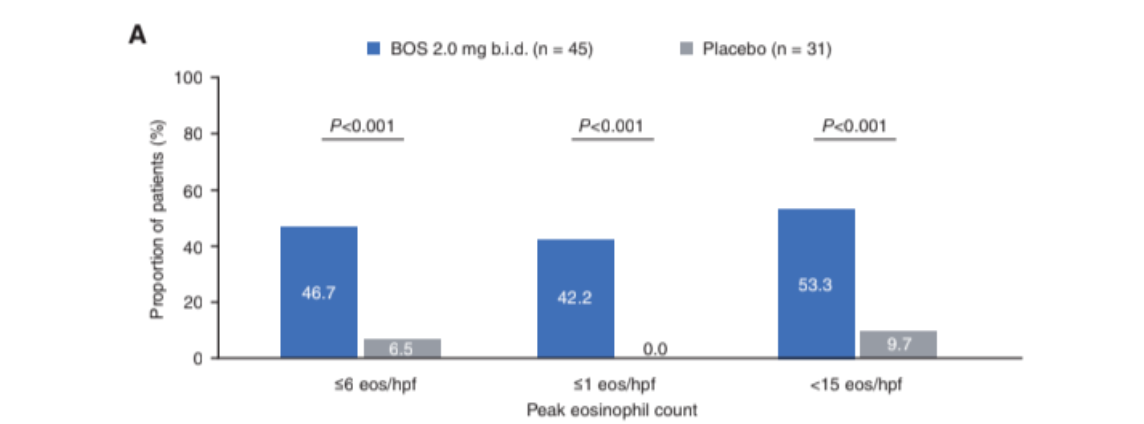
VA Mukkada, SK Gupta, BD Gold et al. JPGN 2023; 77: 760-768. Pooled Phase 2 and 3 Efficacy and Safety Data on Budesonide Oral Suspension in Adolescents with Eosinophilic Esophagitis

Key finding: Significantly more patients who received BOS (2mg BID) than placebo achieved histologic responses (≤6 eos/hpf: 46.7% vs 6.5%; ≤1 eos/hpf: 42.2% vs 0.0%; <15 eos/hpf: 53.3% vs 9.7%; P < 0.001)
Related blog posts:

View from Rua Augusta Arch in Lisbon

Aerodigestive Complexity Score

HM Horita et al. J Pediatr 2023; 261: 113549. Open Access! Development of a Medical Complexity Score for Pediatric Aerodigestive Patients

Methods: The authors in this study developed a 7-point medical complexity score .  One point was assigned for each comorbid diagnosis in the following categories: airway anomaly, neurologic, cardiac, respiratory, gastrointestinal, genetic diagnoses, and prematurity. A retrospective chart review was conducted of patients (n=234) seen in the aerodigestive clinic who had ≥2 visits between 2017 and 2021. 

Improvements were followed in the Functional Oral Intake Scale (FOIS)–assigned by aerodigestive feeding therapists.6 The FOIS scale is as follows:

  • 1 = Nothing by mouth
  • 2 = Tube-dependent with minimal attempts of food or liquids (<10%)
  • 3 = Tube-dependent with consistent oral intake of food or liquids
  • 4 = Total oral diet of a single consistency
  • 5 = Total oral diet with multiple consistencies, but requiring special preparations or compensations
  • 6 = Total oral diet with multiple consistencies without special preparation, but with specific food limitations
  • 7 = Total oral diet with no restriction, or <12 months of age on age-appropriate diet

Key findings:

  • At presentation, 69.5% were not at unrestricted age-appropriate diet; 22.7% of the cohort (n = 53) were completely tube dependent
  • There were 165 patients who were not at unrestricted total age-appropriate oral diet at presentation, and the majority (54% [n = 90]) showed improvement in their FOIS scores after aerodigestive team intervention.
  • “For each 1-unit increase in complexity score, there was a 33% decrease in the odds of improvement in FOIS scores (OR, 0.66; 95% CI, 0.51-0.84; P = .001);” however, only neurological comorbidity (OR, 0.26; 95% CI, 0.13-0.53; P < .001) and airway anomaly (OR, 0.35; 95% CI, 0.15-0.79; P = .01) were significantly associated with decreased likelihood to progress in feeding based on FOIS scores
  • Of the 125 patients who were tube fed at initial presentation, 20% (n = 25) were able to achieve full oral feeding after intervention

My take: While the complexity score did correlate with likelihood of progressing with oral feedings, it appears that this score is unnecessary as likelihood of progressing is mainly related to two factors: neurological comorbidities and airway anomalies.

Related blog posts:

What Should an Aerodigestive Program Look Like

A recent “consensus statement” publication (Boesch RP, et al. Pediatrics 2018; 141: e20171701) discusses the structure and functions of an aerodigestive program. Congratulations to Dr. Ben Gold –one of my partners and a coauthor.

Overall this is a useful document and a good starting point to establish what an aerodigestive program should look like.

  • Table 1 lists common conditions addressed by aerodigestive programs like chronic cough, Gtube dependence, failure to thrive, TEF/esophageal atresia, recurrent infections, craniofacial anomalices, tracheostomy dependence, vocal cord dysfunction, stridor and wheezing.
  • Table 2 lists important team members.
  • Table 3 establishes important functions like care coordination, combined endoscopy, and summary of recommendations.
  • Table 4, 5, and 6 summarizes procedural skills needed by pulmonology, gastroenterology, and ENT respectively.

The accepted definition of an aerodigestive disorder: “A pediatric aerodigestive patient is a child with a combination of multiple and interrelated congenital and/or acquired conditions affecting airway, breathing, feeding, swallowing, or growth that require a coordinated interdisciplinary diagnostic and therapeutic approach to achieve optimal outcomes.”

  • The authors were split on whether the care needs to be provided by all providers in the same space or whether coordination can occur with separate physician locations.
  • The authors argue that coordinated care is valuable, citing care in children with cystic fibrosis and inflammatory bowel disease (via ImproveCareNow).
  • They note the major limitation is that their recommendations are based on expert opinion.

My take: My main concerns with multidisciplinary care, having participated in a number of multidisciplinary teams, are the following:

  1. There is a lot of redundancy in care with these clinics.  Often, these clinics result in a patient having two GIs, two pulmonologists, and two ENTs. If the aerodigestive team is useful, the aerodigestive expertise needs to be substantially greater than the expertise of their colleagues.  If it is simply a matter of care coordination, this is a deficiency that could be corrected in the absence of a multidisciplinary team.
  2. Many patients do not need all of the multidisciplinary team members. This increases costs unnecessarily.
  3. The potential promise of care coordination is sometimes offset by the extremely lengthy visits at multidisciplinary visits.

So in my view, the key for aerodigestive clinic success is to identify a narrow population of children with high-complexity problems and to identify subspecialists with exceptional abilities.  As an aside, the study states that Cincinnati was the first location to establish a pediatric aerodigestive clinic.  The success there was in large part due to Dr. Colin Rudolph (GI) and Dr. Robin Cotton (ENT), both recognized leaders and innovators in their fields.

Tunnels and hallways inside Hoover Dam