Botox for Pediatric Gastrointestinal Disorders

M Homan et al. J Pediatr Gastroenterol Nutr. 2024;79:1096–1105. Open Access! Drugs in focus: Botulinum toxin in the therapy of gastrointestinal disorders in children (Review)

Botox has been used for the following:

  • Achalasia
  • Cricopharyngeal achalasia
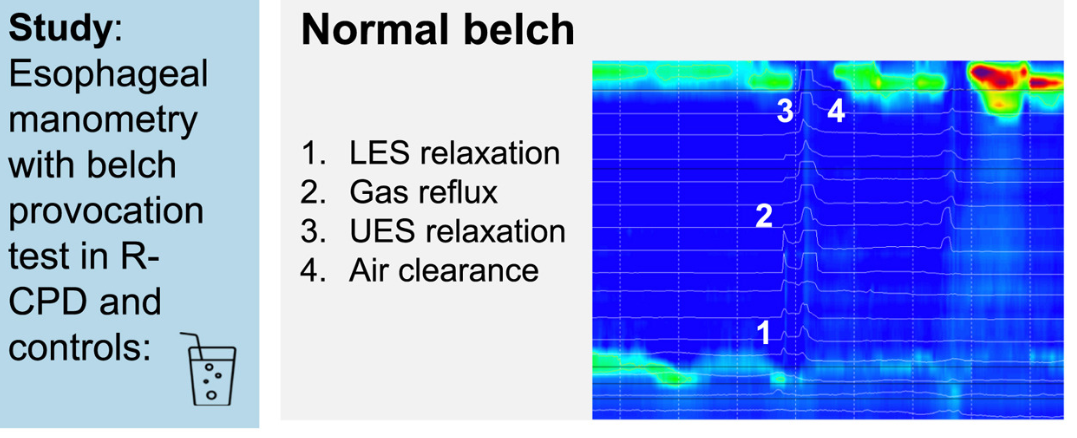
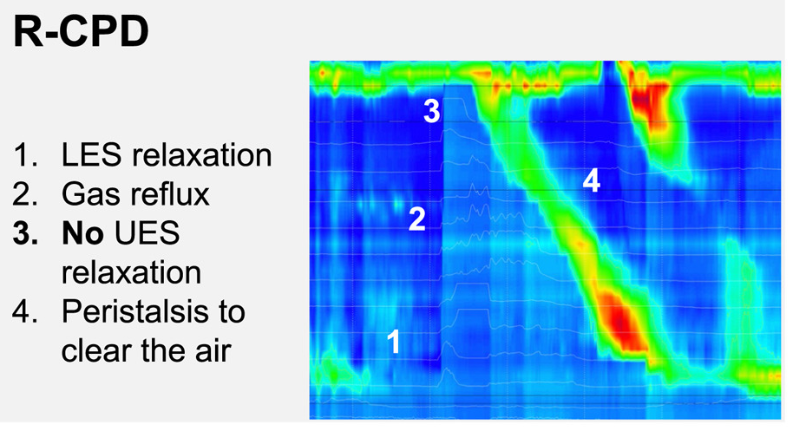
  • Retrograde cricopharyngeal dysfunction
  • Delayed gastric emptying
  • Anal achalasia
  • Constipation after Hirschsprung disease surgery
  • Selected functional constipation
  • Chronic anal fissure

With regard to achalasia, “Botox can be considered only in patients in whom rapid weight gain is important to improve surgical outcomes.”

With regard to gastroparesis/delayed gastric emptying in children, the authors note the following:

‘A recent retrospective study from the Mayo Clinic analysed the response to intrapyloric Botox in children (n = 20) with gastroparesis and concluded that intrapyloric Botox injection in children is safe and can provide temporary relief for patients with refractory upper gastrointestinal symptoms with and without gastroparesis.43 [This was] a meta-analysis, including six studies, 160 patients, which showed that 68% of patients responded to intrapyloric Botox irrespective of the presence of gastroparesis, while among patients diagnosed with gastroparesis the therapeutic response was 66%.43 These results suggest that intrapyloric Botox can be effective not only in children with gastroparesis but also in children with refractory functional upper gastrointestinal symptoms.’ In their conclusion, the authors note “Intrapyloric Botox injection is increasingly used for the treatment of gastroparesis but evidence supporting its use in children is still scarce.”

My take: Overall, this is a helpful review.

Related blog posts:

Is Manometry Useful to Determine if Botox Will Help Nausea/Vomiting?

Before reviewing today’s article, I wanted to make a comment about the blog post on 12/17/23 (Endoscopy of the Ileal Pouch Anal Anastomosis) which was a JPGN topic of the month. The editorial staff encourages author-driven communication and author-driven initiatives for these types of articles. If you have a topic for JPGN, please send an email to the Section Editor Darla Shores (dshores1@jhmi.edu) or to the editor Sandeep Gupta. (skgupta@uabmc.edu). This includes articles that you would like to write (fellow/interested faculty with senior faculty, up to 5 authors, 1500 words, 12 references), or  if you have a topic that you would like to see in JPGN but do not wish to write yourself, please inform the editorial team as well. 

———

PT Osgood et al. JPGN 2023; 77: 726-733. Intrapyloric Botulinum Toxin Injection for Refractory Nausea and Vomiting in Pediatric Patients

In this retrospective review, pediatric patients (n=25) received intrapyloric botox injections: (80-100 IU divided into 4 doses administered via sclerotherapy needle.

Key findings with botox injections:

  • Of 22 patients completing a GE study, 14 had delayed GE with no significant difference between IPBI responders and nonresponders
  • Improvement in vomiting in 80% (16/20), nausea 75% (15/20), abdominal pain 79% (15/19).
  • In those with psychiatric diagnosis, improvement was seen 71%. In those with orthostatic intolerance, improvement was noted in 67%.
  • In those with delayed GE, improvement was noted in 79% compared with 63% (5/8) with normal GE

My take: Botox was associated with improvement in this refractory pediatric group regardless of gastric emptying/manometry. This suggests that relaxation of pylorus is a useful therapeutic modality in a subset of patients.

Related blog posts:

Work on Both Ends

Two articles provide some insight into endoscopic interventions on both ends of the gastrointestinal tract.

In the first article (JPGN 2014; 59: 608-11), the authors retrospectively studied 11 children who received mitomycin-C concurrently with endoscopic dilatation for the treatment of anastomotic strictures after esophageal atresia repair.  Key finding: 8 of 11 achieved resolution of their strictures, 2 remained with stenosis, and 1 needed surgical correction. However, the authors found no benefit of mitomycin C in the resolution of the strictures compared with endoscopic dilatation alone in historical controls (n=10). In fact, in this small study, the control group patients had fewer endoscopic dilatations (3.7 vs. 5.4 dilatations per patient) and 9 of 10 achieved stricture resolution.

In the second article (JPGN 2014; 59: 604-08), the authors retrospectively reviewed the outcome of children (n=33) with surgically-treated Hirschsprung’s disease (HD) who were treated with intrasphincteric Botox injections for obstructive symptoms. In these children with median age of first Botox injection was 3.6 years; a median of 2 injections were given.  26 (79%) had had a transanal endorectal pull-through.  Key finding: initial improvement was noted in 76% and “good/excellent” long-term response was evident in 52% (Table 2).

Bottomline: Botox therapy appears helpful for non-relaxing sphincters in HD whereas mitomycin-C remains an unproven therapy for esophageal strictures.

Also briefly noted: JPGN 2014; 59: 674-78.  “Use of cyproheptadine in young children with feeding difficulties and poor growth in a pediatric feeding program.” n=127.  Of the 82 who took cyproheptadine regularly, 96% reported a positive change in feeding behaviors and there was a significant improvement in weight gain.

Also, with regard to stooling problems, Sana Syed (Emory GI fellow) pointed out a useful website that emphasizes proper positioning for functional constipation: squattypotty.com.  While the website promotes their product to provide proper foot support (with elevation), there are other ways to get a similar result.  As noted previously (“Poo in You” Video | gutsandgrowth) proper positioning can help a lot.

Related posts: