How Triglycerides Affect Outcomes in Pediatric Pancreatitis

ZM Sellers et al. J Pediatr 2025; 276: 114298. Impact of Elevated Serum Triglycerides on Children with Acute Recurrent or Chronic Pancreatitis from INSPPIRE-2

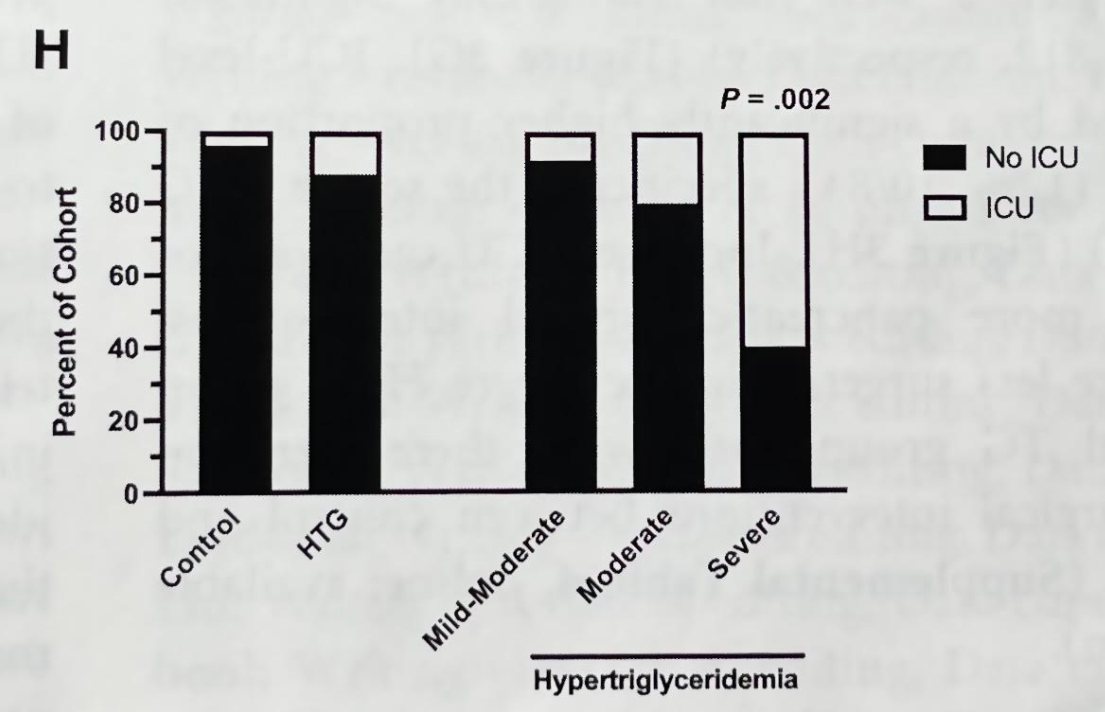
Using the INSPPIRE-2 cohort of children with acute recurrent or chronic pancreatitis (CP) (n = 559), the authors compared the outcomes for children based on their triglyceride levels. Definitions: normal triglycerides (<150 mg/dL), any high triglycerides (HTG) (≥150 mg/dL, mild-moderate HTG (150-499 mg/dL), moderate HTG (500-999 mg/dL), and severe HTG groups (≥1000 mg/dL).

  • Key findings:
    HTG was not associated with an increase in the number of pancreatitis attacks per person-years
  • HTG was not associated with an increase in CP prevalence
  • HTG severity was associated with increased pancreatic inflammation, pancreatic cysts, pain, hospital days, number of hospitalizations, intensive care, and missed school days
  • Interestingly, there were less pancreas gene variants in the severe HTG group which supports the notion that HTG can be a driver of pancreatitis disease

Discussion:

  • “It is well-established that severe HTG levels increase pancreatitis risk by increasing serum chylomicrons and free fatty acids, causing pancreatic ischemia, acidosis and vascular injury…In adults, TG levels >/= 200 mg/dL are independently associated with pancreatic necrosis.”

My take: Checking triglyceride levels, which is in accordance with NASPGHAN recommendations, is a good idea. HTG is a potentially-modifiable risk factor for more severe disease. Levels that substantially increase the pancreatitis severity (500 or higher) merit treatment even in the absence of pancreatitis

Related blog posts:

Pediatric NAFLD: You Don’t Have to be Obese/Overweight to Have Fatty Liver Disease (but it helps)

A recent study (P Kumar et al. JPGN 2018; 67: 75-9) examined suspected NAFLD in 12 to 18 year olds using data from NHANES. In the analysed cohort, there were 124 suspected NAFLD and 1385 without suspicion of NAFLD.  This subset was weight to represent a U.S. population of over 18 million.

Key definitions:

  • Suspected NAFLD was defined by abnormal ALT (>25.8 U/L for boys and >22.1 U/L for girls) who did not have another explanation (eg. viral hepatitis, medication)
  • Lean BMI was defined by BMI less than 85th% for age
  • Hypertriglyceridemia ≥ 150
  • Low HDL ≤ 40 mg/dL
  • HOMA-IR =fasting glucose x insulin (microU/mL) divided by 405. Insulin resistance was defined as HOMA-IR ≥ 3

Key findings:

  • Suspected NAFLD affects ~8% of lean adolescents in the U.S.
  • Hypertriglyceridemia was noted in 10 of 124 suspected NAFLD and was a risk factor (P=0.028) as was Low HDL which occurred in 15 (P=0.016) and IR which occurred in 43 (P=0.053)

My take: Elevated ALT, a marker for fatty liver disease, is common even in adolescents without obesity. Elevated triglycerides, low HDL, and insulin resistance are all risk factors for suspected NAFLD in non-overweight/non-obese teens.

Related blog posts:

Cumberland Island 2018

Possible Quality Metric for Fatty Liver Disease: Dyslipidemia

With nonalcoholic fatty liver disease (NAFLD), it is well-documented that adverse cardiovascular events influence mortality more than any other factor.  Dyslipidemia plays an important role in these outcomes.

A recent study (KE Harlow et al. J Pediatr 2018; article in press. DOI: https://doi.org/10.1016/j.jpeds.2018.02.038) indicates that “clinically actionable dyslipidemia” is present in more than half of pediatric patients with NAFLD.

This multicenter, longitudinal cohort study included children (n=585) with NAFLD enrolled in the National Institute of Diabetes and Digestive and Kidney Diseases Nonalcoholic Steatohepatitis Clinical Research Network.

Key findings:

  • The prevalence of children warranting intervention for low-density lipoprotein cholesterol at baseline was 14%. After 1 year of recommended dietary changes, 51% achieved goal low-density lipoprotein cholesterol, 27% qualified for enhanced dietary and lifestyle modifications, and 22% met criteria for pharmacologic intervention
  • Elevated triglycerides were more prevalent, with 51% meeting criteria for intervention at baseline. At 1 year, 25% achieved goal triglycerides with diet and lifestyle changes, 38% met criteria for advanced dietary modifications, and 37% qualified for antihyperlipidemic medications.

My take: Assessing/managing dyslipidemia is an important component of NAFLD care.

Link to abstract: Clinically Actionable Hypercholesterolemia and Hypertriglyceridemia in Children with Nonalcoholic Fatty Liver Disease

Related blog posts:


Triglyceride Levels and Pancreatitis

A recent study (JAMA Intern Med 2016; 176: 1834-42) suggests that even mild to moderate hypertriglyceridemia may increase risk of pancreatitis.

Among two large cohorts that were followed prospectively for a median of 6.7 years, 434 out of 116,550 patients developed acute pancreatitis.

Key finding (which persisted after adjustment of multiple potential confounding factors):

screenshot-140

More complete summary at GI & Hepatology News: “Mild, moderate hypertriglceridemia tied to pancreatitis”