JJ Patel, SA McClave. NEJM 2026; 395: 162-174. Nutrition Therapy in Critically Ill Adults
Key points: (for adults)
- Early enteral nutrition preserves gut integrity and supports the microbiome, so it is the preferred approach, although contemporary randomized, controlled trials show that early short-term parenteral nutrition is safe when enteral nutrition is contraindicated.
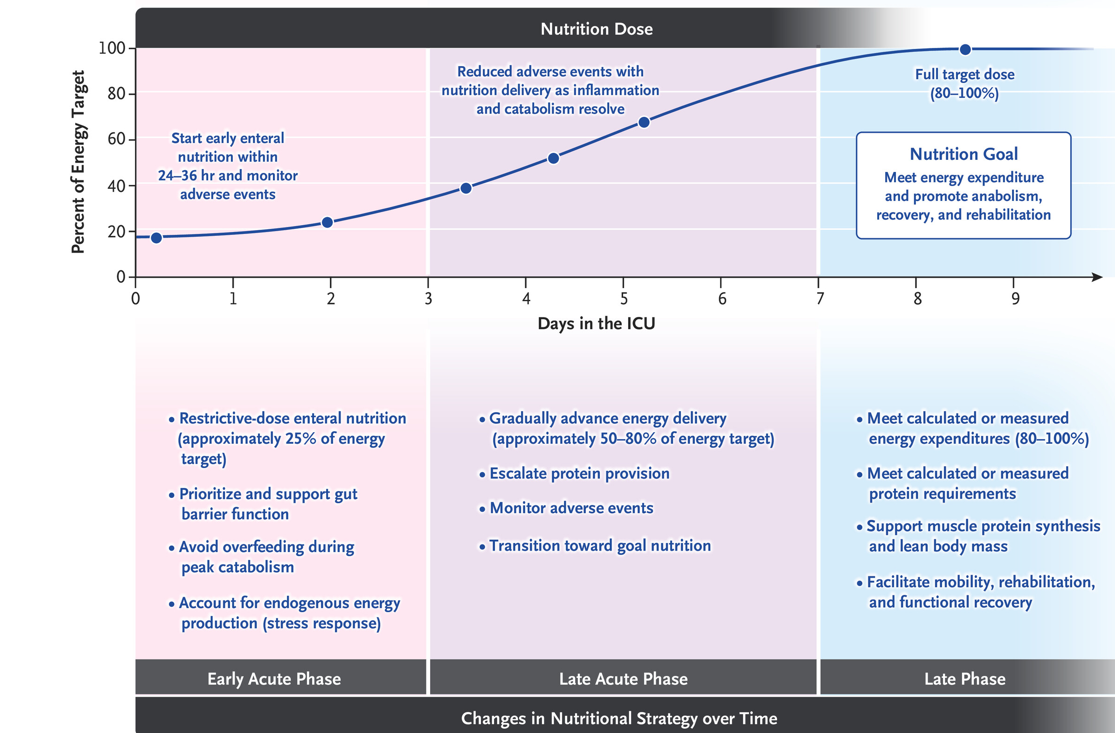
- Providing full-dose nutrition early may lead to more metabolic and gastrointestinal complications than restrictive or trophic feeding.
- High-dose protein (>2.0 g per kilogram of body weight per day) offers no outcome benefit over standard dosing (≤1.2 g per kilogram per day) and may be harmful in patients with acute kidney injury.
- Adverse events with enteral feeding (often called enteral feeding intolerance) are common during critical illness, and the safe delivery of nutrition requires gradual advancement, strategies for prevention of refeeding syndrome, glycemic control (glucose level, <180 mg per deciliter), and avoidance of routine gastric residual volume monitoring.
TIMING, ROUTE AND DOSE OF NUTRITION:
- “The receipt of nothing by mouth…impairs gut health by reducing epithelial-cell proliferation, increasing apoptosis, and disrupting mucosal integrity, enteral nutrition supports gut function by enhancing tight-junction protein expression, reducing enterocyte apoptosis, preserving villous and crypt architecture, maintaining Paneth-cell function, supporting gut-associated lymphoid tissue, and helping to sustain commensal microbiota.11,12 The collective evidence from 21 randomized, controlled trials has shown that early enteral nutrition, initiated within the first 24 to 36 hours after ICU admission, leads to better outcomes than delayed delivery or no provision of enteral nutrition.13” [if no contraindications]
- “The CALORIES and NUTRIREA-2 trials randomly assigned critically ill adults to receive early enteral nutrition or early short-term parenteral nutrition, and the results showed no between-group differences in 30-day and 28-day mortality, respectively”
- “Thirteen randomized, controlled trials questioned the practice of providing full-dose nutrition during the acute phase of critical illness and compared restrictive strategies — such as hypocaloric feeding, permissive underfeeding, and trophic feeding (Table 2) — with full-dose regimens.18–22,36–43 Nine trials showed no significant between-group differences in mortality.18,19,21,37–41,43 Four trials showed that restrictive-dose enteral nutrition led to better outcomes, including reductions in mortality and duration of mechanical ventilation and earlier time-to-readiness for ICU discharge, than full-dose nutrition.20,22,36,42 …Early aggressive full-dose nutrition may cause net harm by increasing the risk of bowel ischemia, refeeding syndrome, overfeeding (exogenous nutrients combined with hepatic gluconeogenesis), suppression of autophagy, increased demand on dysfunctional mitochondria, delivery of excessive fluid volume, and gastrointestinal adverse effects.28“
HIGH PROTEIN NUTRITION:
Several large well-designed studies have looked at higher protein dosing, including the EFFORT Protein Trial, the PRECISE trial and the TARGET Protein trial. Even in patients with preexisting malnutrition which was assciated wiht higher mortality, provision of high protein did not modify this outcome. “These findings were supported by two meta-analyses that showed that a high dose of protein did not lead to better outcomes in critically ill adults than a lower dose.56,57 Moreover, a high dose of protein may be harmful in patients with severe illness and acute kidney injury.”
GASTRIC RESIDUALS:
” A meta-analysis of seven trials (involving 1240 patients) indicated that not monitoring gastric residual volume reduced unnecessary feeding interruptions and showed no between-group differences in the incidence of ventilator-associated pneumonia, the length of ICU stay, or mortality.67 Current evidence does not support the use of gastric residual volume monitoring to reduce the risk of aspiration or pneumonia in ICU patients. Gastric residual volume monitoring may hinder enteral nutrition delivery… Routine monitoring of gastric residual volume — as a marker of adverse events with enteral feeding — should be strongly discouraged.”
Long Term Outcomes:
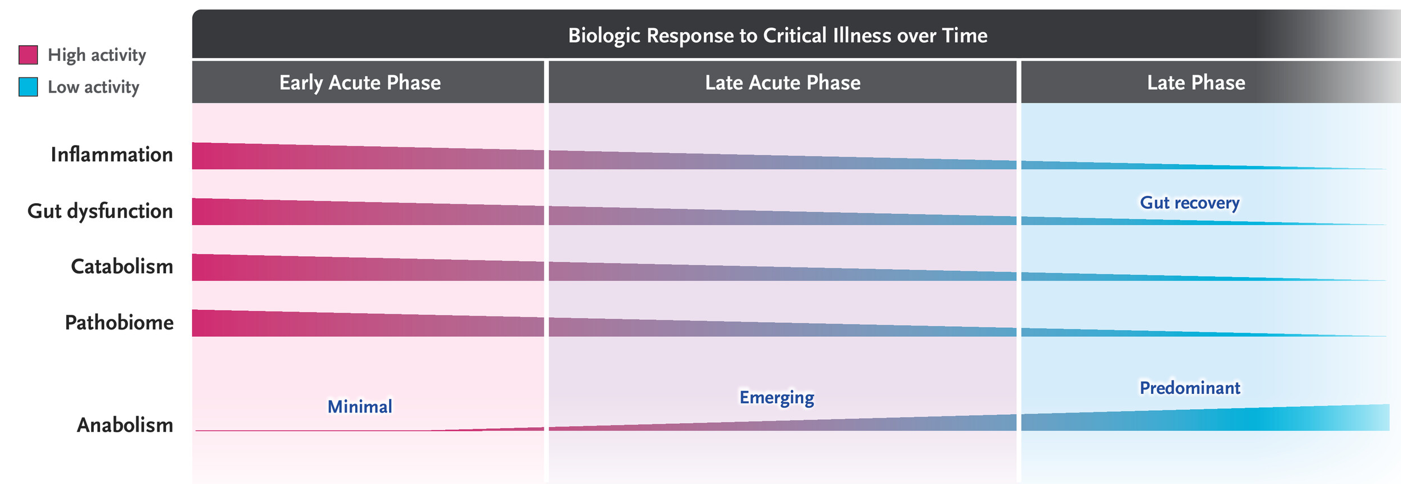
“Over the past four decades, survival from critical illness has improved but is marred by substantial loss of lean body mass, which is a major long-term consequence for survivors.4 Loss of lean body mass contributes to acquired muscle weakness and functional disability, which can persist for up to 5 years after the initial ICU admission.74 In healthy persons, resistance exercise combined with protein supplementation has been shown to elicit a greater anabolic response than protein supplementation alone.75“
My take: While this article is geared towards adult patients, my expectation is that the recommendations are largely applicable to pediatric patients. However, there is much more data in adults and pediatric care needs to be adjusted based on size.
Related blog posts:
- ESPGHAN Position Paper: Nutrition for Critically Ill Neonates
- TARGET Study: Does Energy-Dense Nutrition Improve Outcomes in the Critically Ill
- Detrimental Effect of Early Parenteral Nutrition in Critically-ill Children
- More is Not Better: Protein for Preterm Infants
Disclaimer: This blog, gutsandgrowth, assumes no responsibility for any use or operation of any method, product, instruction, concept or idea contained in the material herein or for any injury or damage to persons or property (whether products liability, negligence or otherwise) resulting from such use or operation. These blog posts are for educational purposes only. Specific dosing of medications (along with potential adverse effects) should be confirmed by prescribing physician. Because of rapid advances in the medical sciences, the gutsandgrowth blog cautions that independent verification should be made of diagnosis and drug dosages. The reader is solely responsible for the conduct of any suggested test or procedure. This content is not a substitute for medical advice, diagnosis or treatment provided by a qualified healthcare provider. Always seek the advice of your physician or other qualified health provider with any questions you may have regarding a condition