K McNevin, BE Rosete et al. J Pediatr Gastroenterol Nutr. 2026;82:1303–1308. A comparison between sodium bicarbonate and ethanol for central line locks in pediatric patients with intestinal failure
Background: Since 2022, there has been growing interest in the use of sodium bicarbonate locks. This dates back to 2018, when Belcher pharmaceuticals managed to get the FDA to designate Ethanol as an orphan drug with a subsequent increase in cost (at that time) to ~$10,000 for a 10-vial pack (10-day supply) (Related post: FDA ‘Safety Initiative’ Now Means an Ounce of Ethanol Costs $30,000). As such, many (?most) children with intestinal failure (IF) no longer had access to Ethanol Lock Therapy which prevents life-threatening infections to their central lines. Sodium bicarbonate has been shown to inhibit bacterial proliferation by impeding bacterial adherence and preventing biofilm formation.15, 16
Methods: A retrospective cohort study was conducted in pediatric patients with IF (19 children who received ethanol locks and 36 with sodium bicarbonate locks) followed by the Intestinal Rehabilitation Program at Seattle Children’s Hospital who received ethanol or sodium bicarbonate locks from 2018 to 2023.
Volume of the lock was calculated based on the documented catheter length when available and by drawing back from the line until blood return was obtained when length unavailable. Ethanol locks were withdrawn from the catheter after the dwell while SBL were flushed.
Key findings:
Rates of CLABSI were similar between the ethanol and sodium bicarbonate lock cohorts (2.03 per 1000 catheter days and 1.59 per 1000 catheter days; p = 0.617)
The sodium bicarbonate group had a lower rate of line replacement (2.21 in the EL group and 0.00 in the SBL group (p = 0.01) and trended toward a lower rate of line repair with1.94 in the EL group and 1.07 in the SBL group (p = 0.23).
Discussion:
“While alternatives exist and may also be effective, SBL has the added benefit of a substantially lower cost. At the time this manuscript was written, based on SCH mediation wholesaler data, the cost of 1 mL of ethanol (Ablysinol®) was $186.66 whereas 1 ml of sodium bicarbonate 8.4% was $0.18.”
My take (borrowed from the authors); Based on these data, SBL should be considered as a primary option for lock therapy in children with IF.
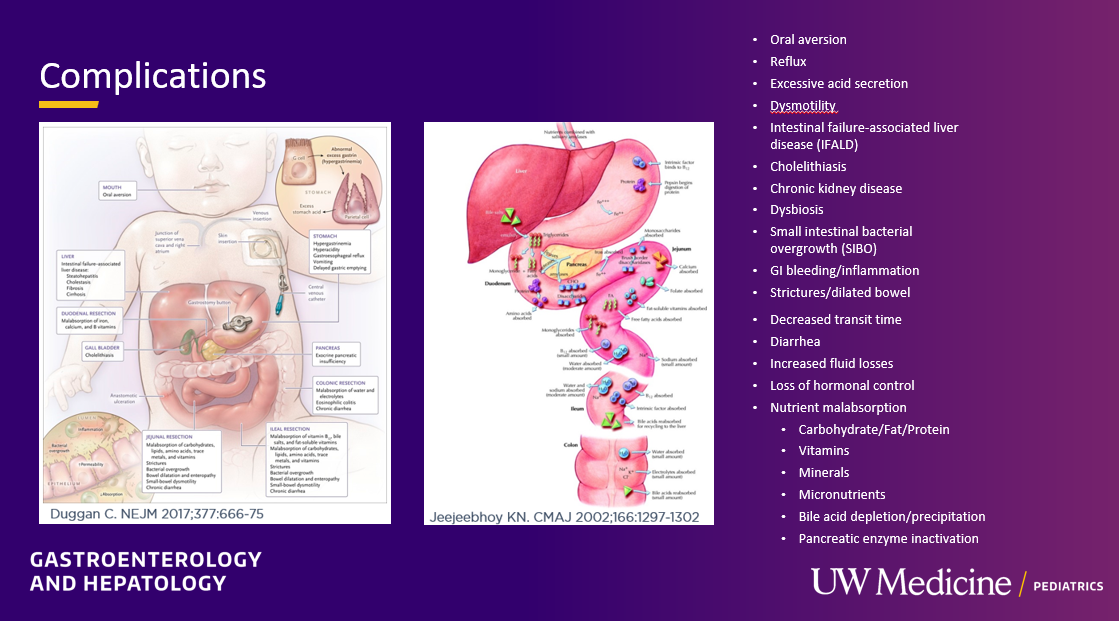
Two years ago, Dr. Wendel gave our group a great lecture on short bowel syndrome (SVS). One of the neonatologists in attendance invited her back to provide a state of the art update. While this 2026 lecture covered some of the same issues, there were important updates and insights.
My notes below may contain errors in transcription and in omission. In addition, the information provided is based on what is done in Seattle. However, there is not a lot of evidence for much of what is done in intestinal rehabilitation. Thus, there is variation in practice at different centers and what works for one patient might not work for another. Following my notes, I have included many of her slides.
Diet:
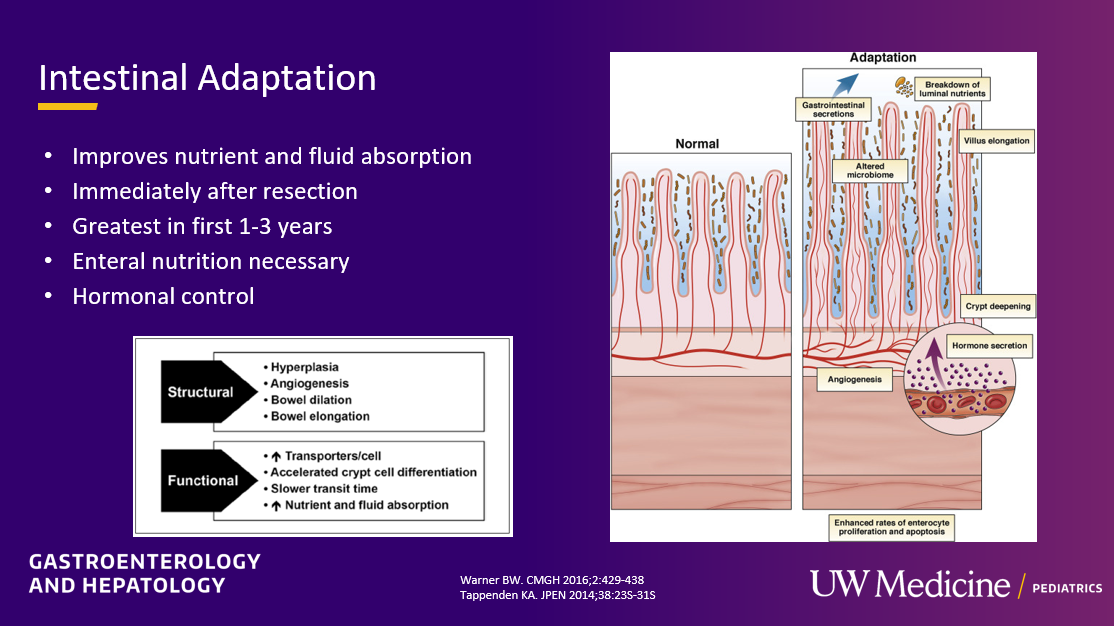
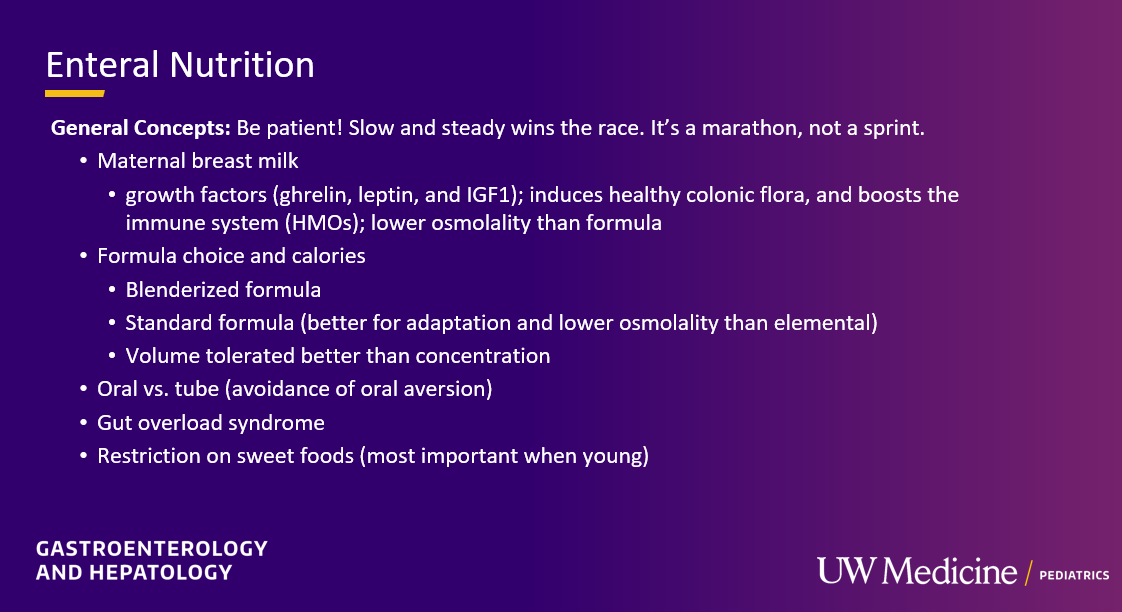
Enteral feedings promote intestinal adaptation. Pediatric patients with SBS require much higher calories with enteral nutrition and may have hyperphagia as a compensatory mechanism
Breastmilk and/or Standard formula likely help promote intestinal adaptation better than hydrolysates and elemental formulas. In addition, it may help reduce the development of food allergies which are increased in children with SBS
Oral feedings have many advantages over NG or GT feedings when feasible. The ability to consume solid foods is quite helpful in reducing diarrhea. Also, encouraging oral feedings may help reduce feeding aversions. As such, GT placement is avoided if possible in Seattle
Key diet advice: avoid sweet tasting food/drink, especially in the first few years of life while they are developing their palate/food preferences
Feed osmolarity/caloric density: Most children with SBS tolerate lower caloric density (15-20 cal/oz) and more volume orally rather than higher caloric density/lower volume feeds
Parenteral Nutrition:
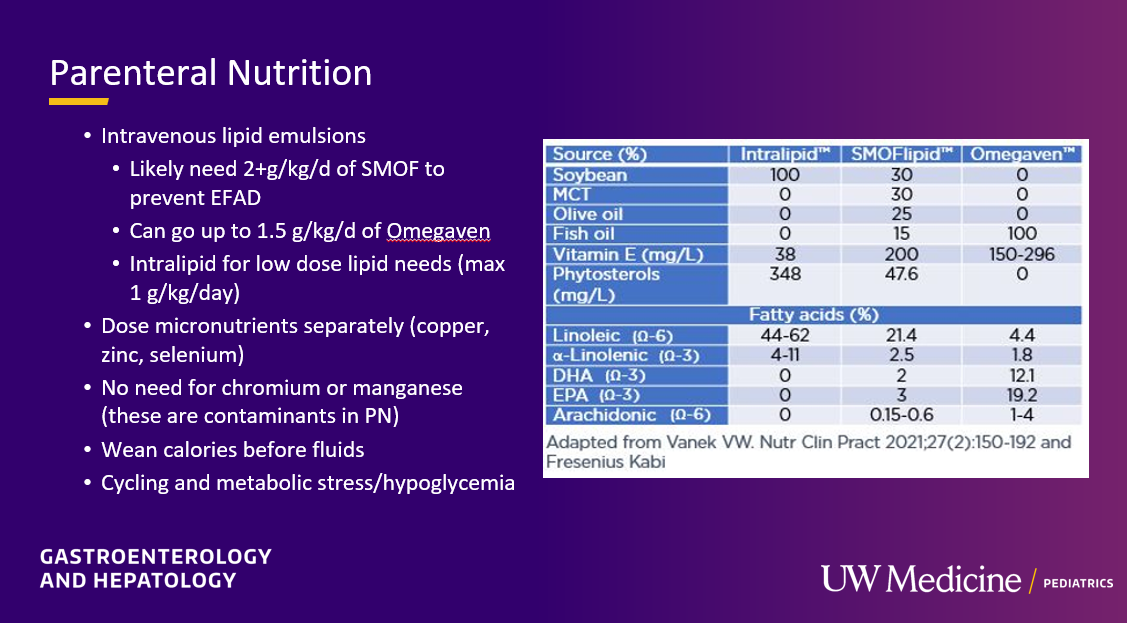
Lipid emulsions: SMOFlipid at 2 gm/day can help prevent essential fatty acid deficiency (EFA). Omegaven may need to be dosed at 1.5 gm/day to prevent EFA. If used for short-term and low dose, standard intralipid can be useful
HAL (aka TPN): Typically weaning calories is done before weaning volume. Cycling HAL (delivering over fewer hours) can be started prior to discharge. Watch for tolerance of the glucose infusion rate (JH: I prefer the terms HAL = hyperalimentation or PN=parenteral nutrition. TPN =total parenteral nutrition. Most patients are receiving parenteral nutrition but not total parenteral nutrition.)
Ostomy/Stool Output:
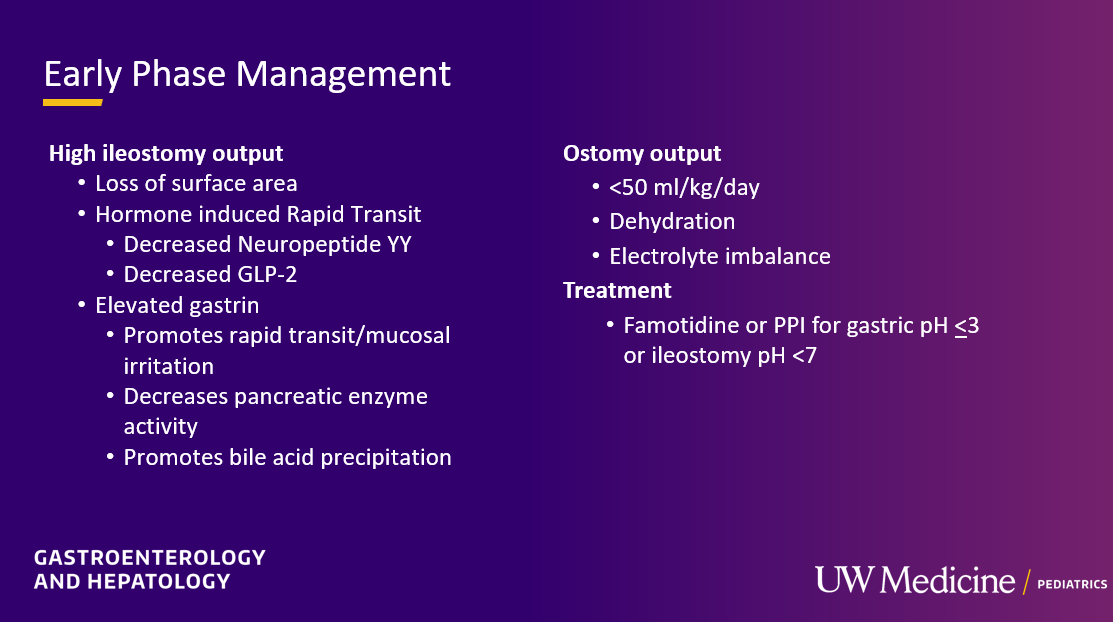
Output goals: Most pediatric patients can tolerate output of 50 mL/kg/day of ostomy output (if being supported by PN), though less than 30 mL/kg/day is more physiologic
Iron: Parenteral iron is typically needed. Seattle team prefers ferric carboxymaltose as it may deliver enough iron for 6-12 months in one infusion
Acid suppression: While acid suppression can sometimes be beneficial by lowering gastric output, if possible avoid long-term use as it may increase risk of bacterial overgrowth along with other infections
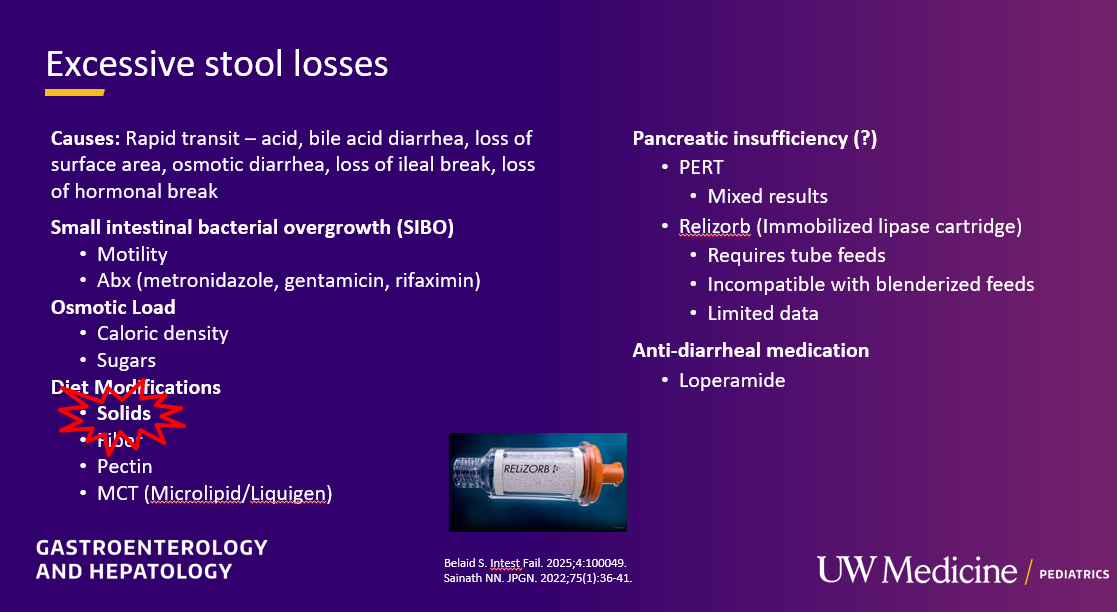
Excessive stool output (via stoma or per rectum) is when it is more than the patient’s baseline. This should prompt investigation for potential causes including diet/osmotic agent, bacterial overgrowth and infections
Pancreatic enzymes: It is unclear if pancreatic enzymes (PERT, Relizorb) will improve stool output due to lack of data
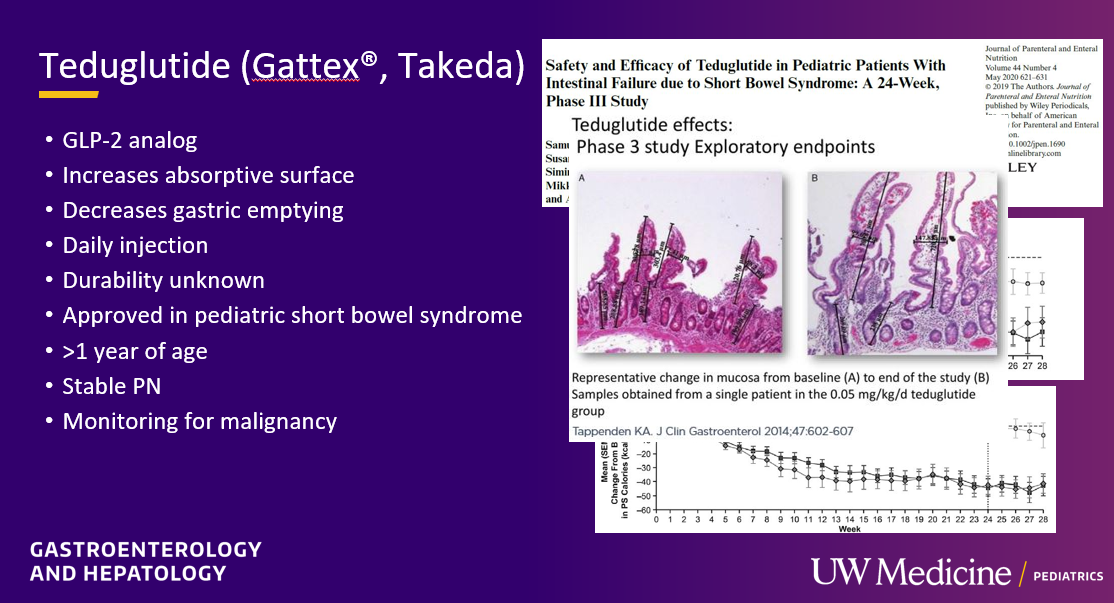
Teduglutide can reduce the need for HAL. It is a hormone (like insulin) and sustained effects are generally not seen when it is stopped. However, especially in patients close to coming off HAL, it may be beneficial
Monitoring:
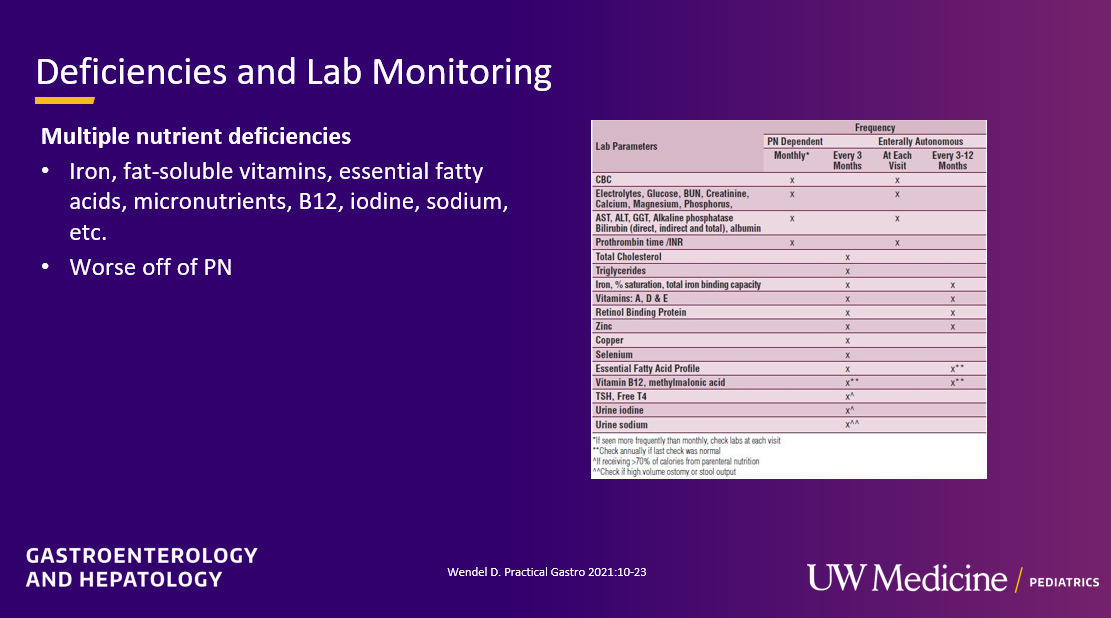
Nutrient deficiencies: Close monitoring for nutrient deficiencies is needed and often even more important when no longer receiving HAL
Urine sodium more than 30 is a goal. Sodium depletion interferes with growth and can contribute to other electrolye disturbances (eg. hypokalemia)
CLABSI:
Antibiotics: Treatment starts with a broad-spectrum antibiotic and wait to add specific gram-positive coverage unless ill-appearing or gram-positive organism starts growing. Vancomycin is not used frequently in Seattle due to concerns of renal toxicity. In patients with gram-positive infection, linezolid is often used
Minimum of 48 Hours For All Fevers: Everyone with SBS and with fever (greater than or equal to 100.4) stays for at least 48 hrs on broad spectrum IV antibiotics
Locks: Sodium bicarb locks help prevent CLABSI and appear to have similar infection prevention as ethanol locks. Ethanol locks have been difficult to get coverage.
SIBO:
Medications: Metronidazole is generally 1st line agent and gentamicin (IV formulation given enterally) is a 2nd line agent in Seattle. Rifaximin would be potentially their 1st line agent if it were easier to get covered
Disclaimer: This blog, gutsandgrowth, assumes no responsibility for any use or operation of any method, product, instruction, concept or idea contained in the material herein or for any injury or damage to persons or property (whether products liability, negligence or otherwise) resulting from such use or operation. These blog posts are for educational purposes only. Specific dosing of medications (along with potential adverse effects) should be confirmed by prescribing physician. Because of rapid advances in the medical sciences, the gutsandgrowth blog cautions that independent verification should be made of diagnosis and drug dosages. The reader is solely responsible for the conduct of any suggested test or procedure. This content is not a substitute for medical advice, diagnosis or treatment provided by a qualified healthcare provider. Always seek the advice of your physician or other qualified health provider with any questions you may have regarding a condition.