
J Wang et al. Clinical Gastroenterology and Hepatology, 2026; 24, 2742-2751. Open Access! Antiviral Therapy Reduces Hepatocellular Carcinoma and Cirrhosis Risk in Chinese Chronic Hepatitis B Patients With Mildly Elevated Alanine Aminotransferase
Background: “Generally, patients with normal or mildly elevated ALT levels have a low risk of disease progression and HCC, and regular follow-up instead of immediate antiviral therapy is recommended in most international CHB guidelines.3–6 However, emerging evidence suggests that a considerable proportion of patients with CHB and normal or mildly elevated ALT levels have significant histological changes and relatively high risk of HCC and cirrhosis, especially in individuals with high HBV DNA levels.7–13 The interim results from a recent randomized controlled trial (ATTENTION) add important evidence that early antiviral treatment with tenofovir alafenamide (TAF) reduces the risk of liver-related adverse events in patients with non-cirrhotic livers and normal or mildly elevated ALT levels compared with untreated patients.14“
Methods: This retrospective multicenter study included 3734 non-cirrhotic patients (mean age 36.5 yrs) with chronic hepatitis B (CHB) with ALT <2 × the upper limit of normal (ULN); ALT values used a more stringent definition of normal or mildly elevated ALT, as recommended by the 2025 AASLD guideline. To balance baseline characteristics between treated and untreated patients, inverse probability of treatment weighting (IPTW) and propensity score matching (PSM) were applied. Of all patients, 37.8% received nucleos(t)ide analogues (NA) treatment.
Key findings:
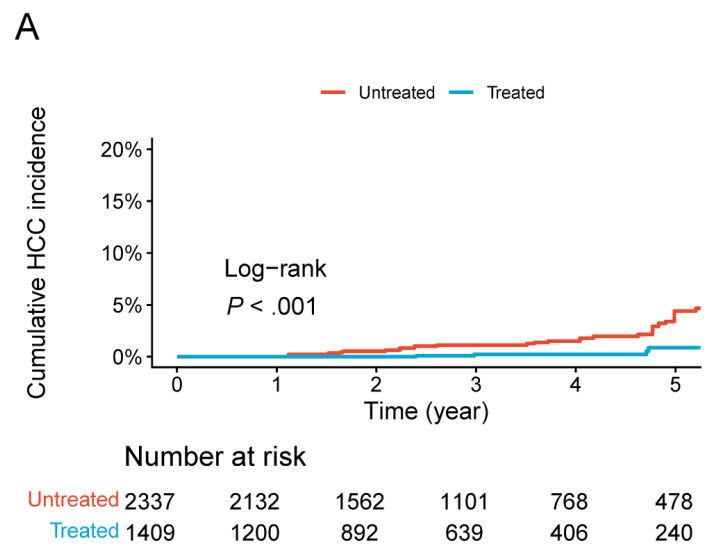
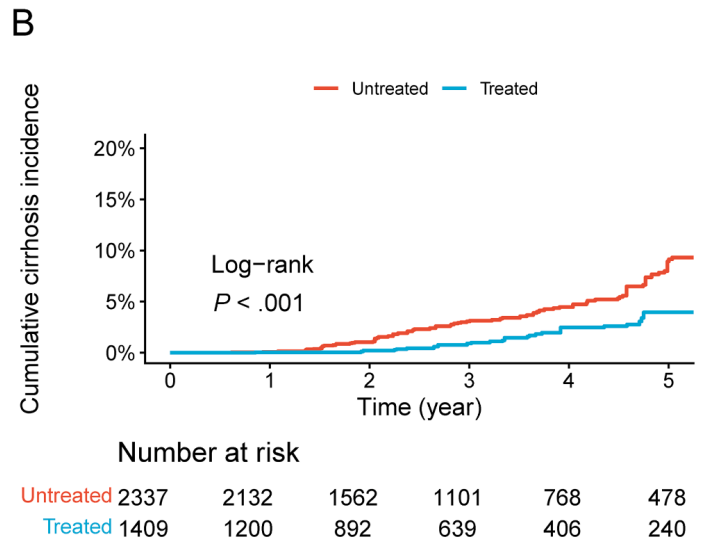
- After IPTW, treated patients had a significantly lower 5-year cumulative incidence of HCC (0.9% vs 4.4%; P < .001) and cirrhosis (4.0% vs 8.9%; P < .001) than untreated patients
Discussion:
“Our real-world evidence supports the ongoing shift toward a more proactive treatment approach for expanding eligibility to include patients with lower threshold ALT levels (>ULN) and HBV DNA (>2000 IU/mL), as recently recommended by the 2025 European Association for the Study of the Liver (EASL) guidelines and the 2024 World Health Organization (WHO) guidelines.4,6“
My take (borrowed in part from the authors): “NA therapy reduced the risk of HCC and cirrhosis in non-cirrhotic CHB patients with mildly elevated ALT levels (1–2 × ULN). These findings support the expansion of antiviral treatment criteria for the early treatment of these patients.” The benefits of NA therapy, though, may vary significantly in younger patients, especially those in the pediatric age group.
Related blog posts:
- Bepirovirsen: Breakthrough for Chronic Hepatitis B Infection
- Major Update on AASLD IDSA Practice Guideline on Treatment of Chronic Hepatitis B (Part 1)
- Major Update of AASLD IDSA Practice Guideline on Treatment of Chronic Hepatitis B (Part 2)
- Scientific Basis for Current Hepatitis B Vaccine Strategy (2025)
Disclaimer: This blog, gutsandgrowth, assumes no responsibility for any use or operation of any method, product, instruction, concept or idea contained in the material herein or for any injury or damage to persons or property (whether products liability, negligence or otherwise) resulting from such use or operation. These blog posts are for educational purposes only. Specific dosing of medications (along with potential adverse effects) should be confirmed by prescribing physician. Because of rapid advances in the medical sciences, the gutsandgrowth blog cautions that independent verification should be made of diagnosis and drug dosages. The reader is solely responsible for the conduct of any suggested test or procedure. This content is not a substitute for medical advice, diagnosis or treatment provided by a qualified healthcare provider. Always seek the advice of your physician or other qualified health provider with any questions you may have regarding a condition.

