Hepatitis B Therapy for Patients with Mildly Elevated Liver Enzymes Associated with Lower Risk of Cancer and Cirrhosis

J Wang et al. Clinical Gastroenterology and Hepatology, 2026; 24, 2742-2751. Open Access! Antiviral Therapy Reduces Hepatocellular Carcinoma and Cirrhosis Risk in Chinese Chronic Hepatitis B Patients With Mildly Elevated Alanine Aminotransferase

Background: “Generally, patients with normal or mildly elevated ALT levels have a low risk of disease progression and HCC, and regular follow-up instead of immediate antiviral therapy is recommended in most international CHB guidelines.3–6 However, emerging evidence suggests that a considerable proportion of patients with CHB and normal or mildly elevated ALT levels have significant histological changes and relatively high risk of HCC and cirrhosis, especially in individuals with high HBV DNA levels.7–13 The interim results from a recent randomized controlled trial (ATTENTION) add important evidence that early antiviral treatment with tenofovir alafenamide (TAF) reduces the risk of liver-related adverse events in patients with non-cirrhotic livers and normal or mildly elevated ALT levels compared with untreated patients.14“

Methods: This retrospective multicenter study included 3734 non-cirrhotic patients (mean age 36.5 yrs) with chronic hepatitis B (CHB) with ALT <2 × the upper limit of normal (ULN); ALT values used a more stringent definition of normal or mildly elevated ALT, as recommended by the 2025 AASLD guideline. To balance baseline characteristics between treated and untreated patients, inverse probability of treatment weighting (IPTW) and propensity score matching (PSM) were applied. Of all patients, 37.8% received nucleos(t)ide analogues (NA) treatment.

Key findings:

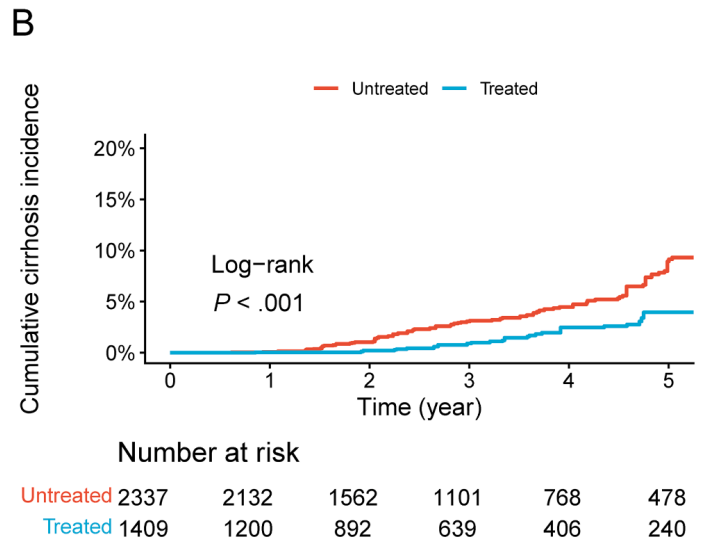
  • After IPTW, treated patients had a significantly lower 5-year cumulative incidence of HCC (0.9% vs 4.4%; P < .001) and cirrhosis (4.0% vs 8.9%; P < .001) than untreated patients
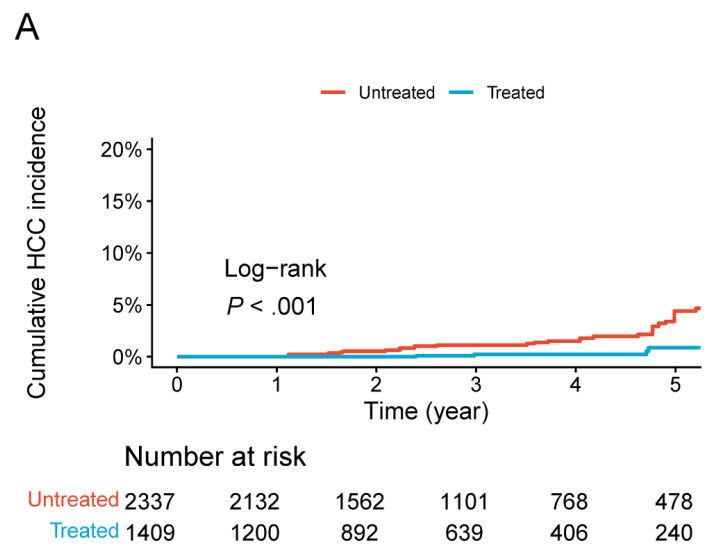
Comparison of cumulative incidence of HCC between treated group and untreated group with IPTW
Comparison of cumulative incidence of cirrhosis between treated group and untreated group with IPTW

Discussion:

“Our real-world evidence supports the ongoing shift toward a more proactive treatment approach for expanding eligibility to include patients with lower threshold ALT levels (>ULN) and HBV DNA (>2000 IU/mL), as recently recommended by the 2025 European Association for the Study of the Liver (EASL) guidelines and the 2024 World Health Organization (WHO) guidelines.4,6“

My take (borrowed in part from the authors): “NA therapy reduced the risk of HCC and cirrhosis in non-cirrhotic CHB patients with mildly elevated ALT levels (1–2 × ULN). These findings support the expansion of antiviral treatment criteria for the early treatment of these patients.” The benefits of NA therapy, though, may vary significantly in younger patients, especially those in the pediatric age group.

Related blog posts:

Disclaimer: This blog, gutsandgrowth, assumes no responsibility for any use or operation of any method, product, instruction, concept or idea contained in the material herein or for any injury or damage to persons or property (whether products liability, negligence or otherwise) resulting from such use or operation. These blog posts are for educational purposes only. Specific dosing of medications (along with potential adverse effects) should be confirmed by prescribing physician. Because of rapid advances in the medical sciences, the gutsandgrowth blog cautions that independent verification should be made of diagnosis and drug dosages. The reader is solely responsible for the conduct of any suggested test or procedure. This content is not a substitute for medical advice, diagnosis or treatment provided by a qualified healthcare provider. Always seek the advice of your physician or other qualified health provider with any questions you may have regarding a condition.
Bepirovirsen: Breakthrough for Chronic Hepatitis B Infection

  • J Hou et al. NEJM 2026. DOI: 10.1056/NEJMoa251513. Phase 3 Results of Bepirovirsen Treatment for Chronic Hepatitis B Virus Infection
  • A Lok. NEJM 2026. DOI: 10.1056/NEJMe2605575. A Major Step toward a Cure for Hepatitis B Infection (editorial)

Methods:

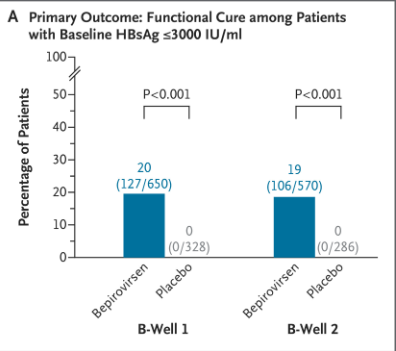
The B-Well trials enrolled patients with noncirrhotic chronic hepatitis B with suppressed HBV DNA during receipt of NA therapy and a low HBsAg level (≤3000 IU per milliliter). A total of 1838 patients were randomly assigned in a 2:1 ratio to receive bepirovirsen or placebo administered as a weekly subcutaneous injection for 24 weeks. The patients who had undetectable HBsAg and unquantifiable HBV DNA from week 24 to week 46 were eligible to discontinue NA therapy at week 48. The primary outcome of a functional cure was assessed at week 72.

Key findings:

  • In two phase 3 trials, 19% of patients with chronic hepatitis B infection had a functional cure with the antisense oligonucleotide bepirovirsen, 24 weeks after stopping all HBV treatment; functional cure was not seen with placebo.

Adverse events of grade 3 or higher were more common in the bepirovirsen groups than in the placebo groups (16% vs. 3%), with an increase in alanine aminotransferase (ALT) being the most common (6%) with bepirovirsen. In addition, adverse events requiring a dose interruption or delay were reported in 16% of the patients in the bepirovirsen groups as compared with 2% in the placebo groups.

My take:

  1. Currently, it is estimated that 240 million persons worldwide are living with chronic HBV. These trials represent a big step forward showing that many patients can achieve a functional cure (no detectable HBV) off all medications. Prevention of HBV, though, via immunization holds much more promise in reducing the number of individuals with poor outcomes due to HBV.
  2. Several of the adverse events — an increase in the levels of ALT and creatinine and a decrease in the platelet count — can be potentially serious if stringent monitoring (every 1 to 2 weeks) and strict trial-adopted guidelines regarding the pausing of therapy are not followed.

Related blog posts:

Effectiveness of Xalnesiran in Treating HBV Infection

JHW Zhang et al. NEJM 391: 2098-2109. Xalnesiran with or without an Immunomodulator in Chronic Hepatitis B

Background: Xalnesiran, a small interfering RNA molecule that targets a conserved region of the hepatitis B virus (HBV) genome and silences multiple HBV transcripts.

Methods: This was a phase 2, multicenter, randomized, controlled, adaptive, open-label platform trial that included the evaluation of 48 weeks of treatment with xalnesiran at a dose of 100 mg (group 1), xalnesiran at a dose of 200 mg (group 2), xalnesiran at a dose of 200 mg plus 150 mg of ruzotolimod (group 3), xalnesiran at a dose of 200 mg plus 180 μg of pegylated interferon alfa-2a (group 4), or a nucleoside or nucleotide analogue (NA) alone (group 5) in participants with chronic HBV infection who had virologic suppression with NA therapy. The primary efficacy end point was hepatitis B surface antigen (HBsAg) loss (HBsAg level, <0.05 IU per milliliter) at 24 weeks after the end of treatment.

Key findings:

In the associated editorial by Janssen et al. (NEJM 2024;391:2163-2168), the authors note that “nucleoside or nucleotide analogues currently form the backbone of therapy for most patients with chronic HBV infection who have access to treatment…However, treatment must be continued on a long-term basis…Although treatment with nucleoside or nucleotide analogues is associated with a decrease in the severity of liver fibrosis and reduction of liver-related complications, the risk of hepatocellular carcinoma persists at the population level because functional cure is not achieved in most patients.”

“Further data are needed on the durability of the effect achieved with new agents that directly interfere with HBsAg production. The results reported by Hou et al. indicate a risk of relapse, undermining the choice of functional cure as an end point for these agents, at least when assessed relatively early after the withdrawal of therapy…Hou et al. observed that functional cure was achieved only in patients with a baseline HBsAg level of less than 1000 IU per milliliter. Although a substantial proportion of patients have similarly low HBsAg levels, patients with higher HBsAg levels have the greatest risk of adverse liver-related outcomes and thus have the most to gain from new therapies.”

My take: While this study represents important progress, it is not likely to change current treatment strategies in the near-term. Even better than treating HBV is preventing HBV. The best strategy for reducing HBV mortality and morbidity still relies of wide-scale use of the highly effective HBV vaccine.

Related blog posts:

Withdrawal of Chronic Hepatitis B Therapy

G Hirode et al. Gastroenterol 2022; 162: 757-771. Off-Therapy Response After Nucleos(t)ide Analogue Withdrawal in Patients With Chronic Hepatitis B: An International, Multicenter, Multiethnic Cohort (RETRACT-B Study)

Methods: This cohort study included patients (n=1552) with virally-suppressed chronic hepatitis B (CHB) who were hepatitis B e antigen (HBeAg)–negative (and without advanced liver disease) and stopped nucleos(t)ide analogue (NA) therapy

Key findings:

  • Cumulative probability of HBsAg loss was 3.2% at 12 months and 13.0% at 48 months of follow-up
  • HBsAg loss was higher among Whites (vs Asians: subdistribution hazard ratio, 6.8; P < .001) and among patients with HBsAg levels <100 IU/mL at end of therapy (vs ≥100 IU/mL: subdistribution hazard ratio, 22.5; P < .001)

My take: This study identifies subsets with HBeAg-negative CHB who may benefit from NA therapy cessation.

Related blog posts:

Big Advance for Hepatitis B, Plus One

A recent open-label randomized controlled study (M Bazinet et al. Gastroenterol 2020; 158: 2180-94.  https://doi.org/10.1053/j.gastro.2020.02.058) showed that the addition of nucleic acid polymers (NAPs) which inhibit assembly and secretion of hepatitis B virus (HBV) subviral particles significantly improved outcomes in a phase 2 HBV trial (n=40).

Full text: Safety and Efficacy of 48 Weeks REP 2139 or REP 2165, Tenofovir Disoproxil, and Pegylated Interferon Alfa-2a in Patients With Chronic HBV Infection Naïve to Nucleos(t)ide Therapy

NAP therapy was administered intravenously once a week.

Key findings:

  • During the first 24 weeks of tenofovir (TDF) and peg-Interferon (pegIFN) administration, significantly higher proportions of patients in NAP groups had decreases in HBsAg to below 1 IU/mL (P < .001 vs control) and HBsAg seroconversion (P = .046 vs control).
  • At the time patients completed the TDF + pegIFN + NAP regimen, HBsAg levels were 0.05 IU/mL or lower in 24/40 participants
  • During 48 weeks of treatment-free follow-up, virologic control persisted in 13 of 40 participants (2 lost to follow-up after 24 weeks), whereas functional cure persisted in 14 of 40 participants (all completing 48 weeks of follow-up) with persistent HBsAg seroconversion

The associated editorial (pg 2051-4 by D Durantel, T Asselah) makes the following points:

  • The authors call for larger multicenter studies with longer followup.  They note that more evaluation is needed to determine if seroconversion is sustained.
  • It remains unclear whether PEG-IFN is needed. TDF/NAP therapy without PEG-IFN was not studied.
  • They state that more information about flares during treatment are needed.  In this study, flares were safe and associated with beneficial outcomes.  It is not clear if therapy flares would be detrimental in those with advanced fibrosis.
  • Optimistically, they state that there are multiple competing therapies being studied (eg. small interfering RNA, and small molecule HBs-RNA destabilizer) which could be more easily administered.

My take (borrowed from authors): In a phase 2 randomized trial, “we found that addition of NAPs to TDF + pegIFN did not alter tolerability and significantly increased rates of HBsAg loss and HBsAg seroconversion during therapy and functional cure after therapy.”

A related commentary (Gastroenterol 2020; 158: 2028-32) calls for investment/study of treatment for immune-tolerant patients along with curative therapy when it becomes available.  The authors also argue for a study of long-term viral suppression with either entecavir or tenofovir alafenamide.

Plus one: N Rodriguez-Baez et al. JPGN 2020; 71: 99-105.  This study examined liver histology from 134 liver biopsies from treatment-naive children with chronic hepatitis B infection. 60% acquired infection vertically, 69% were HBeAg-positive.   Interface hepatitis was mild in 31%, moderate in 61% and severe in 6%; lobular inflammation was mild in 54%, moderate in 29% and severe in 7%. Fibrosis: 18% had no fibrosis, 59% had portal fibrosis without bridging, 19% had bridging fibrosis and 4% had cirrhosis. Alanine amnotransferase was a fairly good indicator of the severity of hepatic inflammation and extent of fibrosis.

Related blog posts:

When Can You Safely Stop Nucleos(t)ide Treatment for Hepatitis B? & Reassessment of Ventilator Success for COVID-19

A recent commentary (KS Liem et al. Gastroenterol 2020; 158: 1185-90) reviews the challenge of stopping nucleos(t)ide (NUC) treatment for chronic hepatitis B viral (HBV) infection.

Key points:

  • NUC therapy “prevents liver failure, decreases the risk of hepatocellular carcinoma, and has excellent safety”
  • Yet, there are “low rates of on-therapy functional cure” which is indicated by loss of HBV surface antigen [HBsAg]
  • Divergent recommendations: Guidelines “recommend NCU therapy in noncirrhoitic patients can be stopped after >3 years of virologic suppression (EASL), after ≥1 year of undetectable HBV DNA and 2 years of treatment (APASL), or only after achieving HBsAg loss (AASLD)
  • “Relapse is highly variable, but is especially dangerous in patients with stage 3 fibrosis or cirrhosis”
  • “Hepatic decompensation is relatively rare but is best prevented by continuing NUC therapy in all cirrhotics or those with advanced fibrosis.”
  • In a randomized controlled trial in Canada, 72 weeks after NUC discontinuation, “only 33% of pretreatment HBeAg-negative patients had a sustained off-treatment response.”
  • “The major guidelines suggest that noncirrhotic pretreatment HBeAg-positive patients can stop NUC therapy after reaching HBeAg seroconversion with undetectable HBV DNA and completing 1-3 years of consolidation therapy…these recommendations are of poor quality.”
  • Three issues need to be studied: retreatment criteria in those who stop NUC therapy, biomarkers to distinguish beneficial from detrimental flares, and better criteria for identifying those who are likely to decompensate.

My take: It is hard to argue with the author’s conclusion that “without the tools for proper patient selection, potential benefits of NUC discontinuation do not outweigh limitations of long-term NUC therapy for most patients in clinical practice.”  This is due to the safety of NUC therapy and the frequency of relapse when NUC is stopped.

Related blog posts:


From NPR: New Evidence Suggests COVID-19 Patients On Ventilators Usually Survive

An excerpt:

A study of some New York hospitals seemed to show a mortality rate of 88%. But Cooke and others say the New York figure was misleading because the analysis included only patients who had either died or been discharged. “So folks who were actually in the midst of fighting their illness were not being included in the statistic of patients who were still alive,” he says….

The mortality rate among 165 COVID-19 patients placed on a ventilator at Emory was just under 30%. And unlike the New York study, only a few patients were still on a ventilator when the data were collected.

Curbside Humor:

Also: What do you get from a pampered cow? Spoiled milk!


Is Tenofovir the Best Medication for Hepatitis B Infection?

Two recent studies have suggested that tenofovir may be more effective for hepatitis B virus (HBV) infections.

  • T C-F Yip et al. Gastroenterol 2020; 158: 215-25.
  • J Choi et al. JAMA Oncol 2019; 5: 30-6. (Reviewed in a commentary by P Lampertico, M Colombo. Gastroenterol 2019; 157: 1682-88)

In the first retrospective study from Hong Kong, the authors analyzed 29,350 consecutive treated-patients  (mean age 52.9 years).  1309 were treated with tenofovir disoproxil fumarate (TDV) and 28,041 were treated with entecavir. Key findings:

  • TDF-treated patients were younger (mean age 43.2 years vs. 53.4 years) and had less cirrhosis at baseline (2.9% vs. 13.6%).
  • After a median follow-up of 3.6 years, 8 TDF-treated patients (0.6%) and 1386 (4.9%) of entecavir-treated patients developed hepatocellular carcinoma (HCC).  The authors note that TDF maintained a lower rate of HCC after propensity score weighting (hazard ratio of 0.36)

The second study was a nationwide population cohort database with >24,000 patients –all with ALT >80. Key finding:

  • HCC was significantly lower in TDF group than in the entecavir group, the percent person-years being 0.64 compared to 1.06; though, there was not a lower mortality rate or a lower liver transplantation rate.

The commentary associated with the latter study makes the following points:

  • Both TDF and entecavir could prevent “the incidence and mortality of HCC …in >85% of patients who received [them] for years.”
  • Studies comparing TDF and entecavir have come up with conflicting results.  “Three studies in Korea, the U.S, and Europe reported no differences between NAs even after patient matching by a propensity score.”
  • “Cumulatively, all these studies deliver the reassuring message of a robust risk reduction of liver cancer taking place in patients with chronic hepatitis B who experience prolonged virus suppression after NA therapy, but currently they fail to provide convincing evidence that one NA is superior to the other one in determining such clinical benefit.”

My take: Tenofovir may be better but the answer is not definitive; due to lack of randomization, there may still be confounding variables in which sicker patients are receiving entecavir and this could be contributing to the difference in outcomes.  Also, in patients with bone disease and renal impairment, tenofovir alafenamide (TAF) or entecavir is recommended.

Related blog posts:

From P’tit Train Du Nord Linear Park

Liver Shorts -January 2020

S Nagai et al. Clin Gastroenterol Hepatol 2019; 17: 2759-68. For patients who underwent liver transplantation during 2016–2017, a significantly lower proportion of patients with NASH survived for 1 year after transplantation than patients with HCV (P = .004) or ALD (P < .001). 1-year patient survival rates: NASH 90.4%, HCV 92.8%, ALD 93.5%. Full Text: Increased Risk of Death in First Year After Liver Transplantation Among Patients With Nonalcoholic Steatohepatitis vs Liver Disease of Other Etiologies

JE Squires et al. JPGN 2020; 70: 79-86.  Using a prospective, longitudinal database, this study from ChiLDReN network with 93 children with biliary atresia and native liver found that NO increased prevalence of neurodevelopmental delays. Markers of advanced liver disease (high bilirubin/GGT for those ≤5 yrs, and portal hypertension for those >5 years) did negatively affect neurodevelopmental measures.

C Jaramillo et al. JPGN 2020; 70: 87-92.  This pilot study with 21 patients found that degree of fibrosis, quantified by collagen hybridizing peptide, at time of Kasai, was associated with the risk of requiring a liver transplantation by age 4 years.  Total bilirubin >2 mg/dL and Albumin ❤ g/dL at 3 months post-Kasai were also associated significantly with need for liver transplantation.

H-S Chen et al. Hepatology 2019; 70: 1903-12. In this study from Taiwan with 182 children (median age of 10.6 at enrollment) with hepatitis B and a normal ALT, a baseline anti-HBc titer of >500 IU/mL was associated with spontaneous HBeAg seroconversion with hazard ratio of 2.81.  Over the median follow-up of 19.8 years, 85 subjects (46.7%) had HBeAg seroconversion. Thus, anit-HBc reflects anti-HBV immune response in the HBeAg-positive patients with normal ALT.

#NASPGHAN19 Liver Symposium (Part 2)

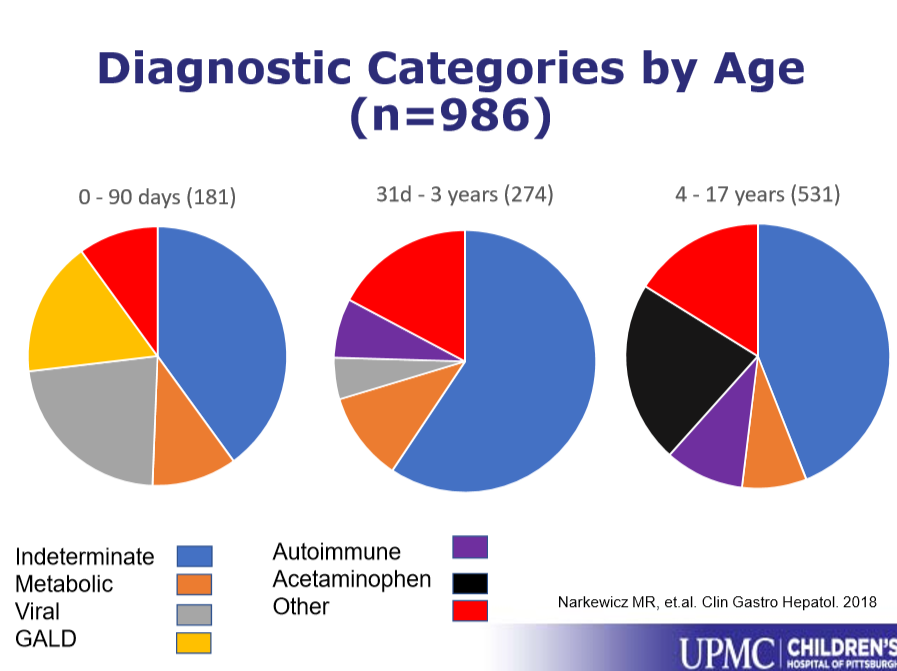
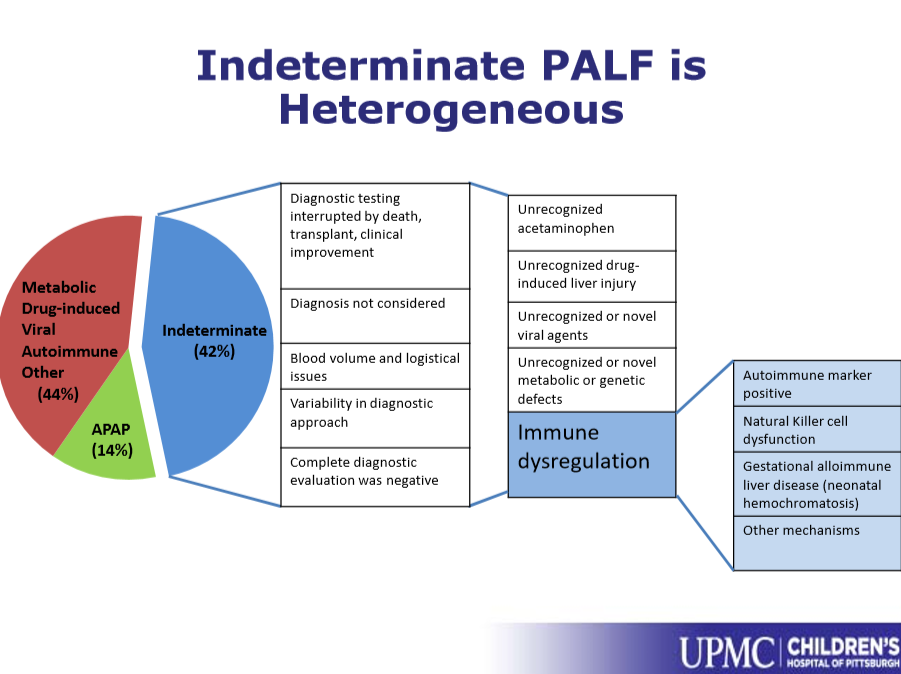
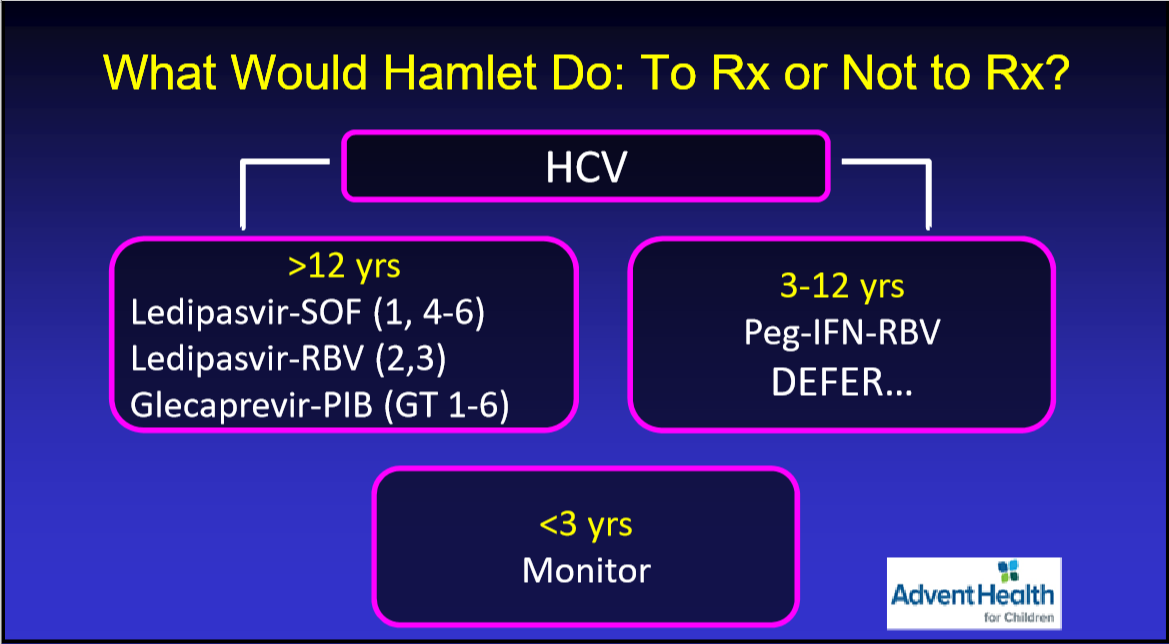
Although I was unable to attend this year’s liver symposium at NASPGHAN19, I reviewed the lecture notes.  There is some terrific content.  Here are some of the slides (borrowed with permission from NASPGHAN).

Link to complete NASPGHAN Chronic Liver Disease Symposium 2019

SESSION II – FRONTIERS IN LIVER THERAPEUTICS

Keynote Speaker: Outcomes for the future: How do we improve on the status quo? Ronald J. Sokol, MD, FAASLD, Children’s Hospital Colorado  (SLIDES NOT AVAILABLE in onliine handout)

Recognition and stabilization of the pediatric patient with acute liver failure Robert Squires MD Children’s Hospital of Pittsburgh at UPMC

Should I offer treatment for my patients with Hepatitis B or Hepatitis C? Regino P. Gonzalez-Peralta MD, AdventHealth for Children

Are there any medical therapies for NASH?   Marialena Mouzaki, MD, Cincinnati Children’s Hospital Medical Center

This lecture describes a lot of the emerging pharmacologic treatments; none of these are currently recommended.

Liver Briefs -September 2019

P Rosenthal et al. Hepatology 2019; 69: 2326-37.  This study examined the efficacy and safety of combined entecavir and Peginterferon for immune-tolerant chronic hepatitis B-infected children (n=60). 48 weeks after completing treatment (week 96), 2 children (3%) achieved the primary outcome of undetectable HBeAg with HBV DNA levels <1000 IU/mL.  These two children were also HBsAg negative/anti-HBs positive. In the other children (55 completed study), the ALT and HBV DNA levels were similar to baseline.  37 children experienced adverse events.  My take: Entecavir/peginterferon is not very effective in immune-tolerant children infected with chronic HBV.

DL Thomas. NEJM 2019; 380: 2041-50. This article reviews the pathway to the global elimination of chronic hepatitis.  Currently, it is estimated that hepatitis C virus (HCV) and hepatitis B virus (HBV) kill more than 1 million persons each year. “In fact, by 2040, deaths from chronic hepatitis are projected to exceed the combined mortality associated with HIV infection, tuberculosis, and malaria.”

JR Dillman et al. J Pediatr 2019; 212: 60-5. This study with 41 patients and 13 patients with biliary atresia prospectively assessed ultrasound shear wave elastography (SWE). The authors found that SWE with a cut-off value of >1.84 m/s had 92% sensitivity and 79% specificity.  Also, in their cohort, GGT >320 had a sensitivity of 100% and specificity of 78%.

Z Younossi et al. Hepatology 2019; 69: 2672-82.  This review provides a global perspective of NAFLD.  25% of the world’s population is currently thought to have NAFLD with highest prevalence in South America at 30.45% and lowest in Africa at 13.5%. This article usggest North America to have 24.1% prevalence rate.