Reducing Financial Toxicity of New Drugs

PA Ubel et al. NEJM 2025; 392: 729-731. Out of Pocket Getting Out of Hand — Reducing the Financial Toxicity of Rapidly Approved Drugs

Key points:

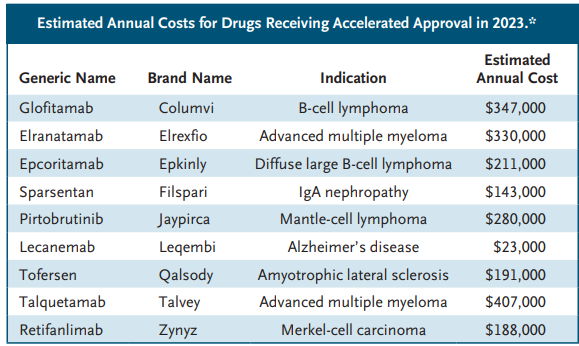
  • In 2023, the median list price of new drugs was $300,000 per year. The FDA does not consider drug cost as part of its approval process.
  • Many new drugs have uncertain benefits despite FDA approval. “Since the FDA is authorized to approve drug labeling, it could consistently require that labeling indicate when a drug’s approval was based on results from uncontrolled trials or from trials with surrogate measures…might reduce the chances that patients, seeing that a drug has FDA approval, will mistakenly assume that it has been proven to provide substantial benefits..[however] . In the face of serious illness, people frequently prefer action to inaction, even when they would ultimately be harmed by taking action.”
  • Optimally, “congress would need to pass legislation giving the agency authority to consider financial harms when making decisions about drugs with unclear benefits, and the FDA would need to gain expertise in evaluating the budgetary implications of new drugs.”

My take: The financial burdens of newer medications leave patients unable to afford other necessary medical and non-medical expenses. This is especially problematic when a new medication offers minimal benefit.

Related blog posts:

Why the Proposed Medicaid Cuts Matter: Children and Other Vulnerable Populations Will Suffer

E Park. NEJM 2025; DOI: 10.1056/NEJMp2501855. Medicaid on the Chopping Block

An excerpt:

A top priority for Congress and President Donald Trump is extending and expanding tax cuts expiring at the end of 2025…Republican leaders in the House intend to make at least $880 billion in Medicaid cuts over 10 years to offset some of the tax cuts’ $4.5 trillion cost…

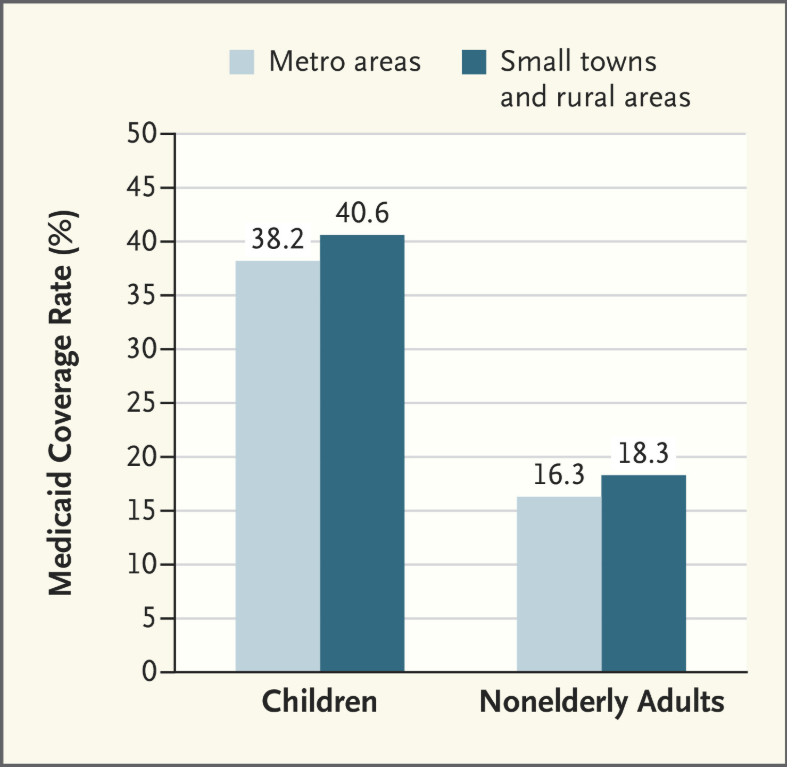
Medicaid, however, is more essential than it has ever been. It provides affordable, comprehensive health coverage to more than 72 million low-income Americans1…Medicaid covers about 40% of all children and births in the United States. It covers more than one third of people with disabilities and 44% of children with special health care needs…

Medicaid is especially vital for rural communities. Residents of small towns and rural areas disproportionately rely on Medicaid…

Under many of these proposals, states would face drastic reductions in federal Medicaid funding….states would have to choose among three painful options. They could dramatically raise income and sales taxes. They could deeply cut other parts of their budgets, such as budgets for K–12 education and higher education, which account for about 43% of states’ own spending. Or — the option most states would have to choose — they could slash their Medicaid programs by substantially narrowing Medicaid eligibility, restricting benefits, making it harder for eligible people to enroll in and renew coverage, and making sharp cuts to already low reimbursement rates for hospitals, physicians, and nursing homes.

As a result, many low-income children, parents, people with disabilities, older adults, and others would be at risk for becoming uninsured and forgoing needed care…As opposition becomes increasingly public, widespread, and vocal, congressional Republican leaders could ultimately view severe Medicaid cuts as too politically difficult and decide they need to drop them from budget reconciliation.

My take: This article elaborates on all the ways that Congress could curtail Medicaid spending. Ultimately, all of them will leave the states with additional costs if they are to maintain current coverage levels. Even with the proposed cuts to Medicaid, the tax cut plan is projected to add two trillion dollars each year during this administration.

Related article: 3/2/25 Patricia Murphy, AJC: Medicaid cuts from Washington would gut this Georgia pediatrician’s practice (behind paywall) “A South Atlanta pediatrician [Dr. Dorsey Norwood] says 85% of her patients are covered by government health care program…For at least one Georgia pediatrician, cutting Medicaid benefits for her young patients would leave a wound in her practice that even she couldn’t heal.”

Delays by Insurance Companies Result in Worse Outcomes for Children with Inflammatory Bowel Disease

Briefly noted: Brad D. Constant MD, MSCSJeremy Adler MD, MScBenjamin D. Gold MD, et al. JPGN Reports. 2025;1–11. Open Access! National perspectives of barriers by insurance and pharmacy benefit managers in pediatric inflammatory bowel disease

Key findings:

  • In this sample of 113 pediatric patients with IBD, 77% of initial denials for biologic therapy were ultimately approved.
  • The median time to receiving medication was 18 days, with administrative time (prior authorization and appeal) requiring a median of 180 min.
  • More than half (60%) of patients experienced adverse outcomes or worsened quality of life due to delays in treatment.

My take (borrowed in part from authors): “Barriers to treatment by payors, of which 77% are ultimately approved, result in substantive treatment delay, patient harm, and hospitalization.” While 18 days (or more) may not seem like a lot, it is when you know the right therapy at the outset and delays lead to suffering and worsened outcomes. In addition, the insurance companies and PBMs (pharmacy benefit managers) know that exhausting valuable physician/office staff time is a disincentive. It makes physicians determine whether it is worth the fight.

Related blog posts:

Wat Arun (Temple of Dawn), Bangkok

Mark Cuban: Disrupting American Healthcare

For those of you with an interest in improving our healthcare system, I highly recommend either Eric Topol’s Ground Truths Podcast with Mark Cuban or the transcription of their discussion. Both can be found here: Mark Cuban: A Master Disrupter for American Healthcare

Mark Cuban describes the expansion of his generic pharmacy business Cost Plus Drugs. But the main focus is on other aspects of healthcare like pharmacy benefits managers, insurance companies and improving patient access.

“So a big part of my time these days is going to CEOs and sitting with them and explaining to them that you’re getting ripped off on both your pharmacy and your healthcare side….”

“Because when you see stories like we’ve all seen in news of a big healthcare, a BUCA healthcare (Blue Cross Blue Shield (BCBS), UnitedHealth, Cigna, and Aetna/CVS) plan with all the pre-authorizations and denials, typically they’re not even taking the insurance risk. They’re acting as the TPA (third party administrator) as the claims processor effectively for whoever hired them. And it goes back again, just like I talked about before. And as long as CMS hires or allows or accepts these BUCAs with these plans for Medicare for the ACA (Affordable care Act), whatever it may be, it’s not going to work. As long as self-insured employers and the 50 million lives they cover hire these BUCAs to act as the TPAs, not as insurance companies and give them leeway on what to approve and what to authorize and what not to authorize. The system’s going to be a mess, and that’s where we are today.”

In response to a post by Elon Musk that Americans are not getting a good deal with their healthcare expenditures, Mark Cuban posted the following:

“Because we’re cutting out all those ancillary costs and credit risk, I want Medicare pricing. Now the initial response is, well, Medicare prices, that’s awful. We can’t do it. Well, when you really think about the cost and operating costs of a hospital, it’s not the doctors, it’s not the facilities, it’s all the administration that cost all the money. It’s all the credit risks that cost all the money. And so, if you remove that credit risk and all the administration, all those people, all that real estate, all those benefits and overhead associated with them, now all of a sudden selling at a Medicare price for that hip replacement is really profitable.”

He also describes how his employees pay premiums but no additional costs and how to get to universal health coverage. “Why do we need insurance companies if they’re not even truly acting as insurance companies?

Related blog posts:

Stopping Insurance Coverage in the Middle of Your Procedure

Recently, an example of the arbitrary and poorly-conceived nature of many insurance policies played out publicly in the past few weeks.

USAToday 12/5/24: Anthem BCBS drops controversial new plan to cap anesthesia coverage after backlash

Excerpts:

“After receiving intense backlash, a health insurance provider has rolled back its plan to implement a new policy that would have limited its coverage for anesthesia used during procedures…According to a description of the policy on Anthem’s website, billing guidelines would change in some states beginning in February 2025 to cap the amount of anesthesia care the company would cover based on time limits pre-set by the insurer…This would mean that if a patient’s procedure ran long, the insurer would not pay for the care.”

“The proposition concerned not only members of the public, who began making tongue-in-cheek comments online about being woken up mid-surgery to swipe a credit card, but professional organizations, doctors and lawmakers alike.

[The goal was]  “implementing practices to “safeguard” its insured against “potential anesthesia provider overbilling”…“This is just the latest in a long line of appalling behavior by commercial health insurers looking to drive their profits up at the expense of patients and physicians providing essential care,” said ASA president Donald E. Arnold”

My take: The surprising part about this story is that the policy was reversed before implementation. Insurance companies are adept at implementing cost-saving policies that do not consider the health consequences.

Related blog posts:

I Call BS -Consolidation in GI is Not a Good Trend

D Marino et al. Clin Gastroenterol Hepatol 2024: 22: 1770-1773. Trends in Consolidation of Gastroenterology Practices

This article describes trends and rationale for consolidation of gastroenterology practices.

Trends:

  • “From 2012 to 2022, the share of physicians who work in private practices dropped 13 percentage points, from 60.1% to 46.7%.” (In the 1980s, 76% of physicians owned their practice)
  • “Ownership among physicians younger than 45 dropped more than 12 percentage points from 2012 to 2022, from 44.3% to 31.7%.”

My Views (in bold) on the Authors’ Rationales for Consolidation:

  • “The potential advantages of consolidation include achieving economies of scale, increasing choices for patients beyond large hospital-based systems of care, enhancing the infrastructure to support high-quality value-based independent practices…whereas drawbacks …diminished authority.” The driving force for consolidation is money not improvement in “high-quality value-based” care. PE investors are tapping into health care to extract profits from the healthcare sector.
  • “The long-term implications for individual practices, physicians and patient care remain uncertain.” Some of the implications are already evident –increased costs for patients and without improvement in quality. PE consolidation does allow improved negotiation with insurers and hospitals.
  • “Large PE-backed groups provide resources to help independent practices stay independent.” This is quite a paradox. PE acquisition is a not a way to maintain independence.

My take: While consolidation, driven by financial incentives, is affecting all areas of healthcare, it is NOT resulting in improvement in patient care or physician satisfaction. This is true whether consolidation is acquisition by private equity or by hospitals. This article’s attempt to provide a different narrative is BS.

As an aside, in some ways, acquisition by hospitals is harder to justify than acquisition by PE; hospitals state that their main goal is patient care. Yet, when hospitals consolidate physician practices, this often runs counter to that goal by increasing costs for patients without improvement in quality.

Related blog posts:

AI Skirmish in Prior Authorizations

Teddy Rosenbluth NYT 7/10/24: In Constant Battle With Insurers, Doctors Reach for a Cudgel: A.I.

An excerpt:

For a growing number of doctors, A.I. chatbots — which can draft letters to insurers in seconds — are opening up a new front in the battle to approve costly claims, accomplishing in minutes what years of advocacy and attempts at health care reform have not….

Doctors are turning to the technology even as some of the country’s largest insurance companies face class-action lawsuits alleging that they used their own technology to swiftly deny large batches of claims and cut off seriously ill patients from rehabilitation treatment.

Some experts fear that the prior-authorization process will soon devolve into an A.I. “arms race,” in which bots battle bots over insurance coverage. Among doctors, there are few things as universally hated…

Doctors and their staff spend an average of 12 hours a week submitting prior-authorization requests, a process widely considered burdensome and detrimental to patient health among physicians surveyed by the American Medical Association.

With the help of ChatGPT, Dr. Tward now types in a couple of sentences, describing the purpose of the letter and the types of scientific studies he wants referenced, and a draft is produced in seconds.

Then, he can tell the chatbot to make it four times longer. “If you’re going to put all kinds of barriers up for my patients, then when I fire back, I’m going to make it very time consuming,” he said…

Epicone of the largest electronic health record companies in the country, has rolled out a prior-authorization tool that uses A.I. to a small group of physicians, said Derek De Young, a developer working on the product.

Several major health systems are piloting Doximity GPT, created to help with a number of administrative tasks including prior authorizations, a company spokeswoman said…

As doctors use A.I. to get faster at writing prior-authorization letters, Dr. Wachter said he had “tremendous confidence” that the insurance companies would use A.I. to get better at denying them.

Related blog posts:

Firefly Bike Trail (Athens, GA)

“Why It’s So Hard to Find a Pediatrician These Days”

Aaron Carroll, NY Times (July 1, 2024): Why It’s So Hard to Find a Pediatrician These Days

The author notes that increasingly there are long waits to get appointments to see pediatricians. In addition, pediatricians rely on a referral network (e.g. pediatric subspecialists, psychologists, psychiatrists) and there are shortages and delays in getting seen in these fields as well.

An excerpt:

There aren’t enough pediatricians right now, and because of that, some kids are unable to get the care they need…

Approximately 30 percent of pediatric training programs failed to fill their available residency slots, leaving 252 positions vacant — a notable increase from just 88 vacant spots last year. This isn’t a minor hiccup; it’s a warning for the future of pediatric care in the United States…Last year, a National Academies of Sciences, Engineering and Medicine committee published a report on the future of the pediatric work force and the issue of shortages, especially in rural areas. It underscored the fragmentation in care coordination between pediatric primary care and specialty care exacerbated by geographic barriers and inadequate financial support.

The elephant in the exam room, though, is that pediatricians earn less than specialists in almost every other medical field in the United States. A key reason is that so many children live in poverty and therefore qualify for Medicaid, which pays far less for care than private insurance and even less than Medicare.

Pediatricians attend the same medical schools as those who enter other specialties, and education is expensive. Almost half of those who graduated with over $150,000 in debt 20 years ago have still not paid it off completely. In 2020, the average debt of those completing pediatrics residencies was $264,000...

We need immediate action to address this crisis and find ways to attract more graduates to pediatrics. Our children are the future, but we sure don’t act like it when it comes to health care.

My take: Most pediatric physicians chose pediatrics to work with families and children. At this time, growing debt and pay inequity are factors causing many to choose other areas in medicine and needs to be addressed.

Related blog posts:

Getty Villa

Medical Billing Trap: Hospital Pricing for Urgent Care Visits and Outpatient Departments

Danielle Ofri. NY Times (June 17, 2024): Even Doctors Like Me Are Falling Into This Medical Bill Trap

An excerpt:

I reflected on how urgent-care centers filled a perfect niche between the overkill of an emergency room and the near impossibility of snagging an immediate orthopedic appointment….Two weeks later a bill arrived: The radiology charge from NorthShore University HealthSystem for the ankle and wrist X-rays was $1,168, a price that seemed way out of range for something that usually costs around $100 for each X-ray. When I examined the bill more closely, I saw that the radiology portion came not from the urgent care center but from a hospital, so we were billed for hospital-based X-rays. When I inquired about the bill, I was told that the center was hospital-affiliated and as such, is allowed to charge hospital prices…

It turns out that I’d stumbled into a lucrative corner of the health care market called hospital outpatient departments, or HOPDs. They do some of the same outpatient care — colonoscopies, X-rays, medication injections — just as doctors’ offices and clinics do. But because they are considered part of a hospital, they get to charge hospital-level prices for these outpatient procedures, even though the patients aren’t as sick as inpatients. Since these facilities don’t necessarily look like hospitals, patients can be easily deceived and end up with hefty financial surprises…

As of 2022, federal law protects patients from surprise bills if they are unknowingly treated by out-of-network doctors. But there is no federal protection for patients who are unknowingly treated in higher-priced hospital affiliates that look like normal doctors’ offices or urgent care clinics...

HOPDs turn out to be an attractive business plan for hospitals that are aggressively acquiring doctors’ practices. ​​When these acquisitions occur, prices often rise as patients are now seen in “hospital facilities.”

It’s time for Congress to protect patients from both unfair pricing schemes and health care deception. MedPAC, the nonpartisan Medicare Payment Advisory Commission, recently recommended to Congress a basic set of site-neutral policies. It would apply site-neutral payments to a handful of low-risk procedures — some imaging, medication injections, simple office procedures — and this would apply to all HOPDs.

Related blog posts:

Environmental Impact of Endoscopy

M Desai et al. Gastroenterol 2024; 166: 496-502. The Environmental Impact of Gastrointestinal Procedures: A Prospective Study of Waste Generation, Energy Consumption, and Auditing in an Endoscopy Unit

This study prospectively collected data on total waste generation, energy consumption, and the role of intraprocedural inventory audit of a single tertiary care academic endoscopy unit over a 2-month period (May–June 2022, 450 procedures).

Key findings:

  • The total waste generated during the study period was 1398.6 kg (61.6% directly going to landfill, 33.3% biohazard waste, and 5.1% sharps), averaging 3.03 kg/procedure.
  • The average waste directly going to landfill was 219 kg per 100 procedures. The estimated total annual waste generation approximated the size of 2 football fields (1-foot-high layered waste). 
  • Endoscope reprocessing generated 194 gallons of liquid waste per day, averaging 13.85 gallons per procedure.
  • Thus, every 100 GI endoscopy procedures (esophagogastroduodenoscopy/colonoscopy) was associated with 303 kg of solid waste and 1385 gallons of liquid waste generation 
  • 20% of total waste consisted of potentially recyclable items (8.6 kg/d) that could be avoided by appropriate waste segregation of these items.

My take: The huge amount of trash (solid and liquid) generated by endoscopy is difficult to fathom. It is incumbent for gastroenterologists to consider this hidden extra cost. Recycling could help in a modest way. Trying to limit low-value procedures is another step. Long-term alternative diagnostic procedures will need to be developed/utilized which reduce the environmental impact.

Atlanta Botanical Gardens