Constipation Video from Primary Children’s Hospital

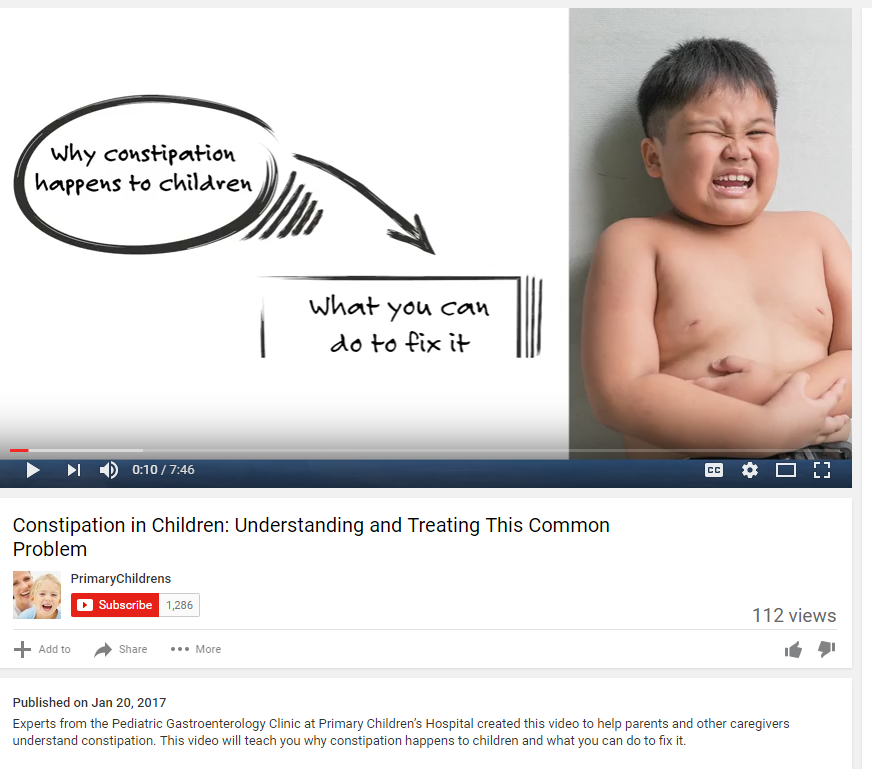
This is a really good educational video (< 8min) -now on YouTube: Constipation in Children: Understanding and Treating This Common Problem (Thanks to John Pohl’s twitter feed for this resource)

screenshot-78

Related blog posts:


Cost Effectiveness & Underpowered Studies

A recent study (ALT Ma et al. J Pediatr 2016; 179: 216-8) reaches a conclusion that questions the cost-effectiveness of pretreatment TPMT activity in pediatric patients. In my opinion, this retrospective study is ridiculous. Here’s why:

The authors examined thiopurine transmethyltransferase (TPMT level) in 228 children before starting a thiopurine. They found the following:

  • Only 2 patients experienced mild neutropenia
  • 12% of their cohort had intermediate activity and 88% normal TPMT activity

I agree with their conclusion that routine blood tests are needed following institution of thiopurines, I think stating that “from an economic point of view –the cost for testing TPMT enzyme activity was high without major clinical benefit” cannot be made with such a small study.  Deficient TPMT activity occurs in about 1 in 300.  If a single patient develops bone marrow suppression due to a thiopurine medication, this can lead to a horrific and prolonged hospitalization.  The cost of such a hospitalization, both economically and emotionally, is enormous.

My take: If I were taking a thiopurine, I would want to know if I metabolized this medication at a slower rate and was at increased risk for bone marrow suppression.  My hunch is the authors would not forgo checking a TPMT level on themselves despite their study’s conclusion, particularly if they have ever witnessed a patient with thiopurine-induced bone marrow suppression.

Related blog posts:

Grand Prismatic Spriing, Yellowstone

Grand Prismatic Spriing, Yellowstone

Briefly noted: PFAPA Study

U Lantto et al. J Pediatr 2016; 179: 172-7.  This retrospective study showed that tonsillectomy was highly effective in children with PFAPA (periodic fever, aphthous stomatitis, pharyngitis, and adenitis) -both those with classic features and incomplete features.

“In the group that met Thomas criteria, 97% (56/58) had complete resolution of fever episodes after tonsillectomy; in the group that did not meet Thomas criteria (50/50) had complete resolution.”

Thomas criteria:

  1. Recurring fevers with early age of onset (<5 years) [the authors suggest a minimum of 5 episodes]
  2. Constitutional symptoms in the absence of over upper respiratory infection with at least one of the following: aphthae, cervical adenitis, pharyngitis
  3. Exclusion of cyclic neutropenia
  4. Completely asymptomatic interval between episodes
  5. Normal growth and development

whater


Quick Take on Migraine Study

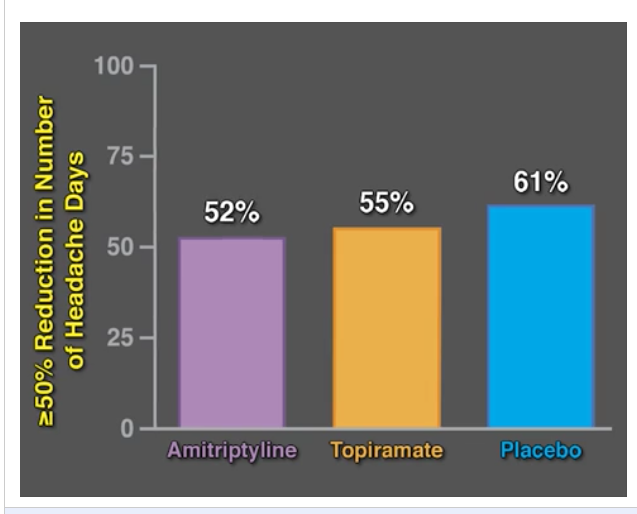
For those who missed this important pediatric study, a quick take ~2 min video link: Pediatric Migraine CHAMP Study

screen-shot-2017-01-12-at-9-49-36-pm

screen-shot-2017-01-12-at-9-50-34-pm

Related blog postTopamax and Amitriptyline Did Not Work for Pediatric Migraines

My take: It looks like placebo did pretty well with >60% response rate.  In a commentary on this subject, the authors noted that when patients are seen by the physician, the symptoms are often severe.  So, some improvement is expected, in part, due to regression to the mean; that is, it is common to return to their baseline level of symptoms.

Standardizing the Care of Children Receiving Chronic Glucocorticoid Therapy

A recent study (ML Basiaga et al. J Pediatr 2016; 179: 226-32) highlights the large variation in care for 701 children receiving  steroids (for at least 15 days) at a leading children’s hospital (CHOP).  I think, given the fact that this is a retrospective study and the huge variation in steroid exposure, the message regarding variation should not be taken that seriously.  But, the article does suggest that in children with chronic glucocorticoid therapy, several measures should be considered:

  • Bone health -particularly Vitamin D (25-OH) levels
  • Immunity -particularly assuring pneumococcal and influenza vaccines
  • Lipid screening
  • Stress steroid plan.  The authors indicate that the endocrinology society recommendations have included instructing parents in intramuscular hydrocortisone in case of vomiting or severe stress.

My take: Having a standard approach to an at-risk group makes sense, however, “whether implementation of preventive care guidelines improves outcomes in children” is not known.

screenshot-63

Is It OK for Pediatricians to try to Prevent Firearm Injuries? Focus on Child Safety –Not on Gun Safety

A recent study (JM Garbutt et al. J Pediatr 2016; 179: 166-71 and related editorial by MD Dowd, pg 15-17) provide relevant information on the issue of firearm injury prevention.

The study describes the results of a survey provided to 1246 parents at a diverse group of practices around St Louis.

Key findings:

  • 36% reported being owners of firearms
  • Of the owners, 25% reported ≥1 firearm was stored loaded and 17.9% carried a firearm when leaving the house.
  • 75% of all parents thought pediatricians should provide advise on safe storage of firearms (71% of owners); however, only 12.8% of all parents reported a discussion about firearms with the pediatrician

The discussion and commentary on this study are more interesting than the actual results. Key points:

  • The AAP has recommended that pediatricians screen for the presence of household firearms and has stated that a “home without guns is the safest option…Advising safe storage is also encouraged.”  Prior surveys have echoed this study that few pediatricians counsel families about firearm safety.
  • Despite AAP recommendations, over “60% of Americans believe that a ‘gun in the house makes it safer’ which is a more common attitude than in 2004 when 42% of Americans held that view.
  • Providing a child with firearm avoidance educational programs (eg. NRA’s “Eddie Eagle”) “is unlikely to lead to safe behaviors…[and] may give parents a false sense of security.”
  • “Children cannot distinguish real guns from toy guns and are strong enough to pull a trigger as early as 3 years of age.”
  • Approaching the topic of safe storage “as an expert in child development” and children’s unpredictable behavior rather than in firearm safety “may be acceptable to both pediatricians and parents.”
  • The authors advocate keeping firearm storage on a checklist of hazards (eg. medication storage, avoiding household poisons) –though this has not been well-studied.
  • From editorial: “When compared with other developed nations, US children under 15 years of age are 12 times more likely to be killed by a gun…We know that nearly 1 in 10 families with guns admit to keeping at least 1 gun loaded and unlocked, and nearly one-half keep at least 1 gun unlocked.”

So, in fact, having a gun in the home does not make a home safer, just the opposite.  But delving into this topic is probably not productive due to strong feelings tangential to gun ownership.  There have been unsuccessful legislative efforts in over 10 states to prevent physicians from discussing the topic as well as a protracted legal battle in Florida.

My take (borrowed from editorial): “Although the difference between “gun safety” and “child safety” may seem subtle, such a shift allows a consistent approach to home injury prevention across mechanisms of injury with the focus on the child, not the gun.” “Little children are curious and big children (teens) are impulsive, so exposure to unsecured guns can lead to tragic outcomes that cannot be prevented by child education.  Who better to deliver this message than pediatricians?”

Related blog posts:

screenshot-7


What’s Wrong with “I Want My Kid Tested for Food Allergies” (Part 2)

In a previous blog entry, What’s Wrong with “I Want My Kid Tested for Food Allergies,” the pitfalls of allergy testing are detailed.

A recent study (DR Stutkus et al.Pediatrics December 2016, VOLUME 138 / ISSUE 6) suggests that primary care providers could used more education on utilizing allergy testing more effectively.  The main problem with food allergy testing is its very low positive predictive value. In a previous study of food allergy testing, the positive predictive value of food allergy testing was 2.2%!

Thanks to Kipp Ellsworth for this reference.

Abstract:

BACKGROUND AND OBJECTIVE: Immunoglobullin E (IgE)-mediated food allergies affect 5% to 8% of children. Serum IgE levels assist in diagnosing food allergies but have low positive predictive value. This can lead to misinterpretation, overdiagnosis, and unnecessary dietary elimination. Use of IgE food allergen panels has been associated with increased cost and burden. The scale of use of these panels has not been reported in the medical literature.

METHODS: We conducted a retrospective review of a commercial laboratory database associated with a tertiary care pediatric academic medical center for food IgE tests ordered by all provider types during 2013.

RESULTS: A total of 10 794 single-food IgE tests and 3065 allergen panels were ordered. Allergists ordered the majority of single-food IgE tests (58.2%) whereas 78.8% of food allergen panels were ordered by primary care providers (PCPs) (P < .001). Of all IgE tests ordered by PCPs, 45.1% were panels compared with 1.2% of orders placed by allergists (P < .001). PCPs in practice for >15 years ordered a higher number of food allergen panels (P < .05) compared with PCPs with less experience. Compared with allergists, PCPs ordered more tests for unlikely causes of food allergies (P < .001). Total cost of IgE testing and cost per patient were higher for PCPs compared with allergists.

CONCLUSIONS: Review of food allergen IgE testing through a high volume outpatient laboratory revealed PCPs order significantly more food allergen panels, tests for uncommon causes of food allergy, and generate higher cost per patient compared with allergists. These results suggest a need for increased education of PCPs regarding proper use of food IgE tests.

From Cadillac Mountain, Acadia Natl Park

From Cadillac Mountain, Acadia Natl Park


Truly Penicillin Allergic?

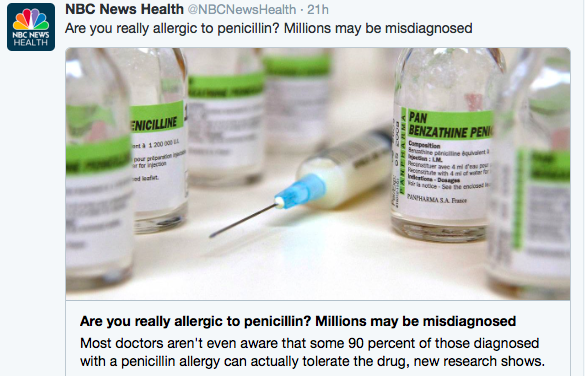
Here’s a link to the video story regarding misdiagnosis of penicillin allergy: Your Allergy to Penicillin May Be Non-Existent

Link to print version: Allergy to Penicillin?

An excerpt: Dr. Thanai Pongdee, an allergist at the Mayo Clinic in Jacksonville, Florida and colleagues tested 384 people who said they were allergic to penicillin. Tests showed 94 percent of them were in fact, not allergic.

pcn-allergy

NASPGHAN Statement on High-Powered Magnet Court Ruling

NASPGHAN Statement on High-Powered Magnet Court Ruling

 The North American Society for Pediatric Gastroenterology, Hepatology and Nutrition (NASPGHAN) is shocked and deeply disappointed by the decision of the U.S. Court of Appeals for the Tenth Circuit to overturn the federal government’s strict safety standard for small, high-powered magnets.  This legal ruling does not change the hazard these products pose to children.

Representing pediatric gastroenterologists who are on the front lines of treating children who accidentally ingest these magnets, NASPGHAN is calling on U.S. retailers, including online retailers, to boycott the sale of products that do not meet the safety standard for magnet sets issued by the Consumer Product Safety Commission in 2014.

 Prior to the new safety standard, pediatric gastroenterologists witnessed a rise in the number of ingestions of high-powered magnets by toddlers and teenagers, often with severe medical consequences. These magnets were sold as part of magnet sets sold as desk toys.

 Kids ingest a lot of things they shouldn’t. High-powered magnet ingestions are different than other ingested foreign bodies. Most foreign bodies will pass through the digestive tract without incident. When two or more magnets are ingested, their attractive force allows the magnets to “find” each other once inside the digestive tract. Consequently, there is a high risk of a fold of intestine becoming trapped between the magnets. When this occurs, ulceration and bowel perforation can occur and lead to death.

 NASPGHAN recommends that high-powered magnet sets should not be stored or used in homes or other settings where children are present. Because these high-powered magnets often come in sets of 100 or more, missing magnets are not easily accounted for and can get lost in carpet or furniture where they can be found by small children.

 Children should receive immediate medical attention for a known or suspected magnet ingestion. Consumers and health care providers are strongly encouraged to report incidents of ingestions to www.saferproducts.gov.

Related blog posts:

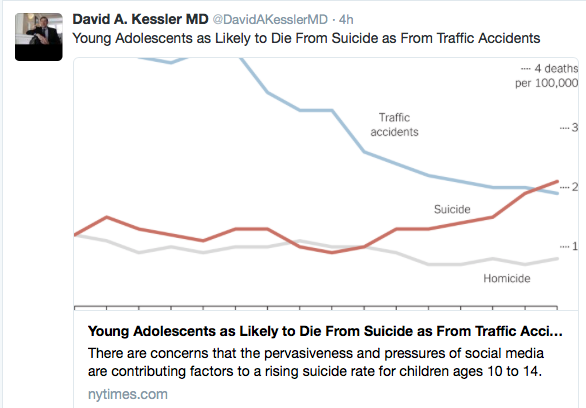
Image Only: Middle Schoolers as Likely to Die From Suicide as From Traffic Accidents

screen-shot-2016-11-04-at-12-57-22-pm

From NY Times:  Full Text

It is now just as likely for middle school students to die from suicide as from traffic accidents.

That grim fact was published on Thursday by the Centers for Disease Control and Prevention. They found that in 2014, the most recent year for which data is available, the suicide rate for children ages 10 to 14 had caught up to their death rate for traffic accidents.