
IP Berset et al. Journal of Crohn’s and Colitis, 2026; 20: jjag110. Anti-TNF withdrawal or long-term treatment in ulcerative colitis (BIOSTOP): a multicentre open label, randomized controlled trial
Methods: “In this prospective, multicentre, randomized, controlled, open-label non-inferiority study, patients in deep clinical, biochemical and endoscopic remission were randomized 1:1 to anti-TNF withdrawal or maintenance treatment. Primary endpoint was endoscopically confirmed remission (Mayo Endoscopic Score 0 or 1) after two years, including UC flares treated with anti-TNF, or non-biologic agents.” This study analyzed 163 adult UC patients (2017-2021, median age 45 years). 29% of patients in the withdrawal group were receiving azathioprine.
Inclusioin criteria:
- Clinical remission defined as six-point Mayo score≤1
- Endoscopic remission defined as Mayo endoscopic score (MES) 0 or 1
- Biochemical remission defined as two consecutive fecal (f-) calprotectin tests<200µg/g
- Minimum one year of first-line anti-TNF treatment (94% of withdrawal group had rec’d anti-TNF therapy for at least two years)
Key findings:
- Eighty percent (66/82) of anti-TNF withdrawal group and 96% (78/81) of maintenance patients were in endoscopic remission after 2 years
- UC flares occurred in 52% (45/86) of withdrawal and 12% (10/86) of maintenance patients
- Anti-TNF retreatment was successful in 74% (20/27) in the intervention group
- 48% of anti-TNF withdrawal patients remained in steroid-free remission
- There were no significant predictors for successful anti-TNF withdrawal
- Serious adverse events:
- In the withdrawal group: colectomy (n=1), and hospitalizaiton for flare-up (n=2)
- In the control group: hospitalization for infection (n=2), and cancer (n=1) which was successfully treated and included anti-TNF discontinuation
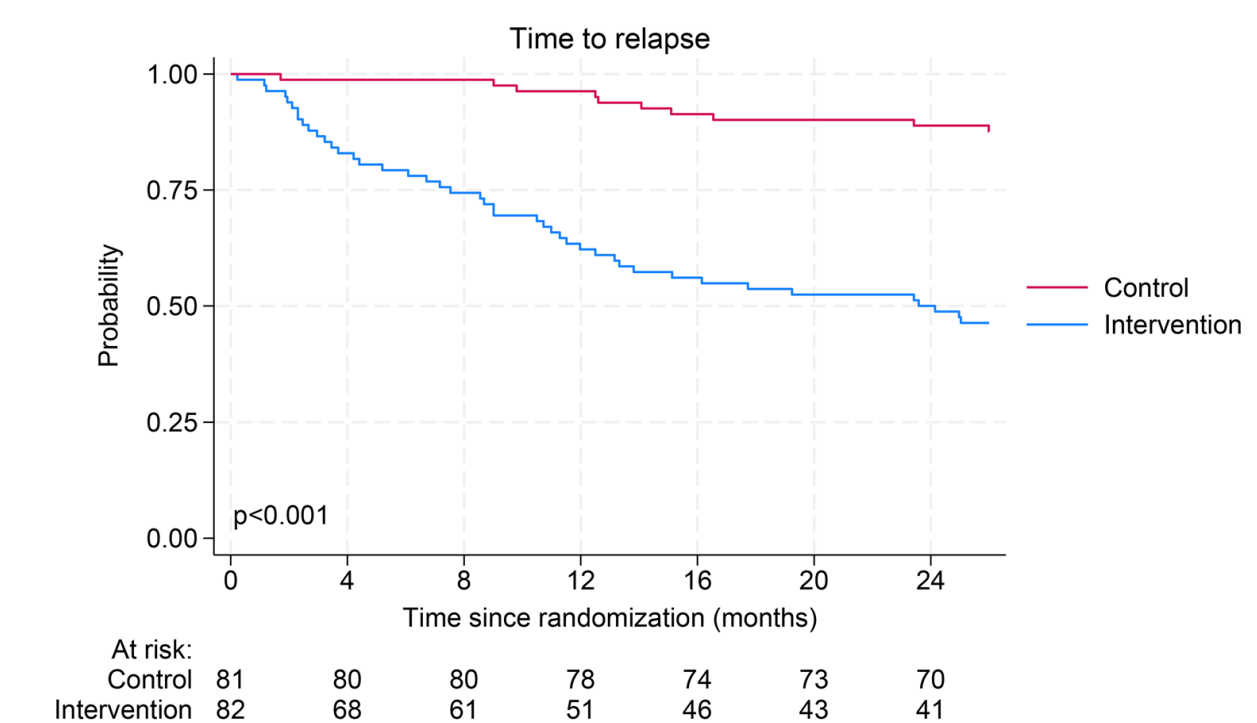
The authors conclude that “withdrawal of anti-TNF treatment should be restricted to selected, well-informed and highly motivated patients.”
My take: This two-year randomized study showed that among patients in deep remission, almost half who stopped anti-TNF treatment continued with a steroid-free clinical remission after two years; however, there were no factors which identified those who were able to successfully withdraw from anti-TNF therapy. The results may overestimate the success rate of anti-TNF withdrawal as ~30% of patients were receiving azathioprine. In pediatrics, expert advice has favored continuation of advance therapies when patients are in remission.
Related blog posts:
- “Do Not Stop Anti-TNF Medications in Children with IBD When They Are Working” (2022)
- High Relapse Rates with Anti-TNF Withdrawal Even with Endoscopic Remission (2023)
- High Risk of Relapse in Younger Patients after anti-TNF Therapy Withdrawal
- What happens when anti-TNF therapy is stopped
- Withdrawing Therapy Leads To Relapse, Even if in Deep Remission

