Antroduodenal Dysmotility in Hypermobility Disorders and Ehlers-Danlos Syndrome

KWE Sweerts et al. Alimentary Pharmacology & Therapeutics, 2025; 61:702–705. Open Access! Analysis of Antroduodenal Motility in Patients With Hypermobility Spectrum Disorders/Hypermobile Ehlers–Danlos Syndrome

Background: Hypermobility spectrum disorders (HSD) and hypermobility Ehlers–Danlos syndrome (hEDS) are frequently associated with gastrointestinal symptoms, although the underlying mechanisms remain unclear. Since recruitment occurred before the 2017 criteria for hEDS were established, it was not possible to distinguish between HSD and hEDS. 

Methods: Retrospective review of all patients (>18 yrs) referred t for gastrointestinal motility evaluation and undergoing ADM were consecutively included from 2009 to 2023. This included 239 patients (50 HSD/hEDS and 189 non-HSD/hEDS). The HSD/hEDS group showed a lower BMI and higher use of enteral feeding than the control group (p < 0.001 and p = 0.026, respectively). This group was also younger, with a mean age of 30.4 ± 11.1 years versus 45.3 ± 15.4 years (p < 0.001).

Key findings:

  • The prevalence of antroduodenal dysmotility was not different between both groups, but enteric dysmotility was less common in the HSD/hEDS group (13% vs. 34%, p = 0.006).
  • There were similar percentages of delayed gastric emptying than non-HSD/hEDS patients; delayed gastric emptying was highly prevalent in both groups, 85% in patients with HSD/hEDS and 94% in non-HSD/hEDS patients
  • There were no differences in predominant symptoms between patients with and without HSD/hEDS.

In the discussion, the authors note that the lower rate of dysmotility combined with higher rates of enteral nutrition indicate that “factors like visceral hypersensitivity and autonomic function could be relevant in this context.”

My take: Most patients at this referral center had delayed gastric emptying. However, Ehlers-Danlos patients, in fact, had lower rates of enteric dysmotility.

Related blog posts:

Grand Palace, Bangkok

Myth or Fact: Joint Hypermobility is Related to Pediatric Functional Abdominal Pain & Dr. Roy Link

According to a recent study (RJ Shulman et al. J Pediatri 2020; 222: 134-40), the prevalence of joint hypermobility does NOT differ in children with irritable bowel syndrome, functional abdominal pain, or healthy control children.

Methods (to reach this conclusion):

  • Children (median age ~9.5 years) with irritable bowel syndrome (n=109), functional abdominal pain (n=31), and healthy controls (n=69) completed a prospective 2-week pain and stooling diaries.  In addition, children and parents reported on measures of anxiety, depression, and somatization. Children were recruited from both primary care and tertiary care settings
  • Joint hypermobility was determined using Beighton criteria using a goniometer and examined cutoffs at both ≥4 or ≥6).

Key findings:

  • Beighton scores were similar between the groups, as was the proportion with joint hypermobility.  Beighton scores were not related to abdominal pain or stooling characteristics.
  • Beighton score ≥4: IBS 35%, FAP 36%, healthy controls 36%.
  • Beighton score ≥6: IBS 12%, FAP 13%, healthy controls 9%.
  • Children reported depression more frequently in those with Beighton scores ≥6 and somatization was greater in those with a score ≥4.

Discussion:

  • “It is well-recognized that patients with joint hypermobility syndromes (eg, Ehlers-Danlos syndrome, Marfan) commonly have GI symptoms.” However, joint hypermobility is common —in this study’s healthy control group 36% had a score ≥4 and 9% had a score ≥6.
  • This study is in agreement with a school-based study (n=136) (M Saps et al. JPGN 2018; 66: 387-90).
  • Limitations: This study population had a median age of ~9.5 years; thus, these findings need to be determined in an older children

My take: There does not appear to be an increased risk of functional GI disorders in children with joint hypermobility. Thus, looking for joint laxity/hypermobility in children with abdominal pain is not needed.

Related blog posts:

Also, a link to Dr. Roy (Benaroch).  Roy is an Atlanta pediatrician and he explains, with the help of Batman and Luigi, the term ‘index’ case and when one is considered exposed: Dr. Roy Covid Pathway

NASPGHAN Postgraduate Course 2017 (Part 5): Refractory constipation, Extraesophageal GERD, POTS, Recurrent Abdominal Pain

This blog entry has abbreviated/summarized these presentations. Though not intentional, some important material is likely to have been omitted; in addition, transcription errors are possible as well.

Here is a link to postgraduate course syllabus: NASPGHAN PG Syllabus – 2017

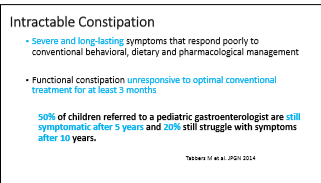
The child with refractory constipation

Jose Garza   GI Care for Kids & Children’s Healthcare of Atlanta

Key points:

  • Polyethylene glycol is a first-line agent and many patients require cleanout at start of therapy
  • Adequate dose of laxative is needed for sure regular painless stools
  • Don’t stop medicines before toilet training and until pattern of regular stooling established. “All symptoms of constipation should resolve for at least one month before discontinuation of treatment”
  • Gradually reduce laxatives when improved
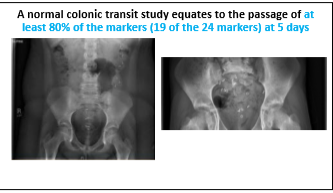
  • An abdominal xray is NOT recommended to make the diagnosis of constipation
  • Do you have the right diagnosis? Irritable bowel is often confused with constipation.  With constipation, the pain is relieved after resolution of constipation.
  • Outlet dysfunction. Stimulant laxatives (eg. Senna) are probably underutilized. Biofeedback may help in older children.
  • Slow transit constipation. Newer prosecretory agents may be helpful –lubiprostone and linaclotide.
  • Organic constipation. Hirschsprung’s, Spina bifida, anorectal malformations etc. Testing: anorectal manometry, rectal biopsy (for Hirschsprung’s)
  • For refractory disease, consider rectal therapy –suppositories, transanal irritagations/enemas (~78% success for fecal incontinence/constipation). These treatments should be used prior to surgical therapy (eg. Malone antegrade continence enema/cecostomy)


The quest for the holy grail: Accurately diagnosing and treating extraesophageal reflux

Rachel Rosen   Boston Children’s Hospital

Key points:

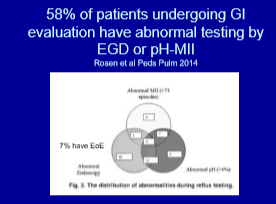
  • It is frequent that EGD or impedance study will be abnormal, though this may not be causally-related.
  • No correlation with ENT exams/red airways and reflux parameters
  • No correlation with lipid laden macrophages and reflux parameters
  • No correlation with salivary pepsin and reflux parameters

Treatment:

  • Lansoprazole was not effective for colic or extraesophageal symptoms (Orenstein et al J Pediatrics 2009)
  • PPIs can increase risk of pneumonia/respiratory infections
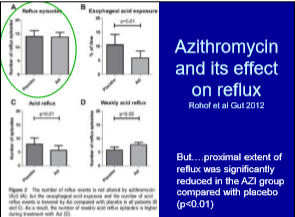
  • Macrolides have been associated with increased risk of asthma but may be helpful for pulmonary symptoms
  • Fundoplication has not been shown to be effective for reducing aspiration pneumonia.  Fundoplication could increase risk due to worsened esophageal drainage.
  • ALTEs (BRUEs -brief resolved undefined events) need swallow study NOT PPIs

POTS and Joint Hypermobility: what do they have to do with functional abdominal pain?

Miguel Saps  University of Miami

Key points:

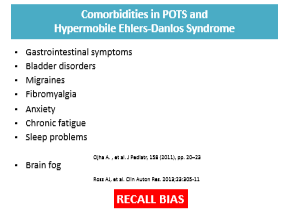
  • Patients with POTS and joint hypermobility have frequent functional abdominal pain as well as other comorbidities
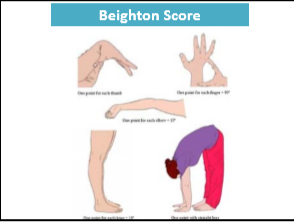
  • Beighton Score can determine if joint hypermobility is present
  • Brighton Score determines if hypermobile Ehlers-Danlos syndrome is present
  • Patients with frequent fatigue.  Gradual progressive and regular exercise is important part of therapy.  Can start with recombant exercise – training bicycle exercise, swimming
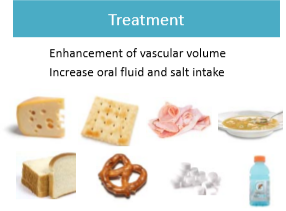
  • Need to push salt intake and fluds

Do I need to test that C.R.A.P.?

Rina Sanghavi   Children’s Medical Center Dallas

This basic talk reviewed a broad range of issues related to functional abdominal pain.

Key points:

  • Carnett’s sign can help establish abdominal pain as due to abdominal wall pain rather than visceral pain
  • What is an appropriate evaluation?  Limited diagnostic testing for most patients.
  • Alarm symptoms include: Fevers, Nocturnal diarrhea, Dysphagia, Significant vomiting, Weight Loss/poor growth, Delayed Puberty, and Family history of IBD