Fluid Management for Abdominal Surgery

A recent study (PS Myles et al. NEJM 2018; 378: 2263-74, editorial 2335-6) throws some shade on the idea that restricting IV fluids during surgery results in better outcomes.

With ERAS (enhanced recovery after surgery) procedures, one of the components has been restricting IV fluids during surgery due to concerns that excessive fluid will result in bowel wall edema and slower recovery.  To better determine if a restrictive IV fluid approach or a more liberal approach was better, this RELIEF study randomized approximately 3000 patients who were receiving major abdominal surgery into two arms: a restrictive group and a  liberal group; they received a median of 3.7 liters of IV fluids and 6.1 liters respectively during and up to 24 hours after surgery.

Key findings:

  • Rate of disability-free survival at 1 year was 81.9% in the restrictive group and 82.3% in the liberal group (hazard ratio for death or disability was 1.05, CI 0.88-1.24, P=0.61)
  • Rate of acute kidney injury was 8.6% in the restrictive fluid group compared to 5.0% in the liberal fluid group (P<0.001). Renal replacement therapy was 0.9% in the restrictive fluid group compared to 0.3% in the liberal fluid group (P=0.048).
  • Rates of surgical site infection was 16.5% in the restrictive fluid group compared to 13.6% in the liberal fluid group (P=0.02).  The authors speculate that this could be related to perfusion of surgical anastomosis.

The associated commentary notes that in this age of minimally invasive surgery, a modestly liberal administration of IV fluids does not create substantial fluid retention.

My take: Restrictive fluid regimen during major abdominal surgery resulted in higher rates of kidney injury and surgical site infections.  This study indicates that for ‘enhanced recovery’ that a more liberal fluid regimen is safer.

Related posts:


Fast Track Recovery/Enhanced Recovery After Surgery (ERAS is Awesome!)

At a recent ImproveCareNow population management meeting for our group, Dr. Kurt Heiss provided an update on the expanding use of ERAS.  In addition to colorectal surgery, uses at our hospital system have included bariatric surgery, craniofacial surgery, and umbilical hernia repairs. The results of this bundled care show fewer complications, less pain/less narcotics (more blocks), and shorter hospital stays (without increased readmission rates).

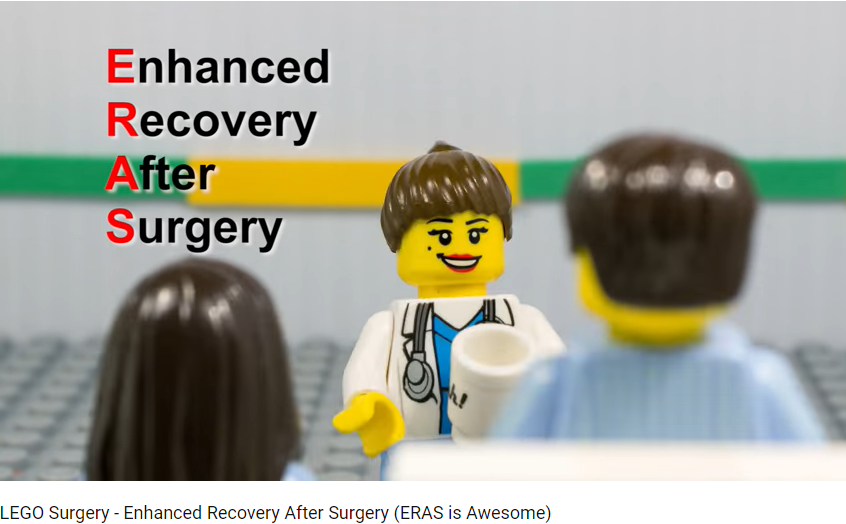
For those who are not as familiar as they would like (and for patients), I recommend a 7 minute Lego ERAS YouTube link: LEGO Surgery -Enhanced Recovery After Surgery

Related blog post: ERAS -Enhanced Recovery After Surgery (2016) With full slide set explaining ERAS further


It’s Alimentary (Part 3)

A recent ‘clinical quality forum’ sponsored by The Children’s Care Network (TCCN) and Nutrition4Kids featured several good lectures. The symposium was titled “It’s Alimentary.” What follows are my notes –the full lectures from these talks will be available in the coming weeks on the Nutrition4Kids website. My notes may include some errors in transcription and errors of omission.

The Importance of Intestinal Microbiota in Pediatric Health and Disease” by W Allan Walker (Harvard Medical School, Director of Division of Nutrition) reviewed data showing how changes in the microbiome, likely related to a ‘Western lifestyle’ has resulted in numerous health consequences.

Key points:

  • The hygiene hypothesis has correlated a greatly reduced risk of infections inversely to an increase in immune-mediated diseases including Crohn’s disease, multiple sclerosis, type 1 diabetes mellitus, and metabolic syndrome/obesity.
  • The consequences of improved hygiene are likely mediated by alterations in gut microbiome
  • To counter alterations in a ‘healthy’ microbiome, perhaps most important is normal neonatal colonization.  This, in turn, is related to healthy pregnancy/full term gestation, vaginal delivery, absence of antibiotics in the first year of life (if feasible), and exclusive breastfeeding.
  • A healthy first-year-of-life microbiome leads to improved tolerance (less allergies) and absence of chronic diseases.
  • In those at risk for altered microbiome, probiotics may be beneficial.
  • By 12-18 months, the microbiome has an ‘adult’ pattern of colonization with a bacterial signature that is present for the rest of someone’s life

Related blog posts:

A subsequent segment addressed “Weight Bias in Healthcare Professionals and What We Can Do About It” by Sheethal Reddy (Strong4Life Clinical Psychologist).

Key points:

  • Physicians have been shown to exhibit decreased empathy with obese patients (KA Gudzune et al. Obesity 2013; 21: 2146-52)
  • Bias can not be eliminated but can be better understood. The Implicit Attitude Test can help ascertain one’s level of bias. https://implicit.harvard.edu/implicit
  • Ways to address obesity as a topic: “Is it OK to talk about…”, use of health report cards to review BMI
  • “The most important thing you can be is kind”

Related blog posts:

In another talk was related to obesity: “ERAS Nutrition in Bariatric Surgery” by Mark Wulkan (Emory University Professor of Surgery). ERAS is an acronym for Enhanced Recovery After Surgery –pioneered in colorectal surgery (Previous post on ERAS: ERAS-Enhanced Recovery after surgery)

Key points:

  • Using ERAS protocol, hospital length of stay has been shortened from 2 days to 1 day
  • ERAS protocol has been associated with minimal use of narcotics –occasionally for breakthrough pain.
  • Current bariatric surgery favored by Strong4Life team –Laparoscopic Sleeve Gastrectomy

Related blog entries:

Bariatric Surgery Candidates

ERAS -Enhanced Recovery After Surgery

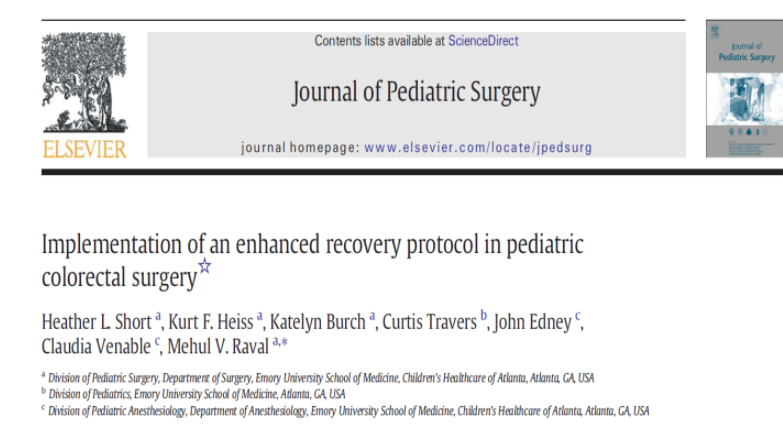
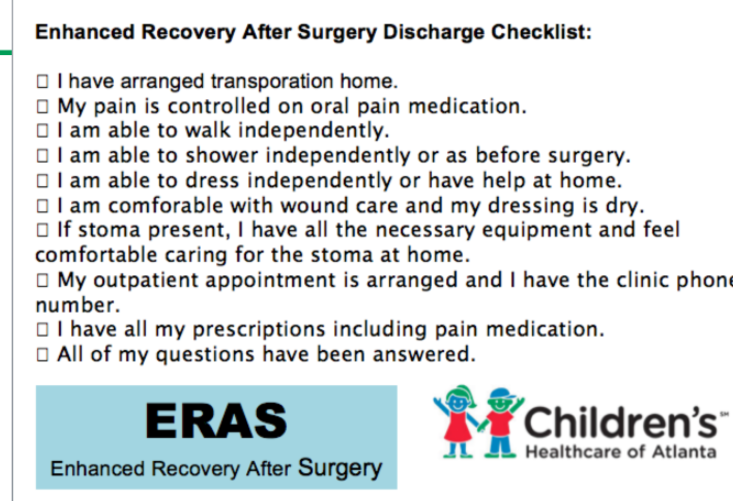
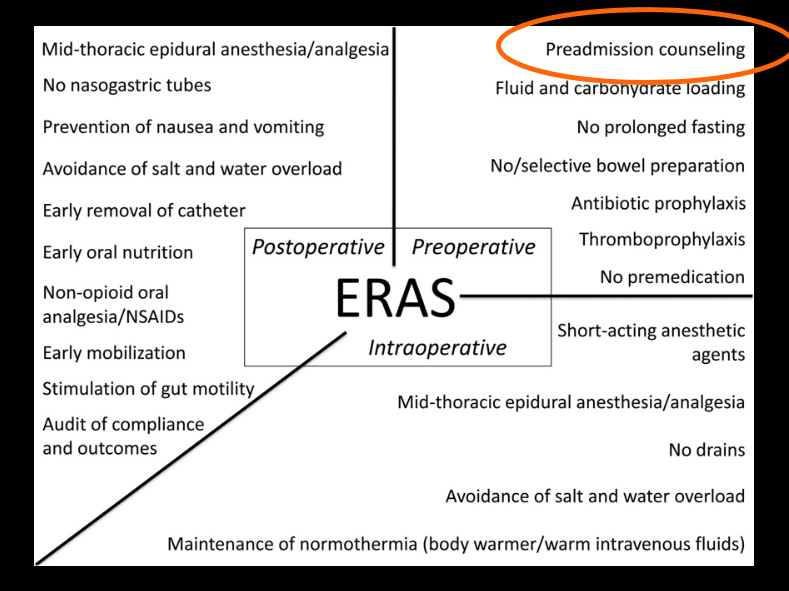
Fortunately, only a small number of children need colorectal surgery.  For those who do need this surgery, there are advancements which are helping to reduce length of stay and shorten recovery.  Some of the concepts with “Enhanced Recovery After Surgery” or ERAs have been around for more than 10 years.  One of our surgical colleagues, Dr. Kurt Heiss, described his experience in applying these techniques in the pediatric population and was kind enough to share his slides.  Slide 10 (see below) outlines the key points.

The immediate challenge in improving the quality of surgical care is not discovering new knowledge, but rather how to integrate what we already know into practice –Urbach DR, Baxter NN, BMJ 2005

Preoperative:

  • Counseling family
  • Avoid bowel prep –>can lead to bowel edema
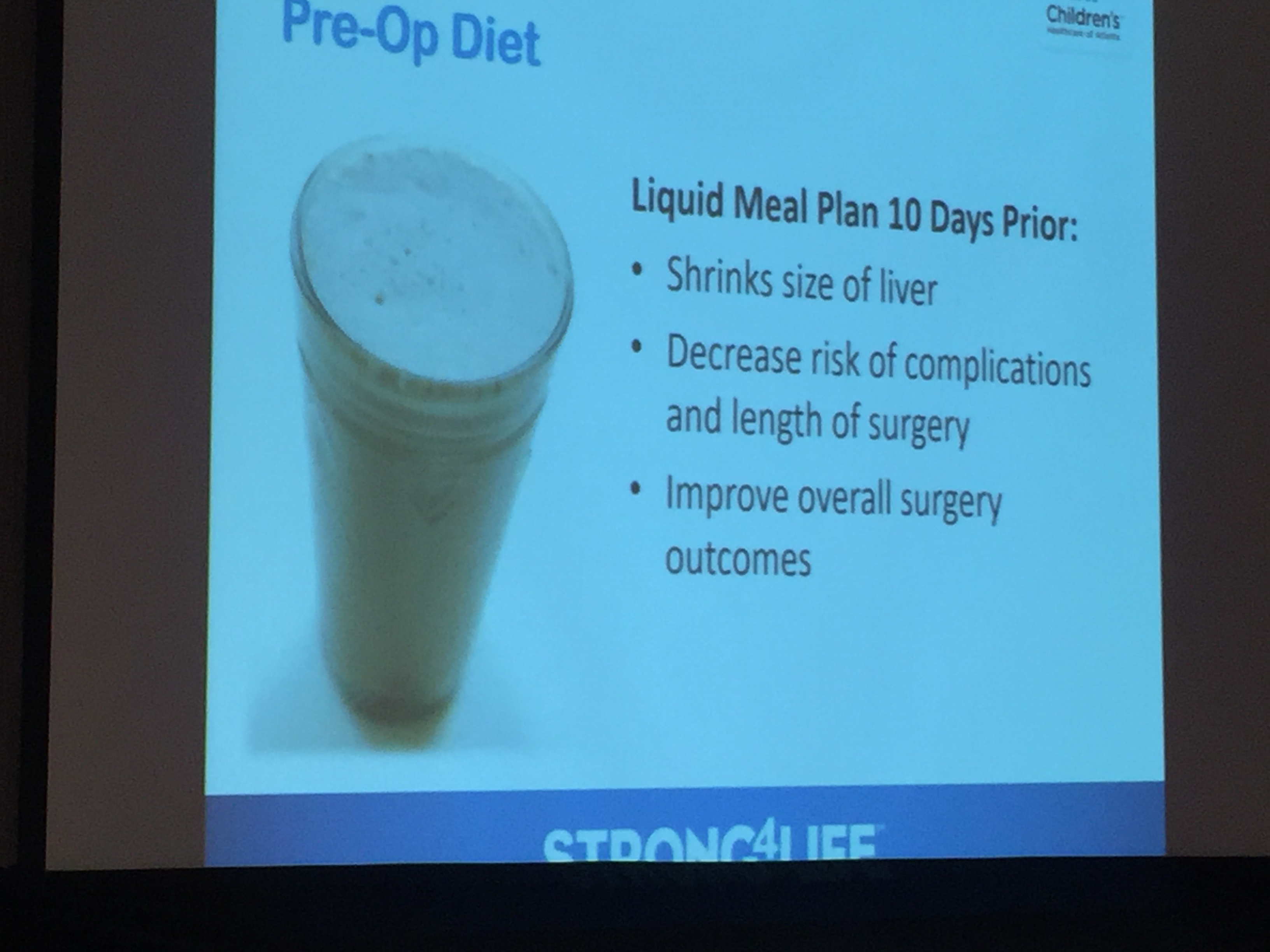
  • Avoid prolonged fast prior to surgery.  Fluid/carbohydrate loading
  • Use of Neurontin preoperative
  • Antibiotic prophylaxis
  • Thromboprophylaxis

Intraoperative:

  • Short-acting anesthetics
  • Use of TAP and/or short-term epidural. Avoid narcotics
  • Avoid excessive fluid administration
  • No drains
  • Maintenance of normothermia

Postoperative:

  • Early feeding (same night)
  • No NG
  • Avoid/minimize narcotics
  • Early mobilization

ERAS: leads to shorter length of stay, reduced nonsurgical complications and no increase in readmission rates.

Resources:

My take: ERAS concept/team approach is leading to better outcomes.  GI surgery is likely to benefit more than other areas due to the often-slow recovery of the GI tract after operations.

Screen Shot 2016-04-25 at 5.00.40 PM