Craig Friesen: Understanding Food Allergies and Food Intolerance in DGBIs

Dr. Craig Friesen gave our group an excellent update on food allergy and disorders of brain-gut interaction (DGBIs).  His main disclosure was that he is not an allergist. My notes below may contain errors in transcription and in omission. Along with my notes, I have included many of his slides.
Key points:

  • Food allergies are common affecting 6-10% of the population. In infants, milk and egg are common allergens. Nut allergies are more frequently seen in children
  • There are likely hundreds of genes that can predispose towards allergies
  • Food exposures, especially in the 4-6 month range, have been associated with a lower risk of food allergies
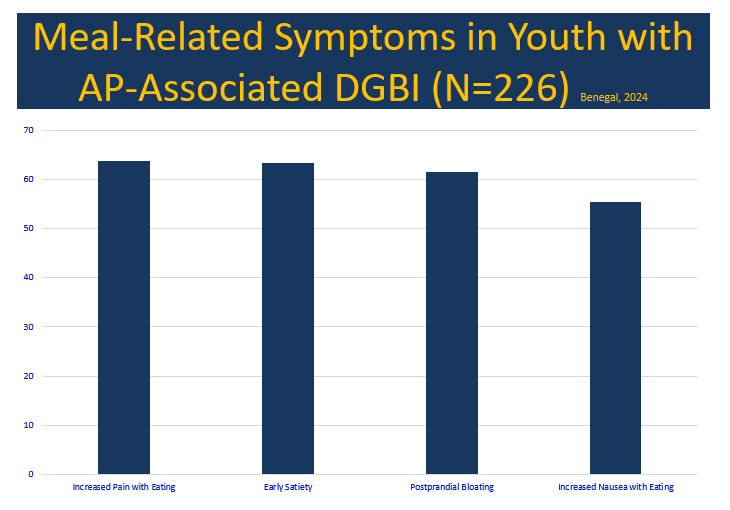
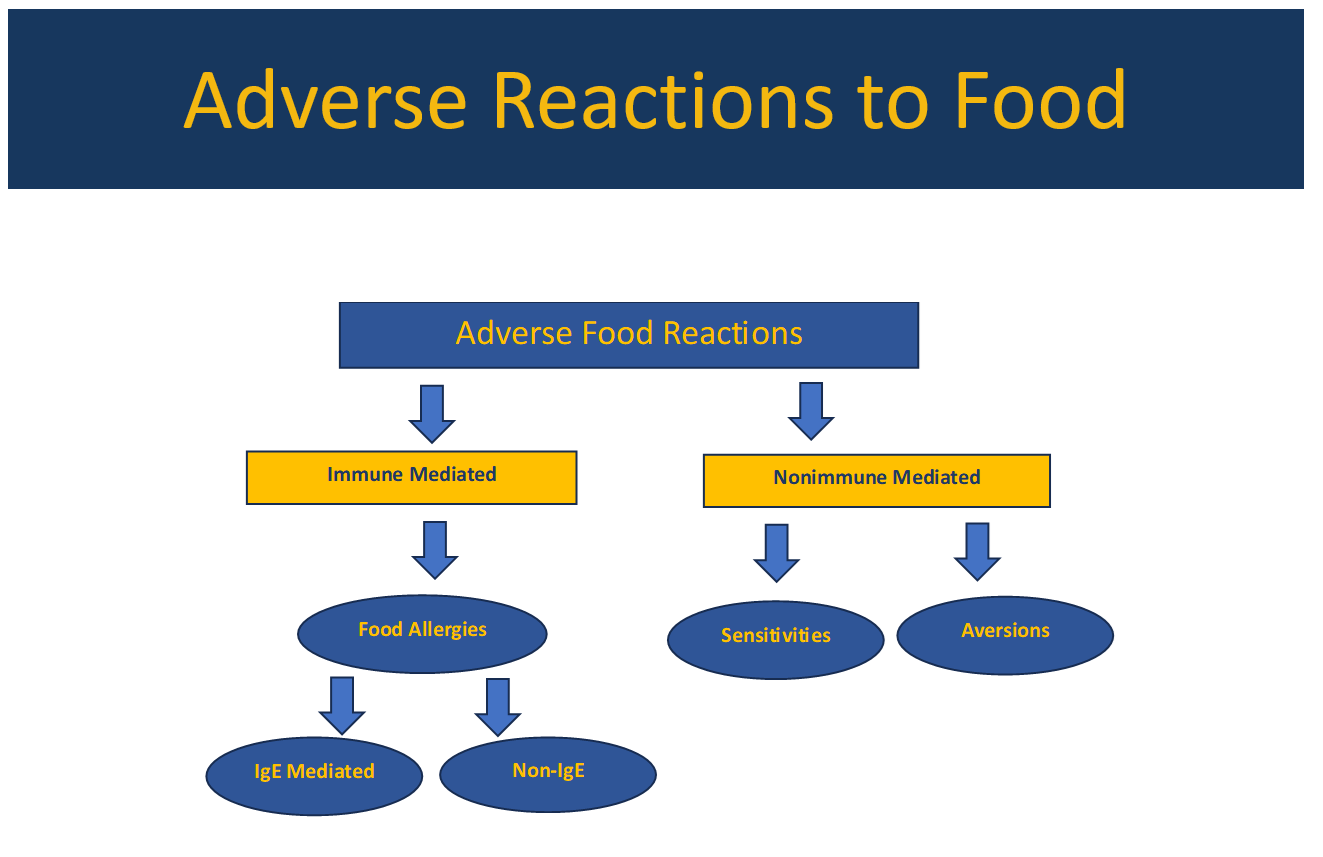
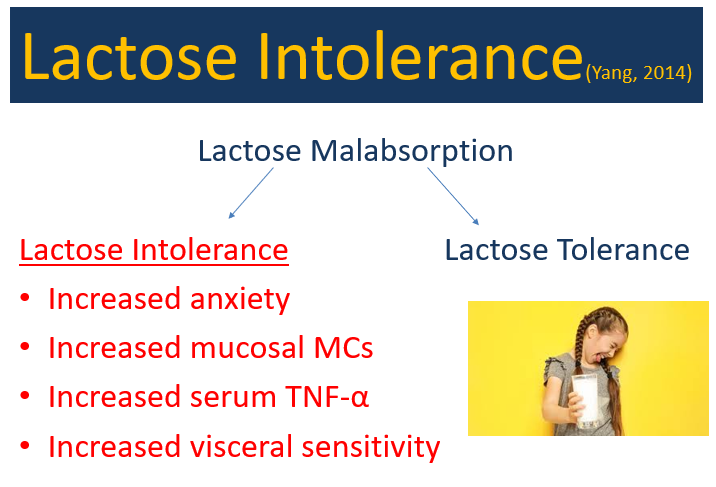
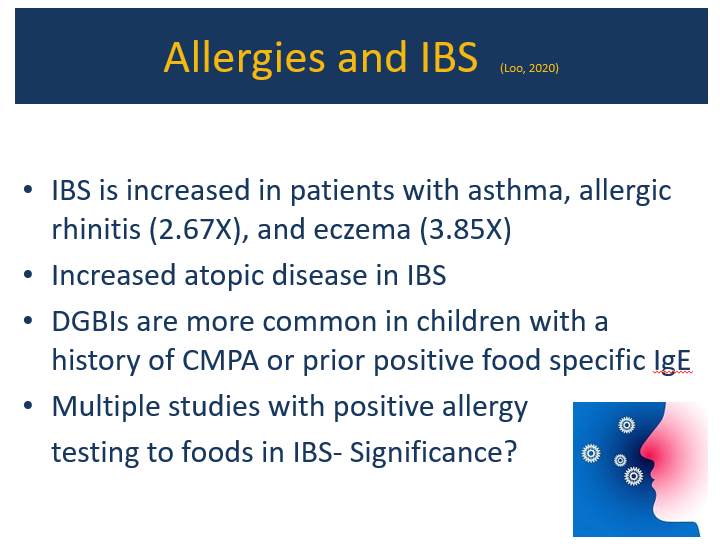
  • Food trigger symptoms are present in most patients with DGBIs; however, the lines between immune mechanisms and non-immune mechanisms are often blurry
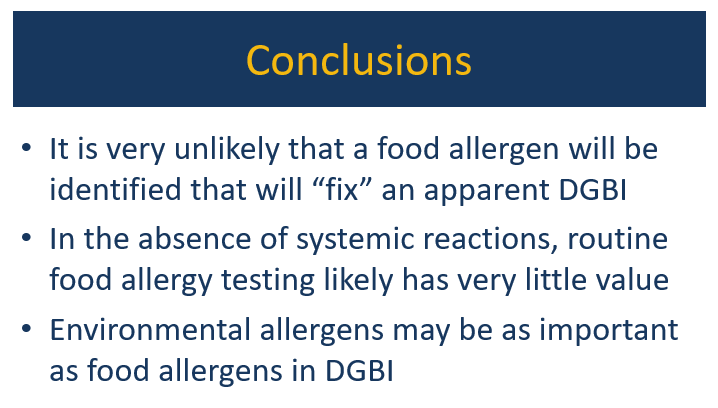
  • Food allergy testing (skin prick testing, IgE-based blood tests) is not recommended in the absence of systemic symptoms due to poor specificity (perhaps ~10%). Obtaining a careful history is a very important part of determining allergies. Double-blind challenges, which are rarely done, are still considered “gold standard” for diagnosis
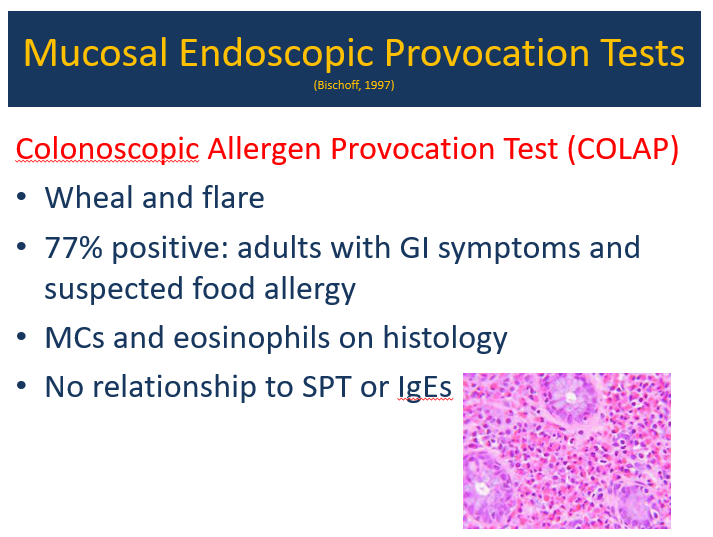
  • Mucosal endoscopic provocation (research tool) often discloses localized immune reaction; it does not correlate with skin prick testing or IgE-based blood tests
  • After prior sensitization/food allergies, stressful conditions may create similar symptoms as allergic exposures. This can be mediated by histamine and tryptase/mast cells
  • It is rare for food allergen restriction to “fix” a DGBI. Occasionally, food allergies may be part of the problem. Dietary restrictions may lead to weight loss and contribute to ARFID
  • IgG-based allergy testing (widely available) is not recommended; IgG antibodies are usually indicative of tolerance
  • Environmental pollen counts are associated with increased DGBI symptoms, increased mucosal eosinophils, and less sleep
  • Environmental allergen testing can sometimes be helpful in identifying cross-reacting foods
  • Alpha-gal syndrome. Consider testing in those with symptoms triggered by meat ingestion, and those with refractory symptoms. In pediatric patients, often no rash is identified and many will ‘outgrow’ allergy
  • Oral immunotherapy can be effective in improving tolerance for allergic foods; however, up to 70% will redevelop intolerance
  • When mucosal eosinophilia is identified, there are a number of potential treatments including dietary restrictions, mast cell stabilizers, antihistamines, and steroids

Related blog posts:

Disclaimer: This blog, gutsandgrowth, assumes no responsibility for any use or operation of any method, product, instruction, concept or idea contained in the material herein or for any injury or damage to persons or property (whether products liability, negligence or otherwise) resulting from such use or operation. These blog posts are for educational purposes only. Specific dosing of medications (along with potential adverse effects) should be confirmed by prescribing physician.  Because of rapid advances in the medical sciences, the gutsandgrowth blog cautions that independent verification should be made of diagnosis and drug dosages. The reader is solely responsible for the conduct of any suggested test or procedure.  This content is not a substitute for medical advice, diagnosis or treatment provided by a qualified healthcare provider. Always seek the advice of your physician or other qualified health provider with any questions you may have regarding a condition.
Quality Forum: Understanding Food Allergy Testing (Part 2) & Atopic Dermatitis

The Children’s Care Network (in Atlanta) has recently shared its Spring 2022 Clinical Quality Forum. Following is the link to the video recording. The poll during the live presentation is not active for the recording.

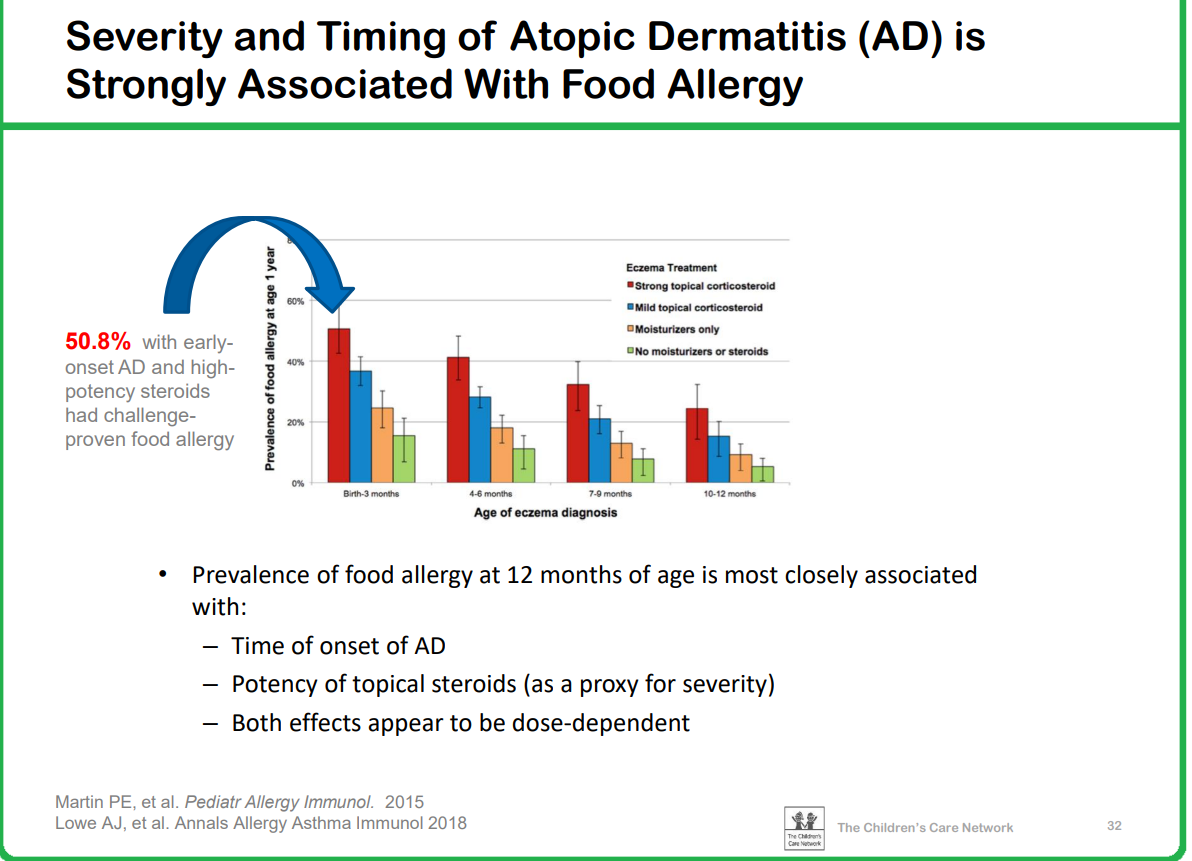
​Some of the slides that I think are most helpful ​are shown below (used with permission).  This 2nd part of content is from Dr. Brian Vickery which describes ​the relationship of atopic dermatitis to food allergy and best practices for prevention of food allergy:

ASCIA Handouts:

Related blog posts:

Disclaimer: This blog, gutsandgrowth, assumes no responsibility for any use or operation of any method, product, instruction, concept or idea contained in the material herein or for any injury or damage to persons or property (whether products liability, negligence or otherwise) resulting from such use or operation. These blog posts are for educational purposes only. Specific dosing of medications (along with potential adverse effects) should be confirmed by prescribing physician.  Because of rapid advances in the medical sciences, the gutsandgrowth blog cautions that independent verification should be made of diagnosis and drug dosages. The reader is solely responsible for the conduct of any suggested test or procedure.  This content is not a substitute for medical advice, diagnosis or treatment provided by a qualified healthcare provider. Always seek the advice of your physician or other qualified health provider with any questions you may have regarding a condition

Quality Forum: Understanding Food Allergy Testing (Part 1)

The Children’s Care Network (in Atlanta) has recently shared its Spring 2022 Clinical Quality Forum. Following is the link to the video recording. The poll during the live presentation is not active for the recording.

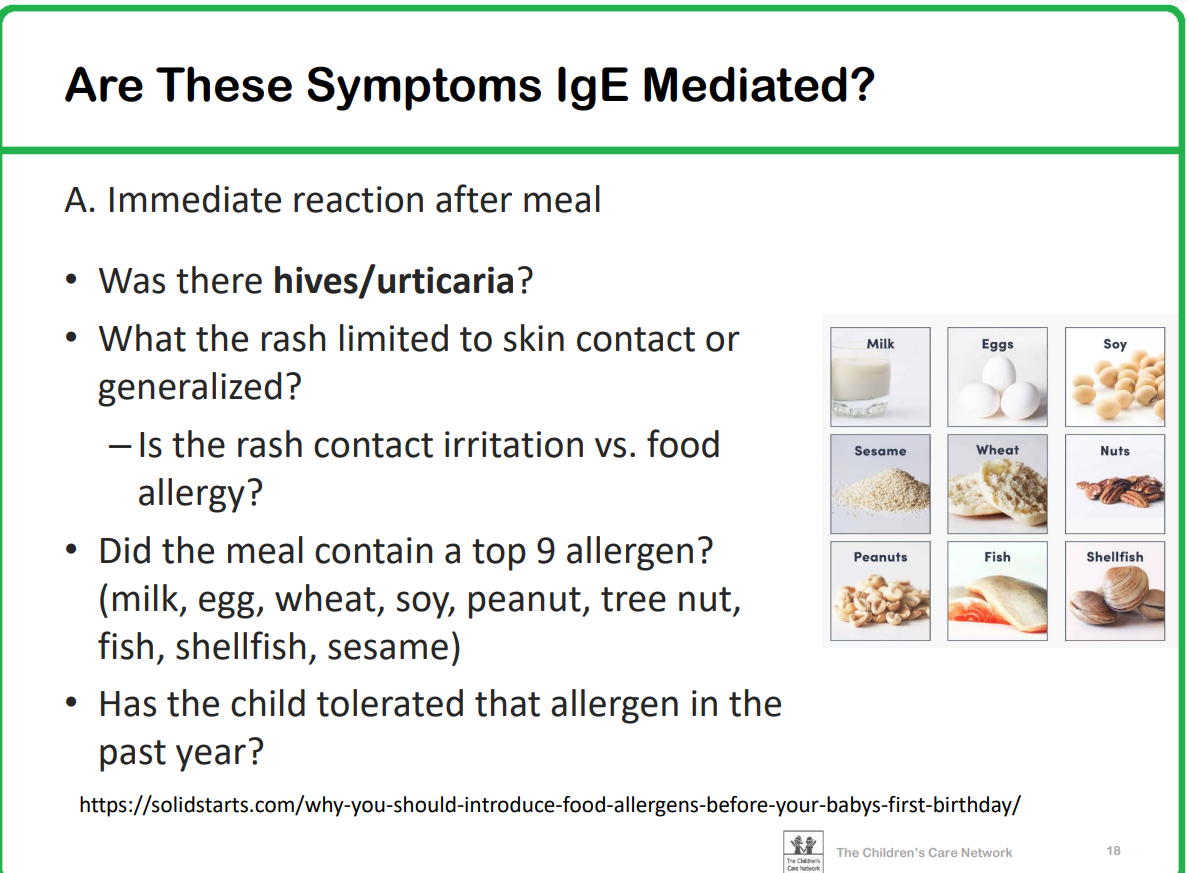
Some of the slides that I think are most helpful are shown below (used with permission). The first part of content is from Dr. Gerry Lee which describes best practices for selecting patients for Food Allergen IgE testing:

Related blog posts:

Disclaimer: This blog, gutsandgrowth, assumes no responsibility for any use or operation of any method, product, instruction, concept or idea contained in the material herein or for any injury or damage to persons or property (whether products liability, negligence or otherwise) resulting from such use or operation. These blog posts are for educational purposes only. Specific dosing of medications (along with potential adverse effects) should be confirmed by prescribing physician.  Because of rapid advances in the medical sciences, the gutsandgrowth blog cautions that independent verification should be made of diagnosis and drug dosages. The reader is solely responsible for the conduct of any suggested test or procedure.  This content is not a substitute for medical advice, diagnosis or treatment provided by a qualified healthcare provider. Always seek the advice of your physician or other qualified health provider with any questions you may have regarding a condition

Best Allergy Articles 2021 (Part 5): Allergy Test Ordering

In Pediatrics, supplement 3 summarizes 76 articles: Synopsis Book: Best Articles Relevant to Pediatric Allergy, Asthma and Immunology

Some of the studies that are most relevant to pediatric GI doctors I am reviewing for this blog over the next/past few days.

MT Kraft et al. Ann Allergy Asthma Immunol 2020; 125: 341-360. Review of Ordering Practices for Single-Allergen and Serum-Specific Immunoglobulin E Panel Tests for Food Allergy

In this study, the author’s examine the ordering of serum IgE food allergy tests at a single hospital in 2018. In total 12,345 tests were ordered by 400 physicians.

Key findings:

  • Allergists ordered 8986 tests, of which only 1.2% were food panels.
  • Nonallergists ordered 3368 tests, of which 37.5% were food panels.
  • Food panel ordering had dropped by 55% in absolute numbers since 2013.

In the commentary, it is noted that food serum IgE panels are not recommended “because more individuals will have detectable IgE sensitization than true symptoms” (aka false positives). “There is still a long way to go regarding educating families and nonallergist provideres on approaches to diagnosis of IgE-mediated food allergies.”

My take: This is a constant struggle. Everyday families want allergy testing on the assumption that it will be useful in treating their GI symptoms. Though dietary changes are frequently helpful in patients with GI problems, food allergy panels are likely to lead to more trouble than benefit.

Related blog posts:

Siesta Key, FL

Poorly-Conceived Allergy Testing Can Lead to Unnecessary Diet Restrictions and Complications

As noted in previous blog posts (see below), allergy testing can lead to unnecessary food restrictions which can in turn lead to numerous subsequent problems. Case in point: YV Virkud et al (NEJM 2020; 383: 2462-2470) report on A 29-Month-Old Boy with Seizure and Hypocalcemia

This boy presented with severe hypocalcemia, rickets, and seizures one year after allergy testing led to additional dietary restrictions. Also, his mother was a vegetarian. At time of allergy testing, IgE testing suggested allergies to milk, cashews, pistachios, egg whites, almonds, soybeans, chickpeas, green peas, lentils, peanuts, and sesame seeds. Many of these foods caused no symptoms with food challenges.

Besides working through the potential reasons for hypocalcemia, the authors make several key points:

  • Nutritional rickets is NOT a historical relic. Vitamin D deficiency appears to be increasing in high-income countries despite food-fortification strategies.
  • There are frequent misdiagnosis of food allergies. “Clinical and laboratory testing is severely limited by poor specificity…approximately 20 to 25% of children have positive IgE blood tests to specific food allergens, even though the true prevalence of IgE-mediated food allergy is likely closer to 6 to 8%.”
  • Avoid indiscriminate use of IgE blood testing. Allergen panels are “particularly problematic, because they often uncover false positives and lead to unnecessary food avoidance.” Individual IgE testing can be used to help confirm a diagnosis after an allergic reaction to a food trigger.
  • The most accurate diagnostic tool is an oral food challenge.
  • In children with food allergies, supplements are often needed to avoid micronutrient deficiencies and a low threshold is needed for involvement of dieticians.
  • Early introduction of foods can reduce incidence of allergies and periodic reassessment is needed to determine if a child has outgrown an allergy.
Xrays show generalized demineralization. The metaphyses show flaring (dashed arrow) and cupping (arrowbead). The physes are radiolucent and widened (asterisks).

Related blog posts:

Disclaimer: This blog, gutsandgrowth, assumes no responsibility for any use or operation of any method, product, instruction, concept or idea contained in the material herein or for any injury or damage to persons or property (whether products liability, negligence or otherwise) resulting from such use or operation. These blog posts are for educational purposes only. Specific dosing of medications (along with potential adverse effects) should be confirmed by prescribing physician.  Because of rapid advances in the medical sciences, the gutsandgrowth blog cautions that independent verification should be made of diagnosis and drug dosages. The reader is solely responsible for the conduct of any suggested test or procedure.  This content is not a substitute for medical advice, diagnosis or treatment provided by a qualified healthcare provider. Always seek the advice of your physician or other qualified health provider with any questions you may have regarding a condition

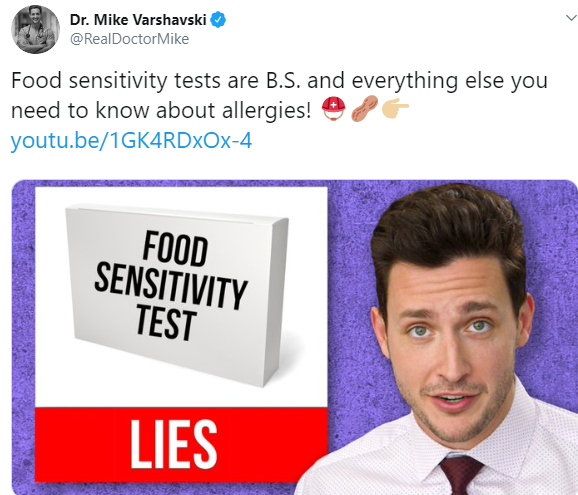
“The Truth About Allergies and Food Sensitivity Tests”

This is a link to a 20 minute video regarding “The Truth About Allergies and Food Sensitivity Tests” with Dr. Dave Stutkus and Dr. Mike Varshavski. (If trouble with link, then can find with quick search on YouTube.)

A couple of clarifications:

The video (~at the 3 minute mark) does not provide much nuance on “non-celiac gluten sensitivity” (see related blog posts below)

Some other points:

  • Don’t perform Food IgG testing -this is a memory antibody and does not reflect food allergy or sensitivity
  • So-called food sensitivity IgG tests do not have standardized normal values
  • Don’t perform broad-based IgE testing; there are many false-positives and false negative

Dr. Stutkus decided to undergone ‘food sensitivity’ tests and was reportedly sensitive to nearly 80 foods.

Related blog posts:

Disclaimer: This blog, gutsandgrowth, assumes no responsibility for any use or operation of any method, product, instruction, concept or idea contained in the material herein or for any injury or damage to persons or property (whether products liability, negligence or otherwise) resulting from such use or operation. These blog posts are for educational purposes only. Specific dosing of medications (along with potential adverse effects) should be confirmed by prescribing physician.  Because of rapid advances in the medical sciences, the gutsandgrowth blog cautions that independent verification should be made of diagnosis and drug dosages. The reader is solely responsible for the conduct of any suggested test or procedure.  This content is not a substitute for medical advice, diagnosis or treatment provided by a qualified healthcare provider. Always seek the advice of your physician or other qualified health provider with any questions you may have regarding a condition

What’s Wrong with “I Want My Kid Tested For Food Allergies”

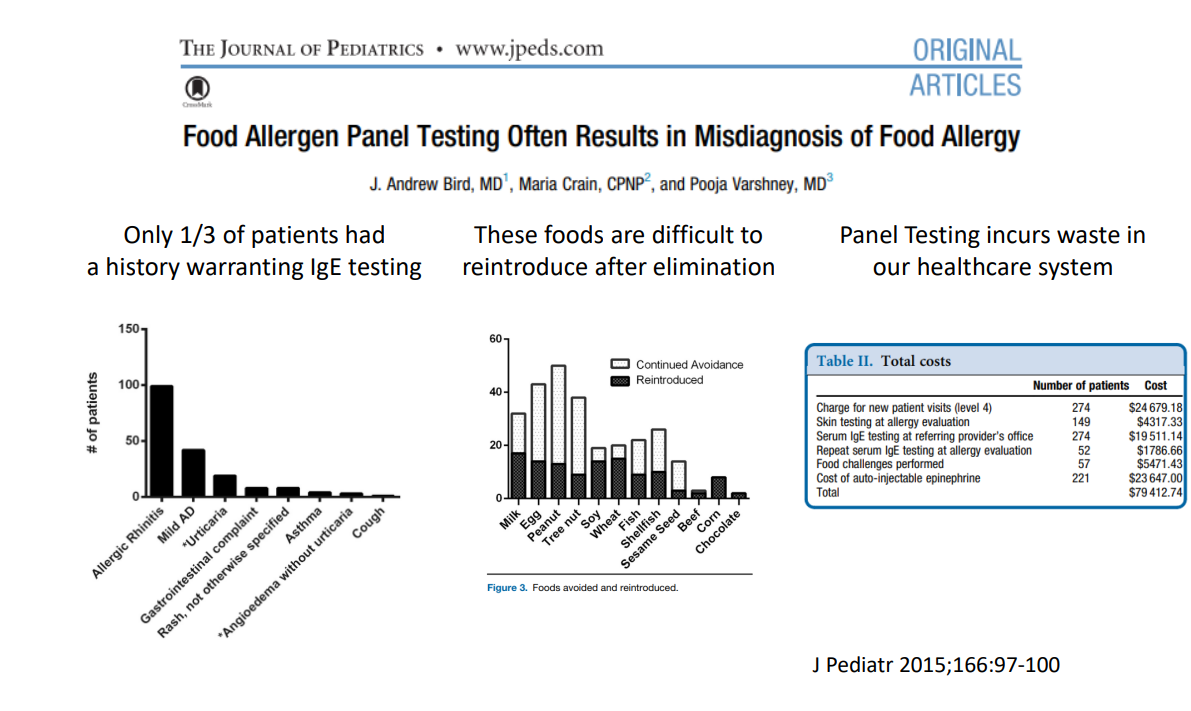
Most parents, and many physicians, do not understand the limitations of food allergy testing.  As I am sure is common among physicians, I frequently receive requests for food allergy testing; parents do not realize that the strategy for food allergy testing is not straight-forward and has not advanced significantly for decades.  This information is detailed in a recent study and associated editorial (J Pediatr 2015; 166: 97-100, editorial 8-10: “Pitfalls in Food Allergy”).

The study was a retrospective review of all new patients seen at a pediatric food allergy center (2011-2012).  This involved a review of 797 new patients.

Key findings:

  • Of 284 patients who had received a food allergy panel, only 90 (32.8%) had a history warranting evaluation for food allergy.
  • Among 126 individuals who had food restrictions imposed based on food allergy panel testing, 112 (88.9%) were able to re-introduce at least 1 food into their diet.
  • The positive predictive value of food allergy testing was 2.2%.

So what can we learn from this study and editorial?

Misdiagnosis often relates to a lack of understanding regarding serum IgE-based testing.  First of all, many children with atopic dermatitis (and other atopic conditions) have elevated total IgE which results in more false positives.  In addition, a positive IgE test for a specific food indicates sensitization but not necessarily an allergy.

Strategy for testing (recommended by editorial):

  • “The key to the diagnosis of food allergy cannot be overstated; it begins with a detailed clinical history”
  • Testing should be “limited in general to the food(s) in question.”
  • When there is uncertainty, oral food challenges can be performed by specialists.
  • “If a patient is consuming a food without clinical symptoms of allergy, allergy testing should not be done to that food.”

Bottomline (from authors’ conclusion): “Food allergy panel testing often results in misdiagnosis of food allergy, overly restrictive dietary avoidance, and an unnecessary economic burden on the health system.”

Related blog posts: