Guselkumab: Expanding the GALAXI of Treatments for Crohn’s Disease

WJ Sandborn et al. Gastroenterol 2022; 162: 1650-1664. Open Access: Guselkumab for the Treatment of Crohn’s Disease: Induction Results From the Phase 2 GALAXI-1 Study

Background: Guselkumab, a selective p19 interleukin-23 antagonist, is approved for the treatment of plaque psoriasis and psoriatic arthritis.

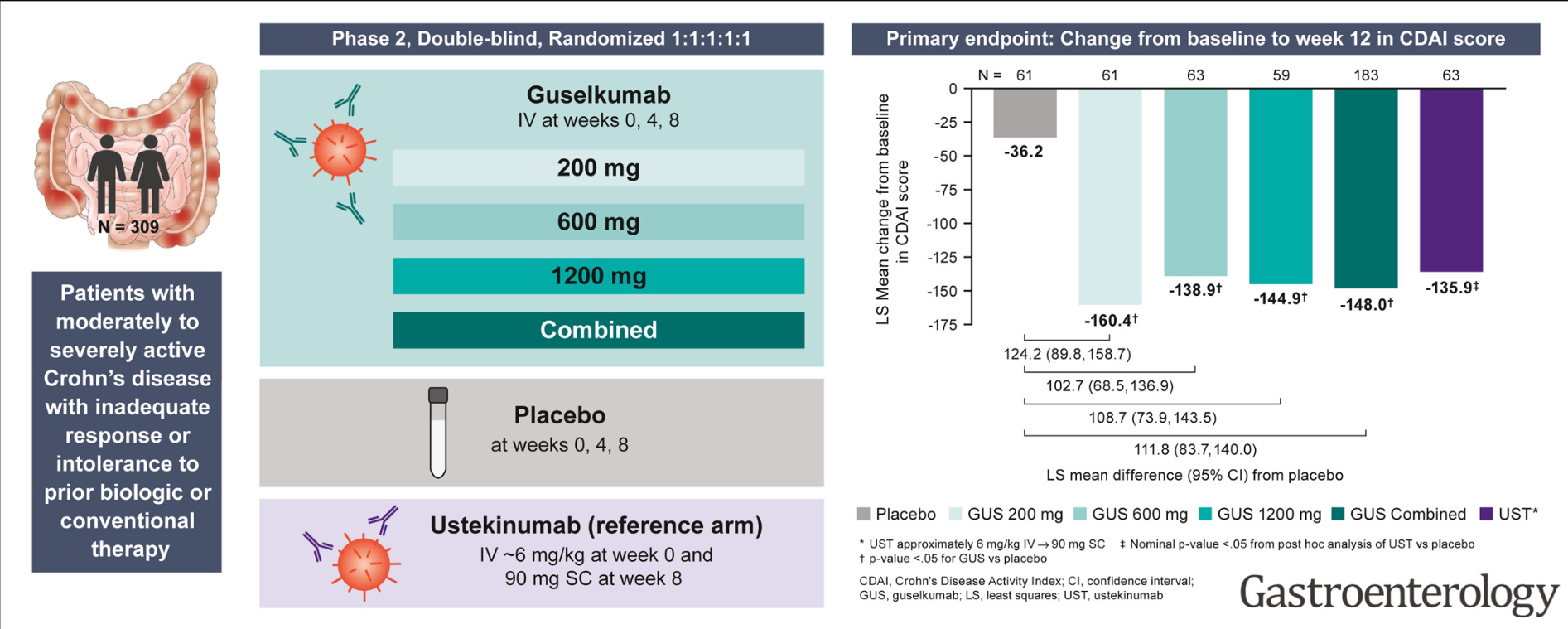
Methods: GALAXI-1, a phase 2, double-blind, placebo-controlled study, randomized patients with moderate to severe Crohn’s disease 1:1:1:1:1 to intravenous guselkumab 200 mg, 600 mg, or 1200 mg at weeks 0, 4, and 8; intravenous ustekinumab approximately 6 mg/kg at week 0 and 90 mg subcutaneously at week 8; or placebo. n=309 with ~50% having disease refractory to prior biologics

Key findings:

  • At week 12, significantly greater reductions in Crohn’s Disease Activity Index from baseline (least squares means: 200 mg: –160.4, 600 mg: –138.9, and 1200 mg: –144.9 vs placebo: –36.2; all, P < .05) and significantly greater proportions of patients achieved clinical remission in each guselkumab group vs placebo
  • Improvement compared to placebo was evident as early as week 4
  • Safety event rates were generally similar across treatment groups

My take: This is an exciting time for practitioners taking care of patients as there are an increasing number of pharmacologic and dietary treatments for inflammatory bowel disease. With guselkumab, there may be an overlapping mechanism with ustekinumab which targets IL-12/23.

Related blog post: Emerging Data on Risankizumab for Crohn’s Disease
Economic Burden of Inflammatory Bowel Disease, Fewer Operations and Emerging Treatments

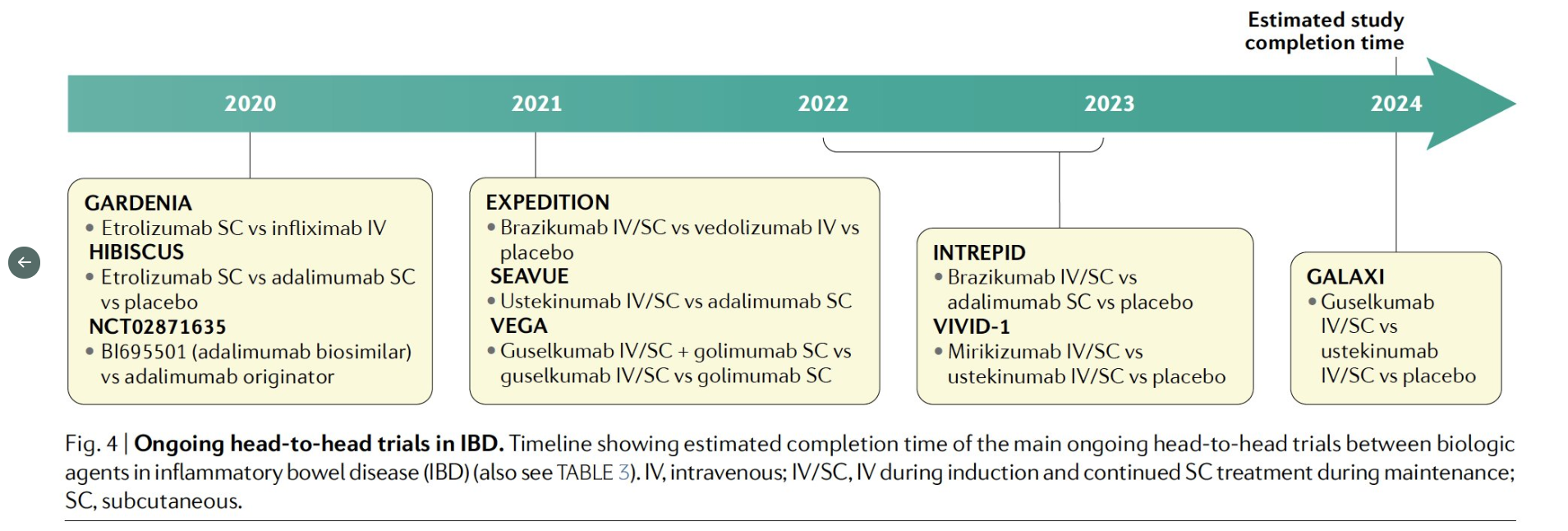
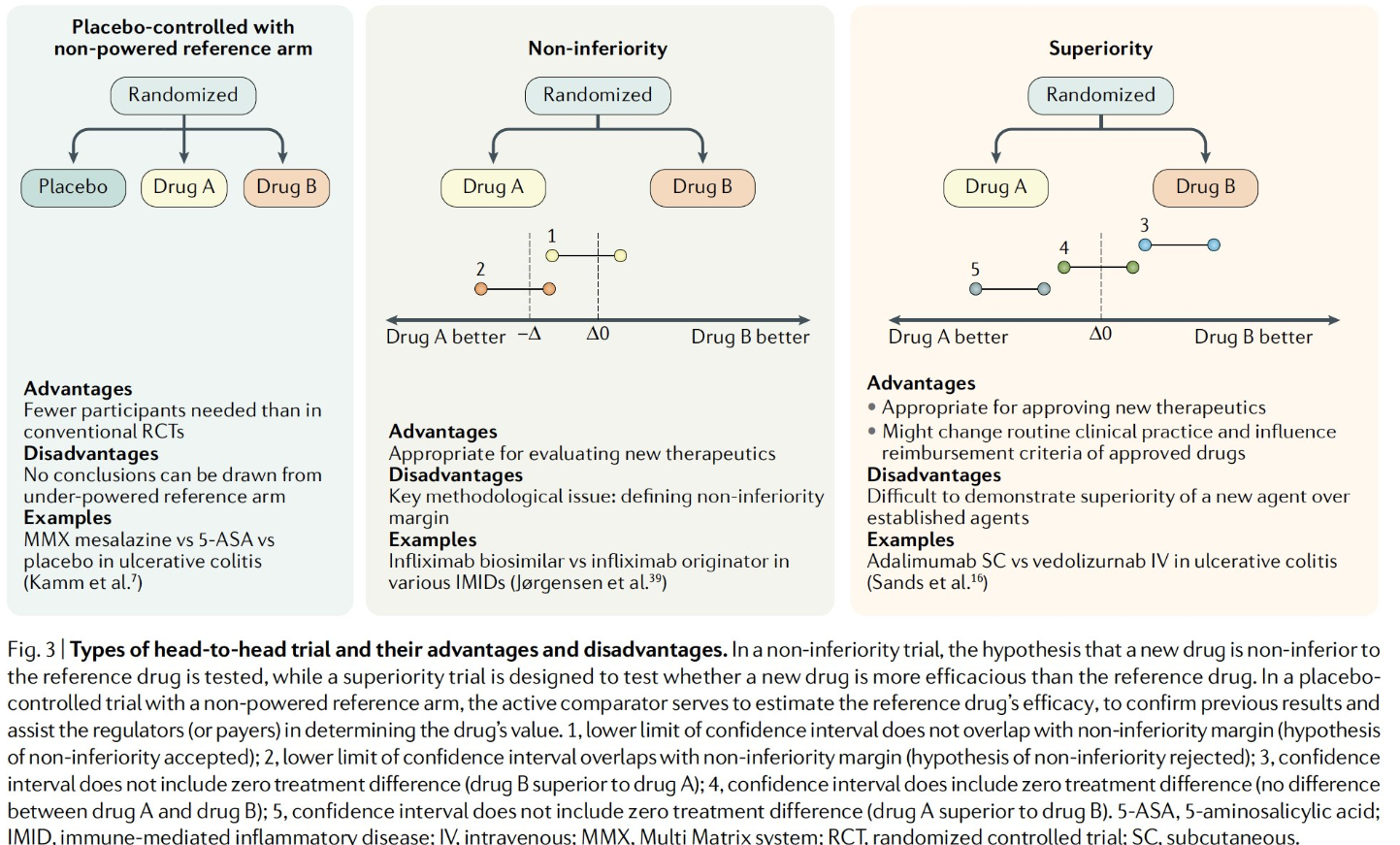
Pouillon, L., Travis, S., Bossuyt, P. et al. Head-to-head trials in inflammatory bowel disease: past, present and futureNat Rev Gastroenterol Hepatol (2020). https://doi.org/10.1038/s41575-020-0293-9 (Thanks to KT Park for this reference)

An excerpt:

This Perspective provides an overview of the past, current and future concepts in IBD trial design, with a detailed focus on the role of comparative research and the challenges and pitfalls in undertaking and interpreting the results from such studies.

Related blog posts:

GR Lichenstein et al. Clin Gastroenterol Hepatol 2020; 18: 889-97.  Using Truven MarketScan Insurance Claims data (2008-2015) from more than 160,000 patients with inflammatory bowel disease (IBD), the authors estimated economic burdens from Crohn’s disease (CD) and ulcerative colitis (UC).

  • For CD, lifetime incremental cost was $416,352 on average, but was $707,711 if diagnosis was established between 0-11 years of age. The lifetime costs, $622,056, consisted of $273,056 for outpatient care, $164,298 for inpatient care, $163,722 for pharmacy costs, and $20,979 for emergency room care.
  • For UC, lifetime incremental cost averaged $230,102, but was $369,955 if diagnosis was established between 0-11 years of age. The lifetime costs, $405,496, consisted of $153,670 for outpatient care, $123,190 for inpatient care, $105,142 for pharmacy costs, and $13,493 for emergency room care.
  • The lifetime costs for UC and CD were both greater than that for rheumatoid arthritis ($100,273) and for type 2 diabetes ($89,064).
  • Related blog postIBD Shorts 2020  Cost of IBD Care is Increasing. From Healio Gastro: Chronic inflammatory disease expenditures nearly double over last 2 decades

T Shinagawa et al. Clin Gastroenterol Hepatol 2020; 18: 898-907.  In this study from Japan with 1871 patients with CD, the 5- and 10-year reoperation rates were 23.4% and 48.0% respectively.  However, reoperation rates were significantly lower after 2002 than prior with HR 0.72.  Postoperative use of immunomodulators (OR 0.60) and anti-TNF therapy (HR 0.71) were associated with a reduced the risk of reoperation.