Aspen Webinar 2021 Part 4 – IFALD Update

More from Aspen Webinar 2021. This blog entry has abbreviated/summarized several presentations. Though not intentional, some important material is likely to have been omitted; in addition, transcription errors are possible as well. An excellent review from Dr. Sokol.

What’s New with IFALD Ronald Sokol

Key points:

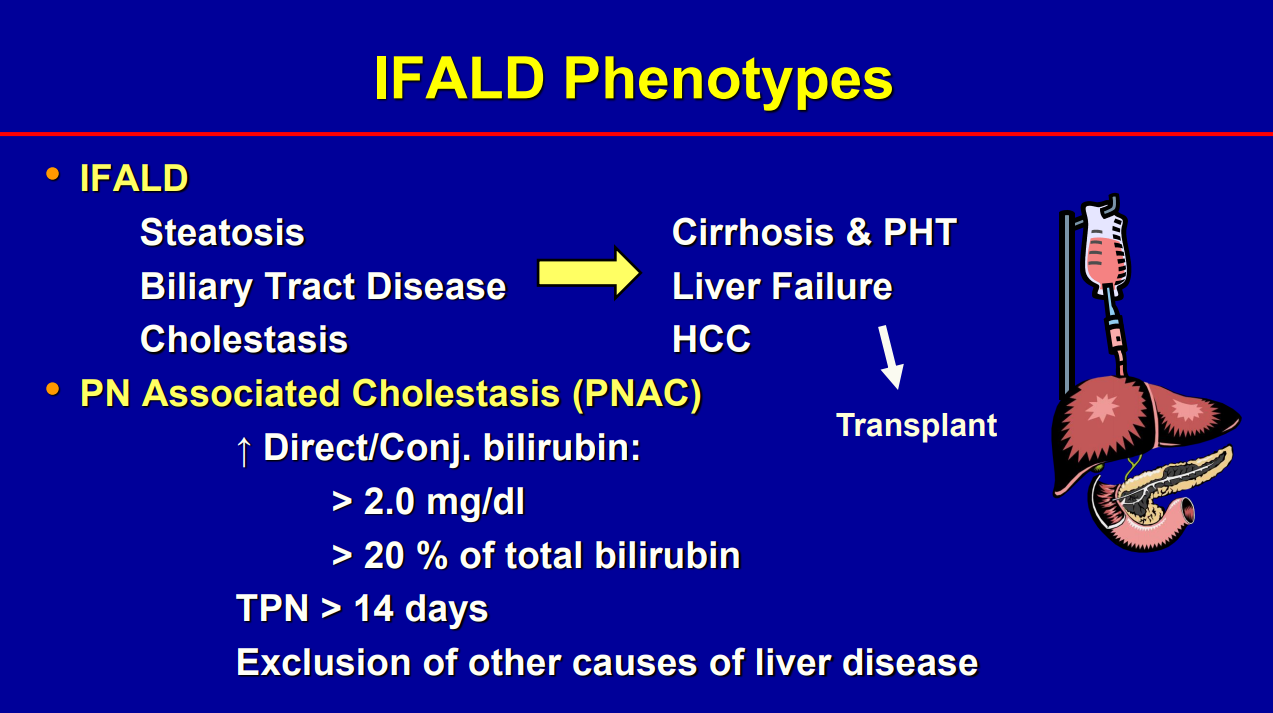
  • Biliary cirrhosis related to parenteral nutrition has been the major indication for small bowel  transplantation/multi-visceral transplantation. IFALD presentations: Steatosis, biliary tract disease and cholestasis
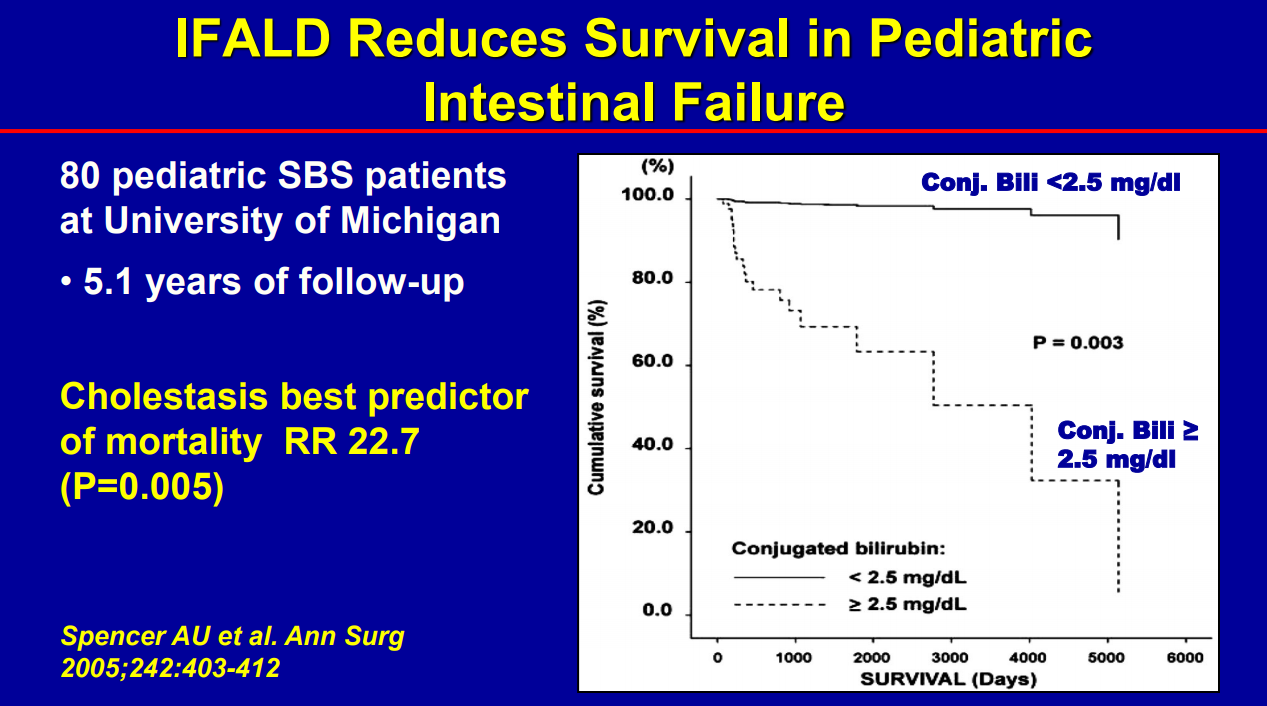
  • Conjugated bilirubin >2.5 had RR 22.5 for mortality (prior to availability of intestinal transplantation)
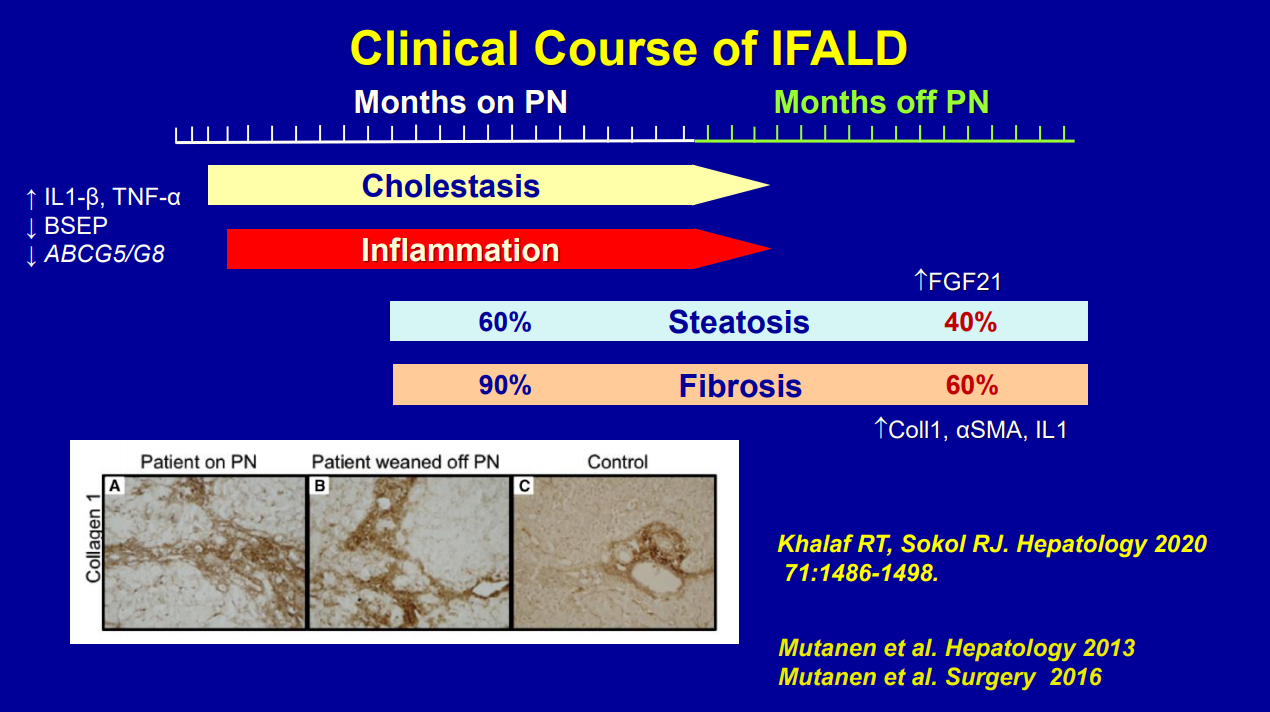
  • Even after weaning off PN, studies have shown long-lasting fibrosis and steatosis in more than 40% of patients (>8 yrs off PN)
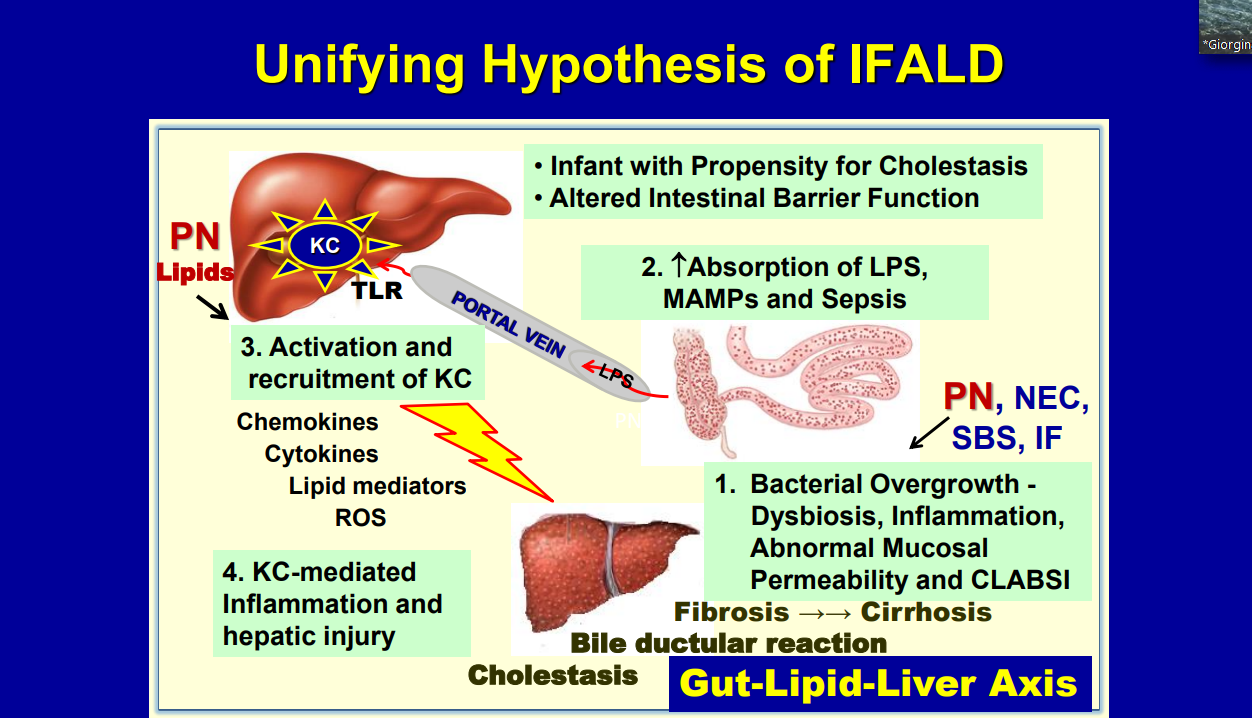
  • Intestinal microbiome is altered in patients with IFALD
  • Puder M et al. (Ann Surg 2009; 250: 395) showed that fish oil (at lower doses) was associated with improvement/resolution of parenteral nutrition associated cholestasis (PNAC)
  • Lipid reduction also is associated with cholestasis resolution
  • Treatments: Advance enteral feeds, lipid modulation, prevent CLABSI, treat bacterial overgrowth, GLP-2, and STEP procedure/tapering
  • SMOF lipid allows full dosing of lipids (3 gm/kg)
  • Caution with Fish oil (omegaven): 1. Does not prevent hepatic fibrosis progression 2. Reduction of lipid doses can have negative effects on brain growth
  • Lipid management has been crucial in reducing the number of children needing intestinal transplantation

Some of the slides:

IBAT Inhibitors Frederick Suchy

Key  points:

  • IBAT inhibitors block intestinal absorption of bile acids/disrupt enterohepatic circulation; this leads to augmented bile acid excretion in stools
  • IBAT inhibitors may reduce liver damage in the setting of cholestasis/accumulation of toxic bile acids
  • Potential diseases for IBAT inhibitors include Alagille syndrome and PFIC
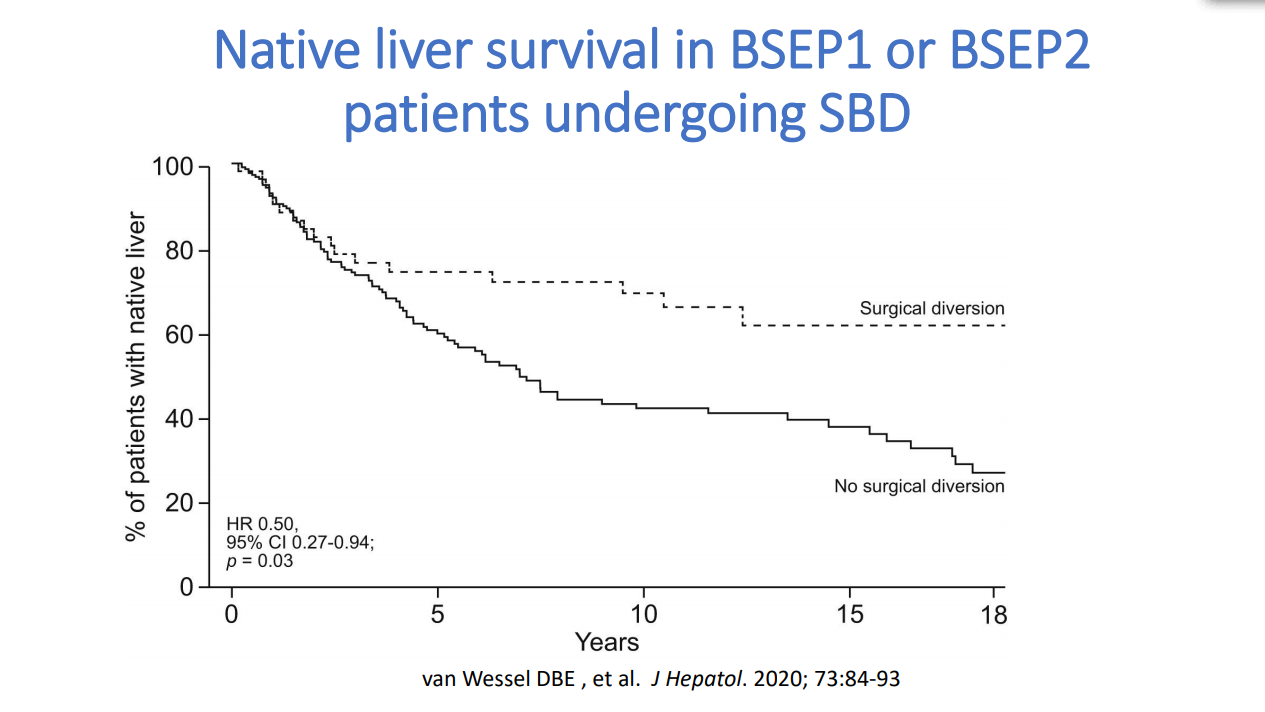
  • Van Wessel et al (J Hepatol 2020; 73: 84-93) correlated survival with PFIC1/PFIC2 with bile acid levels and showed improvement in survival in those with surgical biliary diversion
  • Goals for IBAT inhibitor trials: improvement in pruritus, bile acids, reduced ALT, hepatic fibrosis, HCC and need for liver transplantation
  • Marixibat is available for use as an FDA approved breakthrough medication for Alagille and PFIC2 in pediatric patients older than 1 year
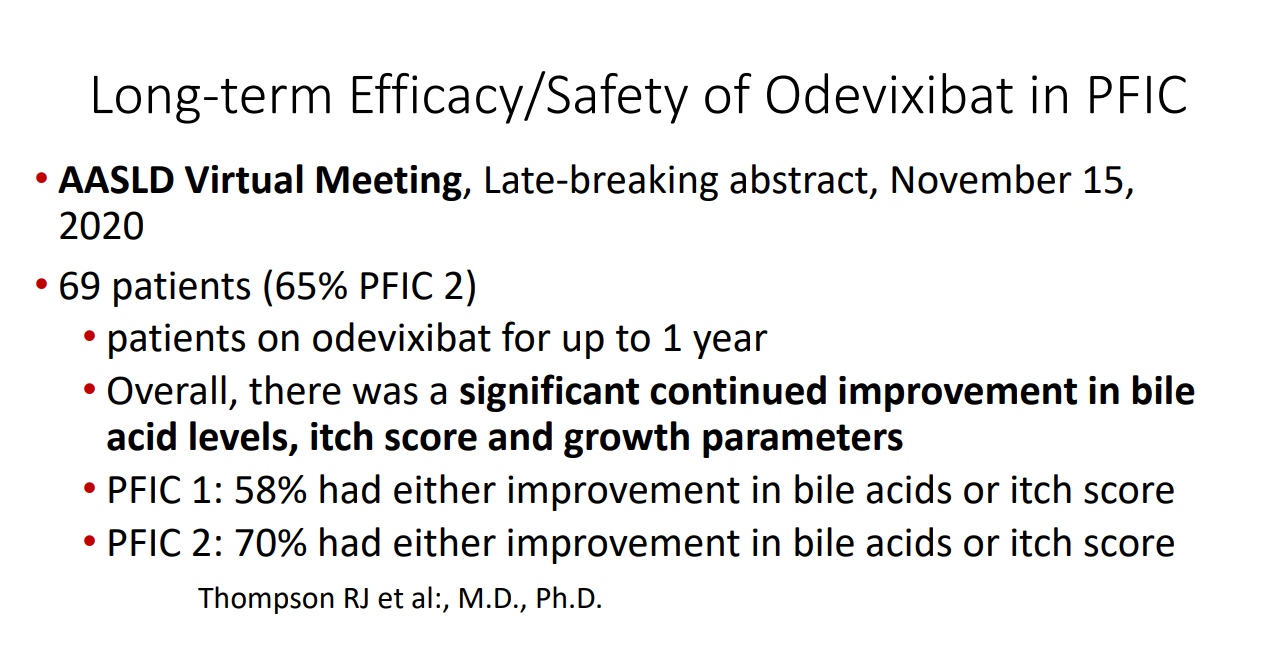
  • Odexibat is designated as an orphan drug for Alagille, PFIC, PBC, and biliary atresia
  • Safety appears good with IBAT inhibitors. Fat soluble vitamin monitoring is needed

Case report: Alejandro Velez Lopez

3 yo presented with fatigue and jaundice, 3 weeks after COVID-19 infection. She was not taking any medications.  Labs:  ALT 939, AST 1321, T bili 5.5, D bili 0.9, INR 2, Plts 174, Hgb 12.8, LDH 1297. remained positive for SARS-CoV2 by PCR. Acetaminophen -no exposure.  Evaluation: LKM 1:1280. Neg ANA, NL Ferritin, NL sIL2r, Other viral studies negative, NL IgG. Developed encephalopathy with NH4 317, INR peaked at 2.8.  Treated with steroids, rifaximin and lactulose.  Liver biopsy showed sub-massive necrosis and fibrosis (indicative of  autoimmune hepatitis, likely triggered or exacerbated by COVID-19).  Patient responded to medical therapy and did not require liver transplantation.

Parenteral Nutrition: “The Scar Remains”

A recent study (KM Gura et al. J Pediatr 2021; 230: 46-54. Fish Oil Emulsion Reduces Liver Injury and Liver Transplantation in Children with Intestinal Failure-Associated Liver Disease: A Multicenter Integrated Study) provides multicenter data comparing fish oil emulsion (FOLE) (Omegaven) with a historical control of soybean emulsion (SOLE) (Intralipid). The FOLE group was enrolled between 2004-2018; the SOLE group had data from 1999-2012.

Key points:

  • Among FOLE recipients (n=189), 65% experienced cholestasis resolution vs 16% of SOLE recipients (n=73) (P < .0001).
  • The aspartate aminotransferase to platelet ratio index scores improved in FOLE recipients (1.235 vs 0.810 and 0.758, P < .02) but worsened in SOLE recipients (0.540 vs 2.564 and 2.098; P ≤ .0003) 
  • Liver transplantation was reduced in FOLE vs SOLE (4% vs 12%; P = .0245).

My main criticisms of the study:

  1. While the methods explain that FOLE received 1 gm/kg/d, compared with 3 gm/kg/d for SOLE, this was NOT reviewed in the discussion. This is quite important in terms of proving that one product is preferred over the other. With lipid toxicity, it would be expected that delivering 3 times as much would be more damaging on the liver.
  2. The discussion does not discuss the potential neurological consequences of lipid minimization/lower doses of lipids. In the same Journal of Pediatrics issue, Bell et al report that 77% of SBS in their cohort of extremely premature infants with short bowel syndrome had moderate-to-severe neurodevelopmental impairment (related blog post: Neurodevelopmental Impairment in the Majority of Extremely Premature Infants with Short Bowel Syndrome)
  3. The discussion has only a single sentence regarding the change in care between the eras of SOLE and FOLE: “Additional limitations include a relatively small sample size and changes in surgical, medical, and nutritional practice between the 2 eras that could not be controlled for this study.”
  4. Also, the discussion omits the development of other FOLE alternatives (eg. SMOFlipid) which has been a very important advance in the management of patients with SBS.

The commentary by Samuel Kocoshis (J Pediatr 2021; 230: 11-12) provides a good deal of insight. The title and first paragraph provides some interesting historical context: (full text) “Even When the Would Is Healed, the Scar Remains” “The above maxim was coined by the Roman author Publilius Syrus when referring to wounds of most tissues or body parts.1 Because hepatic regeneration was recognized (as evidenced by the story of Prometheus’s liver being eaten daily by an eagle only to regenerate the next day) in Syrus’s time, his dictum was too far too simplistic when applied to the liver. One must delve more deeply into the mechanism of liver injury to ascertain just when hepatic scaring persists or when it disappears.”

My take: This study illustrates harm reduction with the change in lipid administration. The development of new lipid products has made a huge difference in the outcomes of children with short bowel syndrome.

Related blog posts:

What Happened to Skepticism re: Lipid Emulsion Position Paper

A recent position paper (from ESPGHAN) (I Hojsak et al. JPGN 2016; 62: 776-92) made me wonder how different people can look at the same data and come to opposite conclusions.

In short, this article systemically reviews intravenous lipid emulsions and the risk of hepatotoxicity.  The review on the data is quite helpful.  The authors conclude that short-term use of the various emulsions currently in use do not result in a significant difference in neonates, infants and children.

The authors acknowledge that the data for long-term use of these emulsions is limited. They state that “there is evidence indicating that just tailoring and adjusting PN in children on long-term PN could improve liver disease, meaning that the focus should not only be on the type of ILE.”

“Although the quality of data are lacking there is some evidence that the use of multicomponent fish oil-containing ILE may contribute to a decrease” in liver toxicity.

What I don’t understand: The authors recommend: “it appears prudent to use multicomponent FO [fish oil]-containing ILE (GR C)” and literally the next sentence: “The present evidence base is inadequate to determine the optimal strategy for intravenous lipid supply.”

My take: I think we need to gather the data before having official position paper  recommendations.

Related blog posts:

2min warning doesn't help