“Proposed Medicaid Cuts Could Lead to Thousands of Preventable Deaths Annually” & Personal Message

6/17/25 Healio, E Bascom: Proposed Medicaid cuts could lead to thousands of preventable deaths annually

An excerpt:

Congress passing the controversial One Big Beautiful Bill Act could leave millions without insurance and lead to at least 16,000 annual preventable deaths, according to research published in Annals of Internal Medicine

Arthur L. Caplan, PhD, a professor and founding head of the division of medical ethics at NYU Grossman School of Medicine, told Healio that the authors’ “warnings about what will happen should the Big Beautiful Bill go through have to be taken very seriously.”

“I think the fallout in terms of impact on Medicaid populations … people losing coverage who would then lose access [to health care] is morally staggering and unacceptable,” he said. “We are taking some of the most vulnerable people in society … and cutting back what is often somewhat meager benefits to begin with…”

A brief recently published by the Robert Wood Johnson Foundation also examined the potential impact of Medicaid cuts. Researchers revealed that, if the bill passes, national health care spending would drop by $797 billion over the next 10 years… They found that physicians would see an $81 billion cut, but hospitals would see the biggest decline in spending, at $321 billion.

Cited Study: A Gafney et al. Annals of Internal Medicine 2025; https://doi.org/10.7326/ANNALS-25-00716 Open Access! Projected Effects of Proposed Cuts in Federal Medicaid Expenditures on Medicaid Enrollment, Uninsurance, Health Care, and Health

An excerpt:

Enactment of the House bill advanced in May would increase the number of uninsured persons by 7.6 million and the number of deaths by 16 642 annually, according to a mid-range estimate…These estimates may be conservative. They rely on CBO’s assumption that states would replace half of the federal funding shortfall…Medicaid cuts would likely also increase uncompensated care, stressing hospitals and safety-net clinics and causing spillover effects on other patients…

ACA boosted enrollment to more than 90 million. Today, despite its many shortcomings, Medicaid enjoys wide support from the electorate and serves as the foundation of the nation’s health care safety net. The cuts under consideration, intended to offset the cost of tax cuts that would predominantly benefit wealthier Americans, would strip care from millions and likely lead to thousands of medically preventable deaths.

My take: Yogi Berra is attributed with the saying, “It’s tough to make predictions, especially about the future.” While this is true, it is highly likely that huge cuts in Medicaid funding will result in huge numbers who lose health insurance with subsequent increases in mortality and other adverse outcomes.

Related article: M Mineiro and M Sanger-Katz, NY Times 6/19/25: ‘Little Lobbyists’ Urge Senators to Oppose Trump’s Bill Cutting Medicaid

Related blog posts:

Personal Message:

Atlanta Botanical Gardens

Why the Proposed Medicaid Cuts Matter: Children and Other Vulnerable Populations Will Suffer

E Park. NEJM 2025; DOI: 10.1056/NEJMp2501855. Medicaid on the Chopping Block

An excerpt:

A top priority for Congress and President Donald Trump is extending and expanding tax cuts expiring at the end of 2025…Republican leaders in the House intend to make at least $880 billion in Medicaid cuts over 10 years to offset some of the tax cuts’ $4.5 trillion cost…

Medicaid, however, is more essential than it has ever been. It provides affordable, comprehensive health coverage to more than 72 million low-income Americans1…Medicaid covers about 40% of all children and births in the United States. It covers more than one third of people with disabilities and 44% of children with special health care needs…

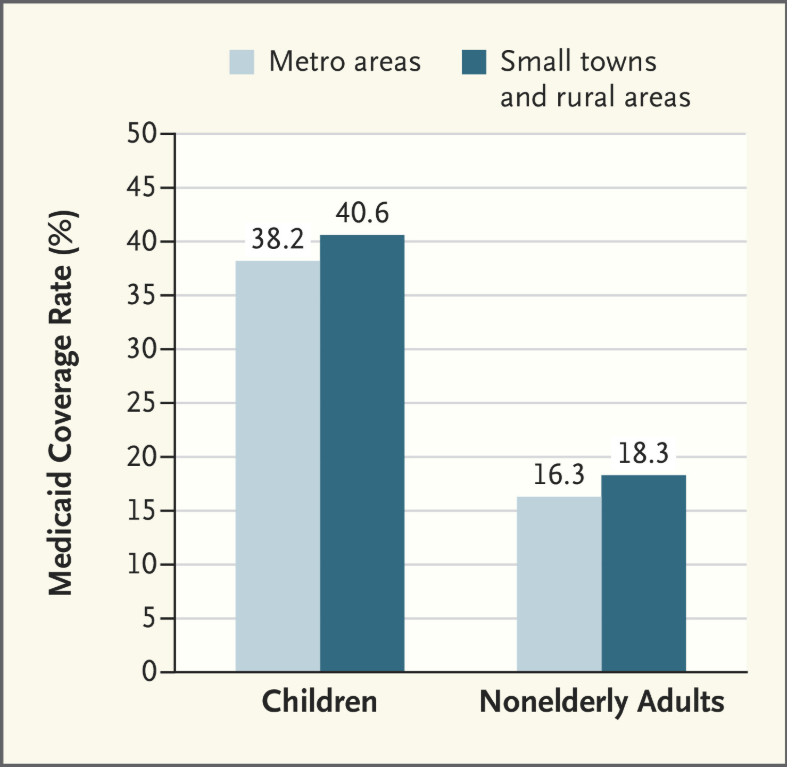
Medicaid is especially vital for rural communities. Residents of small towns and rural areas disproportionately rely on Medicaid…

Under many of these proposals, states would face drastic reductions in federal Medicaid funding….states would have to choose among three painful options. They could dramatically raise income and sales taxes. They could deeply cut other parts of their budgets, such as budgets for K–12 education and higher education, which account for about 43% of states’ own spending. Or — the option most states would have to choose — they could slash their Medicaid programs by substantially narrowing Medicaid eligibility, restricting benefits, making it harder for eligible people to enroll in and renew coverage, and making sharp cuts to already low reimbursement rates for hospitals, physicians, and nursing homes.

As a result, many low-income children, parents, people with disabilities, older adults, and others would be at risk for becoming uninsured and forgoing needed care…As opposition becomes increasingly public, widespread, and vocal, congressional Republican leaders could ultimately view severe Medicaid cuts as too politically difficult and decide they need to drop them from budget reconciliation.

My take: This article elaborates on all the ways that Congress could curtail Medicaid spending. Ultimately, all of them will leave the states with additional costs if they are to maintain current coverage levels. Even with the proposed cuts to Medicaid, the tax cut plan is projected to add two trillion dollars each year during this administration.

Related article: 3/2/25 Patricia Murphy, AJC: Medicaid cuts from Washington would gut this Georgia pediatrician’s practice (behind paywall) “A South Atlanta pediatrician [Dr. Dorsey Norwood] says 85% of her patients are covered by government health care program…For at least one Georgia pediatrician, cutting Medicaid benefits for her young patients would leave a wound in her practice that even she couldn’t heal.”

High Rates of Denying Medical Care for Medicaid Patients Managed by Health Insurers

7/19/23 NY Times: Insurers Deny Medical Care for the Poor at High Rates, Report Says

Some excerpts:

Private health insurance companies paid by Medicaid denied millions of requests for care for low-income Americans with little oversight from federal and state authorities, according to a new report by U.S. investigators published Wednesday.

Medicaid, the federal-state health insurance program for the poor that covers nearly 87 million people, contracts with companies to reimburse hospitals and doctors for treatment and to manage an individual’s medical care. About three-quarters of people enrolled in Medicaid receive health services through private companies, which are typically paid a fixed amount per patient rather than for each procedure or visit.

The report by the inspector general’s office of the U.S. Department of Health and Human Services details how often private insurance plans refused to approve treatment and how states handled the denials.

Doctors and hospitals have increasingly complained about what they consider to be endless paperwork and unjustified refusals of care by the insurers when they fail to authorize costly procedures or medicinesThe investigators also raised concerns about the payment structure that provides lump sums per patient. They worried it would encourage some insurers to maximize their profits by denying medical care and access to services for the poor...

The investigators emphasized the insurers were much more aggressive in refusing to authorize care under Medicaid than under Medicare…Unlike with Medicare, if an insurer refuses to authorize a treatment, patients are not automatically provided with an outside medical opinion as part of their appeal...

The investigators also found that state oversight of coverage denials was lax. Many states do not routinely examine the insurers’ denials nor collect information about how many times a plan denies requests for prior authorization...

The denial rates recorded by the investigators varied widely by insurer and by state.

My take: This is more evidence of the distorted incentives in U.S. healthcare where health insurance companies profit when patients are denied beneficial care.

Related blog posts:

Le Jardin Exotique, Eze France
Narrow walkways in Eze, France

“Socialism” is Already Here & Increasing in U.S. Health Care

The U.S. government now pays for nearly 50% of health care expenditures (Government Now Pays For Nearly 50 Percent Of Health Care Spending, An Increase Driven By Baby Boomers Shifting Into Medicare, Kaiser Health News, 2/21/19). Both in adults and children, the share of public sector spending is increasing. The biggest areas of costs include Medicare, Medicaid, CHIP and Veterans health care. The U.S. government also funds the HHS which includes the FDA, NIH, CDC, and AHRQ.

A recent commentary (JM Perrin et al. NEJM 2020; 383: 2595-2598. Medicaid and Child Health Equity) describes what is happening with Medicaid and the Children’s Health Insurance Program (CHIP).

Key points:

  • Over the past 20 years, the proportion of pediatric health care coverage provided by Medicaid and CHIP has been increasing. In 1997, these programs represented about 15% of health care coverage compared to ~35% in 2018. This corresponds to reductions in employer-provided coverage
  • Unlike private insurance, Medicaid is always available as it doesn’t have fixed enrollment periods
  • Medicaid disproportionately covers minority populations
  • State funding of Medicaid creates challenges. “States have routinely used strategies for limiting enrollment”
  • “Medicaid’s low physician payment rates, which average about two-thirds of rates paid by Medicare for the same services, depress physician participation…Lack of access to specialists poses additional problems in many communities”
  • The authors recommend the following:
    • Medicaid should be expanded to cover all children from birth through 21 years of age
    • The federal government should assume full financial responsibility
    • Medicaid payments should parallel national Medicare standards

Related blog posts:

AAP -Behind the Scenes (Part 1)

Recently I was asked to become a board member for the Georgia Chapter of the American Academy of Pediatrics (AAP) in the role of chair of the section of nutrition.  My role at this meeting was limited.  I was impressed by the commitment of the participants and by the range of activities that the AAP chapter was working on –all in the efforts of improving the health of children in Georgia.

I only took a few notes but here are some of the details.  Dr. Evelyn Johnson (President) provided the president’s report and an overview of the chapter activities.

Dr. Anu Sheth provided an update on the Medicaid Task Force.  This issue was discussed in some detail.  The issue at stake is the low reimbursement for office visits for children with Medicaid coverage; the rate has not changed in 13 years with one notable exception.  In 2013-2014, the federal government provided a one-time boost in the rates of Medicaid reimbursement with the role out of the ACA (Obamacare) to encourage availability of primary care physicians to see the new enrollees.  There is preliminary evidence that this boost did improve access to care.

According to a recent study (NEJM 2015; January 21, 2015DOI: 10.1056/NEJMsa1413299), “Our study provides early evidence that increased Medicaid reimbursement to primary care providers, as mandated in the ACA, was associated with improved appointment availability for Medicaid enrollees among participating providers without generating longer waiting times.”

Since 43.2% of all children in Georgia receive their health insurance through Medicaid this is a big issue.  It is also directly related to another topic of provider access.  61 counties in Georgia have a deficit of needed pediatricians and 23 counties have no pediatrician at all.  Currently, Medicaid rates to physician practices are only about 75% of Medicare rates and compared to commercial insurance plans, they pay only half.

Based on these considerations, the AAP is urging its members to contact their state legislators, particularly those more involved in the budget decision-making process.  While bumping Medicaid rates in the face of other budget constraints may be difficult, default limiting of access results in higher costs through emergency room visits and complications.

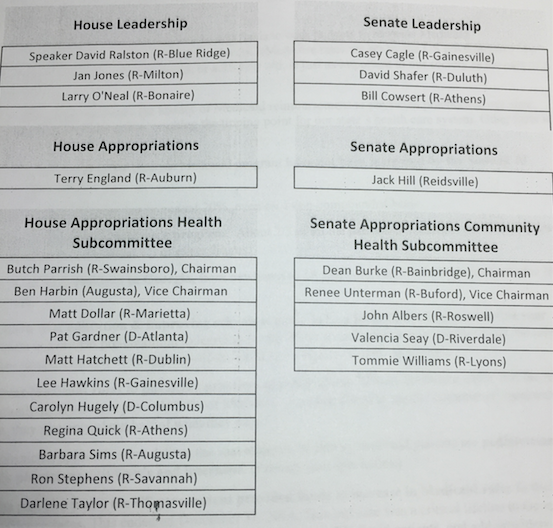
Georgia Politicians with Greatest Impact on Healthcare Decisions

Georgia Politicians with Greatest Impact on Healthcare Decisions

Rural communities are more affected by access issues than urban counties.  Dr. Angela Highbaugh-Battle provided an update on the Governor’s Rural Hospital Task Force.  There have been a number of hospital closures and more appear to be imminent.  Communities that are losing hospitals are losing important jobs, access to timely care, and will have difficulty attracting new businesses.

Another related topic was the issue of ‘retail-clinic’ healthcare.  While the ease of access is quite helpful for families, there are numerous concerns about the quality of care.  Several clinicians described their efforts to provide alternatives including extended hours in their practices and weekend hours as well.

Here’s a related article: “Retail clinics are in, traditional primary care practices are out”

One fascinating aspect about the discussion of retail clinics was its juxtaposition with efforts to improve the process of remaining board-certified (See related blog: Resistance to Maintenance of Certification | gutsandgrowth).  Given the increasing use of retail-clinics and midlevel providers, several clinicians emphasized that board-approval is not a strong consideration for families seeking healthcare.  The fact that the board approval process is not tied to a broad effort to show its impact on patient care and/or to market the efforts of pediatricians has led to widespread dissatisfaction.

Take-home message: The issue of adequate access to primary care physicians along with high quality care is important for everyone.  Make your voice heard!

Related blog posts:


Safety Net Hospitals -Left in the Lurch

A recent perspective piece highlights a new threat to safety-net hospitals (NEJM 2013; 369: 1675-77).

Safety-net hospitals are often referred to as Medicaid Disproportionate Share Hospitals (DSHs).  “Only 2% of acute care hospitals nationwide are safety-net facilities, but they provide 20% of uncompensated care to the uninsured.”  Currently, Medicaid allocates $11.5 billion to support these hospitals.  However, this money is provided to the states and many states including Georgia and Ohio spread these payments broadly rather than targeting these DSHs.

The newest threat:  “Because the Affordable Care Act (ACA) was expected to dramatically expand insurance coverage, safety-net hospitals were expected to need less DSH money…the ACA reduced Medicaid DSH funding by $1.8 billion between fiscal years 2014 and 2020.”  And, “because many states that won’t expand Medicaid currently receive large DSH payments, their safety hospitals will be hit hard when the DSH cuts kick in.”

There are several proposals that the Centers for Medicare and Medicaid Services (CMS) are reviewing to try to address this problem.  However, the authors note that it is unlikely that Congress will restore DSH funding to previous levels.

Bottomline: “If the state governments that refused to expand Medicaid also refuse to rethink their approach to allocating DSH funds, there will be little money left to sustain their safety-net hospitals.”

Related blog post:

Life in the balance (book) | gutsandgrowth