FDA Approves Semaglutide for MASH

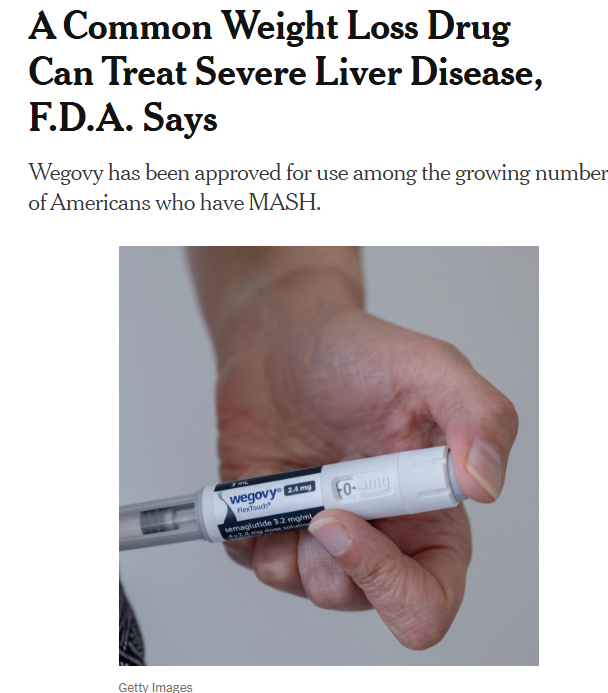
Dani Blum, NY Times 8/18/25: A Common Weight Loss Drug Can Treat Severe Liver Disease, F.D.A. Says
An excerpt:

Roughly 15 million people — six percent of adults in the United States — have metabolic dysfunction-associated steatohepatitis, known as MASH. Rates of the disease are rising…

Wegovy, which is a weekly injection, is now approved for adults with MASH and moderate-to-advanced levels of fibrosis, or excessive scar tissue in the liver. The drug is not intended for people with cirrhosis…

Wegovy will be a welcome addition to the options doctors can prescribe — as long as their patients can access them. The drug carries a list price of over $1,300 a month, although most people do not pay that full amount. Many people have lost insurance coverage for weight-loss drugs, as plans struggle to keep up with the costs.

Related review article: G Targher et al. NEJM 2025; 393: 683-698. Metabolic Dysfunction–Associated Steatotic Liver Disease. This review article succinctly covers the epidemiology, manifestations, disease progression and pivotal pharmacologic advances.

Related blog post: Semaglutide’s Efficacy in Phase 3 MASH Trial
EAT-Lancet Diet Associated with Reduced Risk of MASLD

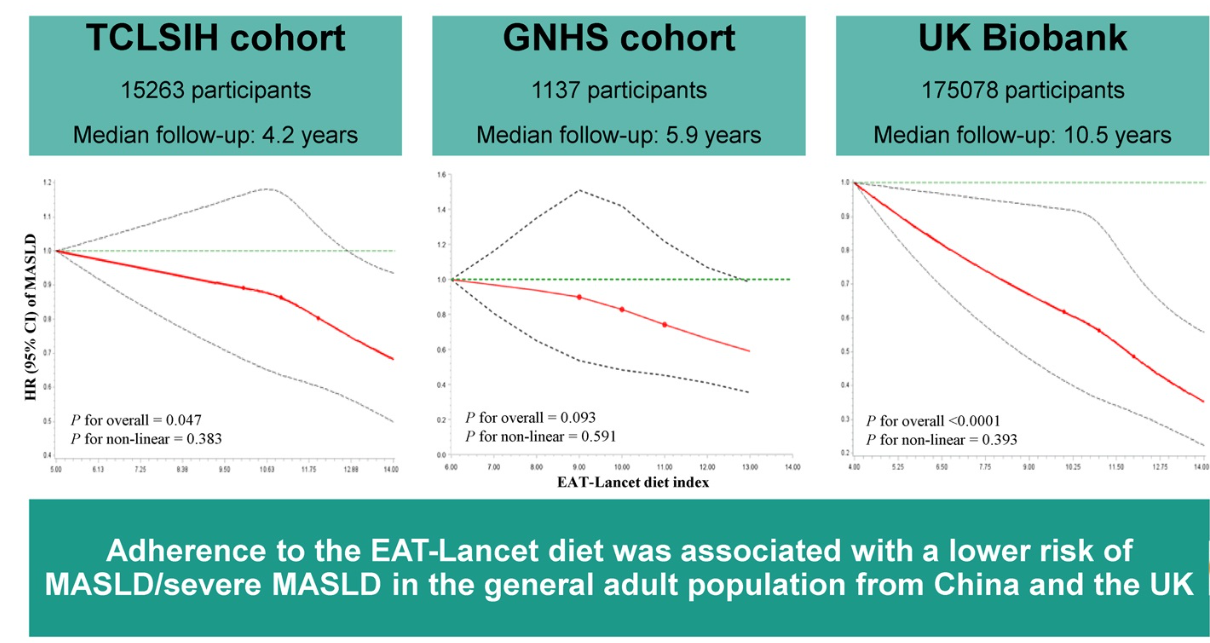
From the commentary: “In 2019, the EAT-Lancet Commission on Food, Plant, and Health proposed a planetary health diet, known as the EAT-Lancet reference diet, that promotes human health and sustainable food production globally…and recommends fruits, vegetables, whole grains, plant-based proteins (eg. legumes, nuts) and unsaturated plant oils, with limited or moderate amounts of animal-based proteins such as meat and dairy….[it] has been associated with multiple health benefits, including reducing the risks of type 2 diabetes, cardiovascular disease, certain cancers, and all-cause mortality.”

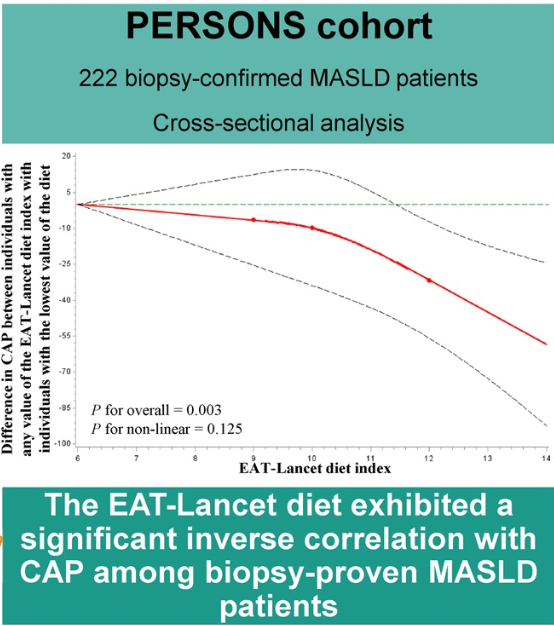
Methods: This prospective multicohort study comprised more than 191,000 adults from several cohorts. In addition, 228 Chinese adults from the Prospective Epidemic Research Specifically of Non-alcoholic Steatohepatitis (PERSONS) with biopsy-proven MASLD were included.

Key findings:

  • Participants in the highest tertiles of the EAT-Lancet diet index had a lower risk of MASLD compared with those in the lowest tertiles with HR ranging in different cohorts from 0.73 to 0.87
  • Liver-controlled attenuation parameter decreased with increasing the diet index in individuals with biopsy-proven MASLD (β = −5.895

My take (borrowed from the authors): Adherence to the EAT-Lancet reference diet was inversely associated with the risk of MASLD as well as its severity.

Related blog posts:

Semaglutide’s Efficacy in Phase 3 MASH Trial
AJ Sanyal et al. NEJM 2025; DOI: 10.1056/NEJMoa2413258. Phase 3 Trial of Semaglutide in Metabolic Dysfunction–Associated Steatohepatitis

The results of this just-published study were alluded to in a previous post: More Data Indicating GLP-1 Efficacy for MASH

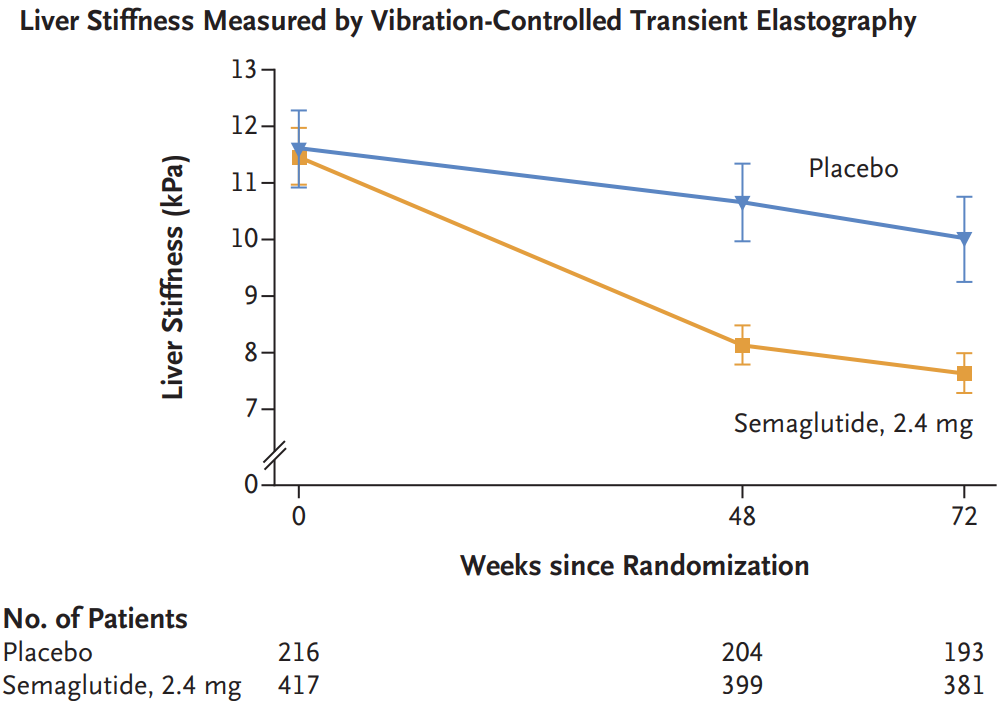
Methods:  In this phase 3, multicenter, randomized, double-blind, placebo-controlled trial, the authors assigned 1197 patients with biopsy-defined MASH and fibrosis stage 2 or 3 in a 2:1 ratio to receive once-weekly subcutaneous semaglutide at a dose of 2.4 mg or placebo for 240 weeks

Key findings:

  • Resolution of steatohepatitis without worsening of fibrosis occurred in 62.9% of the 534 patients in the semaglutide group and in 34.3% of the 266 patients in the placebo group (P<0.001)
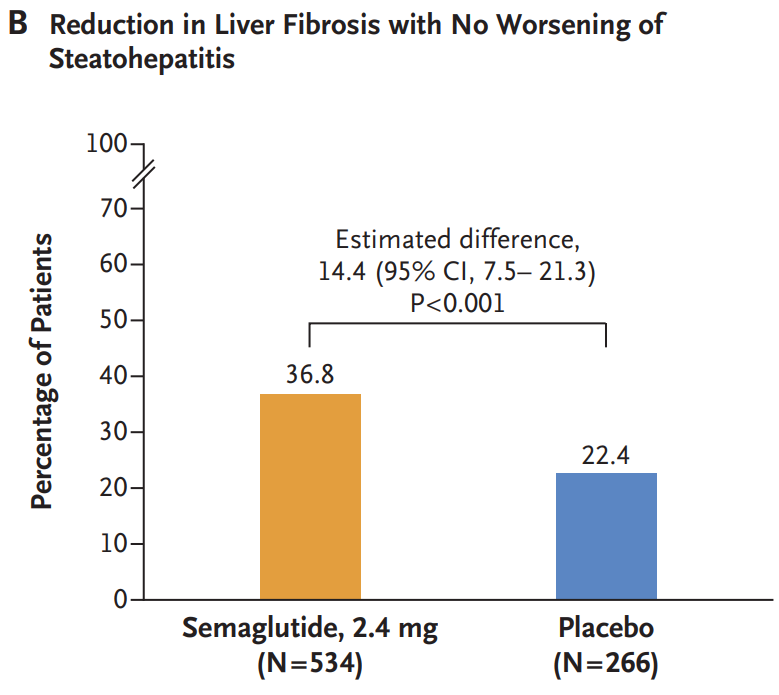
  • A reduction in liver fibrosis without worsening of steatohepatitis was reported in 36.8% of the patients in the semaglutide group and in 22.4% of those in the placebo group (P<0.001). 
  • The mean change in body weight was −10.5% with semaglutide and −2.0% with placebo (P<0.001)
  • Gastrointestinal adverse events were more common in the semaglutide group. The incidence of acute pancreatitis was similar in the two groups: Nausea 290/800 (36.2%) vs. 52/395 (13.2%), Diarrhea 215/800 (26.9%) vs. 48/395 (12.2%), Constipation 178/800 (22.2%) vs. 33/395 (8.4%) and Vomiting 149/800 (18.6%) vs. 22/395 (5.6%)
  • Semaglutide improved multiple cardiometabolic features, including glycemic control and insulin resistance. “These findings are important because metabolic dysfunction is an upstream event driving hepatic lipotoxicity and, subsequently, steatohepatitis and fibrogenesis. Thus, semaglutide treatment addressed the primary pathogenic driver of MASH”
  • Side effects leading to people dropping out of the trial were 2.6% for the semaglutide group and 3.3% for the placebo group

Discussion notes that “although semaglutide can be safely used in patients with
cirrhosis, its efficacy in this population has not been established.”

My take: Semaglutide appears to be effective in patients with MASH.with stage 2 or 3 fibrosis.

Related blog post:

Increased Mortality in Pediatric Steatotic Liver Disease Plus One

From UCSD 4/28/25: Children with Liver Disease Face Dramatically Higher Risk of Early Death (via Jeff Schwimmer’s X feed)

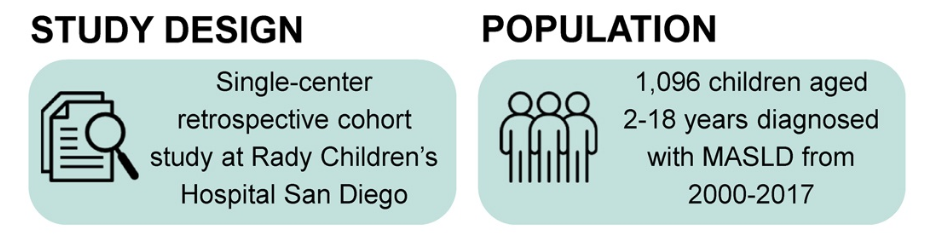
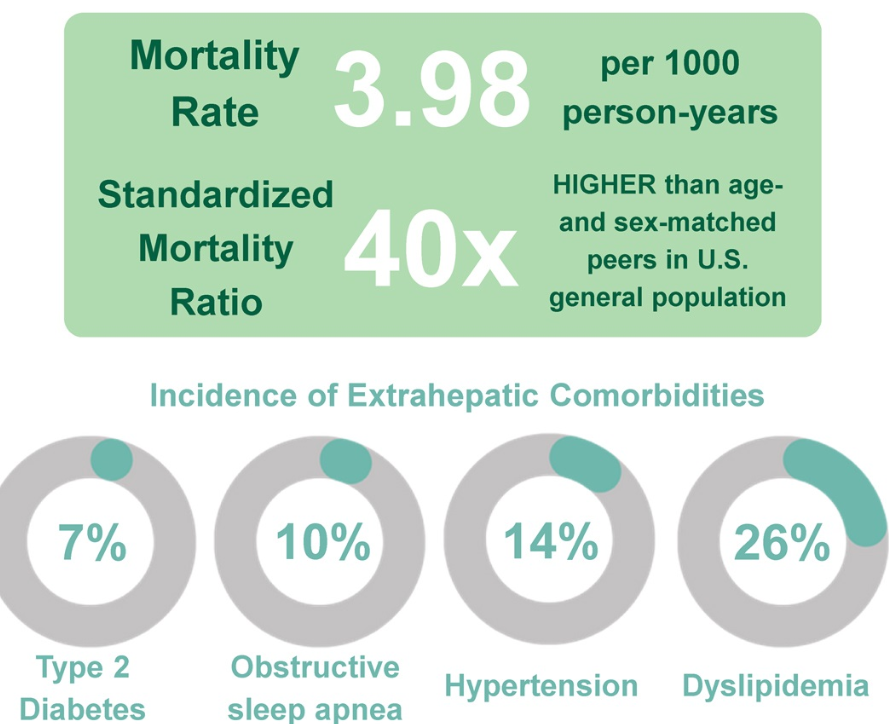
The findings, published April 22, 2025 in Hepatology, the scientific journal of the American Association for the Study of Liver Diseases, come from the Longitudinal InVestigation Evaluating Results of Steatosis (LIVERS) study, which followed 1,096 children over an average of 8.5 years. Nearly half of all deaths in the cohort were liver-related, and the overall mortality rate was 40 times higher than that of similar peers in the general U.S. population...

The retrospective cohort study used medical records and National Death Index data to follow children ages 2 to 18 who were diagnosed with MASLD between 2000 and 2017. Over an average of 8.5 years of follow-up, 3.4% of children had died

In addition to the risk of early death, many children in the study developed serious health problems while still in their teens or twenties. These included high blood pressure (14%), obstructive sleep apnea (9.5%) and type 2 diabetes (7.3%). Problems with blood fats, such as high triglycerides or low HDL, were even more common — making dyslipidemia, the presence of abnormal levels of fats (lipids) in the blood, the most frequent complication overall.

Link to study: JB Scwimmer et al Hepatology ():10.1097/HEP.0000000000001357. Long-term mortality and extrahepatic outcomes in 1,096 children with MASLD: A retrospective cohort study

My take: Since this was a retrospective single center study, the severity of the findings may be different with a more-representative national cohort. Nevertheless, this study shows that MASLD has serious consequences including premature death and numerous comorbidities.

Related article: J Panganiban et al. Obesity Pillars 2025: 14. https://doi.org/10.1016/j.obpill.2025.100164. Open Access! Metabolic dysfunction-associated steatotic liver disease (MASLD) in children with obesity: An Obesity Medicine Association (OMA) and expert joint perspective 2025. This Obesity Medicine Association (OMA) Expert Joint Perspective is a comprehensive review (~28 pages) of steatotic liver disease (SLD), metabolic dysfunction-associated steatotic liver disease (MASLD), and metabolic dysfunction-associated steatohepatitis (MASH) in children with obesity.

Related blog posts:

MASH Treatment: Curcumin Shows Promising Results

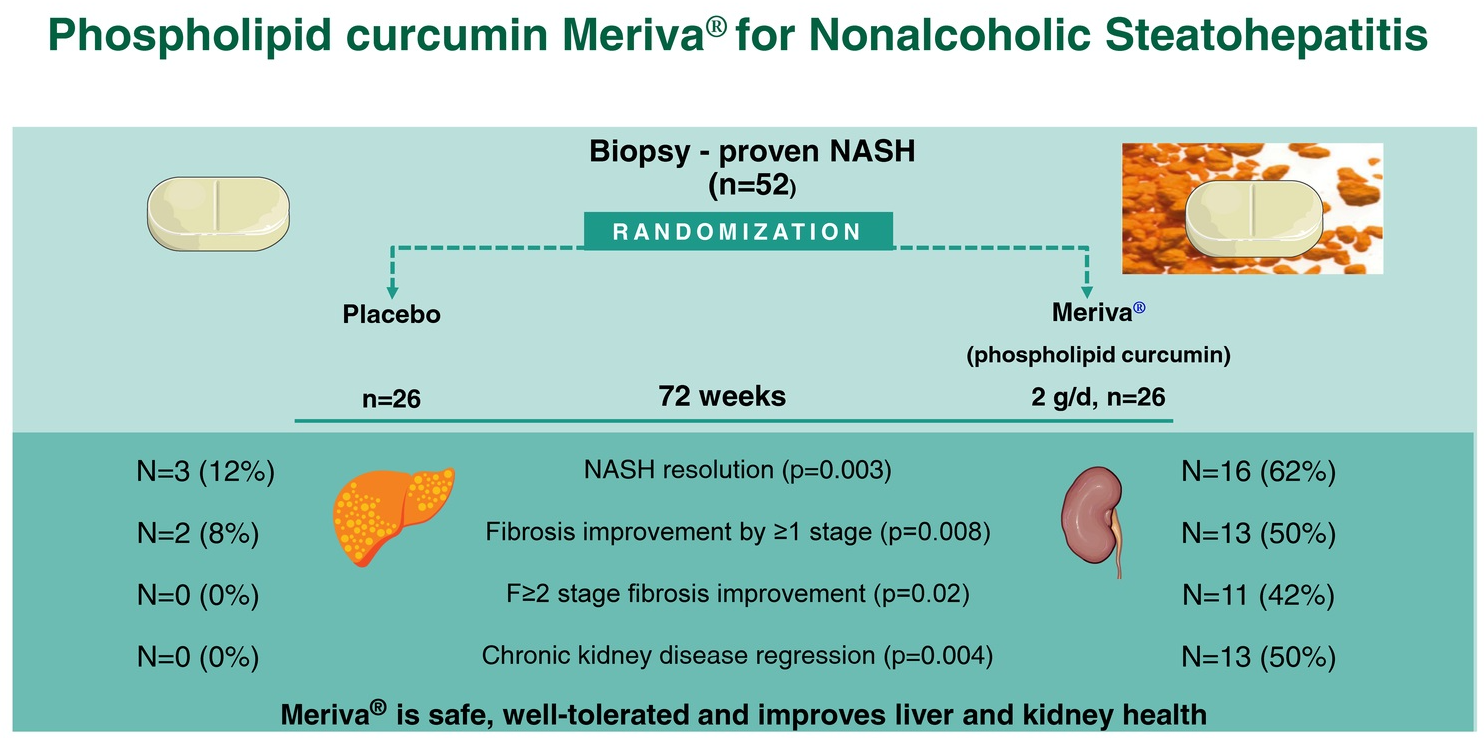
G Musso et al. Hepatology 2025; 81: 560-575. Effect of phospholipid curcumin Meriva on liver histology and kidney disease in nonalcoholic steatohepatitis: A randomized, double-blind, placebo-controlled trial

“Let food be thy medicine” is a well-known phrase usually attributed to Hippocrates (though it is unclear if he said this). Regardless, this study indicates that added curcumin in the diet could be beneficial for steatotic liver disease.

Methods: In this double-blind trial, 52 patients with biopsy-proven NASH (71% with stage ≥F2 fibrosis, 58% with stage A2-G2/A2-G3a chronic kidney disease) were randomized 1:1 to receive Meriva 2 g/d (1 g BID) or placebo for 72 weeks. Meriva is a formulation of curcumin extract with phospholipids that has improved oral bioavailability of curcumin metabolites.

Key findings:

  • Sixteen (62%) patients on Meriva (curcumin) versus 3 (12%) patients on placebo had NASH resolution (RR = 5.33)
  • hirteen (50%) patients on Meriva versus 2 (8%) patients on placebo had ≥1 stage fibrosis improvement (RR = 6.50)
  • Eleven (42%) patients on Meriva versus 0 (0%) on placebo had regression of significant liver fibrosis (RR = 18.01)
  • Thirteen (50%) patients on Meriva versus 0 (0%) on placebo had chronic kidney disease regression (RR = 10.71)
  • Compared with placebo, Meriva improved eGFR (difference in adjusted eGFR change: +3.59 [2.96–4.11] mL/min/1.73 m2/y, p = 0.009), fasting glucose(−17 mg/dL; 95% CI = −22, −12), HbA1c (−0.62%; 95% CI = −0.87%, −0.37%), LDL-C (−39 mg/dL; 95% CI = −45, −33), triglycerides (−36 mg/dL, 95% CI = −46, −26), HDL-C (+10 mg/dL; 95% CI = +8, +11), and inflammatory markers
  • The observed benefits were associated with downregulation of hepatic NF-kB which is a proinflammatory transcription factor and a known curcumin target

My take: A larger multicenter study is needed to confirm these promising results. This study shows that dietary changes and lifestyle modification remain important tools in treating MASH (aka NASH).

Related editorial (open access!): S Zelber-Sagi, JM Schattenberg. Hepatology 2025; 81: 399-401. Is curcumin the new kid on the block for the treatment of MASH?

Related blog posts:

Disclaimer: This blog, gutsandgrowth, assumes no responsibility for any use or operation of any method, product, instruction, concept or idea contained in the material herein or for any injury or damage to persons or property (whether products liability, negligence or otherwise) resulting from such use or operation. These blog posts are for educational purposes only. Specific dosing of medications (along with potential adverse effects) should be confirmed by prescribing physician.  Because of rapid advances in the medical sciences, the gutsandgrowth blog cautions that independent verification should be made of diagnosis and drug dosages. The reader is solely responsible for the conduct of any suggested test or procedure.  This content is not a substitute for medical advice, diagnosis or treatment provided by a qualified healthcare provider. Always seek the advice of your physician or other qualified health provider with any questions you may have regarding a condition.