Prokinetics Have Little Benefit for Gastroparesis

WL Hasler et al. Clin Gastroenterol Hepatol 2024; 22: 867-877. Open Access! Benefits of Prokinetics, Gastroparesis Diet, or Neuromodulators Alone or in Combination for Symptoms of Gastroparesis

Methods: In this prospective study of patients (n=129) with suspected gastroparesis, the authors examined longitudinal outcomes focusing on responses to prokinetics and other therapies. This included gastroparesis diets and neuromodulators. Patients underwent validated gastric emptying testing (wireless motility capsule and gastric emptying scan) before recommending new treatments.

Prokinetics included dopamine antagonists, motilin agonists, acetylcholinesterase
inhibitors, and pyloric botulinum toxin injection.

Key findings:

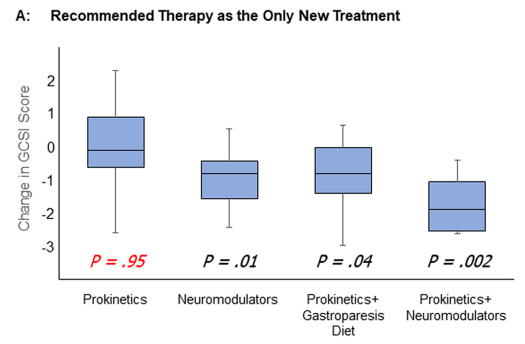
  • “Initiating prokinetics as solo new therapy had little benefit for patients with symptoms of
    gastroparesis.”
  • “Neuromodulators as the only new therapy decreased symptoms other than
    nausea and vomiting”
  • Combination therapy of a prokinetic with a neuromodulator appeared to be the most effective
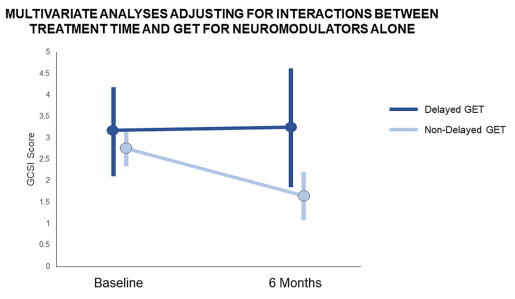
  • Neuromodulators were mainly effective in those without delayed gastric emptying times
My take: Our therapies for gastroparesis are not very good. And, neuromodulators are likely to be more helpful than prokinetics.

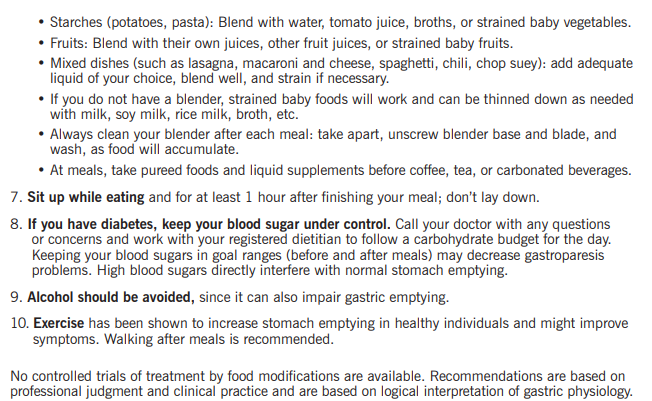
Example of a gastroparesis diet: Cleveland Clinic Gastroparesis Diet (7 pages). Part of the diet recommendations are shown below.

Related blog posts:

Dreaded Nausea (2022) Plus Skills or Pills

C DiLorenzo. Front Pediatr 2022; https://doi.org/10.3389/fped.2022.848659. Open Access: Functional Nausea Is Real and Makes You Sick

Couple of key pointers:

Diagnosis:

  • ” I tend to refrain from ordering gastric emptying studies in patients with nausea unless vomiting hours after eating occurs.” According to the article, this is mainly due to the overlap symptoms of gastroparesis and functional dyspepsia, the suboptimal reliability of testing, and the uncertain value of testing in targeting therapy.
  • “Much like in most other DGBI, diagnostic tests in patients with chronic nausea should only be indicated in the presence of other alarm signs or features (weight loss, severe pain, bilious vomiting, etc.) (29). Upper endoscopies are particularly unhelpful with 98% reported to be normal in patient with nausea as the predominant symptom”

Treatment:

  • “Most beneficial treatment is hypnotherapy.” Cognitive behavioral therapy is likely helpful.
  • Medications that may be useful: cryproheptadine, STW5 (an herbal supplement), scopolamine patch, and erythromycin (when there is gastroparesis); “use of psychotropic agents such as amitriptyline, buspirone, and mirtazapine (which decrease visceral hyperalgesia, improve accommodation or accelerate gastric emptying may be justified in selected cases.” There is little evidence that classical antiemetics such as ondansetron are beneficial for functional nausea.
  • Also consider wrist acupuncture &/or commercially available devices based on the same principle, endoscopic injection of botulinum toxin in the pylorus; implantation of a gastric pacemaker improves drug-refractory nausea. Treatment of anxiety and depression, if present, is also beneficial.

My take: This is a useful review on a tough disorder to manage.

Related blog posts

Related article: PD Browne et al. Clin Gastroenterol Hepatol 2022; 20: 1847-1856. Open Access! Skills or Pills: Randomized Trial Comparing Hypnotherapy to Medical Treatment in Children With Functional Nausea

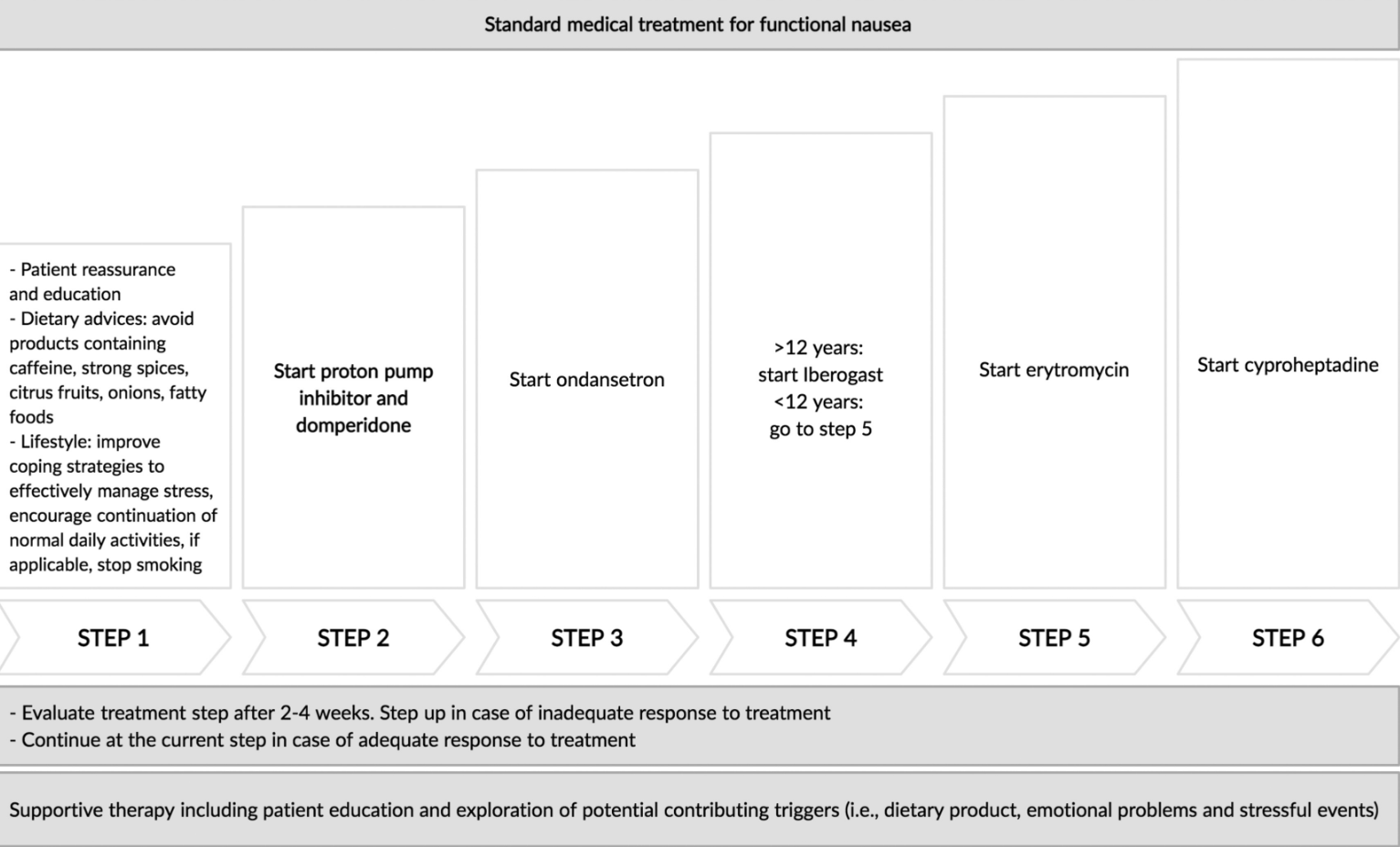
This article found that hypnotherapy was more effective than standard medical therapy during the first 6 months and similar subsequently in children with functional nausea. Standard medical therapy was a progression of treatment: