Increasing Prevalence of Steatotic Liver Disease in Adolescents

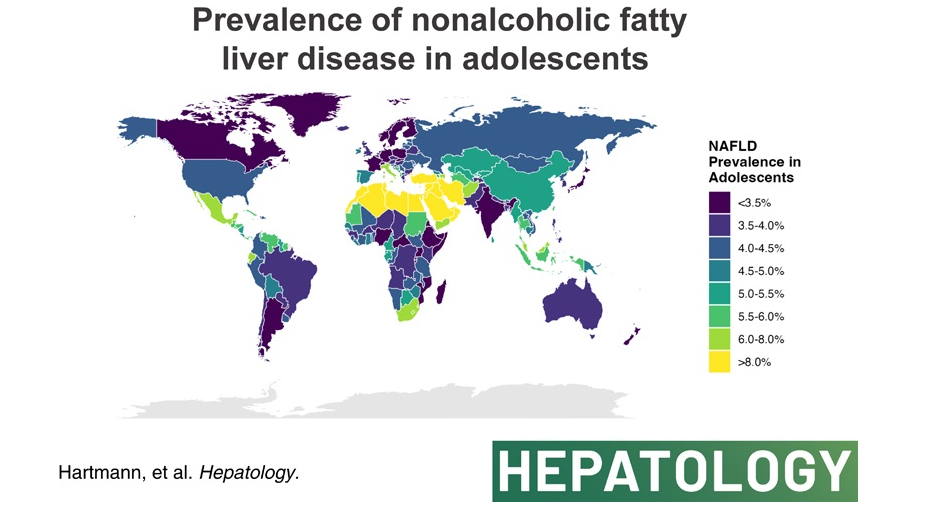
P Hartmann et al. Hepatology 2023; 78: 1168-1181. Open Access! Global and national prevalence of nonalcoholic fatty liver disease in adolescents: An analysis of the global burden of disease study 2019

The authors  analyzed data from the Global Burden of Disease Study 2019 to compare global, continental, and national prevalence rates of adolescent (15-19 yrs of age) NAFLD.

Key finding:

  • The global NAFLD prevalence in adolescents increased from 3.73% in 1990 to 4.71% in 2019 (a relative increase of 26.27%). NAFLD is now termed metabolic dysfunction-associated steatotic liver disease (MASLD).
  • High body mass index and not type 2 diabetes mellitus correlated with NAFLD prevalence in adolescents globally. 
In the associated editorial (S Xanthakos, Hepatology 78(4):p 1017-1019, October 2023, Rising tide of NAFLD in youth: A warning bell and call to action), some of the key points:

  • “The Global Burden of Disease (GBD) Study is the most comprehensive and long-standing effort to systematically and scientifically collate data on hundreds of diseases and injuries across the globe, including related clinical outcomes. Beginning in 1990, the GBD Study initially collected data on 106 conditions and 10 risk factors, across 5 age groups.1 Over time, the GBD Study has expanded through serial iterations to involve >9000 international researchers collecting data on 369 diseases and injuries across 204 countries and territories in the most recent 2019 report.1
  • ” From the GBD Study, we learned that NAFLD is the most rapidly rising cause of chronic liver disease in adolescents and adults,2 and the fastest-growing contributor to cirrhosis, liver cancer, and liver-related deaths globally.”
  • “The global prevalence of NAFLD in adolescents shows no sign of abating, rather has continued to increase steadily from 3.7% in 1990 to 4.7% in 2019.”
  • “As with all epidemiological research, the GBD study faces the primary limitation of relying on data sources that employ varying and less accurate measures of NAFLD prevalence (alanine aminotransferase and/or ultrasound primarily). However, the rigorous methodological approach employed by the GBD including frequent assessment of face validity, and the tremendous input of data sources (>80,000 in 2019) nonetheless results in the most comprehensive global data set available.”

My take (borrowed from editorial): Without intervention, “the increase in adolescent NAFLD certainly portends a future increase in NAFLD-related cirrhosis and liver-related deaths in young adults in the coming decades, and a likely escalation in cardiovascular and diabetes-related morbidity.

Related blog posts:

Flu Shots & Other Vaccines Linked to Lower Rates of Dementia

10/26/23 Washington Post: Flu shots may protect against the risk of Alzheimer’s, related dementias

An excerpt:

A number of studies have found that people receiving vaccinations for flu and several other infectious diseases appear less likely than the unvaccinated to develop dementia, although scientists aren’t sure why…

In the flu study, the researchers took participants from a national patient database, two groups of 935,887 each, one group vaccinated, the other not. To avoid the potential influence of various factors that could affect the results, the scientists ensured that each group shared many of the same characteristics… found that an annual flu vaccination for three consecutive years reduced the dementia risk 20 percent over the next four to eight years, while six shots doubled it to a 40-percent reduction…

“All this requires further studies, but vaccination, along with good diet, exercise, intellectual and emotional stimulation are key factors for healthy aging,” Hotez said.

The article notes reductions in dementia with Shingles vaccine, Tdap or Td, and pneumococcal vaccines.

These cliffs of the calanques (near Cassis, France) are about 260 meters in elevation

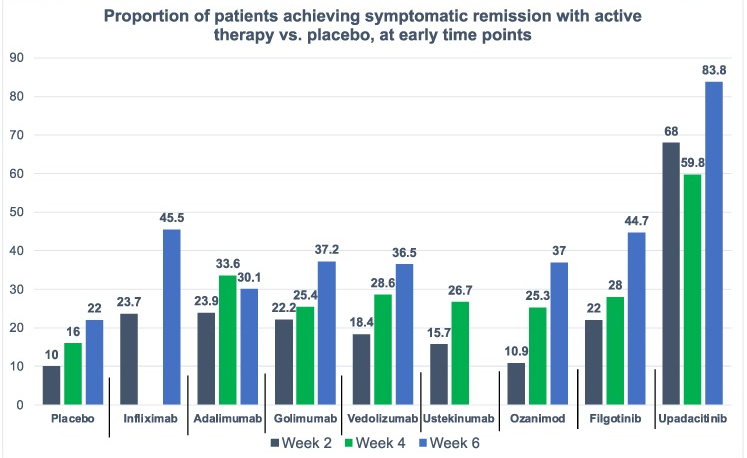
Upadacitinib Works Quickly and with High Response

D Ahuja et al. Am J Gastroenterol 2023; Open Access! Comparative Speed of Early Symptomatic Remission With Advanced Therapies for Moderate-to-Severe Ulcerative Colitis: A Systematic Review and Network Meta-Analysis Thanks to Ben Gold for this article.

Key findings:

  • On network meta-analysis of 14 RCTs, upadacitinib was more effective than all agents in achieving symptomatic remission at weeks 2 (range of RR, 2.85–6.27), 4 (range of RR, 1.78–2.37), and 6 (range of RR, 1.84–2.79). 

This study has a number of limitations including the following:

  • Potential differences in patient-level characteristics between these trials
  • Symptoms may not always correlate with endoscopic findings
  • Data from some medications (eg. tofacitinib) were incomplete and not included

My take: This study indicates an impressive early symptomatic response to upadacitinib compared to other agents for ulcerative colitis.

Related blog posts:

Three-fer on Steatotic Liver Disease

  1. JJ Wattacheril, MF Abdelmalek et al. Gastroenterol 2023; 165: 1080-1088. Open Access! AGA Clinical Practice Update on the Role of Noninvasive Biomarkers in the Evaluation and Management of Nonalcoholic Fatty Liver Disease: Expert Review

This article offers best practice advice -here are two of them:

#2: A Fibrosis 4 Index score <1.3 is associated with strong negative predictive value for advanced hepatic fibrosis and may be useful for exclusion of advanced hepatic fibrosis in patients with NAFLD.

#8 Patients with NAFLD and NITs (noninvasive tests) results suggestive of advanced fibrosis (F3) or cirrhosis (F4) should be considered for surveillance of liver complications (eg, hepatocellular carcinoma screening and variceal screening per Baveno criteria). Patients with NAFLD and NITs suggestive of advanced hepatic fibrosis (F3) or (F4), should be monitored with serial liver stiffness measurement; vibration controlled transient elastography; or magnetic resonance elastography, given its correlation with clinically significant portal hypertension and clinical decompensation.

2. AJ Sanyal et al. Clin Gastroenterol Hepatol 2023; 21: 2889-2900. Validation of a Clinical Risk-based Classification System in a Large Nonalcoholic Fatty Liver Disease Real-world Cohort

In this study from U.S., patients (n=2523) were divided into three categories based on FIB-4 scores: (A) Fibrosis-4 (FIB-4) <1.3 and/or liver-stiffness measurement (LSM) measured by Fibroscan <8 kp, (B) FIB-4 1.31‒2.6 and/or LSM 8.1-12.5 kp, and (C) FIB-4 >2.6 and/or LSM >12.5 kp. However, those in class A with aspartate transaminase:alanine transaminase ratio >1 or platelets <150,000/mm3, or class B with aspartate transaminase:alanine transaminase ratio >1 or platelets <150,000/mm3 were upstaged by one class. The data were reviewed retrospectively from a prospective longitudinal cohort (TARGET-NASH)

Key findings: All adverse outcomes including liver and cardiovascular (see below) were correlated with FIB-4 staging.

S Man et al. Gastroenterol 2023; 165: 1025-1040. Open Access! Prevalence of Liver Steatosis and Fibrosis in the General Population and Various High-Risk Populations: A Nationwide Study With 5.7 Million Adults in China

Key findings: The prevalence of steatosis, severe steatosis, advanced fibrosis, and cirrhosis was 44.39%, 10.57%, 2.85%, and 0.87%, respectively in Chinese adults

Limitation: This data was derived from a health checkup cohort which could give different results than a random population sampling. Patients at health checkups may be more health conscious and/or be aware of underlying health concerns.

Prevalence of different grades of liver fibrosis in different age groups.

My take: Steatotic liver disease is a huge worldwide problem. The growing prevalence is going to result in extensive health issues.

—————

This year’s pumpkin 910/31/23):

It does not look like I will become a professional pumpkin artist anytime soon!

What’s Going on With Refractory Heartburn?

L Guadagnoli, A Geeraerts et al. Gastroenterol 2023; 165: 848-860. Open Access! Psychological Processes, Not Physiological Parameters, Are Most Important Contributors to Symptom Severity in Patients With Refractory Heartburn/Regurgitation Symptoms

Methods: Consecutive adult patients (n=393) with refractory heartburn/regurgitation symptoms underwent standard 24-hour pH-impedance monitoring and completed questionnaires assessing past and current gastrointestinal and psychological health. Refractory reflux meant that they continued to have symptoms after completing at least 12 weeks of PPI (twice per day) treatment.

Key findings: Psychological symptoms were significantly associated with reflux symptom severity, and physiological reflux variables (eg, number of reflux episodes) were not.

In the discussion, the authors note that ” prior research demonstrates psychological symptoms, including depression, anxiety, and post-traumatic stress, are associated with reflux symptom severity.252627 Indeed, psychological processes are believed to impact the brain–gut axis, particularly its central components,28 leading to enhanced esophageal symptom perception and reporting.6,29,30

My take: Psychological factors (depression, anxiety, post-traumatic stress, and poor sleep) are important factors in refractory reflux and they need to be considered early in the evaluation.

A related article: NY Times Magazine 10/4/23, M Velasques-Manoff. The Mystery of My Burning Esophagus. In this article, the writer describes burning pain associated with his diagnosis of eosinophilic esophagitis. This article has some useful information about eosinophilic esophagitis and about lingering symptoms after responding to treatment.

“My new gastroenterologist had a theory to explain the all-consuming pain under my sternum. Sometimes patients develop a hypersensitivity syndrome, she told me. The original insult — in my case, inflammation of some kind — might be long gone, but the nerves that convey pain can become overactive and begin firing at the slightest provocation…Scientists don’t completely understand how antidepressants help pain syndromes, but certain ones seem to impede pain signals in the nervous system…

Doctors are increasingly aware of these kinds of pain syndromes in many disorders, including GERD. The condition, whose primary symptom is known colloquially as heartburn, is pervasive, afflicting an estimated one in five Americans. Some of these patients continue to feel intense pain even after their stomach acid has been reduced with antacids, a malady most likely caused by a hypersensitivity syndrome similar to mine.”

Related blog posts:

Greenville County (SC) Museum of Art