
L Barash et al. J Pediatr Gastroenterol Nutr. 2026; doi.org/10.1002/jpn3.70545. The role of audio‐recorded gut‐directed hypnotherapy onsleep and abdominal pain: A pilot and feasibility study.
Background: Gut-directed hypnotherapy (GDH) is an evidence-based treatment that improves abdominal pain and quality of life in pediatric DGBI both in the short- and long term.3, 4 Home-based audio-guided GDH has shown comparable efficacy to in-person treatment, while enhancing access to care for families with logistical or socioeconomic barriers.5, 6
Methods: This was a non-blinded randomized controlled trial with partial crossover. Treatment includes three 25-min audio sessions every 2 weeks and daily 10–20-min sessions, with a goal of ≥5 sessions per week. Out of 25 participants who initiated GDH 16 (64%), completed treatment. Reasons for dropout included side effects (nausea, n = 2), lack of improvement (n = 1), resolution of symptom (n = 1), and unknown (n = 5).
Key findings:
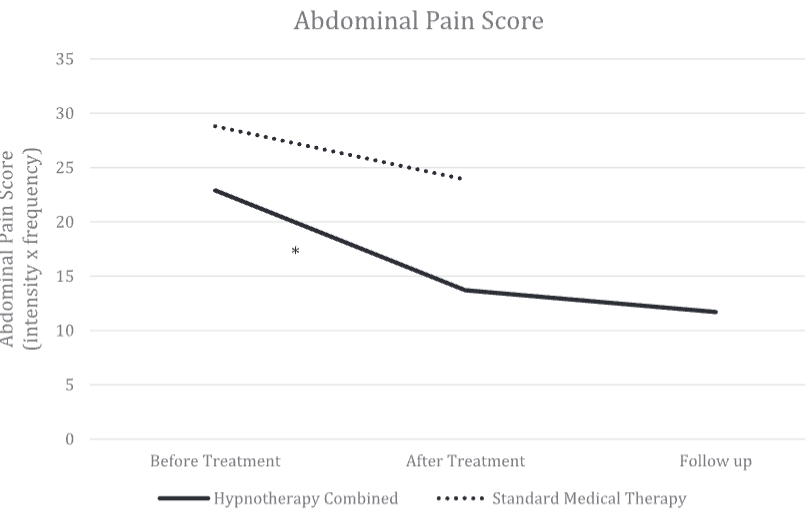
- Combined abdominal pain scores significantly improved post-treatment with GDH, with a 40.2% reduction from baseline (p < 0.001; d = 0.9), compared to a 16.6% reduction in the standard medical therapy (SMT) group
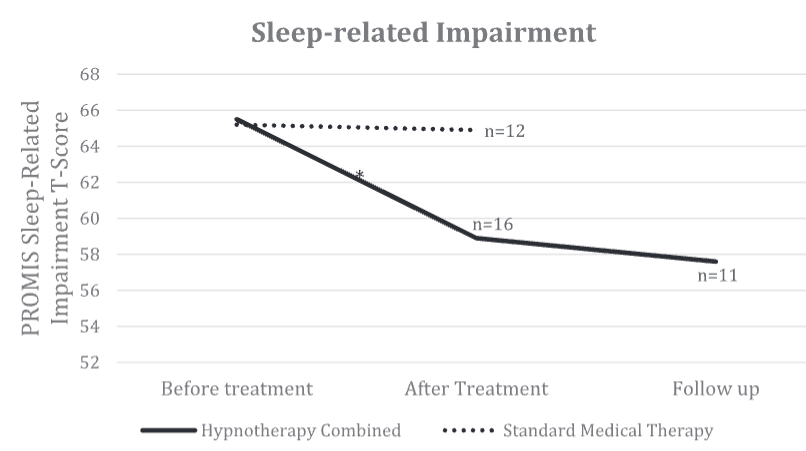
- The SMT group had no improvements in sleep-related impairment (SRI) (p = 0.90) … whereas those who completed GDH demonstrated significant improvements in SRI at both 4 weeks (p = 0.01) and at the completion of treatment (p = 0.01)
- Two participants in our study discontinued due to worsening nausea. Many of the audio recordings included motion-related imagery, which may have contributed to symptoms in susceptible participants.
In a separate study (n=230) (JTW Snijkers et al. Gut Published Online First: 25 July 2026. doi: 10.1136/gutjnl-2026-338385. Open Access! In-person therapist-delivered hypnotherapy versus smartphone-based self-guided hypnotherapy in IBS: a multicentre three-armed randomised controlled trial), a self-guided smartphone hypnotherapy program did not meet the prespecified threshold for noninferiority to in-person hypnotherapy for abdominal pain response in patients with irritable bowel syndrome (IBS). At weeks 13-16, Food and Drug Administration-defined abdominal pain response rates were 48.1% with in-person therapist-delivered hypnotherapy, 33.3% with smartphone-based self-guided hypnotherapy, and 21.8% with online psychoeducation.
My take (borrowed in part from the JPGN authors): “Providers may consider GDH as a low-risk, home-based therapeutic option for children with DGBI, particularly when sleep is also a concern.”
Rigorous pharmacologic studies show that medications, to date, recommended for patients with DGBIs have difficulty outperforming placebo. With hypnotherapy, having an adequate control group is problematic. It would not be surprising, though, for GDH to have difficulty outperforming pharmacologic agents/placebo despite its good response in patients with DGBIs. In this setting, the use of GDH or medications with a low incidence of adverse effects and plausible beneficial effects continue to have a role in improving symptom control.
From AGA Today: US Measles Outbreak Tops 3,000 Cases Reaching 35-Year High
NBC News (9/4, Edwards) reports, “A 6-week-old baby girl is one of two people with measles who died in Pennsylvania, the Lancaster County coroner said Friday, as the nation’s measles tally hit a new 35-year record of 3,134 cases. … At least 115 more people in Pennsylvania, mostly in Lancaster County, have been diagnosed with measles in the last week, the health department said Friday, bringing the state’s outbreak to about 577 cases within the last few months.” Experts say there are likely many more across the country who have contracted measles but have not gotten tested. NBC adds, “The new milestone, the highest number of confirmed cases since 1991, is yet another indication that the highly contagious virus is taking over, particularly in areas of the country with plummeting vaccination rates.”
Related blog posts (for DGBIs):
- Negative Study: Nortriptyline for Functional Dyspepsia
- “Implementing psychological therapies for gastrointestinal disorders in pediatrics”
- Enhanced Placebo Effect For Irritable Bowel Syndrome and Functional Abdominal Pain in Adolescents
- Functional Dyspepsia in Clinical Practice
- Dreaded Nausea (2022) Plus Skills or Pills
- From ImproveCareNow: Resources for Mind Body Interventions
- Dr. Katja Karrento: Chronic Nausea — Evidence of a Complex Syndrome
- How PPIs Improve Functional Dyspepsia
- Gut-Brain Modulators for Functional GI Disorders: Irritable Bowel, Dyspepsia, Functional Heartburn, and Cyclic Vomiting Syndrome
- Algorithm for “Cursed” Dyspepsia (2018)
- Are Gastroparesis and Functional Dyspepsia Part of the Same Problem?
- Pregabalin Helpful for Functional Dyspepsia in Small Study
- Mirtazapine for Functional Dyspepsia
- A 6-Year Study of Amitriptyline, Escitalopram, and Functional Dyspepsia
- A Randoized Trial of Peppermint Oil for Pediatric Irritable Bowel Syndrome
- Treatment Guidelines for Pediatric Irritable Bowel Syndrome
- Rome V: Lower GI Tract and Biliary Disorders of Gut-Brain Interaction in Pediatrics (Part 1)
- Enhanced Placebo Effect For Irritable Bowel Syndrome and Functional Abdominal Pain in Adolescents
- PERSUADE Study: I Guarantee That It Will …
Related blog posts (for Measles)
- Surprise, Surprise – Measles Cases in South Carolina Occurred Where Vaccinations Are Lowest Plus One (June 2026)
- We Are Going to See More Measles Tragedies (May 2026)
- Worsening Measles Outbreak (Feb 2026)
- “The Staggering Success of Vaccines”
- Vaccine Safety -Put into Perspective
- Flu Shots & Other Vaccines Linked to Lower Rates of Dementia

