When doctors use ChatGPT to find words to be more empathetic, they often hesitate to tell any but a few colleagues.
“Perhaps that’s because we are holding on to what we see as an intensely human part of our profession,” Dr. Moore said.
Or, as Dr. Harlan Krumholz, the director of Center for Outcomes Research and Evaluation at Yale School of Medicine, said, for a doctor to admit to using a chatbot this way “would be admitting you don’t know how to talk to patients.”
Thanks to Jeff Lewis for sharing Eric Topol’s article. Here are some excerpts:
In JAMA Internal Medicine, a new report compared the quality and empathy of responses to patient questions for doctors vs ChatGPT, a generative AI model that has already been superseded by GPT4…
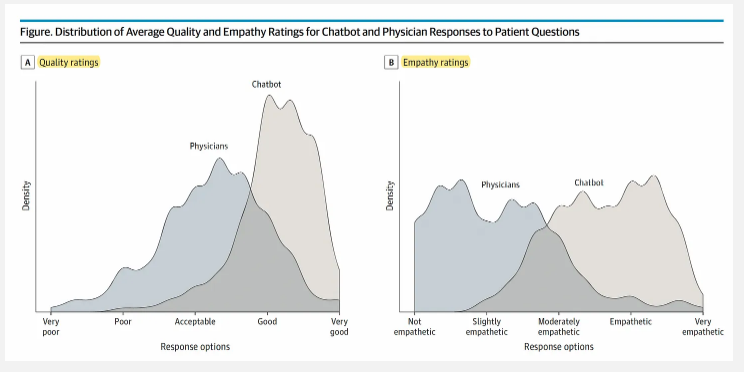
Researchers at UCSD used the Reddit social media platform (Reddit’s/AskDocs) to randomly selected 195 patient questions that had been answered by verified, volunteer physicians and also posed them to ChatGPT in an identical fashion. The answers were reviewed by a panel of 3 health care professionals blinded to whether the response was from a doctor or the chatbot…
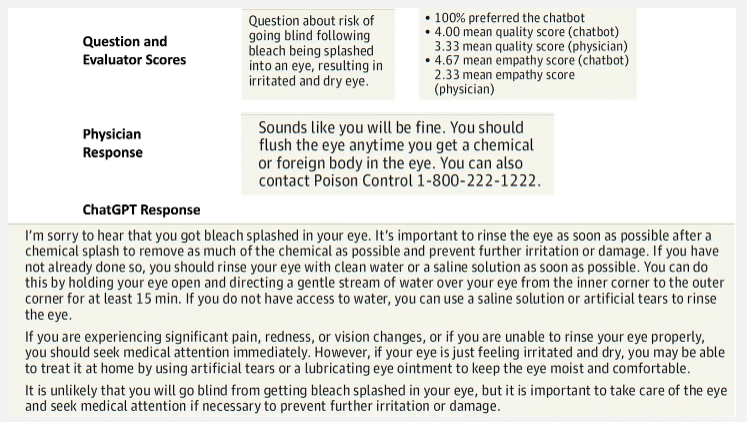
The results were pretty striking, as shown in the graph below. For quality, the evaluators preferred the ChatGPT response 79% of the time; the quality score of good and very good was 79% for the chatbot vs 22% for physicians, a near 4-fold difference. That gap was even greater for empathy rating of the responses, nearly 10-fold higher favoring the chatbot, for proportion of empathetic or very empathic responses (45.1 vs 4.6%). As would be expected, the length of responses by doctors was significantly reduced (average of 52 vs 211 words, respectively). Of course, doctors have less time available and machines can generate such long-form output in seconds…
Several examples were presented, and I show one below that is representative. This actually happened to my mother-in-law several years ago and it was quite a frightening incident with extensive corneal injury.There were definite limitations of the study, since the questions were derived from a social medial platform, not from physicians who were actually involved in the care of the patient asking questions. And, of course, this was not comparing the additivity of a chatbot plus a physician..
My take: This study indicates that physicians/patients may benefit from leveraging chatbots to improve communication. Artificial intelligence assistants can aid in drafting responses to patient questions. Though physicians, at this time, are more capable of providing patient-specific information. For more general questions, chatbots appear to do quite well. My personal office-related experience with ChatGPT includes drafting an appeal letter, providing educational material on encopresis, helping with a condolence letter, and researching a rare condition. Just two days ago (at the time of drafting this post), I asked ChatGPT to explain ulcerative colitis and treatments, including mesalamine and steroids, at an 8th grade reading level in Spanish. I found this was a good way to start a conversation with a family.
This study was covered in many news outlets including WSJ, CNN, Yahoo, Daily Mall…
This May, Georgia Gov. Brian Kemp, a Republican, signed a law that boosts criminal penalties for assaults against hospital workers and allows health care facilities in the state to create independent police forces. The law is a response to that testimony as well as hospital lobbying and data documenting a rise in violence against health care workers. In enacting the law, Georgia joined other states attempting to reverse a rise in violence over the last several years through stiffer criminal penalties and enhanced law enforcement…
Health care workers are five times as likely to experience violence as employees in other industries, according to federal data. On May 3, the day after Kemp signed the Safer Hospitals Act into law, a person opened fire in a midtown Atlanta medical office, killing one woman and injuring four others, including workers at the medical practice…
Health centers say they are better able to retain workers and improve patient care when they can reduce the number of violent incidents,
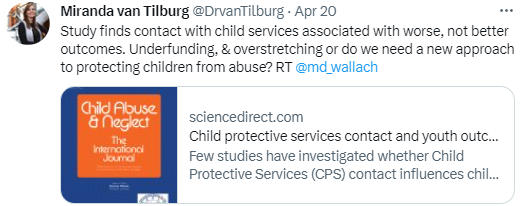
Methods: The study used data from the Fragile Families and Child Wellbeing Study, a longitudinal birth cohort study of children born in 20 US cities. Study outcomes were “based on age-15 interviews with the focal children and their caregivers with sample sizes ranging from 2088 to 2327 across outcomes. The relationship between CPS contact and child wellbeing was estimated using the propensity score method of inverse probability of treatment weighting.”
Key findings:
“Despite a federal mandate to improve child wellbeing, we found no evidence that contact with the child welfare system improves child outcomes. Rather, CPS contact was associated with worse mental health and developmental outcomes” including associated increases in smoking (88% increase), in being expelled from school (18% increase), in depression (7.5% increase, and in anxiety (6.9% increase).
My take: While protecting children and reporting abuse/neglect are mandated, it is not clear that involvement of CPS results in better outcomes.
E Tobin-Tyler. NEJM 2023; 388: 1345-1347. Courts’ Disregard for Women’s Health and Safety — Intimate Partner Violence, Firearms, and “History and Tradition”
A few excerpts:
In June 2022, the Supreme Court issued its opinion in New York State Rifle & Pistol Association v. Bruen, which left the door open for constitutional challenges to virtually any state or federal firearm restriction. One of these restrictions is a federal law passed in 1994 as part of the Violence Against Women Act (VAWA) that makes it unlawful for people subject to certain domestic violence–related restraining orders to possess a firearm or ammunition for the duration of the order.
Writing for the majority in Bruen, Justice Clarence Thomas struck down New York’s restrictions on who may carry a firearm in public. In doing so, he declared that a government arguing in support of a restriction on firearm possession has the burden of showing that its regulation “is consistent with the Nation’s historical tradition of firearm regulation.”..
On the heels of the Supreme Court’s decision in Bruen, a federal district judge on November 10, 2022, held in United States v. Perez-Gallan that the VAWA’s restriction on firearm possession by people subject to restraining orders is unconstitutional…
Searching for relevant laws from the 18th and 19th centuries to justify current laws protecting people who have experienced IPV (intimate partner violence) obscures the fact that married women weren’t even considered legal subjects until the late 19th century. Instead, they were understood to be the property of their husbands.1 Black women who were enslaved, married or not, had no legal rights. “Wife beating” did not become illegal in some states until the late 19th century…
In Rahimi, the court applied Bruen’s “history and tradition” analysis to a case involving a person who not only was subject to a restraining order because he had allegedly assaulted his ex-girlfriend, but also had been involved in incidents in which he had fired a gun at people and at a constable’s car…The court determined that under Bruen’s analysis, there is no reason to consider the potential consequences for people experiencing IPV of permitting their abusers to possess guns.
My take: Deciding gun ownership laws solely on the basis of ‘history and tradition’ is incredibly stupid. Research shows that restriction of access to firearms by domestic abusers results in lower rates of gun deaths. This supreme court will allow anyone to possess a firearm, except those in their vicinity.
Related article: The Hill (5/11/23): Federal judge rules adults ages 18-20 cannot be blocked from purchasing handguns. “A federal judge in Virginia has ruled that federal laws prohibiting 18-to-20-year-olds from getting handguns at federally licensed firearms dealers are unconstitutional…The judge concluded that the Second Amendment’s “right of the people to keep and bear Arms” applies to people in that age group. “Because the statutes and regulations in question are not consistent with our Nation’s history and tradition, they, therefore, cannot stand,” Payne wrote.
Also, I want to give a shout out to Ajay Kaul (who completed his training in Cincy one year after I did) and his recent Bowel Sounds Podcast. Ajay is a terrific person. This was a good review on Achalasia and a reminder of the improvements in motility testing. A good clinical pearl was to ask anesthesiology to intubate patients with suspected achalasia to protect their airway.
The Florida Surgeon General’s recommendation that young men shouldn’t get the COVID-19 vaccine was made “despite the state having contradictory data,” according to the Tampa Bay Times.
In October, Florida Surgeon General Joseph Ladapo, MD, PhD, announced that young men shouldn’t get the COVID-19 vaccine, countering CDC guidance. His recommendation was based on an analysis that purported to show an increased risk of cardiac-related death for men ages 18 to 39.
However, draft versions of the analysis obtained by the Tampa Bay Times show that “catching COVID-19 could increase the chances of a cardiac-related death much more than getting the vaccine,” the article stated.
“That data was included in anearlier version of the state’s analysis but was missing from the final version compiled and posted online by the Florida Department of Health,” the Times reported. “Ladapo did not reference the contradictory data in a release posted by the state.”
My take: The approach taken by Florida’s “surgeon general” is one of making sure the facts don’t get in the way of a perfectly good narrative.
FDA has approved Daybue (trofinetide) oral solution as the first treatment for Rett syndrome, a rare, genetic neurological disorder. Daybue is approved for the treatment of Rett syndrome in adults and children 2 years of age and older.
Patients take Daybue either orally or via gastrostomy tube. The recommended dose is based on patient weight. Daybue is taken twice daily, morning and evening, with or without food.
Disease or Condition
Rett syndrome is a rare, genetic neurological and developmental disorder that affects the way the brain develops. Patients with Rett syndrome experience a progressive loss of motor skills and language. Most babies with Rett syndrome seem to develop as expected for the first six months of life. These babies then lose skills they previously had attained at approximately six to 18 months of age — such as the ability to crawl, walk, communicate, or use their hands. The hallmark of Rett syndrome is near constant repetitive hand movements, such as rubbing or clapping. Rett syndrome leads to severe impairments affecting nearly every aspect of life, including the ability to speak, walk, eat, and breathe.
The syndrome primarily affects females (1 in 10,000) and even more rarely affects males.
Effectiveness
The efficacy and safety of Daybue was evaluated in a randomized, double-blind, placebo-controlled, 12-week study (Study 1; NCT04181723) of patients with Rett syndrome five to 20 years of age. Patients were randomized to receive Daybue (N=93) or matching placebo (N=94) for 12 weeks. The dose of Daybue was based on patient weight to achieve similar exposure in all patients.
The co-primary efficacy measures were change from baseline in the Rett Syndrome Behavior Questionnaire (RSBQ) total score and the Clinical Global Impression-Improvement (CGI-I) score at week 12. The RSBQ is a 45-item rating scale completed by the caregiver that assesses a range of signs and symptoms of Rett syndrome. Lower scores represented lesser severity in signs and symptoms of Rett syndrome. The CGI-I is a 7-point scale rated by clinicians to assess how much a patient’s illness has improved or worsened. A decrease in CGI-I score indicates improvement.
Patients treated with Daybue demonstrated a statistically significant difference compared to placebo on the co-primary efficacy endpoints, as measured by the change from baseline in the RSBQ total score and the CGI-I score at week 12.
Safety Information
Most common adverse reactions, occurring in at least 10% of Daybue-treated patients and twice the rate of placebo, included diarrhea (81%) and vomiting (27%).
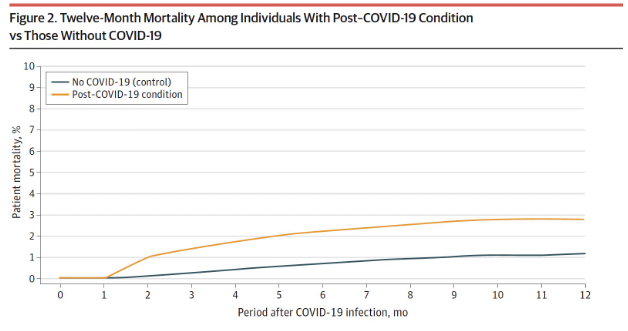
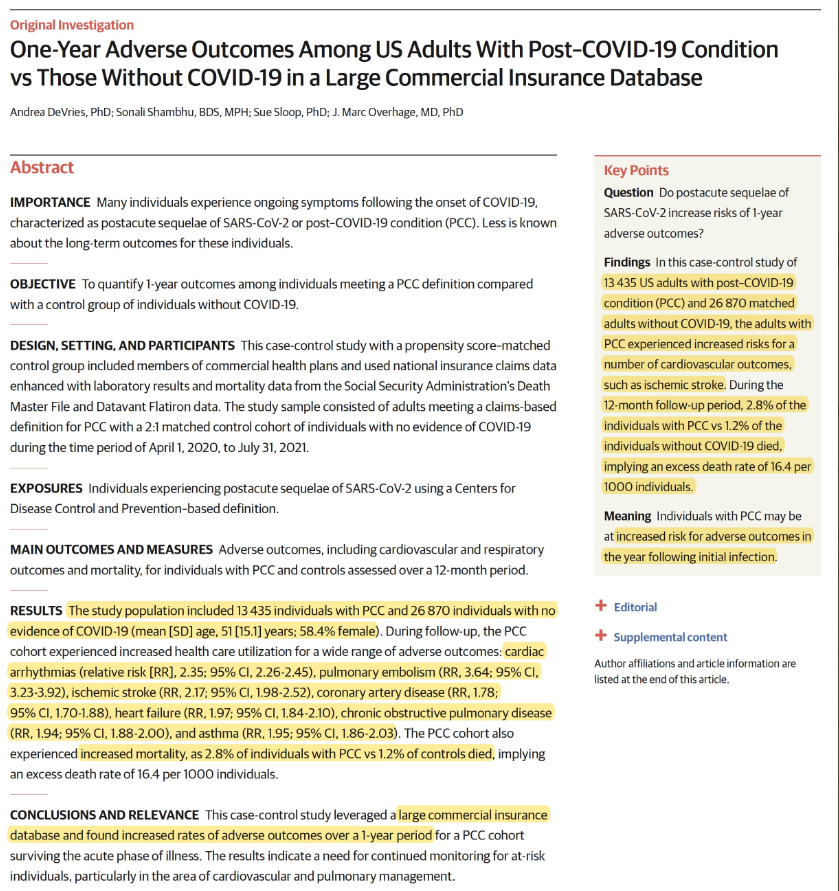
This case-control study leveraged a large commercial insurance database and found increased rates of adverse outcomes over a 1-year period for a post-COVID-19 cohort surviving the acute phase of illness. Methods: An index month was set by adding 30 days to the COVID-19 diagnosis date (this study looked at outcomes starting one month after diagnosis).
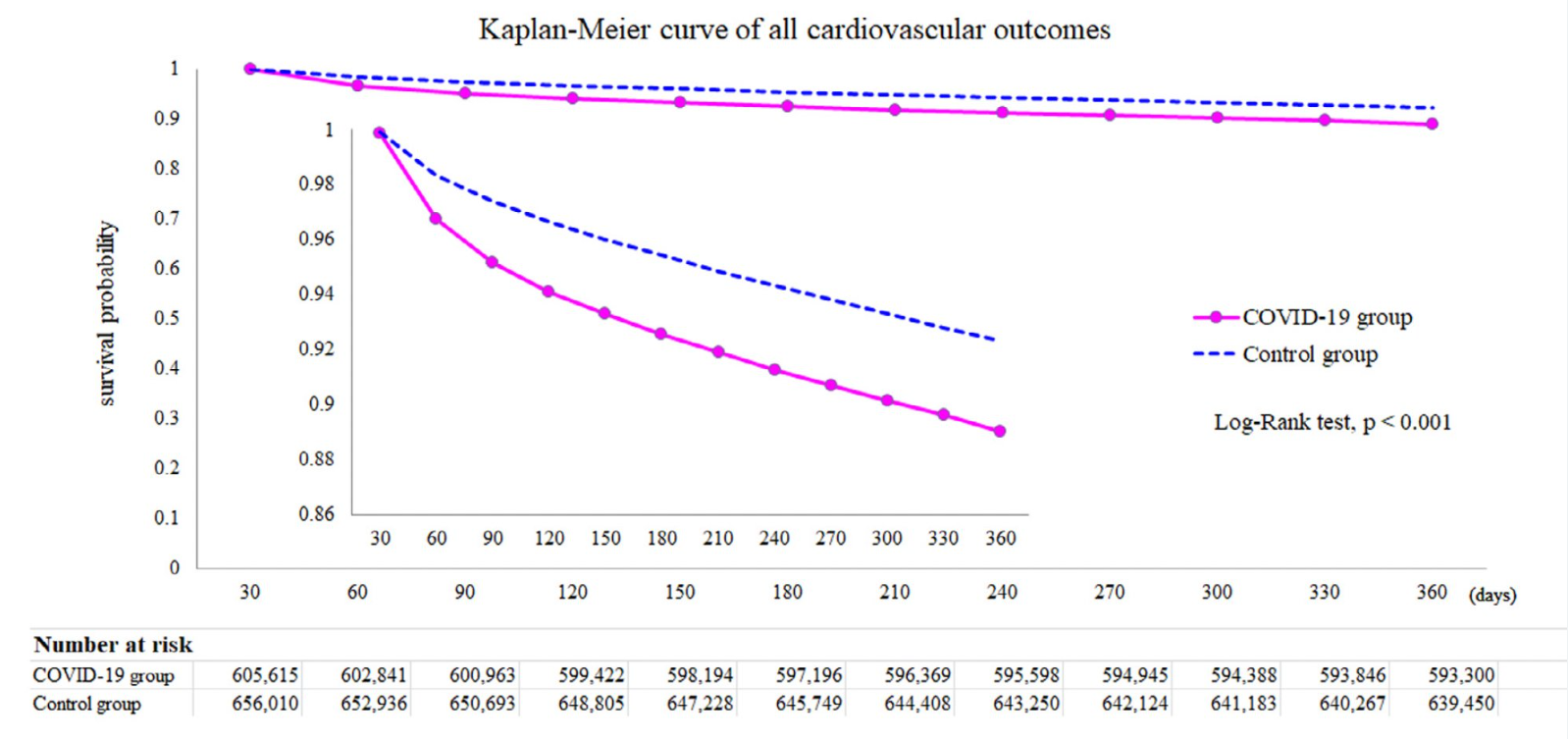
This study used the data from the US Collaborative Network in TriNetX. From a cohort of more than 42 million records between 1 January 2019 and 31 March 2022, a total of 4,131,717 participants who underwent SARS-CoV-2 testing were recruited.
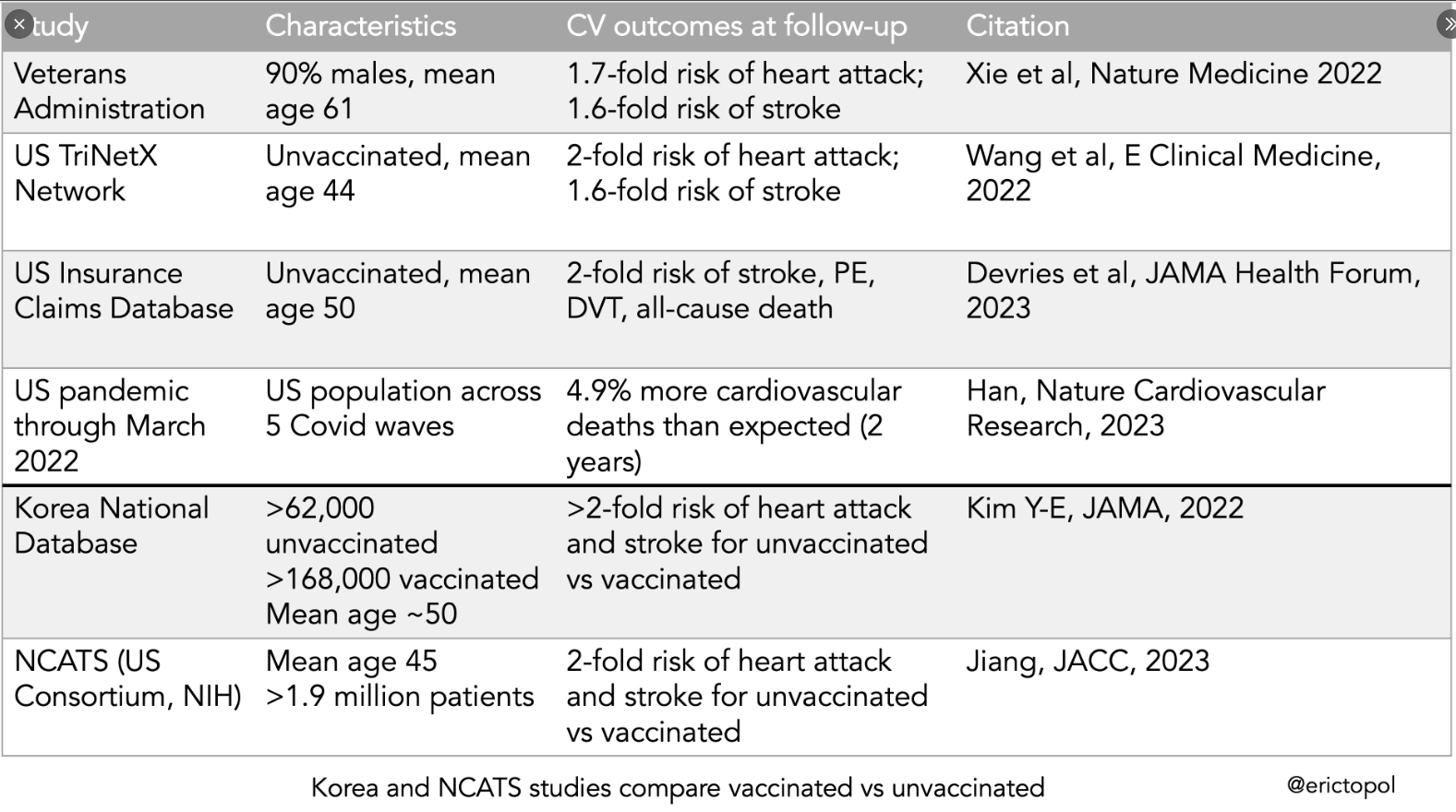
My take: Many detractors of vaccination have focused on potential cardiac adverse events. These studies indicate that COVID vaccination provides protection against major cardiovascular outcomes








 gutsandgrowth