
Here is her speech at CCFA Torch Gala dinner (~3:30): Chelly Dykes CCFA Gala
Related blog post: Premier Physician: Chelly Dykes
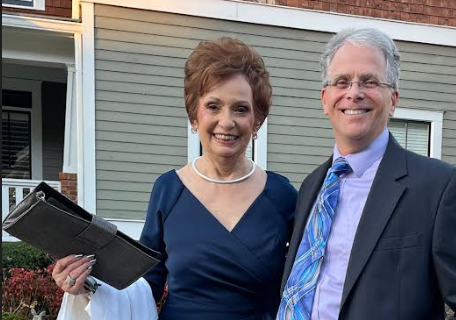
Bernadette and I have worked together for more than 26 years -pretty soon she will have me trained.

Here is her speech at CCFA Torch Gala dinner (~3:30): Chelly Dykes CCFA Gala
Related blog post: Premier Physician: Chelly Dykes
The Atlantic, Elisabeth Rosenthal (11/17/23): Hospitals Have Gotten Too Nice
This article starts off discussing a recent trend of how medical problems are often described as a “journey.” However, the main focus is the trend of hospitals developing expensive amenities further adding to huge medical bills.
An excerpt:
So much of being seriously ill has been rebranded in American health care as a kind of adventure…But on these journeys, you don’t get to go anywhere—except maybe the hospital or doctor’s office, which is likely, too, to have bought into the travel concept. In the past two decades, American hospitals have gotten into the business of hotel-like hospitality (illness can be fun!) rather than confine themselves to the business of disease (what a downer). And although the care might stay solid, the focus on luxurious amenities and the fancy new buildings that house them is one of the factors that have helped send costs for patients soaring that much higher, to prices well above those in other developed countries…
In recent years, tight budgets, staffing shortages, and burnout have hit American hospitals. At the same time, many health centers in the U.S.—including the most prestigious ones, and even some community hospitals—have morphed into seven-star hotels…A hospital might now boast about its views, high-thread-count sheets, or food provided by a Michelin-starred chef…
Back in 2008, researchers at the National Bureau of Economic Research estimated that a hospital investing in amenities would increase demand by 38 percent, whereas a similar investment in clinical quality would lead to only a 13 percent increase…
These amenities have a cost, and they are not worth nearly what we’re paying for them as we’re billed for $100,000 joint replacements and $9,000 CT scans. Room charges in many hospitals can exceed $1,000 a night. And “facility fees” for outpatient procedures and even office visits can reach hundreds of dollars, and simply don’t exist elsewhere. A hospital’s function is to diagnose and to heal, at a price that sick people can afford. I dream of a no-frills Target- or Ikea-like hospital for care…
How about focusing on the very basic things that health systems in the U.S. should do, but—in my experience—in many cases do not, like making it easier for patients to schedule appointments? Shortening the now lengthy wait times to see physicians who take insurance plans? Paying for adequate staffing on nights and weekends, so patients don’t linger in bed pointlessly for two days until social workers return on Monday? Or ending those two-day stays in emergency rooms when all inpatient beds are full?
Related blog posts:


Jeff Lewis, one of my colleagues for the last 25 years, recently shared a story on The Moth Atlanta. For those of you who have not been to The Moth, you can hear many of these stories on NPR (The Moth Radio Hour) or The Moth Podcast. Each session has a topic and 10 people are invited to share their heartfelt and sometimes hilarious stories.
Jeff is a brilliant, innovative individual and a good friend. Some of his diverse accomplishments include helping start a camp for our celiac patients (Camp WeeKanEatit), starting our microbiome transplant program (FMT), advancing the health of special needs kids (given an award for this by the Georgia Department of Public Health) and starting a lecture series to honor our surgical colleague Donald Schaffner. He even prompted changes in the hospital’s advice line. In addition, he has been instrumental in making the business part of our office work and in initiating a whole host of research projects. One of his children has told me that Jeff has a calling as a clinician which is so true.
Here is the kind, sad and thoughtful story he shared (6 min): The Moth (YouTube Link -not available without link https://youtu.be/yK-iOMSDlYM)
My take: It would be a great idea to have a Moth-type session at our national meeting. I enjoy listening to these stories particularly on long trips.

Per google search: “The Moth was founded in 1997 by the writer George Dawes Green — its name comes from his memories of growing up in St. Simons Island, Ga., where neighbors would gather late at night on a friend’s porch to tell stories and drink bourbon as moths flew in through the broken screens and circled the porch light.”
Related blog post: Short Bowel Syndrome is a Full Time Job
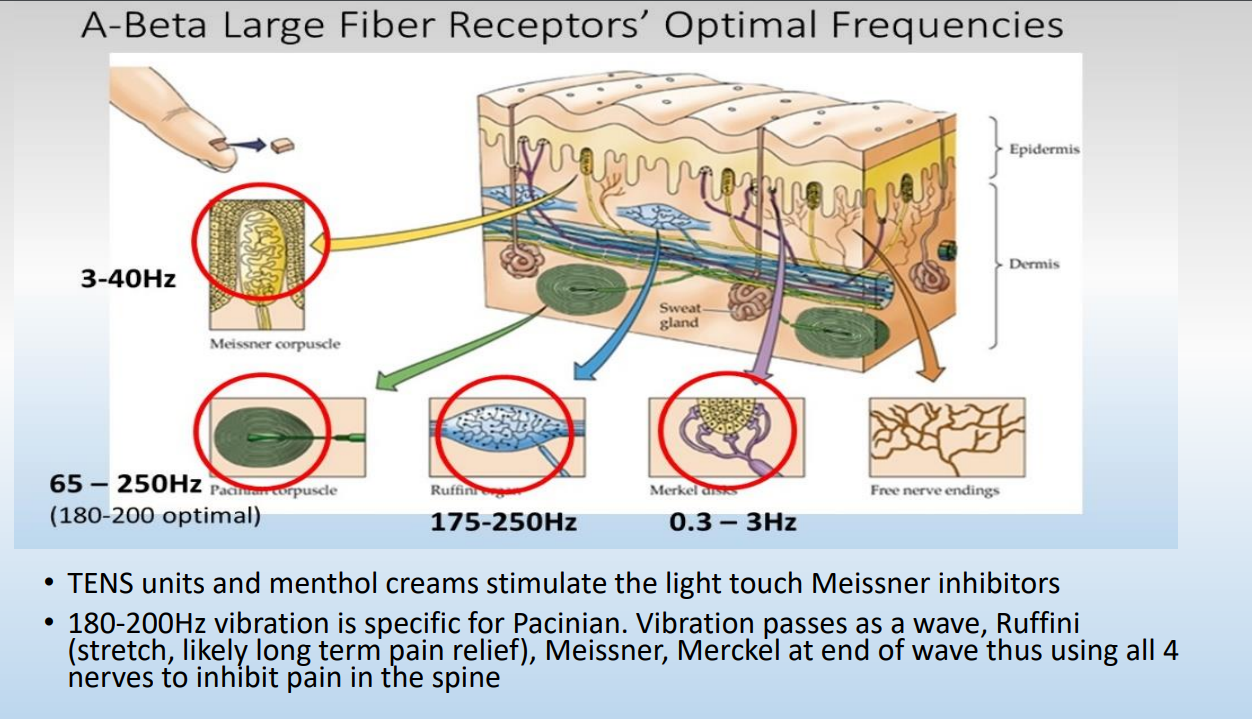
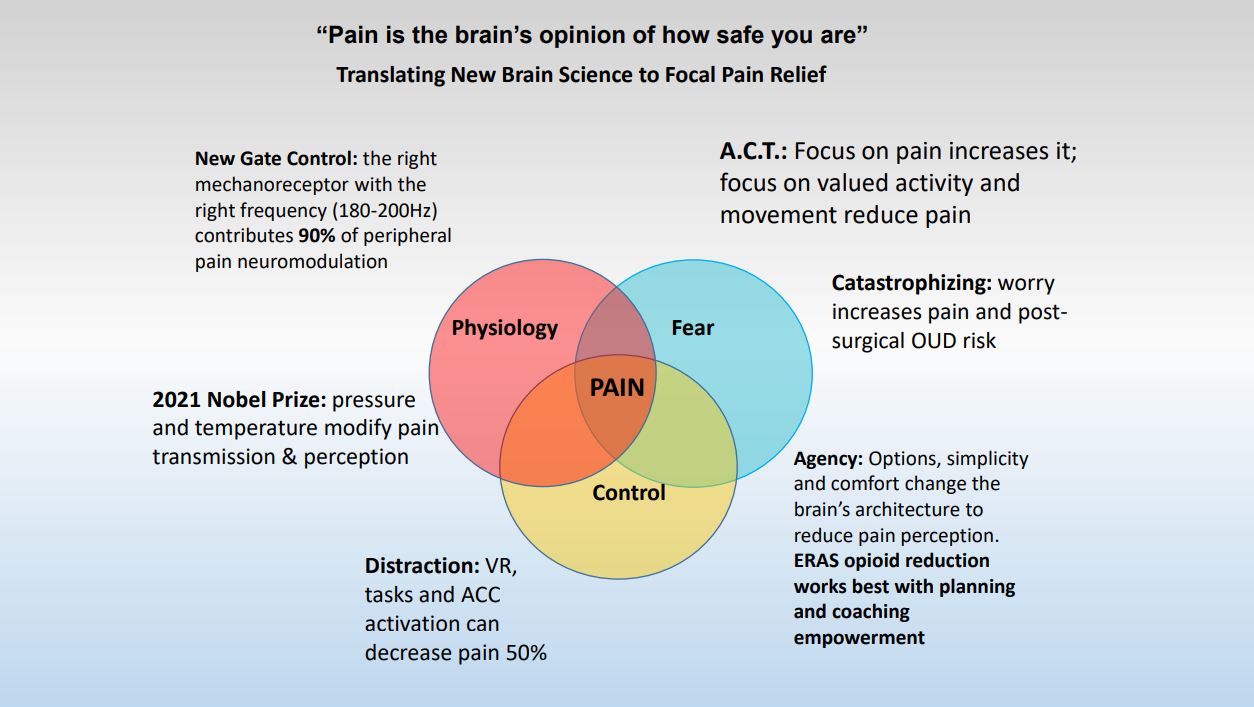
Recently, Amy Baxter, who is the inventor and CEO of BuzzyHelps.com, VibraCool.com ,
Distraction cards, and DuoTherm, gave a terrific update on chronic pain and new ways to help. She has given a TED talk on this topic as well with about 1 million views
TED talk (April 2023): Amy Baxter: How to Hack Your Brain When You are in Pain (12 minute talk and then 4 minutes for Q&A)
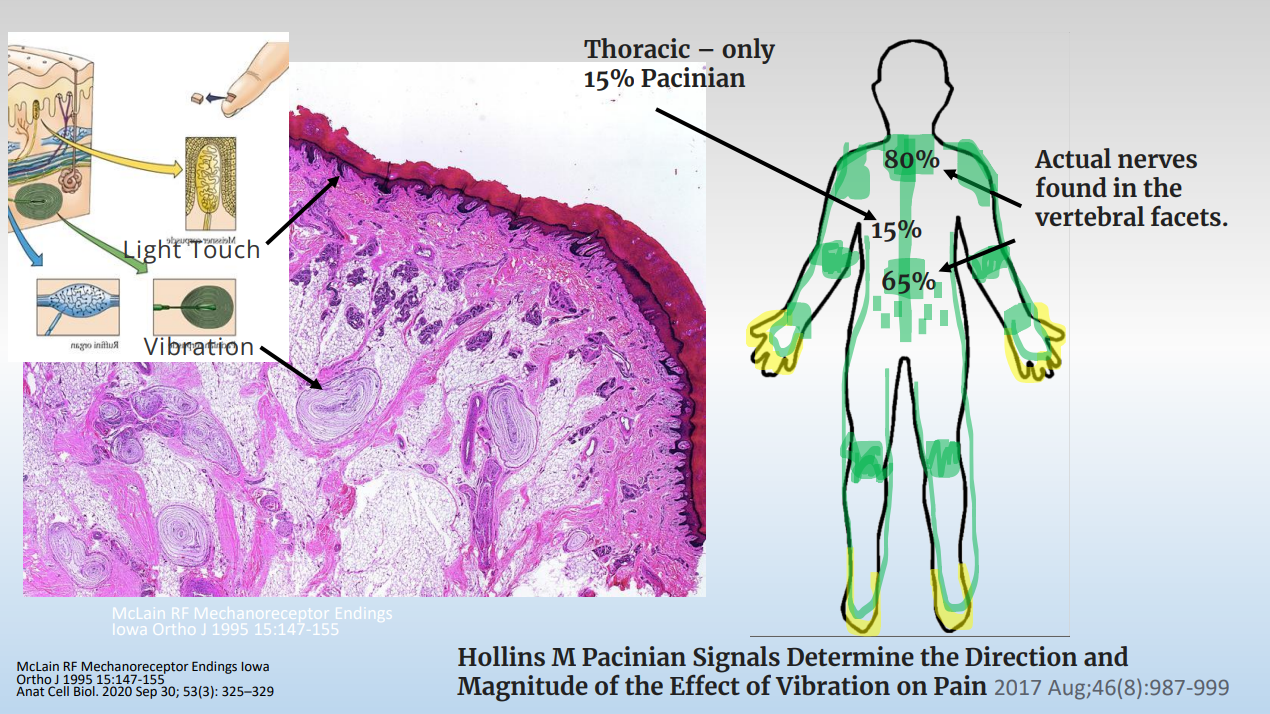
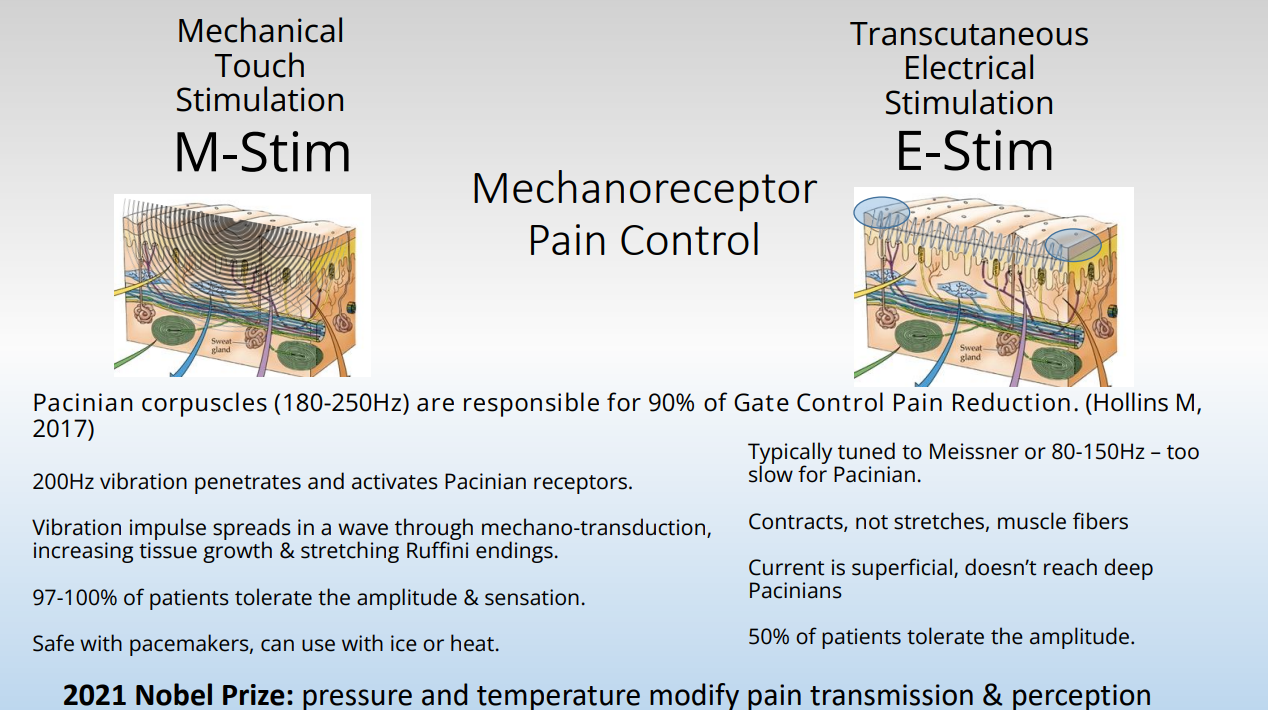
Some of her slides:

Some of her key points:




Related blog posts:
N Berman. NEJM 2023; 389: 1354-1355. A Reason to Retire?
If you regularly read the NEJM, what did you think about this article? Personally, I could relate a lot to the commentary.
The article starts off with the author, at the time in his 40s, chiding a colleague who was considering retiring at age 64 despite being very capable. His colleague responded: “My patients’ illnesses are starting to get to me.” Now, the author in his 70s has a different perspective.
Some excerpts:
Having just retired myself at 71, I now understand exactly what he meant…As a young physician, I was able to compartmentalize illness: it was something that happened to my patients, not to me. I could understand their illnesses, but I never saw myself in their place. I would try to alleviate their suffering, but my primary task was to diagnose and treat their condition.
I needed the distance from their suffering to be able to face the same situation with the next patient. Empathizing was not considered “professional,” but I think the real reason for avoiding it was that it undermined our defenses against the disappointment of failing in our mission to cure disease…”
Objectivity helped me cope with the stress of dealing with my patients’ life-threatening and life-changing situations. It enabled me to see my work in a more intellectual and less emotional light…
But as I grew older, this distinction became harder to maintain… My patients and their problems became more difficult to compartmentalize as separate from me. I started to feel the “extra-medical” aspects of their illnesses much more acutely than I had when I was younger — the unfairness of disease, the inevitability of age and the breakdown of the body.”
My take: As I have become older, it is harder to compartmentalize some of the suffering that I have witnessed. Even though this can help with empathy, I would rather forget a few of these experiences.
Related blog posts

One of our excellent APPs ,Alison Miller, recommended a movie this week called “Take Care of Maya.” It is available on Netflix.
While this is a one-sided account, it provides a well-documented perspective of a family accused of medical child abuse. It is probably a good idea for anyone involved from the medical side of child abuse to watch this movie; it will help them understand a family’s, often awful, experience with this process and may help with providing better care.
Here’s the trailer: Take Care of Maya (1:30)


Related blog posts:
BR Lee et al. J Pediatr 2023; 261: 113551. A Comparison of Pathogen Detection and Risk Factors among Symptomatic Children with Gastroenteritis Compared with Asymptomatic Children in the Post-rotavirus Vaccine Era
Patients (<11 yrs old) with acute gastroenteritis (AGE, n=2503) and healthy controls (HC, n=537) old enrolled in the New Vaccine Surveillance Network study between December 2011 to June 2016. Key findings:
This study shows substantial improvement in rotavirus infections with a drop from 26% in detection prior to vaccine era to 6% afterwards.
My take: These muliplex molecular assays are quite useful and have improved our ability to determine underlying infections. This is particularly useful in children with underlying diseases (eg. IBD, malignancy). However, this report serves as a cautionary note that many pathogens, including C diff and E coli, are frequently identified with PCR assays in healthy children
Related blog posts:
In 2022, 892 infants died in Georgia, an increase of 116 from prior year. About 7 infants dying for every 1000 births. AJC 11/1/23: CDC: Georgia’s infant mortality increase is among the worst in U.S.


10/26/23 Washington Post: Flu shots may protect against the risk of Alzheimer’s, related dementias
An excerpt:
A number of studies have found that people receiving vaccinations for flu and several other infectious diseases appear less likely than the unvaccinated to develop dementia, although scientists aren’t sure why…
In the flu study, the researchers took participants from a national patient database, two groups of 935,887 each, one group vaccinated, the other not. To avoid the potential influence of various factors that could affect the results, the scientists ensured that each group shared many of the same characteristics… found that an annual flu vaccination for three consecutive years reduced the dementia risk 20 percent over the next four to eight years, while six shots doubled it to a 40-percent reduction…
“All this requires further studies, but vaccination, along with good diet, exercise, intellectual and emotional stimulation are key factors for healthy aging,” Hotez said.
The article notes reductions in dementia with Shingles vaccine, Tdap or Td, and pneumococcal vaccines.

T-C Lee et al. Gastroenterol 2023; 165: 509-511. Open Access! ChatGPT Answers Common Patient Questions About Colonoscopy
In this study, ChatGPT answers to questions about colonoscopy were compared to publicly available webpages of 3 randomly selected hospitals from the top-20 list of the US News & World Report Best Hospitals for Gastroenterology and GI Surgery.
Methods: To objectively interpret the quality of ChatGPT-generated answers, 4 gastroenterologists (2 senior gastroenterologists and 2 fellows) rated 36 pairs of CQs and answers, randomly displayed, for the following quality indicators on a 7-point Likert scale: (1) ease of understanding, (2) scientific adequacy, and (3) satisfaction with the answer (Table 1) Raters were also requested to interpret whether the answers were AI generated or not.
Key findings:
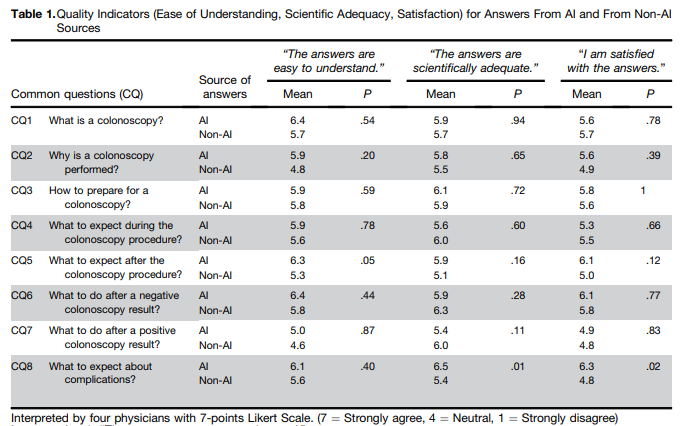
My take: This is yet another study, this time focused on gastroenterology, that show how physicians/patients may benefit from leveraging chatbots to improve communication.
Related blog posts:
Also this:
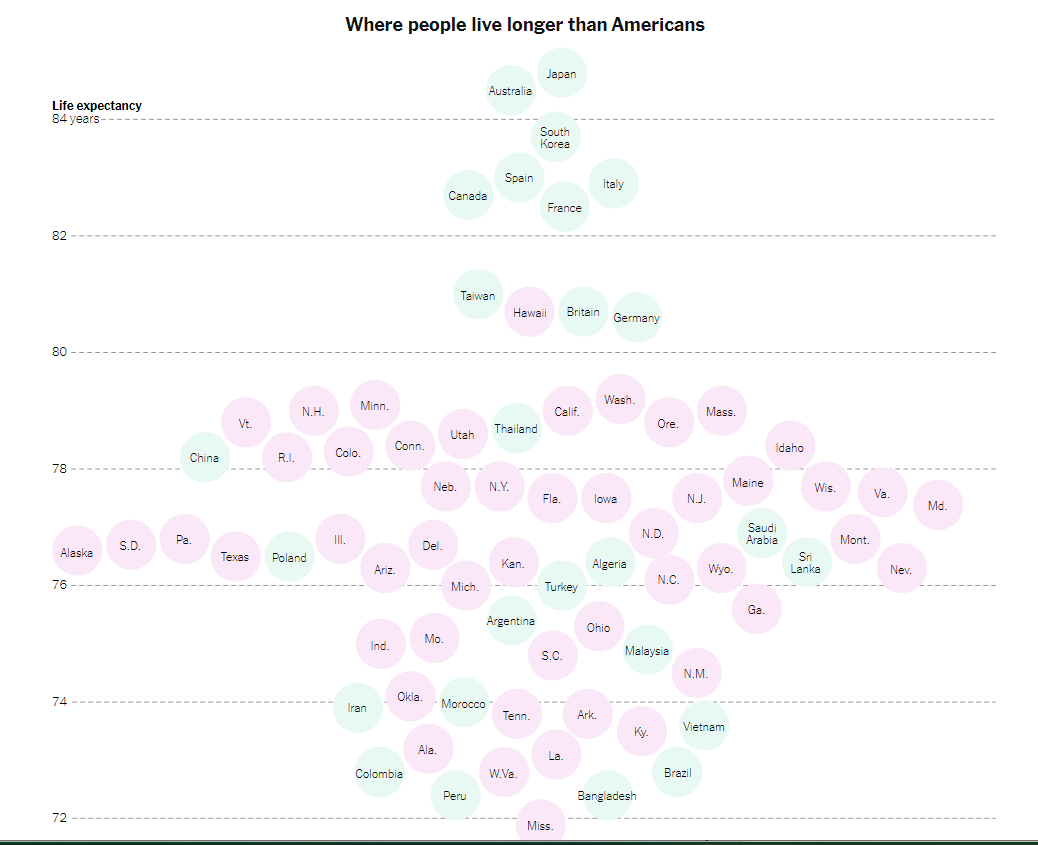
NY Times 8/17/23, Nicholas Kristof: How Do We Fix the Scandal That Is American Health Care?
“It’s not just that life expectancy in Mississippi (71.9) now appears to be a hair shorter than in Bangladesh (72.4). Nor that an infant is some 70 percent more likely to die in the United States than in other wealthy countries….
All that is tragic and infuriating, but to me the most heart-rending symbol of America’s failure in health care is the avoidable amputations that result from poorly managed diabetes…A toe, foot or leg is cut off by a doctor about 150,000 times a year in America, making the United States a world leader of these amputations.
America’s dismal health care outcomes are a disgrace. They shame us. Partly because of diabetes and other preventable conditions, Americans suffer unnecessarily and often die young. It is unconscionable that newborns in India, Rwanda and Venezuela have a longer life expectancy than Native American newborns (65) in the United States. And Native American males have a life expectancy of just 61.5 years — shorter than the overall life expectancy in Haiti.“
The article recommends
Related blog posts:

