Plastics and Cardiac Outcomes: “Plastics Are Neither As Safe Nor As Inexpensive As They Seem”

R Marfella et al. NEJM 2024; 390: 900-910. Microplastics and Nanoplastics in Atheromas and Cardiovascular Events

The authors conducted a prospective, multicenter, observational study involving patients who were undergoing carotid endarterectomy for asymptomatic carotid artery disease with 257 patients who completed a mean follow-up of 34 months.

Key findings:

  • Polyethylene was detected in carotid artery plaque of 150 patients (58.4%), with a mean level of 21.7±24.5 μg per milligram of plaque; 31 patients (12.1%) also had measurable amounts of polyvinyl chloride, with a mean level of 5.2±2.4 μg per milligram of plaque.
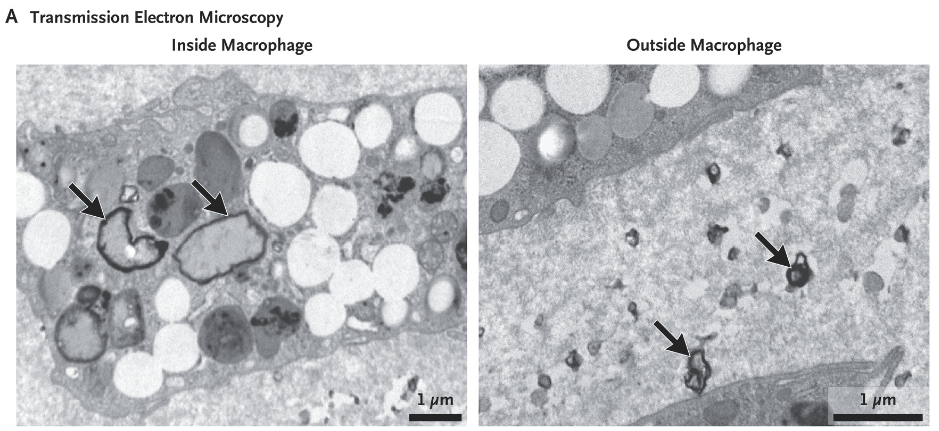
  • Electron microscopy revealed visible, jagged-edged foreign particles among plaque macrophages and scattered in the external debris.
  • There was a 4.5 -fold increase of the composite of all-cause mortality, heart attack and stroke in patients in whom microplastics and nanoplastics (MNPs) were detected within the atheroma than in those in whom these substances were not detected (hazard ratio, 4.53)
“Panel A shows transmission electron microscopy images of particles of high internal electron transparency contoured by a very thin electron opaque line. These particles do not resemble usual organic material owing to their particularly irregular shape. These particles (arrows) were detected inside living macrophages and outside in the amorphous material of the plaque (arrows).”

Discussion notes that “according to a World Health Organization statement, MNPs larger than 150 μm or 10 μm in diameter, respectively, are not absorbed into blood and do not penetrate blood vessels.25 Our findings suggest that nanoplastics, rather than microplastics, might accumulate in sites of atherosclerosis…Given the wide distribution and availability of MNPs, the attribution of all potential sources in humans is nearly impossible.”

“It is important to note that our results do not prove causality. The association between the presence of MNPs within plaque and the incidence of a composite of cardiovascular disease or death outcomes may also entail the risk from exposure to other residual, unmeasured confounding variables.”

Image available on X (formerly called twitter)

The associated editorial (PJ Landrigan. NEJM 2024; 390: 948-950) provides some additional context and notes the need for wide-scale transition form fossil carbon.

Key points:

  • “Plastics have enabled extraordinary advances in virtually every area of medicine and have made our lives immeasurably more convenient. Multiple lines of evidence now indicate, however, that plastics are neither as safe nor as inexpensive as they seem. The benefits of plastics come at great and increasingly visible costs to human health and the environment.”
  • “Plastics comprise a polymer matrix plus thousands of chemical additives that impart such properties as color, stability, flexibility, flame resistance, and water repellency. Many additives are toxic; these include carcinogens, neurotoxicants, and endocrine disruptors such as bisphenols and perfluorinated and polyfluorinated substances that can disrupt lipid metabolism and increase the risk of diabetes, cardiovascular disease, and stroke.2
  • “Worldwide, the annual output … to approximately 400 million tons today.3 This output is projected to double by 2040 and triple by 2060…Disposable, single-use items account for about 40% of current production and contribute disproportionately to the accumulation of plastic waste.”
  • ” Data from the National Biomonitoring Surveys of the Centers for Disease Control and Prevention (https://www.cdc.gov/biomonitoring/index.html. opens in new tab) suggest that plastic additive chemicals are present in the bodies of nearly all Americans. The Minderoo Monaco Commission has concluded that plastics endanger human health at every stage of the plastic life cycle.1

My take: This study provides further evidence that plastics, while incredibly important and convenient, take a huge toll on the environment and are increasingly recognized as having harmful effects on the the human body. In the same issue, is a review article “Health Effects of Fossil Fuel-Derived Endocrine Disrupters.” However, trying to reduce our dependence on plastics is not going to be easy.

Image available on X (formerly called twitter)

Related blog posts:

NY Times: ‘What’s My Life Worth?’ The Big Business of Denying Medical Care

NY Times 3/14/24: ‘What’s My Life Worth?’ The Big Business of Denying Medical Care

Some of the input from this video was from physicians in our ImproveCareNow consortium (personal communication). Here’s an key points/excerpt: Prior Authorization Video (8:37 minute video)

  • This video explains how insurance companies have ‘weaponized’ prior authorization to postpone and/or deny care in order to increase their profits. “This is medical injustice disguised as paperwork.”
  • The video states that ~80% of PAs are effective in preventing patients from getting the care their physician recommended. However, when physicians spend their time appealing denials, they are usually successful in getting the medication covered.
  • “Prior authorization gives your insurance company more power than your doctor.”
  • There are efforts in Congress, including the GOLD Card Act of 2023, aimed at reforming prior authorization.

My take: Prior authorization delays and denials of care sometimes have devastating consequences (watch the video)

Related blog posts:

CAR T-cell Therapy: A Cure for Autoimmune Disease?

  • F Muller et al. NEJM 2024; 390: 687-700. CD19 CAR T-Cell Therapy in Autoimmune Disease —A Case Series with Follow-up
  • JD Isaacs. NEJM 2024; 390: 758-759. (editorial) CAR T Cells — A New Horizon for Autoimmunity?

Methods: This case series enrolled 15 patients with severe SLE (8 patients), idiopathic inflammatory myositis (3 patients), or systemic sclerosis (4 patients) who received a single infusion of CD19 chimeric antigen receptor (CAR) T cells after preconditioning with
fludarabine and cyclophosphamide. All patients were refractory to at least two conventional therapies.

Key findings:

  • Median follow-up was 15 months.
  • All the patients with SLE had DORIS remission, all the patients with idiopathic inflammatory myositis had an ACR–EULAR major clinical response, and all the patients with systemic sclerosis had a decrease in the score on the EUSTAR activity index.
  • Immunosuppressive therapy was completely stopped in all the patients without having relapses or worsening of their disease.

Some points from the editorial:

  • “Similar outcomes [as CAR T-cell infusion] can sometimes be achieved with autologous stem-cell transplantation but with a risk of substantial toxic effects and even death”
  • The editorial explains the potential mechanisms of how CD19 CAR T-cells therapy works in comparison to CD20 monoclonal antibodies like rituximab. “Whereas rituximab primarily depletes B cells with some secondary loss of plasmablasts, CD19 CAR T-cells have direct cytotoxicity for plasmablasts and many plasma cells.”
  • “The future trajectory of CAR T-cell therapy for autoimmunity will be driven by efficacy, safety, cost, and acceptability… if extended follow-up reinforces the current data, the benefit-to-risk ratio is likely to prove acceptable to both physician and patient, at least in certain cases of refractory disease. Therapy is individualized, difficult to scale, and expensive.”
  • Long-term safety for CAR T therapy is still poorly understood. Recently a report identified secondary cancers in patients who have received this treatment for oncologic diseases (Verdun N, Marks P. Secondary cancers after chimeric antigen receptor T-cell therapy. N Engl J Med 2024;390:584-586)

My take: For now, almost all autoimmune diseases will be treated with indefinite conventional agents. Nevertheless, it is a hopeful step that a cure for these diseases may be possible.

Related blog post: Great Story -How CAR-T Came About

Ram Head Trail, St John

In Trials: An Oral IL-23 Antagonist Peptide

R Bissonnette et al. NEJM 2024; 390: 510-521.An Oral Interleukin-23–Receptor Antagonist Peptide for Plaque Psoriasis

While this study shows that an oral IL-23 antagonist was effective for plaque psoriasis, this is exciting news for the GI physicians as biologic agents that target IL-23 have been shown to be very effective for inflammatory bowel disease (IBD) (eg. Ustekinumab, Risankizimab, Mirikizumab). This “FRONTIER” study shows how to achieve similar results as these biologic therapies.

Biologics are large monoclonal antibodies which cannot be orally absorbed and must be administered either intravenously or as an injection. However, “JNJ-77242113 is an oral interleukin-23–receptor antagonist peptide that selectively and potently blocks interleukin-23 proximal signaling and the production of downstream cytokines such as interleukin-17.” This medication needs to be taken on an empty stomach (this could effect real-world results).

My take: I am expecting that this medication will undergo trials for IBD and suggests that an oral effective therapy is in the therapeutic pipeline.

Is Medicine a “Calling?”

A recent thought-provoking commentary on medical training delved into the issue of “workism” and sacrifice in medicine. 

L Rosenbaum. NEJM 2024; 390: 471-475.On Calling — From Privileged Professionals to Cogs of Capitalism?

Dr. Rosenbaum notes that some believe using the concept of medicine as a “calling” is “weaponized against trainees as a means of subjugation — a way to force them to accept poor working conditions.”

Some excerpts:

  • The sacrifices that once brought physicians spiritual fulfillment have increasingly been replaced by a sense that we’re simply cogs in a wheel.
  • Historically the missions of trainees and hospitals were better aligned…there was a shared commitment to serve vulnerable people. Today,… most hospital boards and leaders — even at so-called not-for-profit hospitals — increasingly prioritize financial success. Some hospitals view trainees more as an inexpensive labor force… As educational missions are increasingly subordinated to corporate priorities (such as early discharges and billing documentation), sacrifice becomes far less appealing.
  • [Some younger doctors are] disheartened by what she saw as medicine’s dismissal of people’s pain, poor treatment of marginalized populations, and tendency to assume the worst about patients.
  • My interviews with trainees, educational leaders, and clinicians suggested that efforts to keep work from consuming life have unintentionally increased resistance to medical education’s demands… Some trainees insist that expectations to read up on patients or prepare for conferences violate duty hours.
  • Educators recognize changing norms… And many worried that they were guilty of the generational fallacy — a tendency sociologists call “kids these days” — of thinking their own training was superior to the next generation’s.2 

My take: Whether medicine is a job or a “calling,” like the author, I view doctoring as sacred work. There are many parts of this work that cannot conform to a 9-to-5 schedule. Some work cannot be delayed to the next day and some work can be difficult to delegate. Yet, I definitely understand how a focus on documentation/billing rather than patient care could result in physicians (young and old) not wanting to ‘go the extra mile.’

Related blog posts:

Donkeys at Honeymoon Beach

Severe Cognitive Slowing Identified in Long COVID

S Zhao et al. eClinical Medicine 2024; DOI:https://doi.org/10.1016/j.eclinm.2024.102434. Open Access! Long COVID is associated with severe cognitive slowing: a multicentre cross-sectional study

Methods: To examine cognitive slowing, patients with post-COVID-19 conditions (PCC) completed two short web-based cognitive tasks, Simple Reaction Time (SRT) and Number Vigilance Test (NVT). 270 patients diagnosed with PCC at two different clinics in UK and Germany were compared to two control groups: individuals who contracted COVID-19 before but did not experience PCC after recovery. For the SRT, participants were required to press the spacebar when a large red circle appeared in the center of the screen.

.**The simple reaction time task and the number vigilance task can be tried online at [https://octalportal.com/pcc]..

Key finding:

  • There was pronounced cognitive slowing in patients with PCC, which distinguished them from age-matched healthy individuals who previously had symptomatic COVID-19 but did not manifest PCC. Cognitive slowing was evident even on a 30-s task measuring simple reaction time (SRT), with patients with PCC responding to stimuli ∼3 standard deviations slower than healthy controls. 53.5% of patients with PCC’s response speed was slower than 2 standard deviations from the control mean, indicating a high prevalence of cognitive slowing in PCC.
  • Comorbidities such as fatigue, depression, anxiety, sleep disturbance, and post-traumatic stress disorder did not account for the extent of cognitive slowing in patients with PCC.
  • Cognitive slowing on the SRT was highly correlated with the poor performance of patients with PCC on the NVT measure of sustained attention.
Results of simple reaction time       

My take (borrowed from authors): Using a 30-s web-based, self-administered psychomotor task, cognitive slowing in PCC can be reliably and easily measured as part of diagnostic work-up, and has potential to be a biomarker to track the progress of rehabilitation of PCC.

**The simple reaction time task and the number vigilance task can be tried online at [https://octalportal.com/pcc].

Medical Diagnostic Errors

Eric Topol 1/28/24: Toward the eradication of medical diagnostic error

Key points/excerpts:

  • There is little evidence that we are reducing diagnostic errors despite more lab testing and more imaging. “One of the important reasons for these errors is failure to consider the diagnosis when evaluating the patient.” This, in turn, may be related to brief office visits.
  • There are a few ways that artificial intelligence (AI) is emerging to make a difference to diagnostic accuracy. ..A systematic analysis of 33 randomized trials of colonoscopy, with or without real-time AI machine vision, indicated there was more than a 50% reduction in missing polyps and adenomas, and the inspection time added by AI to achieve this enhanced accuracy averaged only 10 s. 
  • AI support to radiologists for a large mammography study “showed improvement in accuracy with a considerable 44% reduction of screen-reading workload.” The cancer detection rate was 6.1 per 1000 compared to 5.1 per 1000 in the control group.
  • In difficult NEJM CPC cases, large language AI model (LLM) outperformed clinicians (see slide below).” The LLM was nearly twice as accurate as physicians for accuracy of diagnosis, 59.1 versus 33.6%, respectively.”
  • “Likewise, the cofounder of OpenAI, Ilya Sutskever, was emphatic about AI’s future medical superintelligence: ‘If you have an intelligent computer, an AGI [artificial general intelligence], that is built to be a doctor, it will have complete and exhaustive knowledge of all medical literature, it will have billions of hours of clinical experience.’ “

My take (borrowed from Dr. Topol): “We are certainly not there yet. But in the years ahead, …it will become increasingly likely that AI will play an invaluable role in providing second opinions with automated, System 2 machine-thinking, to help us move toward the unattainable but worthy goal of eradicating diagnostic errors.”

Related blog posts:

Pharmacotherapy for Obesity

Recently, Dr. Shruthi Arora, an Emory Pediatric Endocrinologist and part of CHOA’s Strong4Life team, provided a terrific review of pediatric obesity pharmacology for our group. 

Here are a few slides from Dr. Arora’s lecture:

General points from this lecture:

  • GLP-1 agents are a huge advance but currently limited by affordability (frequently there is a lack of insurance coverage if there is not T2DM) and availability. In addition, most individuals will regain weight loss when these agents are stopped.
  • GLP-1 agents are not recommended in the following: patients with gastroparesis, and patients with a personal or family history significant for MEN 2 A /MEN 2 B/ Medullary thyroid cancer
  • Long-term data is still needed. These agents have been associated with muscle and bone loss; thus, working to assure a good diet is still very important

——————————————————————————

NASPGHAN has a good review/webinar on this topic as well: Pediatric MASLD in the Current Era of Pharmacological and Surgical Obesity Treatment Options. For members, after sign in, you can register and login to this webinar (look under clinical practice tab). This webinar made a lot of useful points (many covered by Dr. Arora too).

  • For GLP-1 agents, due to effects on gastric emptying, they are generally held prior to anesthesia. If they are given weekly, then hold 1 week prior to anesthesia. If it is a daily medication, hold for 1 day prior to anesthesia.
  • Surgery definitely helps improve MASH -though variable responses in patients. SLEEVE gastrectomy is currently the most frequent bariatric surgery
  • There is trouble getting GLP-1 medications. 
  • Limited knowledge regarding long-term effects of cycling of GLP-1 agents.
  • Obesity is a long-term disease –>anticipate long-term treatment

The Wall Street Journal recently published a personal account of using the newer obesity medications. Bradley Olson, 1/12/24: A Weight-Loss Drug Changed My Life. Will It Solve My Problem? (behind a paywall). This article discusses the dramatic improvement experienced by the writer along with his concerns about the cost of the medication and potential for rebound when he can no longer afford it. Two of the figures:

Disclaimer: This blog, gutsandgrowth, assumes no responsibility for any use or operation of any method, product, instruction, concept or idea contained in the material herein or for any injury or damage to persons or property (whether products liability, negligence or otherwise) resulting from such use or operation. These blog posts are for educational purposes only. Specific dosing of medications (along with potential adverse effects) should be confirmed by prescribing physician.  Because of rapid advances in the medical sciences, the gutsandgrowth blog cautions that independent verification should be made of diagnosis and drug dosages. The reader is solely responsible for the conduct of any suggested test or procedure.  This content is not a substitute for medical advice, diagnosis or treatment provided by a qualified healthcare provider. Always seek the advice of your physician or other qualified health provider with any questions you may have regarding a condition.

Life, Even in the ICU, is Better with Music

S Mounier et al. J Pediatr 2024: 264: 113736. Music Therapy During Basic Daily Care in Critically Ill Children: A Randomized Crossover Clinical Trial

In this cross-over randomized controlled study with 50 children (median age 3.5 yrs), the authors assessed whether music therapy (MT) is effective to reduce pain during daily personal hygiene care (DPHC). The primary outcome was variation of the Face Legs Activity Cry Consolability (FLACC) score (range, 0-10). Key findings:

  • FLACC score was 0.0 (0.0-3.0) at baseline and 3.0 (1.0-5.5) during DPHC. With MT, these values were, respectively, 0.0 (0.0-1.0) and 2.0 (0.5-4.0).
  • Rates of FLACC scores of >4 during DPHC, which indicates severe pain, were 42% in standard conditions and 17% with MT (P = .013).

In their background, the authors note that MT “provides feelings of well-being and relaxation and acts as a distractor, leading to the inhibition of pain perception.”

My take: This study reinforces the importance of distraction to reduce pain. Life is better and less painful with music.

Of course, the scene from “Airplane!” shows that not all music therapy is beneficial: Clumsy Stewardess and Near Death Experience

LA Times: Dr. Lapado, Florida Surgeon General, is a “Dangerous Quack”

LA Times, Michael Hiltzik (1/9/24): Column: Meet the most dangerous quack in America

An excerpt:

It used to be fairly easy to dismiss Florida’s surgeon general, Dr. Joseph A. Ladapo, as a clownish anti-vaccine quack posing a danger mostly to residents of his home state…Ladapo has moved from promoting useless treatments for COVID-19, such as the drugs hydroxychloroquine and ivermectin, to waging an ever-expanding fact-free campaign against the leading COVID vaccines…

Last January, a faculty committee at the University of Florida medical school found that Ladapo engaged in “careless, irregular and contentious” research practices that may have violated university rules…

That brings us to Ladapo’s latest adventure in medical quackery, his claim that no one should take the mRNA vaccines….Ladapo’s advice is based on what he says is research that the Pfizer and Moderna mRNA COVID vaccines contain fragments of DNA that are injected into human cells, which they can contaminate and turn into cancer cells…

The human cell has a panoply of mechanisms to destroy foreign DNA. Even if the fragments managed to penetrate the cell nucleus, which can’t happen, they would have to cut up the existing DNA, which would require a mechanism the fragments don’t have.

“So the chance that DNA could affect your DNA is zero,” Offit said..

Ladapo’s words and actions have surely contributed to his state’s pathetic performance in getting its citizens vaccinated against COVID. With 11.6% of its population fully vaccinated with a booster as of last May, Florida had a rate among the lowest in the nation. (California’s rate was 20.6%.) Among those 65 and older — purportedly the population that Florida strives to protect — only 31.2% were fully vaccinated. (California: 48.3%.)

Florida’s death rate from COVID of 375 per 100,000 people is among the worst in the country. (California: 283.) You can ignore the defense that the difference is due to Florida’s relatively older population; states with even older median ages have done much better: Vermont (170), New Hampshire (245) and Maine (252). The difference is the indifference of Ladapo and DeSantis to their own residents’ health.

Related blog posts:

As reported on 1/19/24