How Common is Hepatitis E in the U.S.?

In a recent study (Hepatology 2014; 60: 815-22), data from the National Health and Nutrition Evaluation Survery (NHANES) 1988-94 was compared with the NHANES 2009-2010 with regard to Hepatitis E virus (HEV) epidemiology.  In addition, the most recent surgery coupled with a high performance HEV assay.  A total of 8,814 individuals were included in the analysis.

Key findings:

  • The seroprevalence of HEV was estimated at 6.0% in the U.S. which is only one-third as high as previous estimates.
  • Birth outside the U.S., Hispanic race, and increasing age were all factors associated with increased HEV seroprevalence.  The associations of hispanic origin and birth outside U.S. as risk factors disappear when age is taken into account.

Also noted: Hepatology 2014; 60: 1082-89.  “Liver transplantation in the management of porphyria” –useful review.

Related blog posts:

Magnetic Resonance Elastography in Nonalcoholic Fatty Liver Disease

A recent study (Hepatolology 2014; 60: 1920-8) shows that magnetic resonance (MR) elastography can be an accurate noninvasive tool to assess liver fibrosis.

Background: Assessing severity of liver fibrosis provides important prognostic information in patients with nonalcoholic fatty liver disease (NAFLD); however, these patients are often obese which decreases the success of transient elastography.  In addition, high hepatic fat content may alter the results of transient elastography.  Hence, an alternative noninvasive technique is desirable.

Design: Prospective study with 117 consecutive patients with biopsy-proven NAFLD who also underwent 2D-MR elastography between 2011-2013.

Results:

  • Fibrosis stage: stage 0 n=43, stage 1 n=39, stage 2 n=13, stage 3 n=12, stage 4 n=10.
  • MR elastography identified stage 3-4 with an accuracy of 0.92, with little overlap between advanced (F3-4) and non-advanced (F0-2) values.  The specificity, sensitivity, positive/negative predictive values, and cutoff values are detailed in Table 2.
  • Figure 3 provides a cool picture demonstrating the different MR elastography stiffness heat maps correlated with liver fibrosis. Link to similar web-based image from Siemens.

Bottomline: This technology allows a noninvasive measure of liver fibrosis in NAFLD patients and will probably be of use in other liver conditions.  Given the fact that a liver biopsy is more risky and often expensive, this technology and other noninvasive markers of advanced liver disease will be important tools.

Related blog posts:

What is the Role of Ursodeoxycholic Acid in Primary Sclerosing Cholangitis?

While previous studies of ursodeoxycholic acid (UDCA) at high doses (28-30 mg/kg/day) have been shown to have detrimental effects, a number of randomized controlled trials (RCTs) have shown that low-dose UDCA has been associated with biochemical improvements but no differences in endpoints like death, liver transplantation or cholangiocarcinoma.  Given this conflicting information, a new study (Hepatology 2014; 60: 931-40, editorial 785-88) has examined the effects of withdrawal of low-dose UDCA.

In this cohort, the median age was 34 years, “62% were male, 69% had IBD, 19% had cirrhosis, and the baseline UDCA dose was 10-15 mg/kg/day.”

Key findings:

  • “At 3 months, discontinuation of UDCA in patients with PSC causes significant deterioration in liver biochemistry and influences concentrations of bile acid metabolites.”
  • Alkaline phosphatase increased 75.6%, GGT increased 117.9%, bilirubin increased by 50%, aspartate aminotransferase increased by 45.0%, and alanine amiontransferase increased by 63.9%
  • The Mayo Risk Score for PSC (associated with PSC prognosis) also increased 0.5 points from baseline.

Conclusion (from editorial): “there may still be a role for judicious use of UDCA in patients with well-compensated disease.”  A suggested “yet unproven” algorithm for use of UDCA is noted in Figure 1 pg 787 and considers UDCA for patients with alkaline phosphatase >1.5x ULN and/or PSC-associated symptoms like pruritus.  If no clinical improvement within 6 months, then stopping UDCA is recommended.

Related blog posts:

PEG vs Lactulose in Hepatic Encephalopathy

In a study (JAMA Intern Med. Published online September 22, 2014. doi:10.1001/jamainternmed.2014.4746) with 50 participants, PEG was more effective than standard therapy of lactulose for hepatic encephalopathy.  PEG vs Lactulose (HELP study) Abstract.

Here’s an excerpt:

Design, Setting, and Participants  The HELP (Hepatic Encephalopathy: Lactulose vs Polyethylene Glycol 3350-Electrolyte Solution) study is a randomized clinical trial in an academic tertiary hospital of 50 patients with cirrhosis (of 186 screened) admitted for HE.

Interventions  Participants were block randomized to receive treatment with PEG, 4-L dose (n = 25), or standard-of-care lactulose (n = 25) during hospitalization…

Results  Thirteen of 25 patients in the standard therapy arm (52%) had an improvement of 1 or more in HESA score, thus meeting the primary outcome measure, compared with 21 of 23 evaluated patients receiving PEG (91%) (P < .01)… The median time for HE resolution was 2 days for standard therapy and 1 day for PEG (P = .01). Adverse events were uncommon, and none was definitely study related.

Conclusions and Relevance  PEG led to more rapid HE resolution than standard therapy, suggesting that PEG may be superior to standard lactulose therapy in patients with cirrhosis hospitalized for acute HE.

Related blog posts:


John Snow and Hepatology Potpouri

If you mention the name “John Snow,” I bet most people would think about one of the characters from Game of Thrones.  However, a more important John Snow is referenced in a recent Hepatology review (Hepatology 2014; 60: 1124-25).  “In 1855, the physician and epidemiologist John Snow used the technique of medical geography to stem the cholera epidemic in London.  By mapping the number of choleras case and the local water supply, he found that the Broad Street pump station was responsible and after the pump handle was removed, incident cases declined.”

Hepatology 2014; 60: 1150-59, editorial 1124-25.  Using spatial (clustering) epidemiology, the authors show that parenteral antischistosomal therapy (PAT) alone cannot explain the high HCV prevalence in Egypt.  Other iatrogenic exposures and poor infection control are likely contributing factors.

Hepatology 2014; 60: 1222-30, editorial 1130.  In a prospective study (western Europe), the authors show that vitamin D (25-OH) levels were inversely associated with the risk of hepatocellular carcinoma (HCC).  What is remarkable about this study is the levels were obtained on average 6 years before HCC diagnosis.  Also, this study uses tertiles -comparing those in the top third to those in the lowest third.

Hepatology 2014; 60: 1399-1408.  More data showing injury from Herbals and dietary supplements.  Liver injury caused by bodybuilding herbal supplements (often anabolic steroids) were typically less severe than liver injury induced in non-bodybuilding herbals (predominantly middle-aged women). Table 3 identifies by name many of the herbal supplements/dietary supplements associated with death or liver transplantation.  “Contrary to popular belief, this study demonstrates that HDS products are not always safe.”

Wrongful Conviction: HCV Acquitted of Causing Diabetes & a Word on Ebola

First about Ebola –here’s the Ebola recommendation from the NEJM editors regarding quarantine:

An excerpt:

The governors of a number of states, including New York and New Jersey, recently imposed 21-day quarantines on health care workers returning to the United States from regions of the world where they may have cared for patients with Ebola virus disease. We understand their motivation for this policy — to protect the citizens of their states from contracting this often-fatal illness. This approach, however, is not scientifically based, is unfair and unwise, and will impede essential efforts to stop these awful outbreaks of Ebola disease at their source, which is the only satisfactory goal…We should be honoring, not quarantining, health care workers who put their lives at risk not only to save people suffering from Ebola virus disease in West Africa but also to help achieve source control, bringing the world closer to stopping the spread of this killer epidemic.

Take-home message: Read the entire editorial why quarantine is not the right approach for asymptomatic returning health care workers.
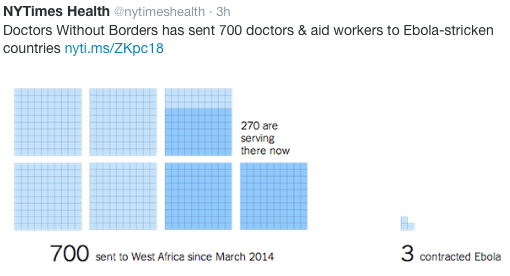
Direct Ebola Risk to Health Care Workers

Direct Ebola Risk to Health Care Workers

Now in followup to yesterday’s post about HCV and diabetes:

Even Perry Mason would have had a difficult time proving hepatitis C virus (HCV) did not cause diabetes until a recent publication (Hepatology 2014; 60: 1139-49, editorial 1121-23).

In this study using population-based data from the U.S. National Health and Nutrition Examination Survey (NHANES) with 15,128 adult participants, the authors show that the prevalence of diabetes and prediabetes did not differ by HCV status.  The authors used standardized definitions for diabetes and prediabetes and adjusted for major confounders.  The authors did note a relationship between elevated alanine aminotransferase (ALT) with diabetes regardless of HCV status.  In their cohort, 56.7% had normal glucose, 32.8% had prediabetes, 3.2% had undiagnosed diabetes, and 7.3% had diagnosed diabetes.  The mean age progressively increased in these groups: 40.8 years, 51.9 years, 58.9 years, and 59.2 years respectively.

Among those with diabetes, 10.5% were HCV RNA-negative and 12.0% were HCV RNA-positive –unadjusted for ALT values; the unadjusted HCV antibody status was nearly identical at 10.5% and 10.2% respectively. After adjustment, the OR for being HCV RNA-positive was 1.06 (P=0.53) with confidence limits of 0.59-1.90.

In examining the evidence, the editorial and the discussion review previous evidence of a significant association between HCV infection, insulin resistance, and diabetes.  The odds ratio for this association (HCV and diabetes) was estimated to be about 1.7.  The problems with this association were the following:

  • Much of the work was reported from tertiary care centers
  • Advanced liver disease (of any type) is a well-established risk factor for type 2 diabetes (T2DM)
  • Many studies may have included patients with nonalcoholic fatty liver disease which is another risk factor for diabetes
  • These studies did not control for ALT values

Bottomline (from editorial): This study “calls one to reconsider the dogma on the role of IR [insulin resistance] in the pathogenesis of HCV infection and its association with T2DM.” If there is an association, it is much smaller than previous estimates.

Related blog post: Treating HCV Helps Diabetics | gutsandgrowth

Telaprevir-Based HCV Therapy is Expensive Too

With the arrival of newer expensive hepatitis C virus (HCV) therapies, there has been an effort to prove that the costs are within reason.  One study (Hepatology 2014; 60: 1187-95) looking at this issue examines the cost of a sustained virological response (SVR) with the previous best therapy: Telaprevir-Based Triple Therapy.

Design: Records from 147 patients who received telaprevir-based triple therapy in 2011 were reviewed.

According to the authors (supported by Gilead Sciences), median cost of care was $83,721 per patient and the median cost per SVR was $189,338.  The costs of two of the drugs, telaprevir and pegylated interferon, accounted for 85% of the total costs.  Other costs included adverse management (8%), ribavirin (4%), professional fees (2%), and laboratory fees (1%).

The main reason besides pharmaceutical prices for the high costs were the SVR rate of 44%.

Bottomline: If a patient requires HCV therapy, the newer, more effective, expensive agents are likely to compare favorably with the less new, less effective, expensive medications.

Related blog posts:

Also noted: Hepatology 2014; 60: 1211-21.  “WELCOME” Study tested whether 15-18 months of docosahexaenoic acid (DHA) plus eicosapentaenoic acid (EPA) decreased liver fat and histology in nonalcoholic fatty liver disease (NAFLD). n=101, with 51 in treatment group. Findings the DHA+EPA had a “trend toward improvement in liver fat” percentage but no improvement in fibrosis.

Have You Heard of Harvoni?

The U.S. Food and Drug Administration on 10/10/14 approved Harvoni (ledipasvir and sofosbuvir) to treat chronic hepatitis C virus (HCV) genotype 1 infection.

“Harvoni is the first combination pill approved to treat chronic HCV genotype 1 infection. It is also the first approved regimen that does not require administration with interferon or ribavirin, two FDA-approved drugs also used to treat HCV infection.”

Full FDA press release –includes data supporting approval.

Related blog postThe Future is Now (for Hepatitis C) | gutsandgrowth

Understanding the Costs and Benefits of HCV Treatment

A useful editorial in JAMA (available free online –) provides a useful overview of HCV treatments in terms of costs and strategies for using new therapies.

A couple of useful points

  • Given the cost of medications, many are using the newer therapies in those who absolutely need treatment now and waiting for costs to improve in others
  • “The ultimate approach to cost will be lower prices, which will occur as more products create competition.”
  • “This fall, an oral combination of sofosbuvir and ledipasvir will be introduced that inhibits both the NS5B polymerase and NS5A polymerase and has been shown to reduce treatment to an 8-week course with cure rates of more than 95%.2 Now, a chronic disease that affects millions of Americans can be cured by well-tolerated oral medications.”
  • Because of the large number of potential patients, “the simple math is that treatment of patients with HCV could add $200 to $300 per year to every insured American’s health insurance premium for each of the next 5 years.”

Related blog posts:

Hepatology Update (Part 2) -Summer 2014

Hepatology 2014; 60: 715-33.  This publication is the AASLD Practice Guideline for Hepatic Encephalopathy in Chronic Liver Disease.  The recommendations are too extensive to summarize.  Here’s one: despite concerns about efficacy, “lactulose is the first choice for treatment of episodic” overt hepatic encephalopathy.  Rifaximin is an effective add-on therapy to lactulose for prevention of OHE recurrence. AASLD Guidelines Website

Hepatology 2014; 60: 679-86. Using the Drug-Induced Liver Injury Network between 2004-2012, the authors identified 22 cases of hepatotoxicity attributed to statins.  Median age was 60 years.  The latency to onset of symptoms varied from 34 days to 10 years with a median of 155 days. Nine patients had a cholestatic hepatitis pattern and 12 had hepatocellular injury, including six with an autoimmune phenotype. Severity: nine required hospitalization, four had evidence of hepatic failure and one died.

Related blog posts: