Vedolizumab for Primary Sclerosing Cholangitis (with IBD)?

“The monoclonal antibody vedolizumab may reduce biliary inflammation in patients with primary sclerosing cholangitis and comorbid inflammatory bowel disease, according to early, open-label study findings reported at the meeting sponsored by the European Association for the Study of the Liver”  –according to GIHepNews: Biliary inflammation reduced by IBD drug

“Vedolizumab given to 27 patients with primary sclerosing cholangitis (PSC) and inflammatory bowel disease (IBD) resulted in a 50% reduction or normalization of serum alkaline phosphatase levels in 17 cases (63%).”

This was an open-label, proof-of-concept study involving 27 patients aged 25-30 years with PSC and comorbid IBD.

My take: This is interesting but needs a lot more study.

Atlanta Zoo 2016

Atlanta Zoo 2016

Slipping Rib Syndrome

The entity, of “Slipping Rib Syndrome,” which could be mistaken for a gastronomical error at The Boathouse, is also called Cyriax syndrome.  A recent brief report (L Calvete et al. J Pediatric 2016; 172: 216) describes a typical case.  This teenager had a 1-year history of “brief, episodic, sharp upper left abdominal pain, accompanied by a [subtle] chest wall deformity, which started after physical activity.”

Key points:

  • This disorder is most common in middle-aged females but can occur at any age
  • It can result from hyper mobility of the false ribs, allowing “the affected rib to sublet or ‘slip’ under the adjacent rib,..and cause pain
  • The disorder can be elicited with the ‘hooking’ maneuver.  “In this test, the patient lies in the supine position, while the clinician hooks his or her fingers beneath the costal margins of the affected side, displacing them upward and anteriorly pulling gently.  A positive test reproduces pain.”
  • Treatment: avoidance of displacement and mild analgesics

My take: I’ve only seen this condition once but think it is important to consider in patients presenting with intermittent abdominal pain.

Atlanta Zoo 2016

Atlanta Zoo 2016

Solitary Hepatic Nodule and Alagille Syndrome

A retrospective study (A Alhammad et al. JPGN 2016; 62: 226-32) of 55 children from 1999-2014 examined the frequency of a solitary hepatic nodule adjacent to the right portal vein as a potential diagnostic finding for Alagille syndrome.  Only 39 had appropriate imaging to examine.

Key findings:

  • In 12 (of 39) focal hepatic lesions were evident (11 were solitary).
  • The median diameter was 8.1 cm.
  • In those with pathology review, the cases were suggestive of a regenerative nodule.
  • In all but one case, the alpha-fetoprotein levels were normal.
  • 10 of these lesions were adjacent to the right portal vein.

One other point from the discussion:

  • ~21% of patients with Alagille require liver transplantation, primarily for unremitting cholestasis and pruritus

My take: Recognition of this entity will help avoid mistaking this lesion for hepatocellular carcinoma.

Related blog posts:

HeavenHellBillMurray

Ultra-Short Celiac Disease


It is well-recognized that obtaining a duodenal bulb biopsy increases the likelihood of making a diagnosis of celiac disease.  Another study (PD Mooney et al. Gastroenterol 2016; 150: 1125-34) has tried to quantitate the frequency of “ultra-short” celiac disease (USCD).

In this prospective study of 1378 patients (mean age 50.3 yrs) who underwent endoscopy between 2008-2014, there was a cohort who had a high clinical suspicion of celiac disease in which quadrantic biopsies of the duodenal bulb were obtained.

Key findings:

  • 268 (19.4%) were diagnosed with celiac disease
  • 26 (9.7%) of celiac population had disease identified primarily in the duodenal bulb.  These patients with USCD were younger (P=.03), had lower serologic titers of tissue transglutaminase antibody (tTG) (P=.001), and less frequently had diarrhea (P=.001).
  • In USCD, the tTG titers were a median of 4.8x ULN compared with 20x ULN in those with more extensive disease.
  • While the authors characterize 26 as having USCD, 19 of the 26 did have Marsh 1 (n=18, 69.2%) or Marsh 2 (n=1, 3.8%) lesions, indicating at least some involvement more distally. However, in these patients the duodenal bulb findings clinched the diagnosis.

Despite the protocol, the authors showed that a single biopsy from the bulb was sufficient to increase the diagnostic yield.

My take: This study reinforces the need for duodenal biopsies from both the bulb and more distally when the diagnosis of celiac disease is being considered.

Related blog posts:

Last Year at Turner Field

This is the last year at Turner Field

More Than 100 Leading Scientists: “Stop Bashing GMO Foods”

“Scientific and regulatory agencies around the world have repeatedly and consistently found crops and foods improved through biotechnology to be as safe as, if not safer than those derived from any other method of production,” the group of laureates wrote. “There has never been a single confirmed case of a negative health outcome for humans or animals from their consumption. Their environmental impacts have been shown repeatedly to be less damaging to the environment, and a boon to global biodiversity.”

Here’s the link: NY Times Stop Bashing GMO Foods

Related posts:

Sullivan's Island, SC

Sullivan’s Island, SC

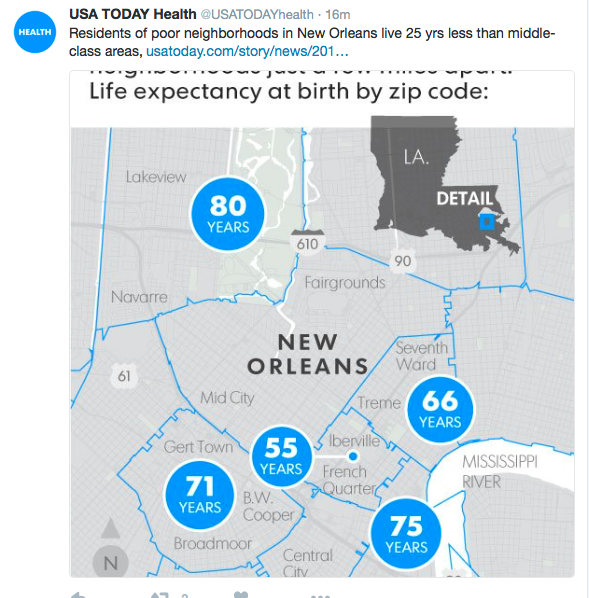
Zip Code vs. Genetic Code

Several posts have highlighted the importance of poverty contributing to high mortality, including the following:

The following infographic shows again how your zip code is likely more important than your genetic code.

Lower Teen Birthrate

Lower Teen Birthrate


Gastrostomy Tubes: The First 30 Days

A retrospective study (AB Goldin et al. J Pediatric 2016; 174: 139-45) provides a better idea about the likelihood of complications by looking for ED visits and admissions within 30  days of placement.

This study involved 38 Children’s Hospitals and 15,642 patients the Pediatric Health Information System (PHIS) database. Key findings:

  • 8.6% had an ED visit within 30 days
  • 3.9% had an admission within 30 days
  • Common reasons for return visits: infection (27%), mechanical complication (22%) and replacement (19%).

The authors note that risk factors for ED visits and admission were mainly non modifiable like race/ethnicity and medical complexity.  They also note that problems in the early postoperative period are grossly underestimated due to many issues being addressed in the outpatient setting.

This study indicates that there is a tremendous opportunity for improvement.  There is great variation in hospital practices with regard to the type and method of placing gastrostomy tube.  In addition, there is a high variability in the determination of the need for fundoplication which is often undertaken at the time of gastrostomy tube placement.

My take:  Understanding these risks is important to give families accurate information prior to placement of gastrostomy tubes.  In addition, these high rates of complications indicate the need for head-to-head prospective trials comparing types of gastrostomy tube placement and education efforts.

Related blog posts:


betterbirthrate

Lower Teen Birth Rates

teen birth rate

Even Normal Body Mass Index Could Be a Problem

A recent study (G Twig et al. NEJM 2016; 374: 2430-40) which had more than 42 million person-years of followup (1967-2010) showed that adolescents with a BMI in the 50th to 74th percentile (CDC values), well within the accepted normal range, had increased cardiovascular and all-cause mortality.

The study involved more than 2.3 million Israeli adolescents with up to 40 years of followup information. The study utilized data obtained from 17 year olds who were seen 1 year prior to mandatory military service. There was increasing mortality associated with higher BMI subgroups.

Key findings:

  • For those between the 50-74% in adolescence: the hazard ratios for coronary heart disease 1.49, for stroke 1.18, and total cardiovascular causes was 1.32.
  • For those ≥95% (obese) in adolescence: the hazard ratios for coronary heart disease 4.89, for stroke 2.64, and total cardiovascular causes was 3.46.

My take: this study shows that even modest increases in BMI are associated with modest increase in cardiovascular mortality over 40 years.  Whether the BMI itself plays a causal role or is more of an epiphenomenon of other risk factors (eg. sedentary risk factors) is not clear.


Screen Shot 2016-06-27 at 1.05.47 PM

Adverse Events Following Pediatric Endoscopy –Underestimated Previously

A recent study (RE Kramer, MR Narkewicz. JPGN 2016; 62: 828-33) report the frequency of adverse events that occurred within 72 hours in a prospective observational cohort of 9577 patients from a single center.

The authors characterized complications more precisely and identified a much higher rate of complications than what has previously been reported.  Key findings:

  • The overall adverse event rate was 2.6% with 1.7% of all cases requiring unanticipated medical care.
  • Absolute risk of bleeding was 0.11%, infection 0.07%, and perforation 0.1% (n=12).  In total, these standard measures of complications were 0.28%.
  • Advanced and therapeutic cases had much higher rates of adverse events. Perforations occurred after esophageal dilatation (5), esophageal food impaction (1), polypectomy (4), and primary GJ placement (2).
  • Adverse rate with ERCP was 11.54%
  • Adverse rate with PEG was 10.71%
  • Adverse rate with dilatation was 10.94%.  It is noted that a total of 319 dilatations were reviewed.  5 had perforations.
  • Adverse rate with polypectomy was 6.27%.  It is noted that a total of 128 polypectomies were reviewed.  4 had perforations.
  • The authors did not identify a significantly higher complication rate with trainee physicians.

As noted in a previous entry (see below), studies in adults have an estimated a perforation rate of 0.09% and serious complication rates (GI and non-GI complications) of 0.15% for upper endoscopy and of 0.2% for colonoscopy. In addition, a large pediatric study of endoscopies, found a perforation rate of 0.014% for EGDs and 0.028% for colonoscopies. Thus, this report identifies a higher rate (10-fold) of perforation (driven by therapeutic endoscopy) and a much higher rate of adverse events, including 2.08% in diagnostic EGD and 3.9% for diagnostic colonoscopy.  Furthermore, for diagnostic EGD and for diagnostic colonoscopy, grade 2 (needing ER or unanticipated physician evaluation) or higher adverse events occurred in 1.21% and 2.31% respectively.

My take: Using a broader (and more accurate) definition of complications after endoscopy, the authors have demonstrated a much higher rate of adverse events, particularly following dilatation, PEG, polypectomy, and ERCP.  This report indicates that our preop counseling needs to be modified to inform families that complications are not quite so rare.

Related blog post:  High Endoscopy Complication Rate After Intestinal …

Complication -Unrelated to endoscopy:
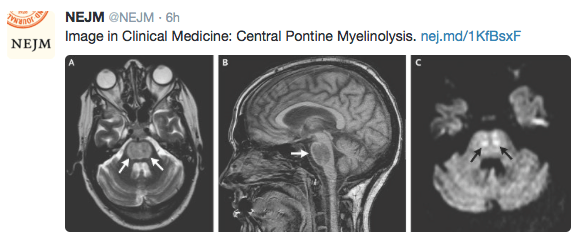
pontine myelinosis

Soap Suds Enemas & ED Management of Impactions

A recent retrospective single-center study (CE Chumpiitazi et al. JPGN 2016; 63: 15-18) identified 512 patients (8 mo-23 years) who were treated with soap suds enemas (20 mL/kg of water with one packet of castile soap).  Key findings: No serious adverse events were identified. “82% were successfully treated.”

While this large study provides a fair amount of reassurance, the associated editorial (pg 1-2) makes some key points:

  • ED diagnosis of fecal impaction is unreliable.  “Abdominal radiographs are often performed…[but] have shown unsatisfactory sensitivity and specificity.”  In this study, only 38% had reported history of constipation; thus a high number of children developed impactions without prior constipation.  Thus, either many of these children were not impacted or the history was unreliable.
  • “SSEs are likely to be very effective, but so are phosphate enemas and milk and molasses enemas that have fallen out of favor because of safety concerns.”
  • In the editorial, until prospective studies are completed, the authors advocate considering oral PEG (high-dose) or ducosate enemas, normal saline enemas, glycerin enemas, mineral oil enemas, or bisacodyl enemas.

My take: While the editorial makes some valid points, particularly making sure that treatment for an impaction is needed, I think this study provides good preliminary data on the safety of soap suds enemas.  As with all pediatric treatments, more high-quality studies would be welcome.

Related blog posts:

AJC Peachtree Road Race 2016

AJC Peachtree Road Race 2016