New Information on Neonatal Liver Failure

WS Thompson et al. Liver Transplantation 2023; 29: 118-121. Ultra-rapid whole genome sequencing: A paradigm shift in the pre-transplant evaluation of neonatal acute liver failure

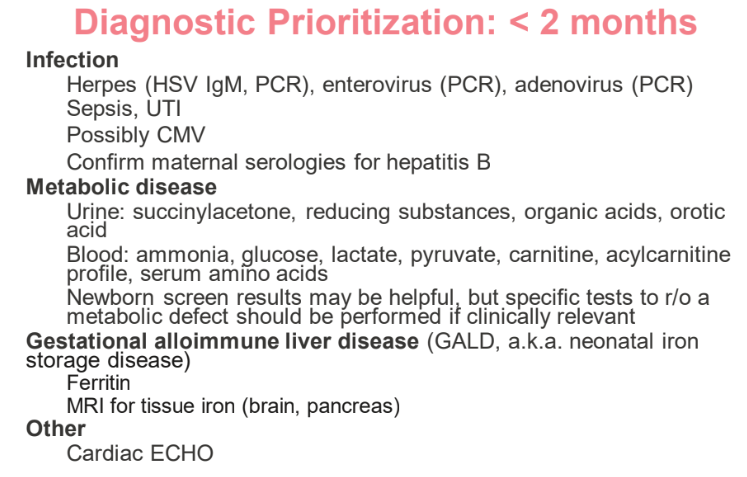
In this case series, three patients had ultra-rapid whole genome sequencing (WGS). Case 1 identified PRF1 mutation consistent with familial HLH, Case 2 identified variants in FDXR implicated in a mitochondrial disorder and Case 3, found pathogenic mutations in ASL associated with agrininosuccinic aciduria.

The authors argue that ultra-rapid WGS which can provide information in as little as 12 hours and typically provides actionable results within 3 days. should be a first-line approach and would identify nearly all causative genetic reasons for neonatal acute liver failure. While GALD and viral etiologies would not be found, if there are no genetic causes, this would support the “initiation of empiric therapy.”

S Antala et al. Liver Transplantation 2023; 29: 5-14. Open Access! Neonates with acute liver failure have higher overall mortality but similar posttransplant outcomes as older infants

In this retrospective study with 1807 neonates and 890 infants (31-120 days) with ALF (identified in two large databases between 2004-2018), the key findings:

  • Neonates had higher death rates (46% alive without liver transplant, compared to 53% of infants who were alive without liver transplant)
  • Both groups had low liver transplant rates, with neonates less likely to be transplanted: 2% vs 6.4% (P<0.001)
  • Infants had higher rates of “unidentified” as etiology whereas neonates had higher rates of GALD and viral infections. Cardiac etiologies causing ALF were common in both groups, 24% of neonates and 18% of infants.

My take: Rapid genomic testing is very useful in infants/neonates with ALF. This population has a high mortality rate and a low rate of receiving liver transplants. Reducing the size for split liver donation could help with organ availability (see next post).

Related blog posts:

Selected Slides from NASPGHAN 2022 Postgraduate Course (Part 1)

Pediatric Foreign Body Ingestions
Esophageal Strictures
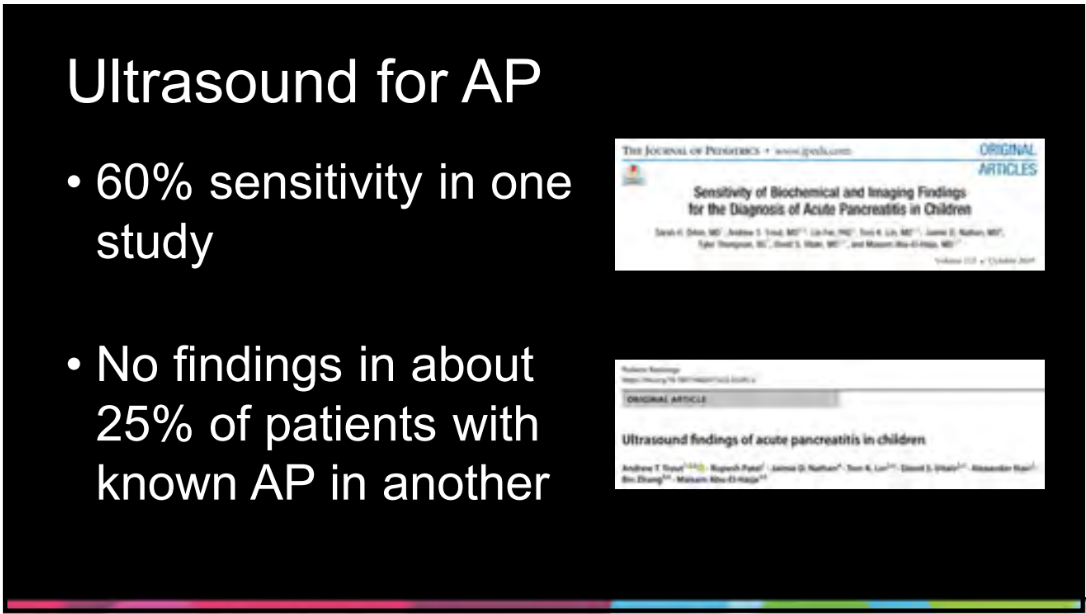
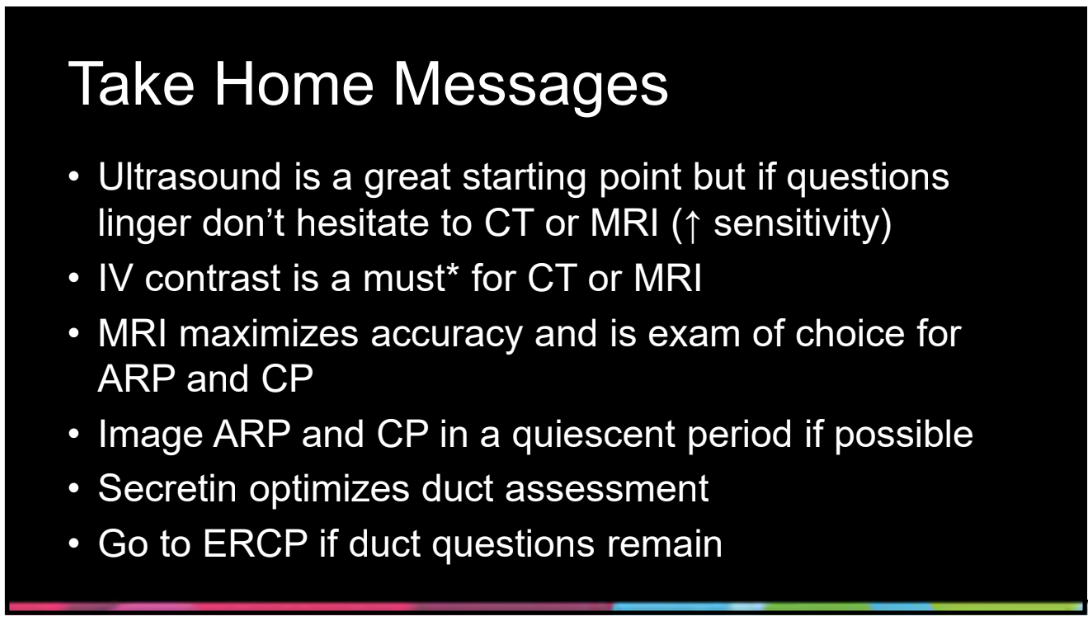
Imaging for Acute Pancreatitis
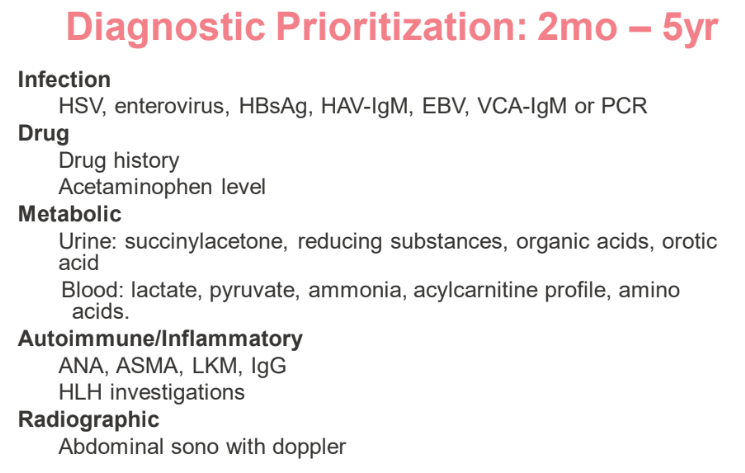
For Acute Liver Failure

Disclaimer: This blog, gutsandgrowth, assumes no responsibility for any use or operation of any method, product, instruction, concept or idea contained in the material herein or for any injury or damage to persons or property (whether products liability, negligence or otherwise) resulting from such use or operation. These blog posts are for educational purposes only. Specific dosing of medications (along with potential adverse effects) should be confirmed by prescribing physician.  Because of rapid advances in the medical sciences, the gutsandgrowth blog cautions that independent verification should be made of diagnosis and drug dosages. The reader is solely responsible for the conduct of any suggested test or procedure.  This content is not a substitute for medical advice, diagnosis or treatment provided by a qualified healthcare provider. Always seek the advice of your physician or other qualified health provider with any questions you may have regarding a condition.

Why Do Some People Recover from Acute Liver Failure and Some People Don’t?

Briefly noted: T Lin et al. Hepatology 2022; 322-337. Open Access: Follistatin-controlled activin-HNF4α-coagulation factor axis in liver progenitor cells determines outcome of acute liver failure

Design: After preliminary work in 19 patients with acute liver failure (ALF) and in a zebrafish model, a prospective clinical study followed up 186 patients with cirrhosis for 80 months to observe the relevance of follistatin (FST) levels in prevalence and mortality of acute-on-chronic liver failure.

Key findings: Recovered patients with ALF robustly express HNF4α in either LPCs (liver progenitor cells) or remaining hepatocytes. Serum FST levels could predict the incidence and mortality of acute-on-chronic liver failure.

Implication of study: “Our results indicate that serum FST levels might be a surrogate marker reflecting the extent of hepatocyte death and hepatic insulin resistance, which point to the danger of coagulopathy and clinical deterioration. The hypothesis requires further confirmation in the future.”


Hormone-controlled activin-HNF4α-coagulation factor axis in LPCs

Bookmark This Article on Pediatric Acute Liver Failure

JE Squires et al. JPGN 2022 – Volume 74 – Issue 1 – p 138-158. doi: 10.1097/MPG.0000000000003268. Open Access: North American Society for Pediatric Gastroenterology, Hepatology, and Nutrition Position Paper on the Diagnosis and Management of Pediatric Acute Liver Failure

This article provides a terrific summary of the most urgent issues with regard to caring for children with PALF; this article provides helpful information for diagnosis, and management, as well as information on pathophysiology, and associated outcomes.

PDF version: PALF in Children Position Paper

The article makes a number of recommendations for testing/treatment -here are a few of them:

  • While the initial testing does list ferritin, it does not list soluble IL2R as an early test (listed lower in Table 4 under section of hepatic encephalopathy). My colleagues at Emory who specialize in liver transplantation have frequently recommended this test early in the evaluation of severe liver disease/acute liver failure (ALF) as a potential marker of HLH and immune dysregulation.
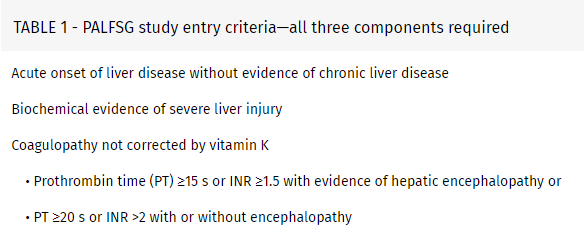
  • With regard to coagulopathy: “Coagulopathy secondary to vitamin K deficiency should rapidly correct following appropriate repletion. Notably, if coagulopathy persists, efforts to “correct” abnormal coagulation profiles with fresh frozen plasma or other pro-coagulation products should generally be avoided” [in the absence of bleeding or need for invasive procedure].
  • Initial IV Fluids: ” In the absence of the need for volume resuscitation, total intravenous fluids should initially be restricted to around 90% of maintenance fluids to avoid overhydration. Initial fluids should be similar to hypertonic glucose (D10) one-half normal saline and supplemented with 15 mEq of potassium (K+)/L.”
  • Nutritional support: “Patients with PALF are likely catabolic and require more calories than basal needs. Enteral feeding is often preferred over total parenteral nutrition (TPN), and both naso-gastric or naso-jejunal feeds should be considered before TPN.”
  • Neonatal ALF: “GALD results from an intrauterine alloimmune liver injury and is suspected to be the single most common cause of neonatal acute liver failure… Characteristic clinical features of GALD include an ALF presentation usually at birth and almost always in the first days of life. The majority (70–90%) of affected infants are born premature and a history of maternal sibling death is common. Timely exchange transfusion and high-dose intravenous immunoglobulin (IVIG) is the preferred treatment to remove offending antibodies and block their action, including activation of complement (88,91). The mechanism of GALD places subsequent pregnancies at risk, and intrapartum IVIG should be used to prevent recurrences.”
  • Table 8 list common medications implicated in PALF. “Acetaminophen (APAP) …remains the most common cause of DILI, and is the most common identified cause of ALF in children.” 

Related blog posts:

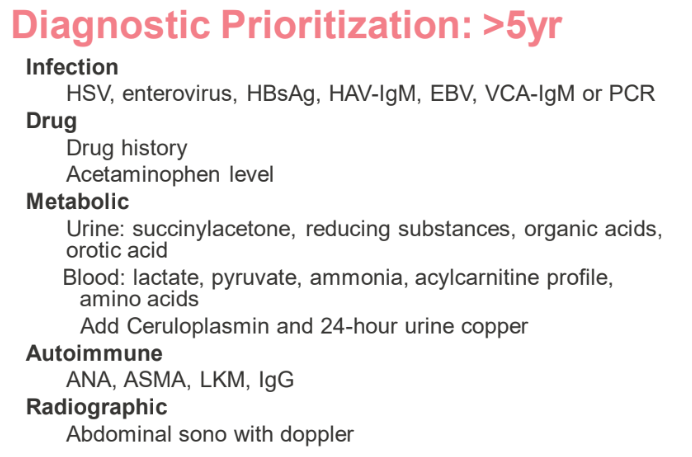
Figure 3: Etiology of acute liver failure in children.
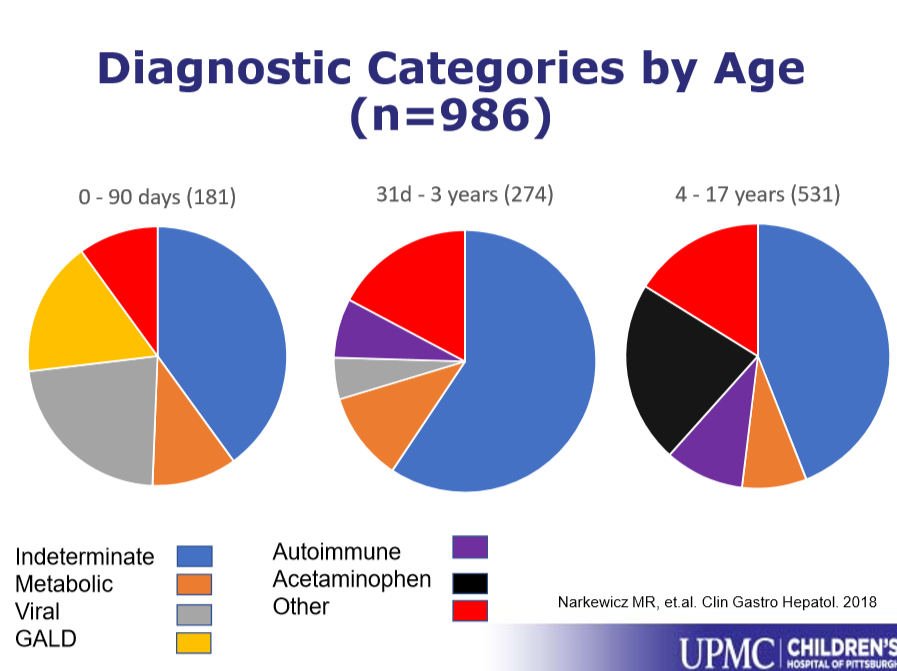
(A) Etiology for 1144 children from the Pediatric Acute Liver Failure Study Group (PALFSG) 1999–2014. (B) Final diagnosis by age (note: figure B includes information on only 985 participants)

Disclaimer: This blog, gutsandgrowth, assumes no responsibility for any use or operation of any method, product, instruction, concept or idea contained in the material herein or for any injury or damage to persons or property (whether products liability, negligence or otherwise) resulting from such use or operation. These blog posts are for educational purposes only. Specific dosing of medications (along with potential adverse effects) should be confirmed by prescribing physician.  Because of rapid advances in the medical sciences, the gutsandgrowth blog cautions that independent verification should be made of diagnosis and drug dosages. The reader is solely responsible for the conduct of any suggested test or procedure.  This content is not a substitute for medical advice, diagnosis or treatment provided by a qualified healthcare provider. Always seek the advice of your physician or other qualified health provider with any questions you may have regarding a condition.

Genetic Underpinnings of Acute Liver Failure in Children

R Hegarty et al. J Pediatrics; 236: 124-130. Open Access: Study of Acute Liver Failure in Children Using Next Generation Sequencing Technology

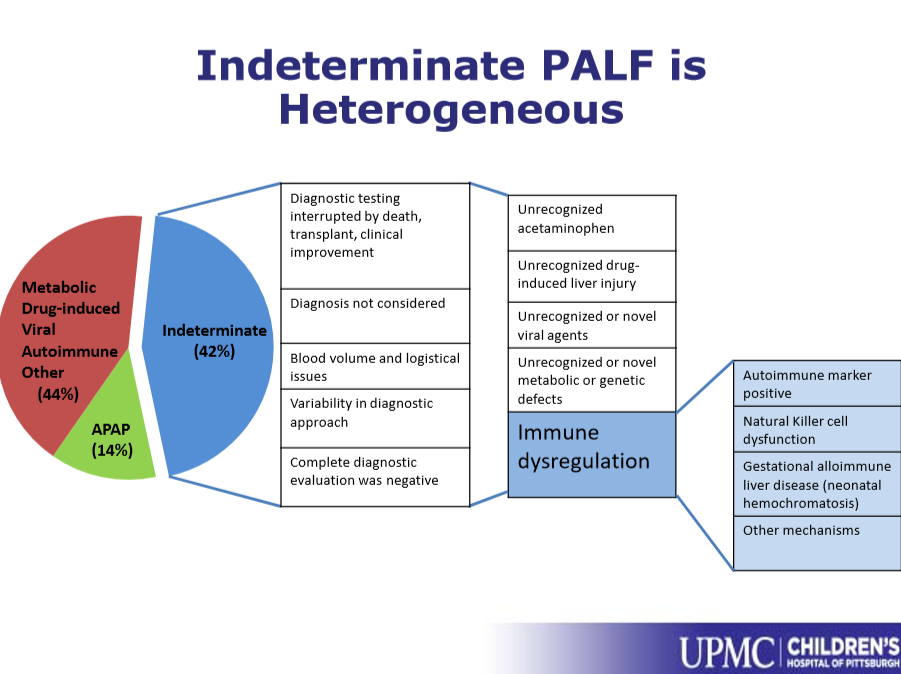
Background: “Despite the progress made over the last 40 years the rate of indeterminate cases [of acute liver failure] remains ~30%”

Methods: The authors identified 41 children (<10 yrs) with DNA sample availability who were admitted to King’s College Hospital, London, with ALF of indeterminate etiology (2000-2018). In addition, trio exome sequencing was performed on 4 children admitted during 2019.

Key Findings:

  • Homozygous and compound heterozygous variants were identified in 8 out of 41 children (20%) and 4 out of 4 children (100%) in whom targeted and exome sequencing were carried out, respectively
  • The genes involved were NBAS (3 children); DLD (2 children); and CPT1A, FAH, LARS1, MPV17, NPC1, POLG, SUCLG1, and TWINK (1 each). Variants in NBAS and mitochondrial DNA maintenance genes were the most common findings.

My take: Genetic testing for underlying metabolic/metabolic disorders is important to further determine the reasons for ALF. Given the potential need for liver transplantation, obtaining these results quickly will be crucial. In addition, interpretation of the results in some cases will be difficult.

Related blog posts:
How Reliable is an Acetaminophen Level in Patients with Acetaminophen Overdose?

A recent study (TM Leventhal et al. Clin Gastroenterol Hepatol 2019; 17: 2110-6) provides more data indicating that acetaminophen levels are frequently undetectable even in patients suspected of developing acute liver failure (ALF) due to acetaminophen overdose.

The authors performed a retrospective study with 434 subjects from the ALF study group who met criteria for either ALF (coagulopathy and hepatic encephalopathy w/in 26 weeks of first symptoms) or Acute Liver Injury (ALI) (severe liver injury with coagulopathy but no encephalopathy).  In this group, all of the patients had liver disease attributed to acetaminophen (APAP) toxicity.

Key findings:

  • 227 patients (52%) had undetectable acetaminophen levels
  • Transplant-free survival rate was 79.5% (including both ALF and ALI patients)
  • APAP-protein adduct data was available for 37 patients in cohort; all patients with this assay had evidence of APAP toxicity regardless of whether APAP level was detected

Discussion Points:

  • Symptoms from APAP toxicity frequently emerge >24 hours after ingestion.  APAP, though, has a short half-life, approximately 2-2.5 hours.  Thus, most patients will have APAP clearance from plasma in 18 hours
  • Unintentional overdose, often with multiple doses over therapeutic limit of 4 g/day (in adults), more frequently is associated with an undetectable APAP level than a single large intentional overdose which results in a higher peak level

My take: This study shows that APAP levels are unreliable in determining APAP ingestions and not predictive of ALF.  The use of N-acetylcysteine should not be determined by APAP levels in patients with suspected overdose.

Related blog posts:

Disclaimer: These blog posts are for educational purposes only. Specific dosing of medications/diets (along with potential adverse effects) should be confirmed by prescribing physician/nutritionist.  This content is not a substitute for medical advice, diagnosis or treatment provided by a qualified healthcare provider. Always seek the advice of your physician or other qualified health provider with any questions you may have regarding a condition

Atlanta Botanical Garden

#NASPGHAN19 Liver Symposium (Part 2)

Although I was unable to attend this year’s liver symposium at NASPGHAN19, I reviewed the lecture notes.  There is some terrific content.  Here are some of the slides (borrowed with permission from NASPGHAN).

Link to complete NASPGHAN Chronic Liver Disease Symposium 2019

SESSION II – FRONTIERS IN LIVER THERAPEUTICS

Keynote Speaker: Outcomes for the future: How do we improve on the status quo? Ronald J. Sokol, MD, FAASLD, Children’s Hospital Colorado  (SLIDES NOT AVAILABLE in onliine handout)

Recognition and stabilization of the pediatric patient with acute liver failure Robert Squires MD Children’s Hospital of Pittsburgh at UPMC

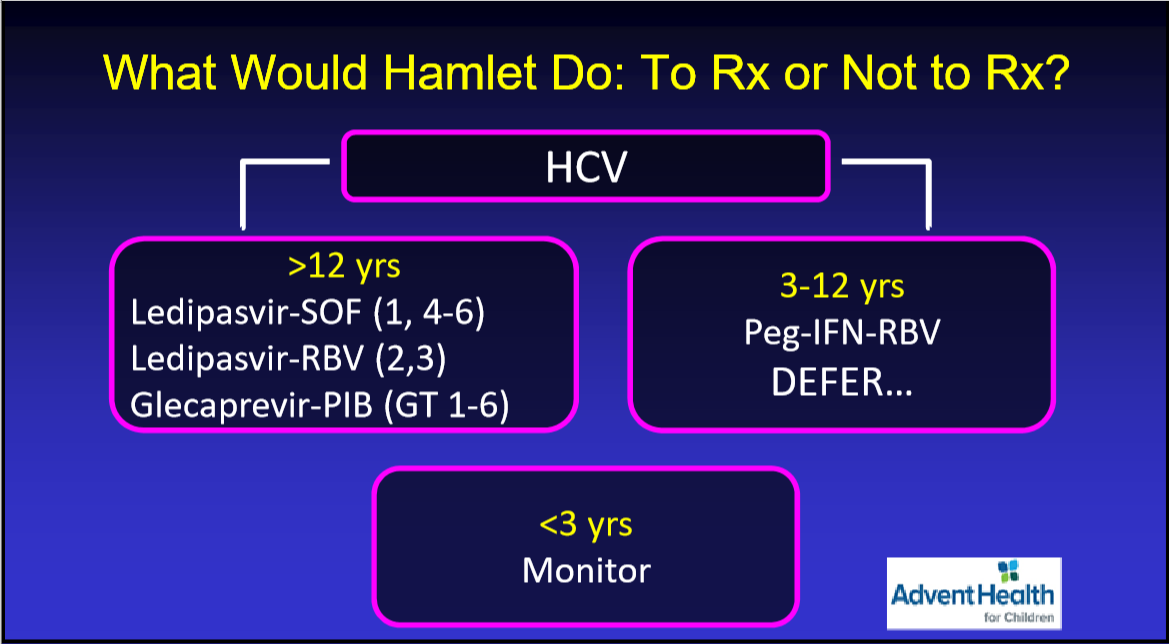
Should I offer treatment for my patients with Hepatitis B or Hepatitis C? Regino P. Gonzalez-Peralta MD, AdventHealth for Children

Are there any medical therapies for NASH?   Marialena Mouzaki, MD, Cincinnati Children’s Hospital Medical Center

This lecture describes a lot of the emerging pharmacologic treatments; none of these are currently recommended.

Hereditary Fructose Intolerance

A recent case series (Li H, A Diaz-Kuan, M Vos et al. Mol Genet Metab. 2018 Apr;123(4):428-432) highlights the importance of dietary history in infants with liver failure (abstract below).  Congratulations to my colleague Miriam Vos one of the coauthors.

Commentary on this publication from Emory News (from Kipp Ellsworth’s twitter feed):

Babies with inherited intolerance of fructose face a risk of acute liver failure if they are fed certain widely available formulas containing fructose, pediatricians and geneticists are warning. Baby formula manufacturers should remove fructose or sucrose, or explicitly label their products to allow parents to avoid those sweeteners if necessary, the doctors say.

In a recent paper in Molecular Genetics and Metabolism, Emory geneticists Hong Li, MD, PhD and Michael Gambello, MD, PhD together with Children’s Healthcare of Atlanta pediatric hepatologist Miriam Vos, MD and colleagues report four cases of hereditary fructose intolerance (HFI), all diagnosed in early infants. All had acute liver failure that resolved when the infants switched to formula without fructose.

HFI is estimated to occur in 1 out of 20,000 live births. It comes from mutations in the aldolase B gene, resulting in an inability to metabolize fructose. Early symptoms include nausea, vomiting, abdominal pain and failure of an infant to gain weight. If unrecognized, HFI can result in liver and kidney damage, seizures or death.

HFI-related problems do not appear if an infant is being breastfed exclusively. It is normally recognized when fructose-containing solid foods, such as fruit, are introduced into the diet several months after birth. However, some baby formulas – often soy-based – contain sweeteners such as high-fructose corn syrup or sucrose (table sugar), which is made of fructose and glucose linked together. Sometimes, the label only says “sugar” instead of sucrose…

Since HFI is a treatable disease, Li urges pediatricians to consider HFI as a potential diagnosis if there is a feeding problem, elevated transaminase enzymes or jaundice (a sign of liver damage) and the infant has been fed formula containing fructose or sucrose.

Some information about a young patient’s condition can be obtained from urine carbohydrate tests, but the only way to confirm HFI is by genetic sequencing.

Abstract:

Hereditary fructose intolerance (HFI) is an autosomal recessive disorder caused by aldolase B (ALDOB) deficiency resulting in an inability to metabolize fructose. The toxic accumulation of intermediate fructose-1-phosphate causes multiple metabolic disturbances, including postprandial hypoglycemia, lactic acidosis, electrolyte disturbance, and liver/kidney dysfunction. The clinical presentation varies depending on the age of exposure and the load of fructose. Some common infant formulas contain fructose in various forms, such as sucrose, a disaccharide of fructose and glucose. Exposure to formula containing fructogenic compounds is an important, but often overlooked trigger for severe metabolic disturbances in HFI. Here we report four neonates with undiagnosed HFI, all caused by the common, homozygous mutation c.448G>C (p.A150P) in ALDOB, who developed life-threatening acute liver failure due to fructose-containing formulas. These cases underscore the importance of dietary history and consideration of HFI in cases of neonatal or infantile acute liver failure for prompt diagnosis and treatment of HFI.

Related blog post: Changing Approach to Neonatal Acute Liver Failure

Chattahoochee River Near Island Ford


Acute Liver Failure -Pediatric ICU Management

Full Text Link: Intensive Care Management of Acute Liver Failure

This article provides a very good overview of this topic starting withe diagnosis, epidemiology and proceeding to specific management issues/outcomes.

Table 1 reviews etiologies –indeterminant is most common. Table 2 shown below reviews management principles and Table 3 reviews specific treatments based on etiology. Table 4 reviews grades of encephalopathy.

My take (from authors): “Despite recent advances in supportive care and the improvements in outcomes observed…the practical intensive care management of PALF remains poorly defined…Current treatment options are merely supportive and based on incomplete adult data and local institutional experience.”

Related blog posts:
March 2017 Briefs

MC Montana, AS Evers. J Pediatr 2017; 181: 279-84. This commentary reviewed recent studies regarding anesthetic neurotoxicity. “Two recently published human studies suggest a lack of harm in otherwise-healthy children following a short duration anesthetic (approximately 1 hour)” References: Lancet 2016; 387: 239-50 & JAMA 2016; 315: 2312-20.

Related posts:

NR Santucci et al. JPGN 2017; 64: 186-93.  This systematic review selected 31 studies (out of 916 citations) and found there is no consensus concerning diagnostic criteria for biliary dyskinesia and the data supporting the concept of biliary dyskinesia in children is weak.  The uncontrolled studies were generally observational, retrospective designs with relatively small numbers.

Related posts

I Youngster et al. J Pediatr 2017; 182: 239-44.  This study examined large prescription databases (more than 74 million person years) and identified wide discrepancy in antibiotic use among the six different countries.  For example, among children less than 2 years of age, South Korea had the highest rate of antimicrobial use, with 3.41 prescribed courses per child-year; in contrast, the rates were 1.4 in Italy, 1.5 in Spain, 1.1 in the U.S., 1.0 in Germany, and 0.5 in Norway.

A Srivastavai et al. JPGN 2017; 64: 194-9. In this retrospective study with 262 children with liver disease-related ascites, the authors found spontaneous bacterial peritonitis (or culture-negattive neurocytic ascites) in 28.6%. Half of these patients were asymptomatic.  SBP/CNNA was defined by having a polymorphonuclear leukocyte count of >250 cells/mm3.  There was a 24% one-year mortality rate for those who had SBP/CNNA.

MR Narkewicz et al. JPGN 2017; 64: 210-7. Using data from the pediatric acute liver failure group, the researchers identified a high rate of autoantibodies (28%) among 986 pediatric subjects with acute liver failure. The presence of autoantibodies was not significantly associate with 21-day outcomes and steroid treatment was not associated with survival; in fact, those without a known diagnosis of autoimmune hepatitis, had a higher risk of death with steroid therapy. In the setting of acute liver failure, autoantibody positivity does not obviate the need for a complete diagnostic workup.

A Lauterio et al. Liver Transplantation 2017; 23: 184-93.  Italian review of living donor safety found that major complications occurred in 12.6% (31 or 246)  but there were no mortalities. 5 (2%) required reoperation.


from Twitter's 'This Week in Church Signs' feed

from Twitter’s ‘This Week in Church Signs’ feed