Likelihood of Genetic Disease with Early-Onset Pancreatitis

Another study (MJ Giefer et al. J Pediatr 2017; 186: 95-100) from the INSPPIRE group provides data on early-onset pancreatitis.  Specifically, the group presents clinical information on 342 children with acute recurrent pancreatitis or chronic pancreatitis regarding disease burden and associations with genetic mutations.

Key findings:

Genetic disease is much more common in younger ages:

  • In subset younger than 6 years, 72 of 102 had genetic diseases identified:  PRSS1 in 42, CFTR in 27, SPINK1 in 12, and CTRC in 8.
  • In subset 6-11 years of age, 52 of 90 had genetic diseases identified: PRSS1 in 20, CFTR in 23, SPINK1 in 22, and CTRC in 1.
  • In subset greater than 12 years of age, 39 of 72 had genetic diseases identified: PRSS1 in 13, CFTR in 24, SPINK1 in 6, and CTRC in 1.
  • Testing for newer susceptibility genes were not evaluated as they had not become commercially available: carboxypeptidase 1, claudin 2, carboxylesterlipase, and carboxyesterlipase-hybrid
  • SPINK1 is noted to be present in 1-3% of general population; CTRC mutation occur in 0.7% of healthy controls.

Obstructive causes were common.  Pancreas divisum was identified in 38 patients but there was not a great deal of difference among the age groups; similarly, other obstructive causes were identified in about one-third of patients and included sphincter of Oddi dysfunction (n=9), gallstones (n=17), pancreaticobiliary malunion (n=12), biliary cyst (n=11), pancreatic stricture (n=2), annular pancreas (n=3), and duodenal diverticulum.

Disease burden:

  • Exocrine insufficiency noted in 52 (no strong age predilection)
  • Diabetes in 18 (11 of the cases occurred in those >12 years)
  • Constant moderate pain noted in 82 (25 in group <6, 27 in 6-12 group, and 30 in group >12 years)
  • Constant severe pain noted in 18  (4 in group <6, 5 in 6-12 group, and 9 in group >12 years)
  • Average number of hospitalizations in past year was 1 in those ≤12 and 2 in those older than 12.

My take: PRSS1 and CTRC mutations are associated with early onset pancreatitis.

Related blog posts:

Rotunda dome at the University of Virginia


Pancreatitis Update (part 1)

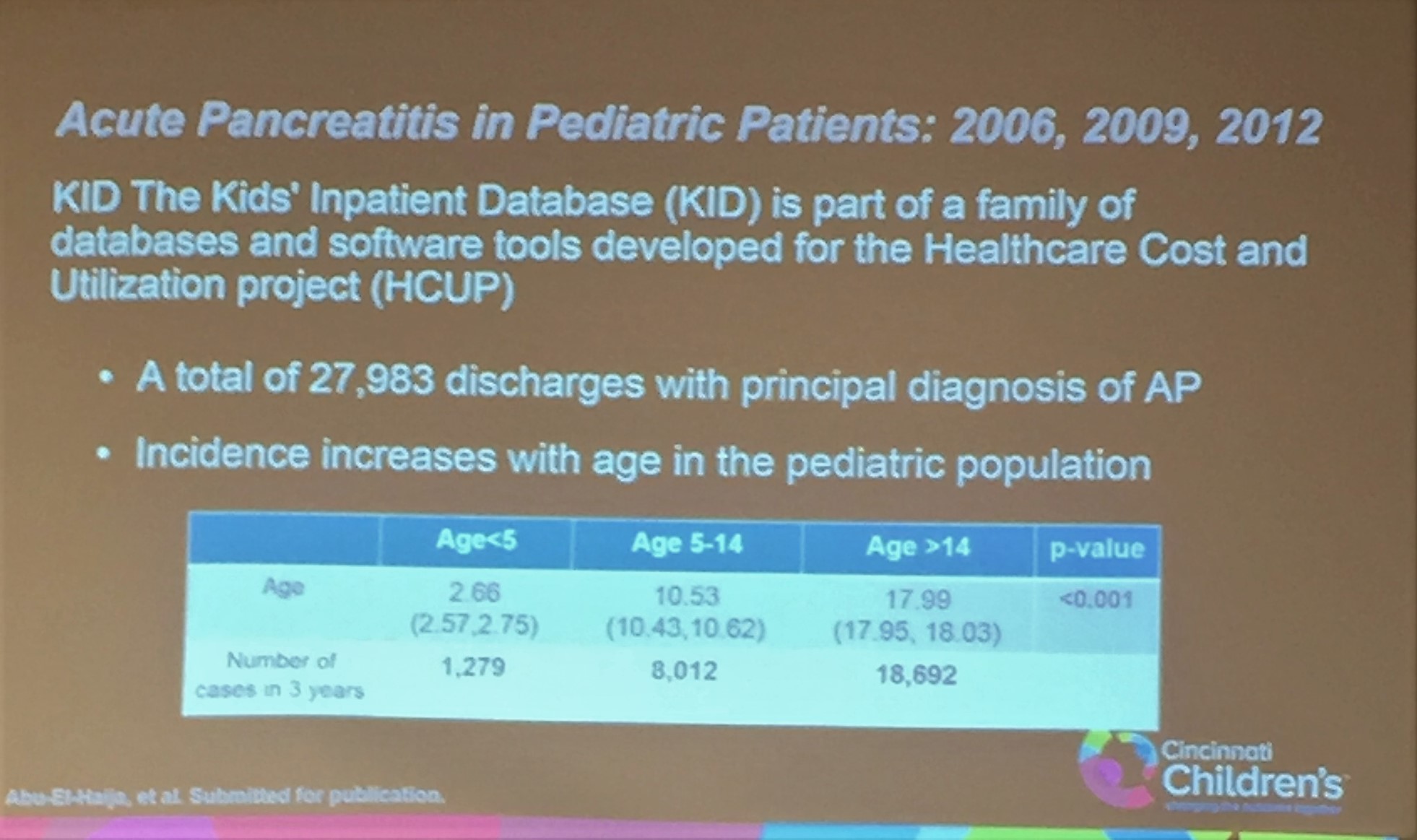
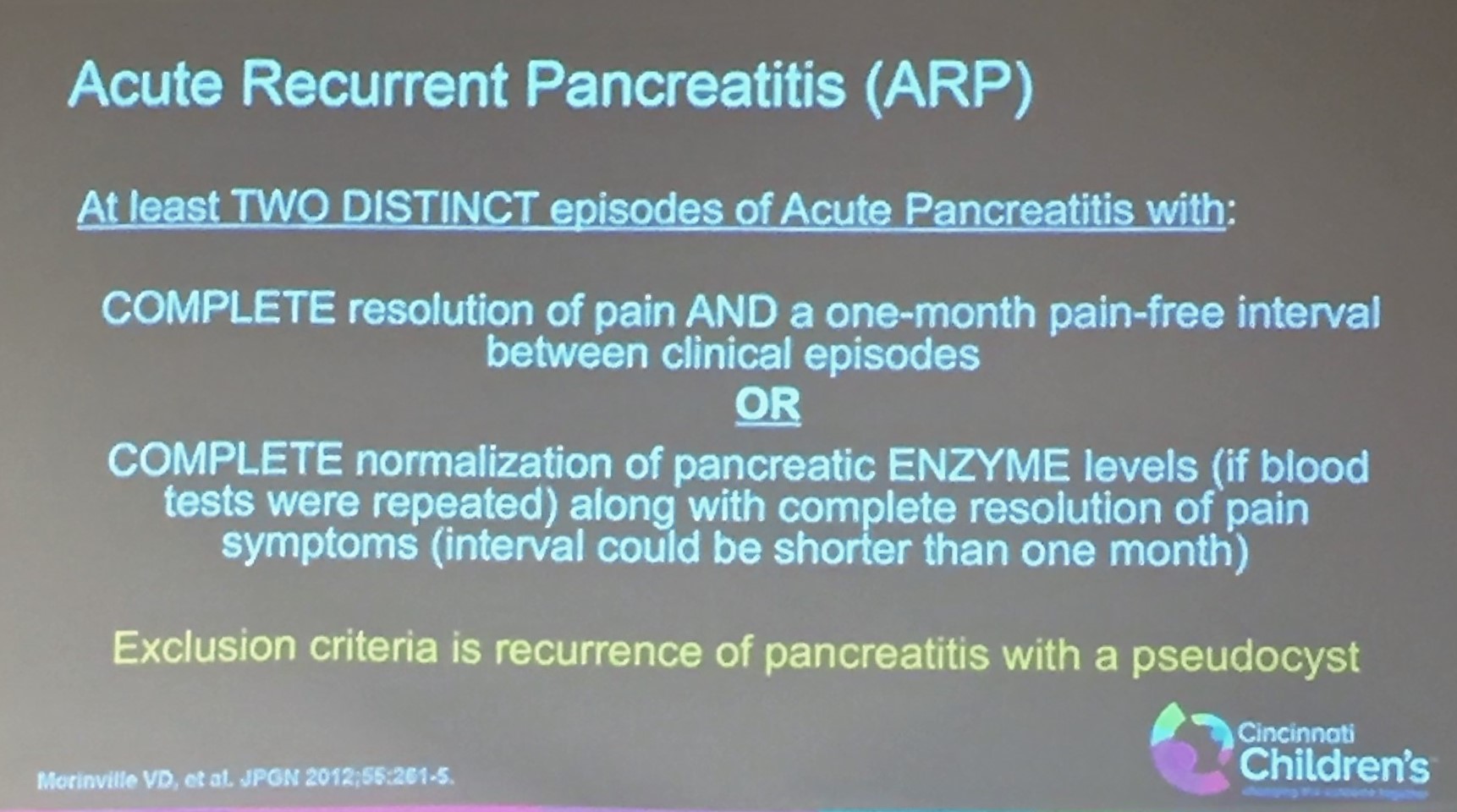
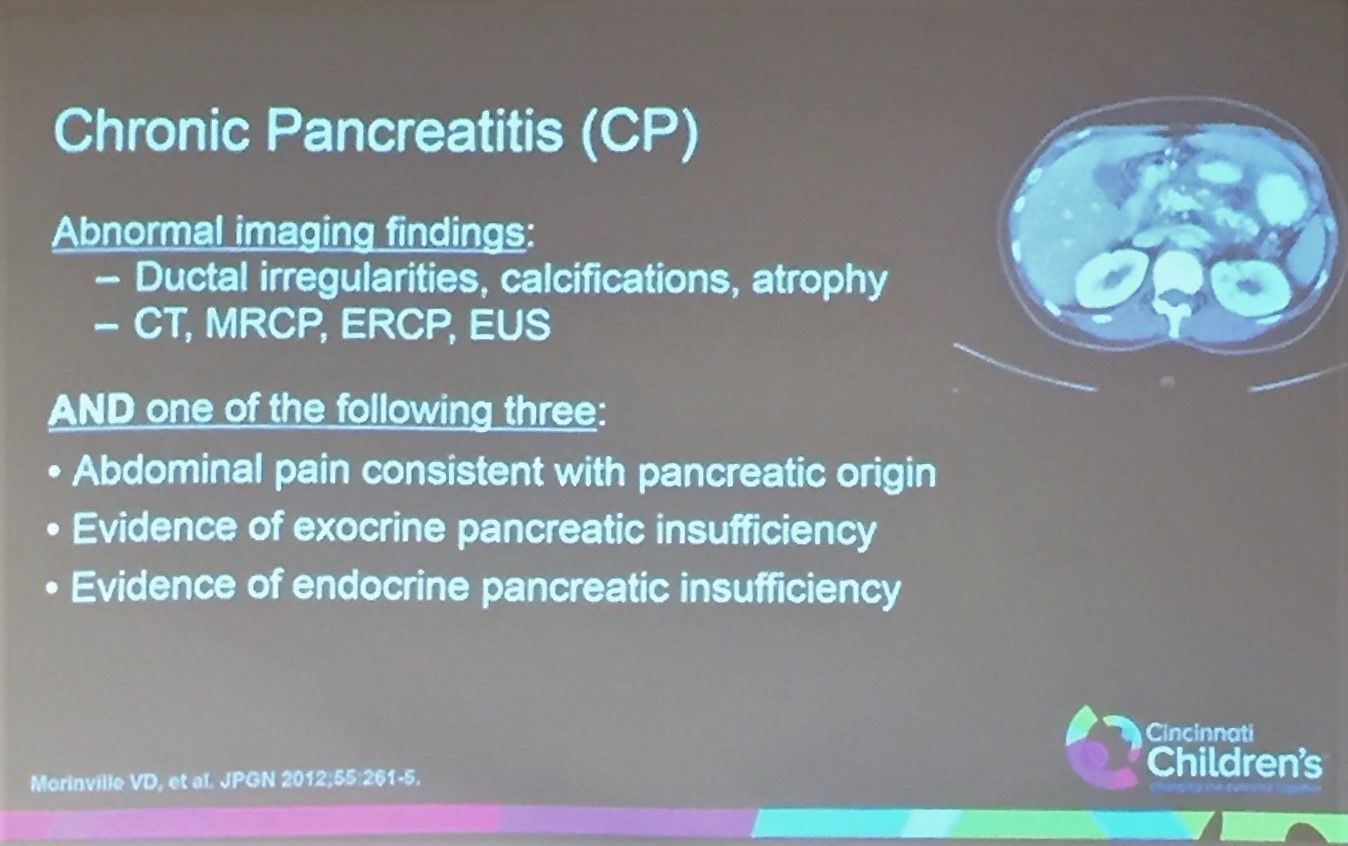
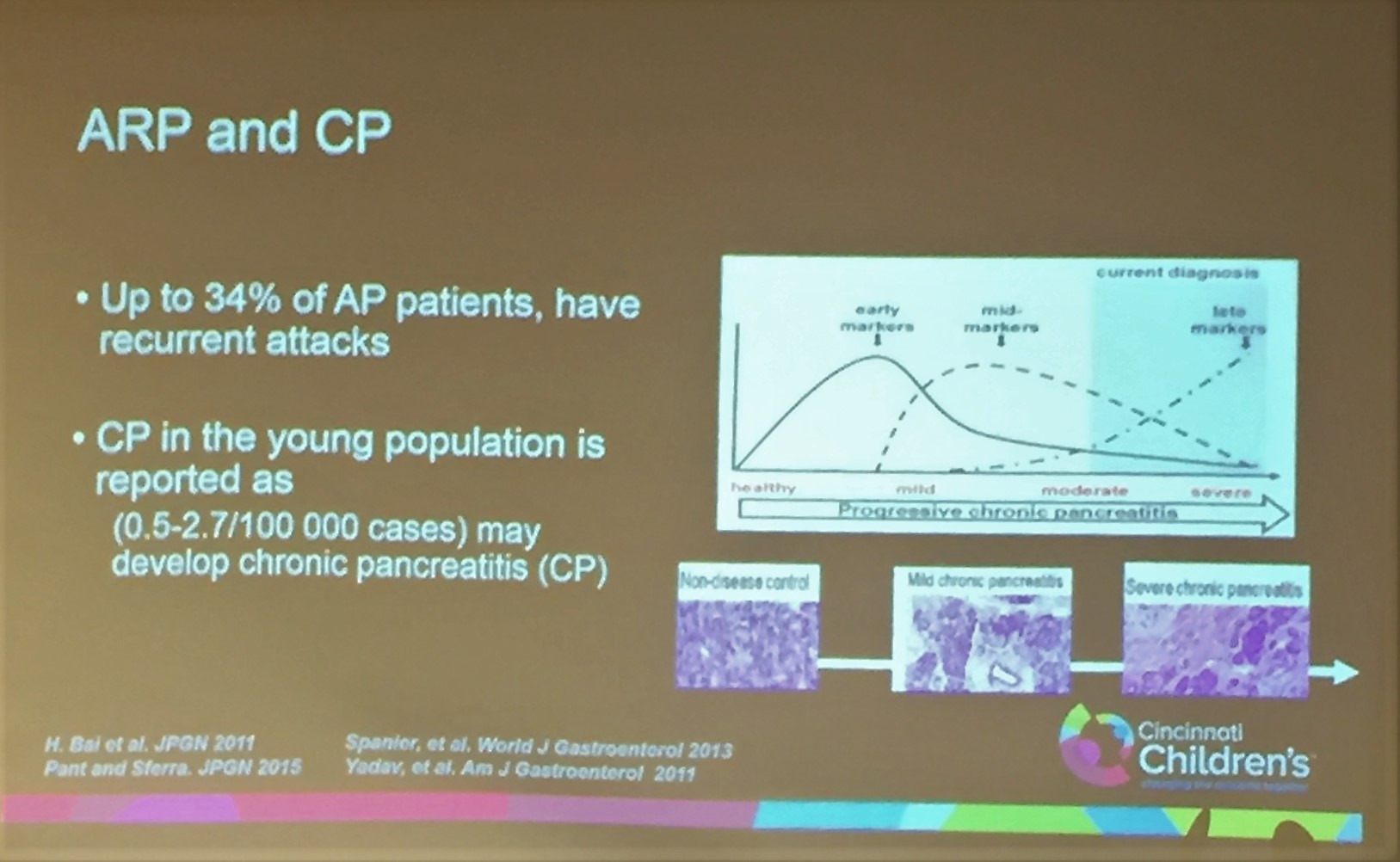
Our group received a very helpful update on pancreatitis from Maisam Abu-El-Haija (GI) and Jaime Nathan (surgery). My notes may include some errors in transcription and errors of omission. Some pictures of the slides are included below as well.

Key points:

  • About 30% of acute pancreatitis patients have a 2nd bout of pancreatitis. Obesity is a risk factor for recurrence.
  • There has been a recent increase in incidence of acute pancreatitis.
  • Cincinnati has a gene panel to examine the four most common mutations which cause hereditary pancreatitis (PRSS1, SPINK1, CFTR, and CRTC) along with 6 other relevant genes. (28 day turnaround) In addition, there is a pancreatitis insufficiency panel.
  • Discussed screening for pancreatic insufficiency.  Directly measuring pancreatic enzymes are more sensitive for early insufficiency, but may be unnecessary if good growth and normal stool elastase.
  • There are NO proven medical/dietary therapies to prevent recurrent or chronic pancreatitis and eliminate pain symptoms.

Related blog posts:

Consensus Pancreatitis Recommendations

The INSPPIRE Group (CE Gariepy et al. JPGN 2017; 64: 95-103) has published consensus recommendations for acute recurrent pancreatitis (ARP) and chronic pancreatitis (CP).

While the authors acknowledge the need for high-level evidence/further research, they provide a large number of consensus recommendations.  These recommendations are succinctly summarized in Table 1 and Table 2.  From a reader’s perspective, my preference would have been to separate the recommendations for ARP and CP rather than to intermix them (though many of the recommendations are the same for both conditions).

ARP specific recommendations:

  • “Initial evaluation should include AST,ALT, GGT, Total bilirubin (fractionate if elevated), fasting lipids, and total serum calcium.”
  • Evaluate for fat-soluble vitamin deficiency, and pancreatic exocrine insufficiency at least annually

ARP and CP recommendations:

  • Consider ammonia and urine organic acids if there is a concern for undiagnosed metabolic disease.
  • Check for celiac disease.
  • Check for O&P if immunosuppressed, travel to endemic areas of Ascaris, or if peripheral eosinophilia.
  • Evaluation of genetic causes: should include sweat chloride test and PRSS1 gene testing. Consider SPINK1, CFTR, and CTRC evaluation.
  • Evaluate with MRCP (not ultrasound) acutely if GGT >2 x ULN or if direct bilirubin is elevated.
  • Non-acutely, MRCP recommended to evaluate pancreatic ductal abnormalities.  “When available, secretin-enhanced MRCP …should be obtained.” sMRCP can provide dynamic images of the pancreatic duct allowing differentiation of fixed from nonfixed lesions; this technique has not been widely adopted by pediatric radiologists compared with adult radiologists.

CP specific recommendations:

  • Evaluate for fat-soluble vitamin deficiency, pancreatic exocrine insufficiency, and pancreatic endocrine insufficiency at least annually

The authors did not recommend checking serum IgG4 in the absence of associated systemic disease or suggestive imaging for autoimmune pancreatitis.

Briefly noted: J-H Choi et al. Clin Gastroenterol Hepatol; 2017: 15: 86-92.  This study indicated that vigorous hydration with lactated ringer’s (LR) reduces risk of pancreatitis after ERCP.  A potential inference would be that LR would be an optimal fluid for pancreatitis more broadly. (Related: Why an ERCP Study Matters to Pediatric Care | gutsandgrowth)

Related blog posts:

Dragon Point, Labadee

Dragon Point, Labadee

Total Pancreatectomy with Islet Autotransplantation for Refractory Recurrent Pancreatitis

A recent study (MD Bellin et al. Clin Gastroenterol Hepatol 2016; 14: 1317-23) describes the use of Total Pancreatectomy with Islet Autotransplantation (TPIAT) in 49 patients (mean age 32.8 years).  This study included 6 children.

All of these patients met strict criteria for recurrent acute pancreatitis and lacked imaging or functional evidence for chronic pancreatitis.  All 49 required narcotics for pain management prior to TPIAT.

The surgical technique for TPIAT is well-described in the report.  Patients underwent total pancreatectomy, splenectomy, cholecystectomy and partial duodenectomy with continuity restored via doudenoduodenostomy or Roux-en-Y duodenojejunostomy.  The islets were isolated and then infused intraportally.

Key findings:

  • At 1 year following TPIAT, 22 (46%) reported no use of narcotic pain medications.
  • Health-related quality of life scores improved (see Figure 3)
  • Diabetes is a common post-op concern.  Approximately half were insulin-independent at 1 and 2 years out from surgery, with one-third remaining so at 5 years.
  • Histopathology was consistent with chronic pancreatitis in 37 (76%) indicating that current imaging/functional features do not reliably identify chronic pancreatitis with adequate sensitivity.

In the discussion, the authors note the selected patients, due to having normal caliber pancreatitis ducts, were not candidates for surgical drainage procedures like the Puestow procedure.  They also note that the Puestow procedure can compromise later islet cell isolation.

My take: TPIAT is an important option in those with severe recurrent or persistent pancreatitis disease.

Related blog posts:

Quiet spot on Univ Virginia Grounds

Quiet spot on Univ Virginia Grounds

Chronic Pancreatitis in Pediatrics -Descriptive Study

“Genius is one percent inspiration and ninety-nine percent perspiration.” – Thomas A. Edison

I thought about this saying as I was reading an editorial titled: “Understanding Pediatric Chronic Pancreatitis: Inspiration and Hard Work Required” (Pant C, Sferra TJ. J Pediatr 2015; 166: 798-800). The editorial was reviewing the article “Pediatric Chronic Pancreatitis Is Associated with Genetic Risk Factors and Substantial Disease Burden” (Schwarzenberg SJ et al. J Pediatr 2015; 166: 890-6).

The study comes from the International Study Group of Pediatric Pancreatitis: In Search of a Cure (INSPPIRE) consortium.  None of the findings in the study are particularly surprising; nevertheless, a descriptive study of the patients in the registry who had strictly defined chronic pancreatitis (n=76) is still an important early step in improving our understanding of this dreaded problem.

Chronic pancreatitis required either:

  • Abdominal pain consistent with pancreatic pain with imaging findings suggestive of chronic pancreatic damage
  • Evidence of exocrine or endocrine pancreatic insufficiency and imaging findings suggestive of chronic pancreatic damage
  • Histology (surgical biopsy) findings suggestive of chronic pancreatitis

Key points:

  • Two-thirds of patients with genetic testing had identified genetic mutations: PRSS1 (n=33), SPINK1 (n=14), CFTR (n=11), chymotrypsin C (CTRC) (n=2).  Mutations in more than 1 gene were noted in 9 patients, including 6 of the 11 with CFTR mutations.  Several newer mutations, like calcium-sensing receptor and carboxypeptidase A1, were not evaluated in any of the patients.
  • Pancreas divisum was present in 15 patients; however, 8 of 15 of these patients had an identified genetic mutation as well.
  • Radiographic findings of chronic pancreatitis were most commonly ductal abnormalities and pancreatic atrophy. This is in contrast to adults in which pancreatic calcifications are common.
  • The researchers also document severe disease burden with patients reporting a median of 3 emergency dept visits and 2 hospitalizations in the previous year. In addition, 70% (n=47) had missed 1 day of school in the past month and 34% had missed 3 or more days.
  • Medical treatment (eg. pancreatic enzymes) was ineffective in the majority of patients.
  • 43% had undergone ERCP and two-thirds noted improvement from this intervention
  • Surgical procedures were performed in 39% and were helpful in the majority.  Total pancreatectomy with islet autotransplantation was the most common surgery in this cohort and was helpful in 20 of 21 patients.
  • The authors recommend avoidance of CT scans due to concerns of accumulating excess ionizing radiation exposure.

Take home message: For me, this study helps define the problem.  As a practical matter, it would be helpful to have a genetic panel to check for the lesser frequent mutations if PRSS1, SPINK1, and CFTR are normal.

Related blog posts:

Postgraduate Course Notes -Pancreatitis Module

When and how to assess pancreatic function: an update for clinicians –Sohail Z. Husain, MD (page 31)

Reviewed methods of detecting pancreatic insufficiency

Indirect (non-stimulatory) Methods

Stool:

  • Fecal Fat Analysis: Coefficient of fat absorption (CFA): (fat intake – fat in stool / fat intake) * 100
  • Normal > 93% (> 85% in less than 6 mo.
  • old)
  • 72 hr collection gold standard

ELASTASE-1: Stable, specific for human pancreas

  • Normal > 200 μg elastase/g stool
  • Particularly good for monitoring the development of PI in patients with CF
  • Low levels (false-positive) with diarrhea
  • Only detects severe PI

Other tests

  • Chymotrypsin: less sensitive; requires discontinuation of enzymes
  • Steatocrit: cheap; has low sensitivity
  • Serum
  • Breath
  • Direct (stimulatory)
  • Dreiling tube
  • Endoscopic pancreatic function testing (ePFT)
  • Secretin-enhanced MRCP (sMRCP)

Causes of Pancreatic Insufficiency

-85% of patients with Cystic Fibrosis have pancreatic insufficiency

Shwachman-Diamond Syndrome

  • Mutation in SBDS, found in ~90% of SDS patients
  • PI affects almost all SDS pts

Johanson-Blizzard syndrome (JBS): Key findings

  • PI
  • Severe developmental delay
  • Hypoplasia or aplasia of the nasal wings

Pearson marrow pancreas syndrome Key findings: Severe hypoplastic,macrocytic anemia,  Pancreatic insufficiency (due to pancreatic fibrosis)

Diagnosis: Clinical picture, High serum lactate/pyruvate,  Southern blot for mtDNA rearrangements

Other causes of pancreatic insufficiency

  • Chronic pancreatitis
  • Pancreatic obliteration after severe, acute pancreatitis
  • Pancreatic tumors
  • Celiac disease
  • Diabetes
  • IBD

Managing nutrition in cystic fibrosis: the role of the pediatric gastroenterologist  Sarah Jane Schwarzenberg, M.D. (page 41)

Good nutrition status correlates with better heights, better lung function, and better survival.  (Presentation did not delve into the issue of potential reverse causation.)

  • Patients with a Weight-for-Age percentile >50% at age 4 years reached a much higher height-for-age early in life and maintained this advantage into adulthood
  • Pulmonary function (FEV1%predicted) was much lower in CF patients with WAP<10% at age 4 years. This finding tracked through age 18 years.
  • Small bowel overgrowth is common in CF
  • Small bowel bacterial overgrowth contributes to poor nutritional intake and increased nutrient losses

Options to improve nutrition in CF

  • Review and optimize enzyme dose and adherence
  • Review patient’s diet with an experienced CF dietician
  • Consider adding a PPI to improve intestinal pH
  • Consider confounding disease
  • Evaluate for signs and symptoms of small bowel overgrowth and consider trial of metronidazole or rifaximin
  • Ask patient about abdominal pain
  • Evaluate for gastroparesis
  • Evaluate for DIOS
  • Consider non-CF gastrointestinal disease
  • Consider oral glucose tolerance test

Therapy to improve nutrition

  • Time-limited interventions
  • Behavior therapy to improve intake
  • Offer oral supplements
  • Consider cyproheptadine as an appetite stimulant
  • Consider a G-tube for nocturnal feeds
  • Consider Endocrinology consult

Beyond the Basics in the Management of Pancreatitis  –Aliye Uc, M.D. (page 51)

INSPPIRE To Study Acute Recurrent and Chronic Pancreatitis in Children-180 children from 14 centers enrolled to study the etiologies, epidemiology, natural history and outcome.

Pediatric Acute Recurrent and Chronic Pancreatitis-etiologies

  • Genetic (49%) (61 of 91 tested)
  • PRSS1-30%, CFTR-22%, SPINK1-14%, CTRC-3%
  • Obstructive (34%)
  • Idiopathic (20%)
  • Toxic-Metabolic (17%)
  • Autoimmune (3%)

Genetics of Pancreatitis:

1. PRSS1 (cationic trypsinogen): Autosomal dominant, 80% penetrance, Mutations are due to increased activation or decreased inactivation of trypsin (i.e. R122H, N29I).

2. SPINK1 (trypsin inhibitor): Autosomal recessive/complex inheritance, 2% have mutation, <1% have pancreatitis (i.e. N34S), Pancreatitis is dose-related (homozygous>>>het), Associated with other mutations (CFTR)

3. CFTR (>1700 mutations):

  • 2 Severe mutations = Cystic Fibrosis
  • 1 severe, 1 mild mutation = mild or atypical CF, ARP, CP
  • CF carriers = 3-4 fold increase risk in pancreatitis.
  • 1 any +SPINK1 = CFTR-associated pancreatitis
  • 1 any +divisum = CFTR-associated pancreatitis

4.New Modifier Genes in ARP and CP

  • CTRC (trypsin degrading enzyme)
  • CASR (a calcium-sensing receptor)
  • CLDN2 (tight junction protein on X chromosome)
  • CPA1 (Carboxypeptidase 1)  increased riskf for CP in younger patients

Management:

  • Unclear if antioxidants helpful for pain.
  • The role of pancreatic enzymes in CP is equivocal.

Diet

  • When to start feeds? depends on the severity of AP, OK to start early; correlate with clinical readiness, abd pain
  • What mode of nutrition? prefer enteral over TPN, NG vs. NJ
  • What to feed?  recent studies in adults with mild AP support full diet

(Moraes JM et al. J Clin Gastroenterol 2010 44:517)

No evidence that low-fat diet is helpful

IV Fluids: With acute presentation, Lactated Ringer’s preferred over Normal saline.

NG Suction

  • Not shown to decrease symptoms,mortality or hospital stay.
  • May be useful if: severe gastric distention, refractory nausea and vomiting, or obstruction seen on abdominal x-ray

For the pediatric pancreatologists

Pancreatitis is a terrible affliction whether acute, recurrent or chronic.  While pediatric patients often have “mild” problems from acute pancreatitis, even in these cases the pain is usually severe and the treatment, which consists mainly of holding feedings and providing pain relief, does not impress anyone.

A few recent references do provide more data on several aspects of pancreatitis.

The first reference, J Pediatr 2013; 162: 788-92, provides data on the rare problem of acute necrotizing pancreatitis in children.  This retrospective study encompassing 21 years identified seven children.  CT scan showed necrosis of more than 30% and/or more than a 3 cm area in all of these patients.  Etiologies included medications (L-asparaginase, Valproate, Minocycline), diabetes (n=1), and gallstones (n=1).  No patients needed surgery or died.  After discharge, 5 patients had complications which included pseudocysts, diabetes, and pancreatic exocrine insufficiency.

Key points:

  • CT scan (with contrast) is useful in diagnosis and assessment of severity.
  • Initial presentation is similar to cases of acute pancreatitis without necrosis.  Long-term complications are increased.

The second reference: Gastroenterol 2013; 144; issue 6.  The entire issue is devoted to pancreas issues.  Pages 1272-81 review acute pancreatitis, pages 1282-91 review chronic pancreatitis, and pages 1292-1302 review genetic risk factors.

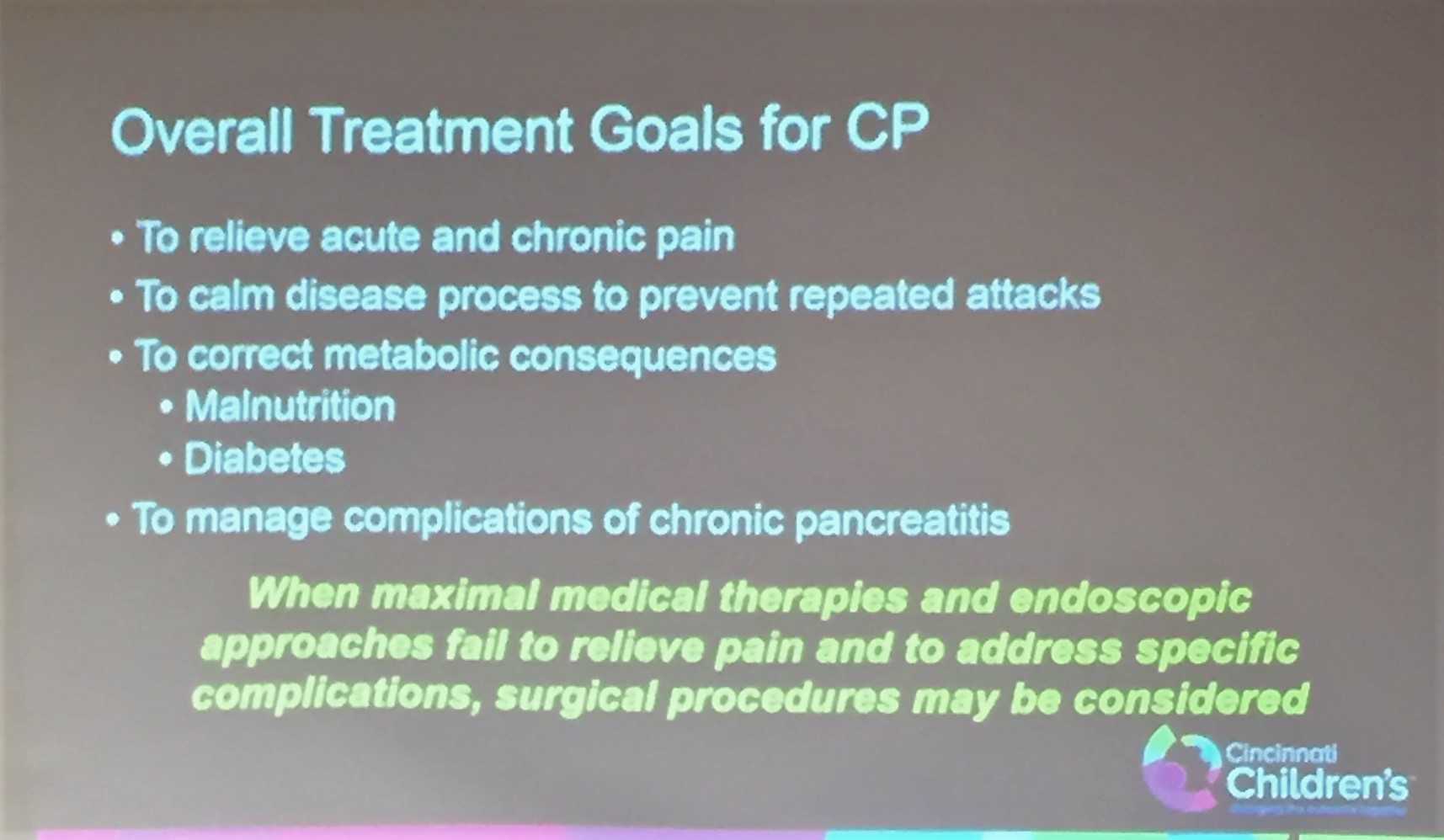
Page 1288 provides a suggested management algorithm for chronic pancreatitis:

Medical therapy recommendations include alcohol/smoking cessation, counsel regarding nutrition/vitamin D/calcium, consider analgesics (start with tramadol), consider adjuncts for pain (e.g.. neuron tin, SSRI, SSNRI, TCAs), assess exocrine and endocrine function (elastase and HgbA1C), use steroids if autoimmune pancreatitis.

If medical therapy ineffective, assessment of pancreatic duct is recommended.  Based on this information, discussion of endoscopic and surgical treatment is outlined as well.

Related blog entries:

How helpful are antioxidants for chronic pancreatitis pain?

The ‘ANTICiPaTE’ study shows that antioxidants are not helpful in the typical patient with chronic pancreatitis (Gastroenterol 2012: 143: 655-63).  While chronic pancreatitis is a rare problem for the pediatric population, I was drawn to this study because I had to see what the acronym stood for: ANTI-oxidant therapy for painful Chronic Pancreatitis Therapy Evaluation.

In brief, this study was a double-blind placebo-controlled single-center randomized trila of Antox version 1.2 in patients with painful chronic pancreatitis.  The ingredients of this antioxidant included selenium, ascorbic acid, d-α-tocopherol and multiple secondary ingredients.  Antioxidant levels were measured as well and did increase on study medication.

Results: after 6 months, pain scores were reduced by 1.97 from baseline in placebo group and 2.33 in the antioxidant group.  The -0.36 difference was within the 95% confidence interval (-1.44 to 0.72).  Quality of life measures were similar as well.

The discussion points out that the largest randomized study (Bhardwaj et al) found that antioxidants were effective in relieving pain in chronic pancreatitis.  So why the discrepancy? Possible reasons:

  • 1. Different populations: Bhardwaj study had a younger population: 31 years compared with 50 years in current study
  • 2. Different etiologies: The Bhardwaj study had only 31% with alcoholic etiology for chronic pancreatitits compared with 72% in current study
  • 3. Comorbid conditions:  The Bhardwaj study had 28% smokers compared with 80% in current study
  • 4. Antioxidant constituents differed
  • 5. Chance

Take-home message: While there are notable differences between this study and the Bhardwaj study, the present study is more indicative of typical chronic pancreatitis patients in the U.S. and indicates that antioxidants are not effective in this population. For the pediatric population, the Bhardwaj study has more applicability; however, the present study diminishes optimism that antioxidants will be effective.

What are the alternatives? Both surgical and endoscopic treatments can be considered for chronic pancreatitis, though neither has consistently been effective at reducing pain.

Additional references:

  • -Bhardwaj P, et al. Gastroenterology 2009; 136: 149-59.  Antioxidants for chronic pancreatitis pain.  antioxidant included 600mcg selenium, 0.54g ascorbic acid
  • -Gastroenterol 2011; 141: 1690.  Surgical Rx outperformed medical Rx. n=79.  Only 5% of surgical pts needed more Rx.  47% of endoscopic pts eventually needed surgery, 68% of endoscopic pts had repeated procedures.
  • -NASPGHAN Postgraduate Course 2011: Exercise helpful in reducing pain/depression, coffee/green tea may help. Surgery (eg Puestow) -most commonly for pain —>75-80% good outcome.  Rarely Frey procedure & investigational pancreatectomy (harvesting islet cells) -n=24 in Minnesota. May benefit from dual sphincterotomy -bilary/pancreatitic (33% improve) but increased complications (pancreatitis, cholangitis, restenosis)
  • -Am J Gastro 2010 105: 1884.  –cleaning out ducts w ERCP-1/3rdimprove (some worsen)
  • -Clinical Gastro & Hep 2011; 9: 541.  steatorrhea (w pancreatitis) typical adult dosing of pancreatic enzymes: 40,000-50,000 IU lipase/meal & 1/2 dose for snacks.
  • -Gastroenterol 2011; 141: 536.  Pregabalin reduces pain in chronic pancreatitis -randomized control trial.

Related blog entries:

Does pancreas divisum cause pancreatitis?

Recurrent pancreatitis and genetic underpinnings

Pain changes brain

Recurrent pancreatitis and genetic underpinnings

While the absolute number of patients with genetic causes of pancreatitis is small, due to frequent hospitalizations, this remains a significant problem.  This month additional information on genetic predisposition for pancreatitis is available (JPGN 2012; 54: 645-50).

Sultan et al (Milwaukee, WI) reviewed the charts of children <18 years with recurrent acute pancreatitis (RAP) and patients with chronic pancreatitis (CP) from 2000-2009.   RAP was considered if patient had a minimum of two distinct episodes of acute pancreatitis.  Acute pancreatitis was considered the diagnosis if patient had typical symptoms associated with 3-fold elevation of amylase or lipase or imaging changes consistent with acute pancreatitis. CP was defined as a minimum of 2 episodes of acute pancreatitis associated with pancreatic duct abnormalities or pancreatic insufficiency.

Among this cohort of 29 children, 23 (79%) had mutations which have been associated with genetic pancreatitis (GP).  Family history was positive in only five patients.

  • CFTR mutation in 14 (48%): two had homozygous mutations, six heterozygous, and four had 5 T variants.  The importance of a single CFTR mutation in contributing towards pancreatitis is unclear.  However, the Wisconsin population has a carrier frequency of 1:32; the striking difference in frequency  indicates that even a single mutation may be important in the pathogenesis of RAP.
  • SPINK1 (serine protease inhibitor Kazal type 1) in 8 (27%).  SPINK1 mutations occur in 1-3% of the general population.  It is often a modifying factor rather than an isolated causal factor in the development of RAP.  Four of the patients with SPINK1 mutations also had a CFTR mutation.
  • PRSS1 (cationic trypsinogen gene) in 7 (24%).  Individuals with these mutations are considered to have hereditary pancreatitis, an autosomal disease with incomplete penetrance.
  • Only one patient was tested for chymotrypsin C gene (CTRC) –tested negative.

Seven patients with RAP did not undergo genetic testing & were excluded from the study.  These patients had other known causes of RAP: 3 had gallstones, 2 had pancreas divisum, 1 had a metabolic disorder, and 1 had a medication-induced pancreatitis.  The authors note, however, that patients with pancreas divisum have had genetic mutations identified in other studies.

Additional References:

  • www.uni-leipzig.de/pancreasmutation. This link will take you to the hereditary pancreatitis database where you can search for the specific mutation you identified and find articles dealing with a variety of aspects of that particular mutation.
  • 2011 Naspghan Postgraduate Course:
    Pancreatitis Workup
    -1st bout, check U/S, trig
    -if 2nd bout, suggested to check MRI, genetics (SPINK1, PRSS1, CFTR), sweat test, fecal elastase, possibly IgG4/ANA
  • OMIM#167800/276000
  • -Gastroenterology 2006; 131: 1844.  Mouse model w R122H Trypsiongen expression.
  • -Whitcomb DC. Gut 2004; 53: 1710-17. test for PRSS1 (cationic trypsinogen), SPINK1 (Serine protease inhibitor, Kazal Type 1), and CFTR gene.
  • -JPGN 2002; 34: 1A pg 444. n=108 with hereditary or idiopathic pancreatitis. (28% had + fhx)  12 c PRSS1 mutation, 24 c SPINK1 (21 s fhx); 22 had + CFTR mutation.
    -Pancreatology 2001; 1: 405-415.  Consensus guidelines for testing for H. Pancreatitis. PRSS1 gene -cationic trypsinogen
    http://www.pancreas.org/assets/pdfs/Pancreatology/HPgeneTestConsensus.pdf
  •  David Whitcomb’s laboratory at the University of Pittsburgh. The test is commercially available there. Their web site for the forms is:
    http://www.pitt.edu/~whitcomb/HPINFO/MolGenTest.html
  • -JPGN 2011; 52: 262. Review.
  • -J Pediatrics 2011; 158: 612.  Acute pancreatitis can result in diabetes.
  • -Clin Gastro & Hep 2010; 8: 410-416, 417. REVIEW of acute pancreatitis.  Rec NJ generally over TPN.
  • -Clin Gastro Hep 2010; 8: xxii.  Anomalous pancreatobiliary jxn as a cause.
  • -JPGN 2009; 49: 137.  Pancreatitis assoc w celiac
  • -Clin Gastro & Hep 2009; 7: 702.  Harmless Acute pancreatitis score.  Nonsevere when NL hgb, NL creatitine, and no rebound tenderness/guarding
  • -Alim Pharm Ther 2008; 28: 777-781.  Use of a low fat diet helped shorten hospital stay among adult pts with acute pancreatitis.
  • -Clin Gastro & Hep 2008; 6: 1070, 1077.   Fluids and imaging in acute pancreatitis.  With imaging, CT probably best.
  • – J Pediatrics 2008; 152: 106.  Acute pancreatitis in young children

Related blog entry:

Indomethacin to prevent post-ERCP pancreatitis