IBD Updates

  1. Allopurinol makes thiopurines more effective. A Vasudevan et al. AP&T 2023; https://doi.org/10.1111/apt.17831 Clinical trial: Combination allopurinol-thiopurine versus standard thiopurine in patients with IBD escalating to immunomodulators (the DECIDER study)

This was  a multicenter, randomized, placebo-controlled trial to compare the efficacy and safety of thiopurine-allopurinol versus thiopurine with placebo for adults commencing a thiopurine for IBD in 102 patients. Allopurinol was dosed at 100 mg. Key findings:

  • A higher proportion achieved the primary outcome (improved clinical score and fecal calprotectin <150) in the thiopurine-allopurinol group (50% vs 35%, p = 0.14) and fewer participants stopped their allocated therapy due to adverse events (11% vs 29%, p = 0.02

Related blog posts:

2. Newer treatments and lower colectomy rates in pediatric UC. D Ley et al. AJG 2023; 118:1997-2004 New Therapeutic Strategies Are Associated With a Significant Decrease in Colectomy Rate in Pediatric Ulcerative Colitis. Thanks to Ben Gold for this reference.

Medication exposure and disease outcomes were compared between 3 diagnostic periods: 1988 to 1993 (period [P] 1; pre-IS era), 1994 to 2000 (P2; pre-anti-TNF era), and 2001 to 2011 (P3; anti-TNF era).

  • Key finding: The risk of colectomy at 5 years decreased significantly over time (P1, 17%; P2, 19%; and P3, 9%; P = 0.045, P-trend = 0.027) and between the pre-anti-TNF era (P1 + P2, 18%) and the anti-TNF era (P3, 9%) (P = 0.013). 

Related blog posts:

3. More data indicating that anti-TNF therapy does not increase post-operative complications. D Bajzat et al. Inflamm Bowel Dis 2023; 29: 1971-1980. Safety Analysis of Preoperative Anti-TNF-α Therapy in Pediatric IBD After Intestinal Resection: A Systematic Review and Meta-analysis

In this systematic review, the authors identified 8 eligible articles with 526 pediatric patients with IBD. Key finding: “There is no significant association between preoperative anti-TNF-α therapy and postoperative complications in children with IBD after intestinal resection.”

Related blog posts:

Pics from Island Ford/Chattahoochee River

Disclaimer: This blog, gutsandgrowth, assumes no responsibility for any use or operation of any method, product, instruction, concept or idea contained in the material herein or for any injury or damage to persons or property (whether products liability, negligence or otherwise) resulting from such use or operation. These blog posts are for educational purposes only. Specific dosing of medications (along with potential adverse effects) should be confirmed by prescribing physician.  Because of rapid advances in the medical sciences, the gutsandgrowth blog cautions that independent verification should be made of diagnosis and drug dosages. The reader is solely responsible for the conduct of any suggested test or procedure.  This content is not a substitute for medical advice, diagnosis or treatment provided by a qualified healthcare provider. Always seek the advice of your physician or other qualified health provider with any questions you may have regarding a condition.


IBD Shorts: Pediatric Colonic CD, UC Colectomy Risk Factors, Ustekimumab for 5 years

TD Berger et al. JPGN 2022; 74: 258-266. Clinical Features and Outcomes of Paediatric Patients With Isolated Colonic Crohn Disease

This study focused on 94 with isolated colonic Crohn’s disease (L2). Key findings: Response to enteral nutrition (78.3%) was comparable to those with L1 disease (82.4%) (n=104). Skp lesions and granulomas, identified in 65% and 36% in those with L2 disease was similar to those with L1 disease.

JS Hyams et al. Inflamm Bowel Dis 2022; 28: 151-160. Open Access: Clinical and Host Biological Factors Predict Colectomy Risk in Children Newly Diagnosed With Ulcerative Colitis

Key findings:

  • 25/428 (6%) children with recently diagnosed UC underwent colectomy at ≤1 year, 33 (9%) at ≤2 years, and 35 (13%) at ≤3 years. 
  • An initial PUCAI ≥ 65 was highly associated with colectomy (P = 0.0001)
  • A  pretreatment rectal gene expression panel showed that patients who had colectomy had significantly higher values for this genetic signature in comparison with those who did not require colectomy

WJ Sandborn et al. Clin Gastroenterol Hepatol 2022; 20: 578-590. Open Access: Five-Year Efficacy and Safety of Ustekinumab Treatment in Crohn’s Disease: The IM-UNITI Trial

Key findings:

  • Using an intent-to-treat analysis of all patients randomized to ustekinumab at maintenance baseline, 34.4% of patients in the every-8-weeks group and 28.7% in the every-12-weeks group were in clinical remission at week 252. In the 8 week group in the long-term extension portion of the study the rate was 54.9%
  • Adverse effect profile (per 100 patient-years): generally were similar in the placebo and combined ustekinumab groups for all adverse events (440.3 vs 327.6), serious adverse events (19.3 vs 17.5), infections (99.8 vs 93.8), and serious infections (3.9 vs 3.4).
White Sands (actually gypsum) at White Sands National Park, NM

Crohn’s Disease Diagnosis Identified After Colectomy in Presumed Ulcerative Colitis

A recent retrospective single-center study (I Jones et al. JPGN 2018; 66: 69-72) identified a high rate of inflammatory bowel disease (IBD) reclassification.  From 2003-2014, 570 children were diagnosed with IBD, including 190 with ulcerative colitis.  29 of these patients underwent colectomy.  Among this select group, 24% (7/29) were subsequently reclassified as having Crohn’s disease, sometimes several years later.  Only two of the seven reclassified patients were younger than 10 years of age at the time of colectomy.

My take: This rate of Crohn’s disease following colectomy is higher than in previous reports (generally 5-10%).  The larger point is that the diagnosis of ulcerative colitis is more uncertain in the pediatric population, particularly in those in the first decade of life.

Related blog posts:

Near Bright Angel Trail, Grand Canyon

An Overlooked Finding in a Recent Acute Severe Ulcerative Colitis Study

A recent study (S Choshen et al. JPGN 2016; 63: 58-64) examined 283 children who were treated with IV steroids for acute severe ulcerative colitis.  This study focused on steroid dosing.  Their conclusion: “there does not seem to be a consistent superiority of high dose (>2 mg/kg/day) versus standard (1.25 mg/kg/day) or low-dose (1 mg/kg/day) methylprednisolone in pediatric acute severe colitis.”

Before looking into the details a little closer, one finding that was not even discussed in the abstract or discussion was the colectomy rate of 31%.  Previous pediatric studies of patients with ulcerative colitis had found rates generally half that rate but notably included patients with milder presentations of ulcerative colitis.  Thus, this rate of 31% (by 1 year after discharge) is useful information to reference when considering pediatric patients with acute severe colitis (ACS).

This study used datasets from the prospective Outcome of Steroid therapy in Colitis Individuals (OSCI) (n=128) and from the retrospective OSCI study (n=99).

Other results:

  • By day 5 of steroids, 45% had at most mild disease (ie PUCAI <35)
  • 31% had failed IV steroids and required salvage therapy (biologic or calcineurin inhibitor)
  • 20% had colectomy by discharge
  • When examining steroid dosage and outcomes, the authors could not discern any differences in need for salvage therapy, PUCAI <35 at day 5, or need for salvage therapy within 1 year. There was a mild difference in length of stay with 9 days in the low-dose group and 10-days in the high dose group.

My take: This large cohort provides some reassurance that current steroid dosing recommendations are probably right, in that there was no discernible improvement with higher doses.  This is in agreement with previous studies in adults which have not shown advantages of methylprednisolone >60 mg/day.  The high colectomy rate of 31% is worth keeping in mind in this population.

Related blog posts:

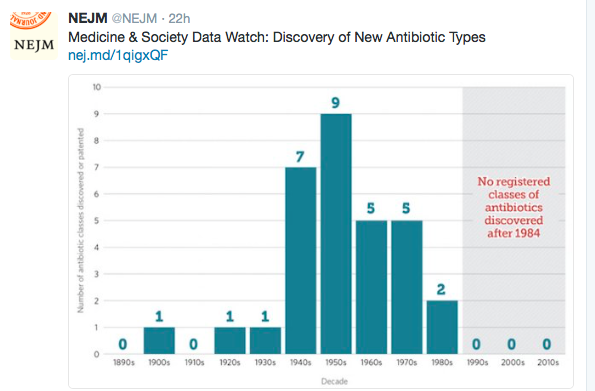
NewAbxDiscovered


Predictors of colectomy in pediatric UC

A recent review of children in the Pediatric Inflammatory Bowel Disease Consortium (PediIBDC) examined risk factors for proctocolectomy in children with Ulcerative Colitis (UC) (JPGN 2012; 55: 534-40).  Two of the investigators (Stanley Cohen and Ben Gold) are colleagues of mine at GI Care for Kids.

In total, 406 children with UC were reviewed.  The average age at diagnosis was 10.6 years.  The average followup was 6.8 years.  57 (14%) underwent surgery with a median time to surgery of 3.8 years.  Overall risk factors for colectomy included the following:

  • Presenting with weight loss, HR 2.55
  • Presenting with hypoalbuminemia (<3.5 g/dL), HR 6.05
  • First-degree relative with UC, HR 1.81
  • Treatment with cyclosporine, HR 6.11
  • Treatment with tacrolimus, HR 3.66

While this data expands on the knowledge of these factors in children, the findings are not unexpected.  Low albumin levels and poor nutritional status have been identified in other studies as risk factors for UC relapse and for colectomy.

With regard to first-degree relatives, the findings imply that children with a first-degree relative are more likely to have a more severe form of UC.

The use of calcineurin inhibitors, cyclosporine and tacrolimus, are given only in the presence of severe disease.  Thus, while use of these agents is associated with an increased risk of colectomy, it is unlikely that this is a causal relationship.  Interestingly, the use of infliximab was not identified as a risk factor.  However, this retrospective study examined patients between 1999-2003.  Since this timeframe, there has been increased use of infliximab for refractory UC.

Going forward, it is likely that contemporary studies would incorporate PUCAI (pediatric UC activity index) measurements and would have the ability to enroll far greater numbers of patients from database consortiums.

Related blog posts:

How new therapies impact colectomy in UC patients

Has the need for colectomy changed with the increasing use of more potent medical therapies for ulcerative colitis (UC)?  One article gives some insight into this question (Inflamm Bowel Dis 2012; 18: 1641-46).

This French study followed 151 patients with newly diagnosed UC from 2000-2008; median followup was 58 months. During this time, 21 patients (14%) underwent colectomy.  1.3% required colectomy in the first year following diagnosis.

Looking closer at their study, 55% of patients had pancolitis.  Cyclosporin usage, typically given in refractory cases, was the only medication determined to be a predictive factor for surgery.

Medication usage during study period:

  • 68% oral mesalamine products
  • 72% systemic corticosteroids
  • 7% methotrexate
  • 49% azathioprine
  • 9% cyclosporin
  • 30% had received at least one anti-TNF agent

The authors concede several limitations, including the evolving nature of UC treatment.  Yet, they conclude that colectomy still is frequently needed and the use of IBD medications, including anti-TNF, “does not appear to reduce the long-term need for surgery in UC.”

I take issue with the last sentence.  Whether anti-TNF agents prove to be a disease-modifying treatment over the long-term is not known.  In this particular cohort, only 30% were even exposed to these agents.  My conclusion: we need a study designed to answer the question.  This would require larger numbers of patients followed prospectively for many years.

Related blog entries:

TNF antagonists and UC

In my fellowship (15 years ago), the use of thiopurines (eg. azathioprine, 6-mercaptopurine) for ulcerative colitis was debated.  Many physicians urged colectomy rather than using these drugs which could have long-term consequences.  At the time, the risk of thiopurines was less well-understood.  Over time, the use of these agents has become common when mesalamine products were ineffective.  The same issue comes up with TNF antagonists versus colectomy.

A recent study provides more information on the effectiveness of adalimumab for patients with moderate-to-severe UC but does not settle this debate (Gastroenterology 2012; 142: 257-65).  In this study, termed ‘ULTRA-2’ (Ulcerative colitis long-term remission and maintenance with adalimumab 2), the  efficacy of adalimumab for induction & maintenance of remission was studied in 494 patients.  This was a randomized, double-blind, placebo-controlled study; average age was 40 years.

Clinical remission in the adalimumab group were 16.5% at 8 weeks (9.3% placebo).  At 52 weeks, 17.3% in the adalimumab group were in remission (8.5% placebo).  Among patients naive to anti-TNF agents, the response rate was 21.3% at week 8 & 22% at week 52.  Safety overall was similar in both groups; however, in the adalimumab group one patient developed gastric cancer and one developed squamous cell carcinoma.

The authors conclude that adalimumab is safe and more effective than placebo in inducing and maintaining remission among patients with moderate-to-severe UC.

A second study, also published this past month, looks at the use of infliximab for maintenance therapy for UC (Inflamm Bowel Dis 2012; 18: 201-11).  Patients who had achieved benefit from ACT-1 and ACT-2 studies were followed for three years.  Dosage of infliximab could be adjusted.  A total of 229 patients entered the study.  During the study, 70 patients (30.6%) discontinued infliximab due to adverse effects (10.5%), lack of efficacy (4.8%) or other reasons (15.2%); the majority were able to continue infliximab.  The authors indicate that no new safety issues were identified. Yet, there were two deaths among the infliximab group including a 19 year-old nonsmoker who developed lung cancer and a lethal case of histoplasmosis.

Because the improvement compared to placebo is modest with both of these agents, the question about whether to use these medications or proceed to surgery in UC patients is unanswered.

Additional references:

  • -Aliment Pharmacol Ther. 2008 Oct 15;28(8):966-72. Epub 2008 Jul 24.  Long-term outcome of adalimumab therapy for ulcerative colitis with intolerance or lost response to infliximab: a single-centre experience.
  • -Am J Gastroenterol (Oussalah A et al) 2010; 105: 2617-25. Multicenter study of IFX for UC
  • -Gastroenterology 2010; 138: 2282. Severe pediatric UC. 25/33 responded to IFX. colectomy rate 19% at 1 year.
  • -Gastroenterology 2009; 137: 1204 (ed), 1250. lower colectomy rates at 54wks in IFX vs placebo (+concomitant meds): 10% vs. 17%.
  • -Clin Gastro & Hep 2008; 6: 1112. Do NOT use CYA post infliximab and vice versa. n=19. 1 death due to sepsis. Remission rates occur in ~1/3rd but are of short duration.
  • -NEJM 2005; 2462. 69% clinical response @ 8 weeks (vs. 37% placebo) & 45% at week 54 (vs. 20% placebo).
  • -JPGN 2004; 38: 298. 82% short-term response, 63% sustained response; n=16.