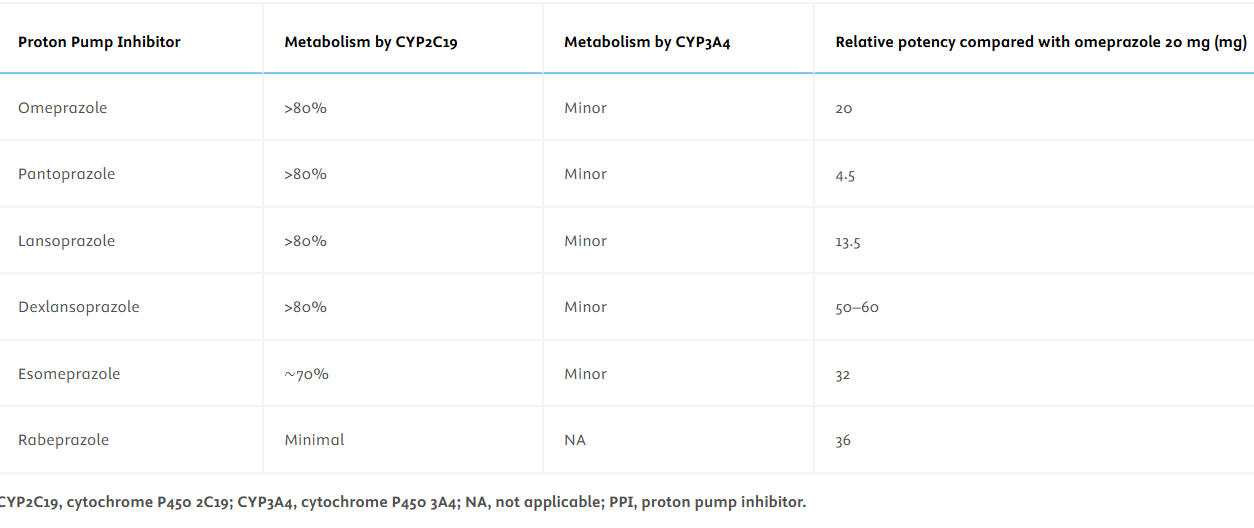
P Bose et al. American Journal of Gastroenterology. DOI: 10.14309/ajg.0000000000004117 Dose May Matter: CYP2C19 Genotype and Proton-Pump Inhibitor Response in Pediatric Eosinophilic Esophagitis
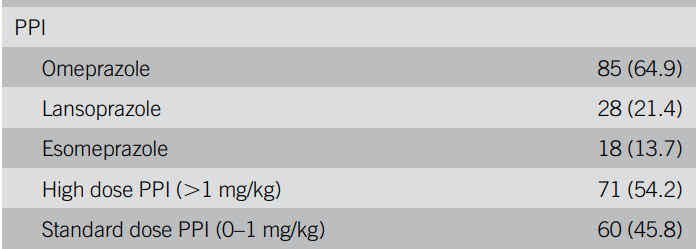
Methods: A cohort study of pooled data from 2 tertiary-care pediatric centers (Riley Children’s Health,Indianapolis, IN, and Children’s Hospital of Philadelphia, Philadelphia, PA) was conducted. N=131, mean age 8.5 yrs. Individuals with certain CYP2C19 polymorphisms were classified as normal (NMs), intermediate/slow(IMs), and rapid metabolizers (RMs) of PPIs based on the presence of normal function (*1), loss-of-function (*2), or gain-of-function (*17) alleles. PPI choice and dosing:
Key findings:
- PPI response occurred in 22.1% of subjects (29/131)
- Overall, IMs had the highest proportion of PPI response at 33.3% (10/30), followed by NM of 21.7% (13/60) and RM of 14.6% (6/41) (P 5 0.205).
- No ultra-rapid metabolizers had a response.

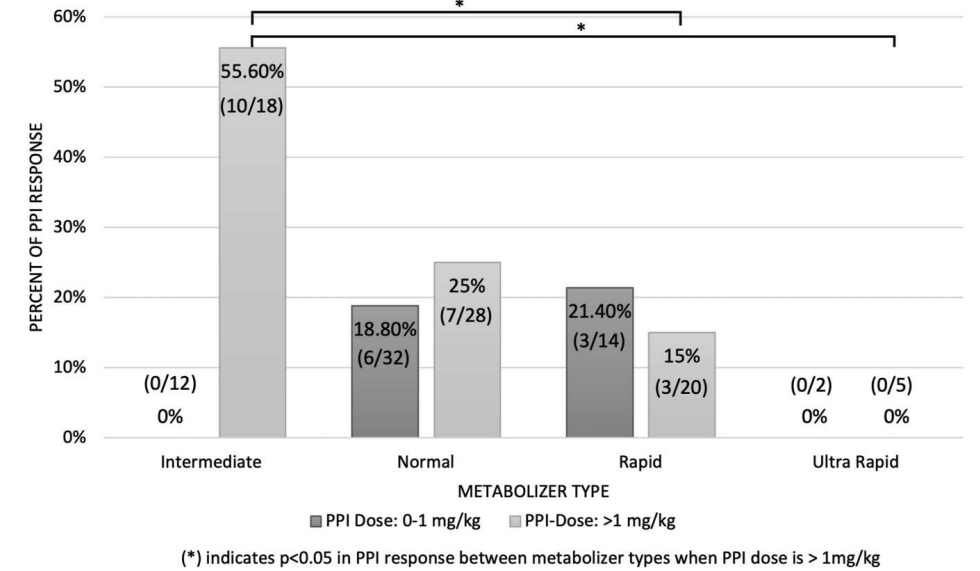
Discussion: “Atypical dosing for PPI use in EoE may be related to mechanisms of action apart from gastric acid suppression, such as inhibiting eosinophil migration or restoring esophageal mucosal barrier integrity, which have been previously proposed.”
There may have been a selection bias in this population. The methods section does not detail these cohorts precisely. It is unclear if all patients in these centers undergo CYP2C19 genotype testing. In most centers, CYP2C19 genotype testing is uncommon and may be more likely in those who have not responded to therapy.
My take:
- CYP2C19 genotype testing may help determine whether PPI therapy is likely to work for a patient with EoE and influence the dosage selected. This is not a new concept. It was noted at a NASPGHAN meeting in 2017.
- In those with unfavorable CYP2C19 genotype, either an alternative therapy or a PPI that is not metabolized with CYP2C19 (eg. rabeprazole) should be considered.
Related blog posts:
- Here’s Why CYP2C19 Testing May Be Helpful For Refractory Reflux
- Updated Data on PPI Effectiveness For Eosinophilic Esophagitis
- #NASPGHAN17 Eosionophilic Esophagitis Session James Franciosi presented research at NASPGHAN meeting indicating that the main difference between children with eosiniophilic esophagitis (EoE) who respond to proton pump inhibitiors (PPIs) compared to those who do not was related to their metabolism of PPIs and not related to the nature of their underlying EoE.
- Incredible Review of GERD, BRUE, Aspiration, and Gastroparesis
- Why Vonoprazan Is More Effective For Erosive Esophagitis Than a Proton Pump Inhibitor
- How Genetics Influence Response to PPIs in Eosinophilic Esophagitis