Income and Health Outcomes in Pediatric Short Bowel Syndrome

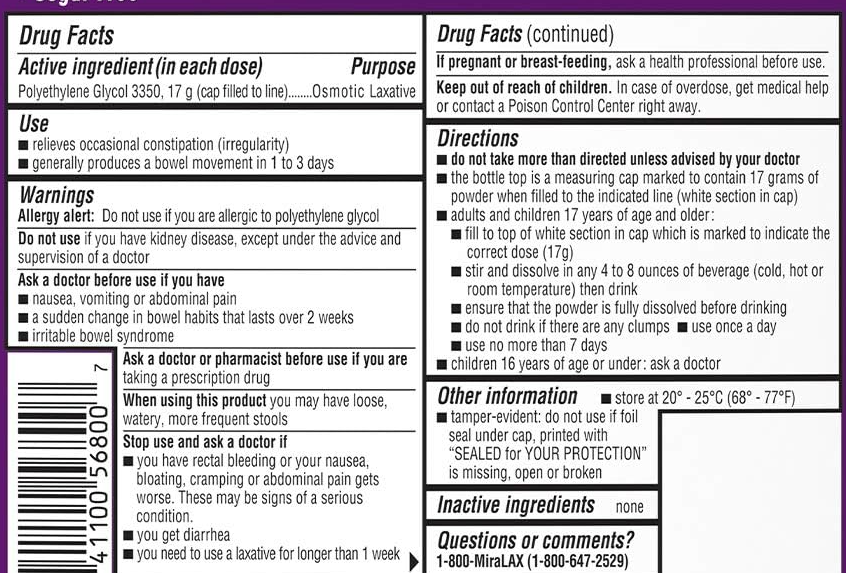
Clarification: Yesterday’s post on the safe use of polyethylene glycol (Long Term Use of Polyethylene Glycol (PEG 3350)) noted the labeling indicates “‘to not use these medications for more than 7 days.” However, Ben Enav pointed out that the label also states the following in bold: “do not take more than directed unless advised by your doctor.” The actual label is shown below.
———

SA Gutierrez et al. J Pediatr 2024; 265: 113819. Neighborhood Income Is Associated with Health Care Use in Pediatric Short Bowel Syndrome

Methods: The authors used the Pediatric Health Information System (PHIS) database to evaluate associations between neighborhood income and hospitalization data for children with short bowel syndrome (SBS). This included 4289 children with 16,347 hospitalizations from 43 institutions.

Key findings:

  • 2153 of the 4289 (50%) patients were readmitted during the study period (2006-2015)
  • Children living in low-income neighborhoods were more likely to be Black, Hispanic, have public health insurance, and live in the Southern U.S.
  • Children from low-income neighborhoods had a 38% increased risk for all-cause hospitalizations (rate ratio [RR] 1.38), an 83% increased risk for CLABSI hospitalizations (RR 1.83) and increased hospital length of stay.
  • 2.4% of patients in this cohort experienced 10 or more CLABSI hospitalizations

One of the study’s limitations is that ‘there is no singular ICD-9 code for SBS.’

My take: It is speculation about the reasons why children in low income neighborhoods have higher rates of hospitalizations and CLABSI hospitalizations. It could be that more parents in these households have less time and resources to manage a child with SBS. It is possible that these households have more chaotic environments. Regardless of the reason, it takes a lot of work and meticulous care to prevent CLABSI hospitalizations in children with SBS.

Related blog posts:

A lot of Turk’s Cap Cacti along the Ram Head Trail, St John

Delayed Commentary

I was a little disappointed (aka first world problem) that this commentary appeared in the February print edition of The Journal of Pediatrics about 4 months after the publication of the analyzed study. This blog commented on this study in October: Disparities Are Abundant in Pediatrics -4 Studies on IBD, SUID, Specialty Referrals and in the NICU re: J Smith et al. J Pediatr 2023; 260: 113522.

DJ Spencer. J Pediatr 2024; DOI:https://doi.org/10.1016/j.jpeds.2023.113839. Open Access! Understanding Health Outcomes in Pediatric Inflammatory Bowel Diseases: Contributing Factors that Aren’t so Black and White

“In this issue of The Journal, Smith et al report the results of an historical cohort analysis of 519 children and adolescents with newly diagnosed IBD (2013-2020)… Smith et al ask the question of whether the greater rate of complicated disease in Black patients is related more to delayed diagnosis or access to therapy rather than inherent race-based differences in response to treatment.”

Key points:

  • “In this study, Smith et al importantly identified no difference in initiating standard medical therapies based on race. Specifically, they report no difference in initial corticosteroid usage, time to initiation of maintenance therapy, or time to initiate antitumor necrosis factor therapy. In patients receiving biologics, both Black and White patients received similar loading doses and frequency of therapeutic drug monitoring.”
  • Despite comparable disease presentation and approach to medical therapy in this study cohort, Black patients strikingly remained only one-half as likely to reach corticosteroid-free remission at 12 months compared with White patients (OR 0.52, 95% CI 0.3-0.9).”
  • ” Black patients were less likely to be seen in gastroenterology specialty clinic for follow-up, more likely to present to the emergency department, and more likely to be hospitalized.”
  • “This study described poorer outcomes in Black patients despite similar treatments. However, the authors fail to arrive at a definitive answer as to why this is the case.”

My take: Black patients, even when offered similar IBD treatment, clearly experience inferior outcomes. While access and social determinants of health are important, there may be biological/phenotypic factors (eg. more aggressive disease) that are involved as well. More studies are needed. This editorial is a helpful review -the timing of the editorial in the print edition many months later, though, is a head-scratcher.

Unrelated topic: CDC COVID-19 Recommendation

The Centers for Disease Control and Prevention announced new isolation guidance for Covid-19 this week. At the start of the pandemic, people were recommended to stay home for 10 days after testing positive. At the height of the Omicron wave, that was revised to 5 days. This week, isolation time was revised to 24 hours without a fever and symptoms improving, which is similar to the recommendations for other illnesses.

St Johns Honeymoon Beach

Related blog posts:

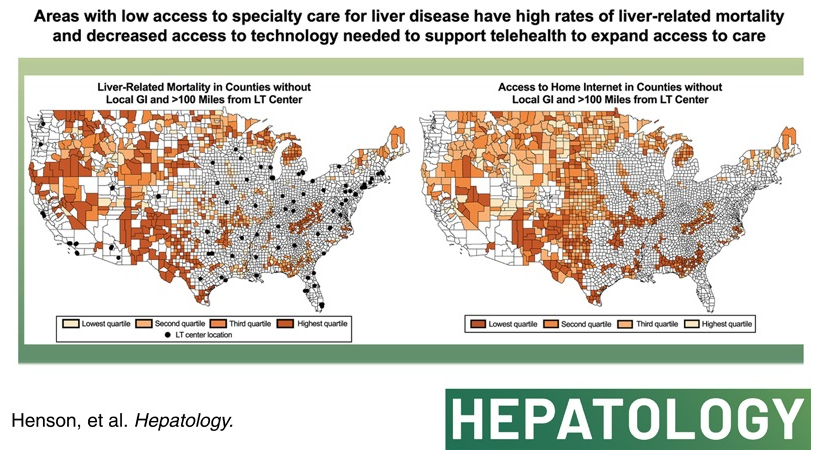
Why Telehealth Will Not Solve Health Care Disparities: Liver Care Experience

JB Henson et al. Hepatology 2023; 77: 176-185. Access to technology to support telehealth in areas without specialty care for liver disease

Key finding: Technology access was lowest in areas with low access to care and the highest burden of liver‐related mortality.

Editorial: S Wadhwani, JC Lai. Hepatology 2023; 77: 13-14. Open Access! The digital determinants of liver disease

An excerpt:

The authors found that counties with decreased access to gastroenterologists and liver transplant centers had increased county‐level liver‐related mortality. These counties tended to have residents who were more likely to be living in poverty, have lower educational attainment, have less access to primary care, and be living in a rural location. These same counties were less likely to have access to the high‐quality connectivity necessary to engage in telehealth appointments, demonstrating that telehealth in its current iteration will be unable to overcome health inequities in liver disease. For telehealth to be a viable solution to overcoming disparities in liver‐related mortality, the United States will need to tackle the “digital divide.”

My take: The same patients who have trouble seeing a liver specialist due to distance, transportation issues, and poverty are much less likely to have a good internet connection. Without this digital access, telehealth cannot help solve the disparity in care.

Related blog posts: