Antroduodenal Dysmotility in Hypermobility Disorders and Ehlers-Danlos Syndrome

KWE Sweerts et al. Alimentary Pharmacology & Therapeutics, 2025; 61:702–705. Open Access! Analysis of Antroduodenal Motility in Patients With Hypermobility Spectrum Disorders/Hypermobile Ehlers–Danlos Syndrome

Background: Hypermobility spectrum disorders (HSD) and hypermobility Ehlers–Danlos syndrome (hEDS) are frequently associated with gastrointestinal symptoms, although the underlying mechanisms remain unclear. Since recruitment occurred before the 2017 criteria for hEDS were established, it was not possible to distinguish between HSD and hEDS. 

Methods: Retrospective review of all patients (>18 yrs) referred t for gastrointestinal motility evaluation and undergoing ADM were consecutively included from 2009 to 2023. This included 239 patients (50 HSD/hEDS and 189 non-HSD/hEDS). The HSD/hEDS group showed a lower BMI and higher use of enteral feeding than the control group (p < 0.001 and p = 0.026, respectively). This group was also younger, with a mean age of 30.4 ± 11.1 years versus 45.3 ± 15.4 years (p < 0.001).

Key findings:

  • The prevalence of antroduodenal dysmotility was not different between both groups, but enteric dysmotility was less common in the HSD/hEDS group (13% vs. 34%, p = 0.006).
  • There were similar percentages of delayed gastric emptying than non-HSD/hEDS patients; delayed gastric emptying was highly prevalent in both groups, 85% in patients with HSD/hEDS and 94% in non-HSD/hEDS patients
  • There were no differences in predominant symptoms between patients with and without HSD/hEDS.

In the discussion, the authors note that the lower rate of dysmotility combined with higher rates of enteral nutrition indicate that “factors like visceral hypersensitivity and autonomic function could be relevant in this context.”

My take: Most patients at this referral center had delayed gastric emptying. However, Ehlers-Danlos patients, in fact, had lower rates of enteric dysmotility.

Related blog posts:

Grand Palace, Bangkok

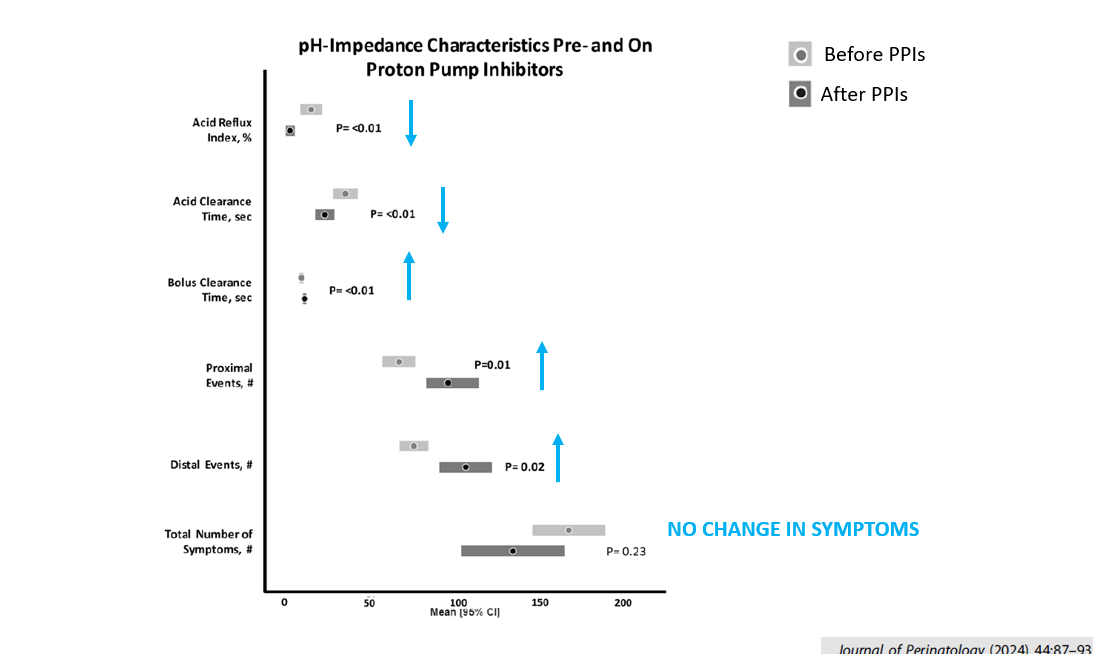
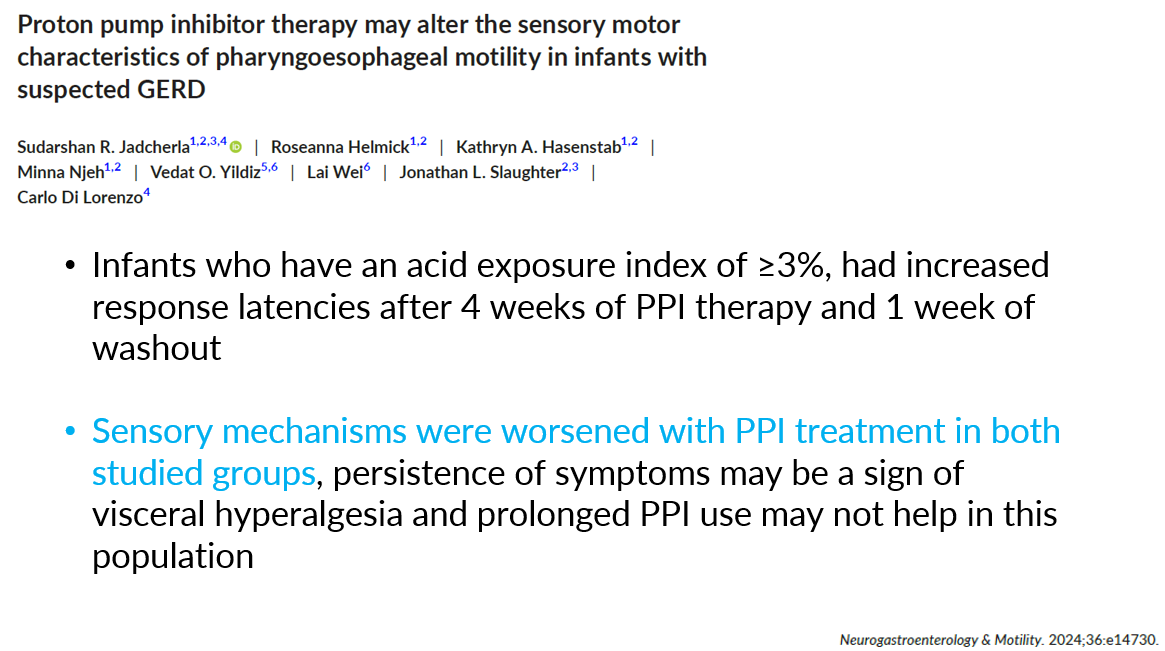
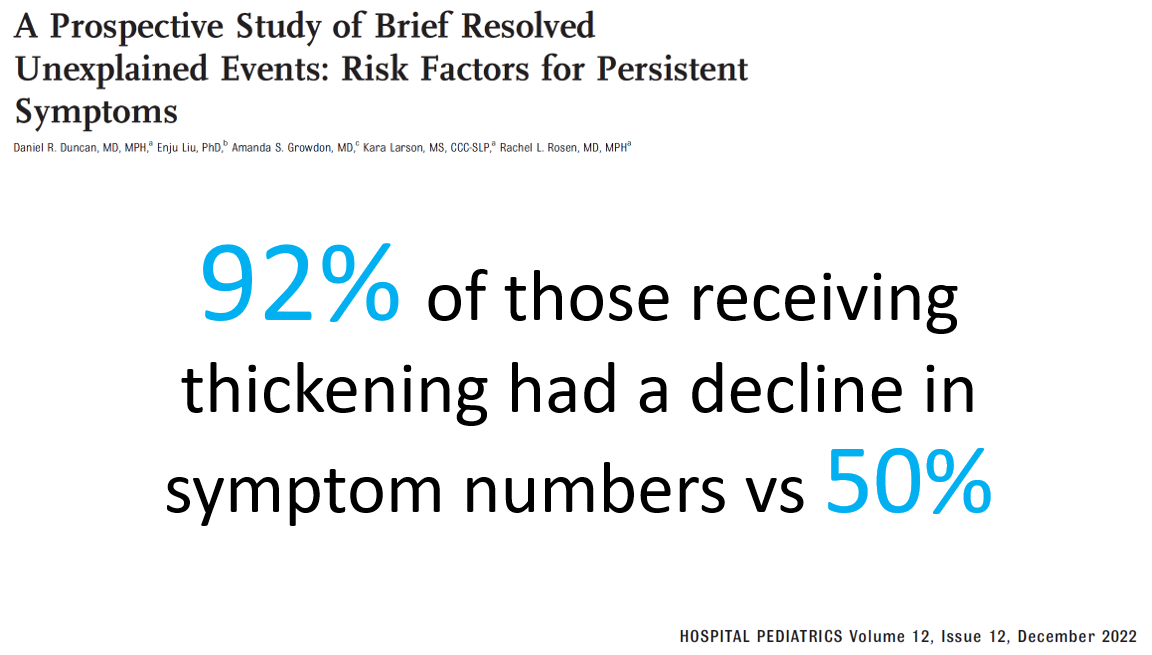
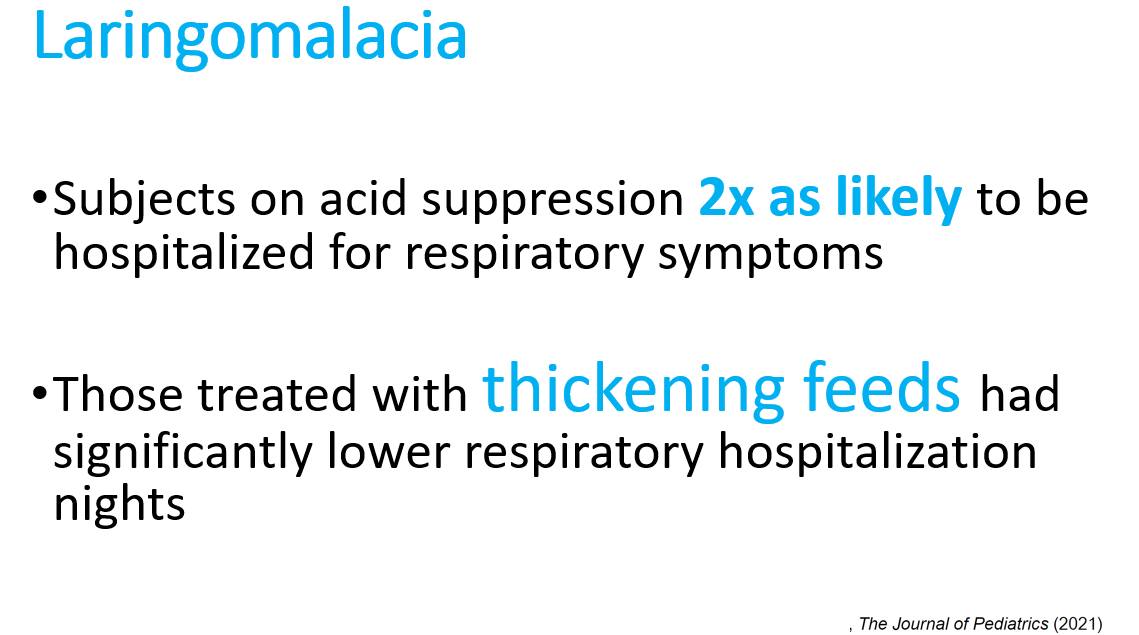
Jose Garza: What’s New in Motility (Part 1)

Dr. Jose Garza joined our group in 2013 and has been providing excellent care for children throughout the South with suspected motility disorders. Recently, he gave our group a fabulous update on what’s new in motility.  My notes below may contain errors in transcription and in omission. Along with my notes, I have included some of his slides. His talk had 123 slides; true motilists would be appalled that I haven’t included more of the high resolution tracing slides (though there are a few tomorrow).

Reflux:

Colic:

BRUE:

Laryngomalacia/Thickening:

Impedance

Disclaimer: This blog, gutsandgrowth, assumes no responsibility for any use or operation of any method, product, instruction, concept or idea contained in the material herein or for any injury or damage to persons or property (whether products liability, negligence or otherwise) resulting from such use or operation. These blog posts are for educational purposes only. Specific dosing of medications (along with potential adverse effects) should be confirmed by prescribing physician.  Because of rapid advances in the medical sciences, the gutsandgrowth blog cautions that independent verification should be made of diagnosis and drug dosages. The reader is solely responsible for the conduct of any suggested test or procedure.  This content is not a substitute for medical advice, diagnosis or treatment provided by a qualified healthcare provider. Always seek the advice of your physician or other qualified health provider with any questions you may have regarding a condition.

It’s worth the cost

Recently the cost of Sitzmarks® increased to $175 (for 12)–it’s worth the cost.  According to one study, the use of a transit study helps determine which patients will benefit from colonic manometry (JPGN 2012; 54: 258-62).  A retrospective review of 24 children showed that all five children with normal oral-anal transit (OTT) studies had normal colonic manometry.  In contrast, 9/19 (47%) with abnormal (slow OTT) had abnormal colonic manometry.

The authors define their approach to OTT which is helpful.

  • In patients with a fecal impaction, this was cleared prior to starting study
  • If patients had difficulty with capsule ingestion, markers were administered by embedding in part of a banana or mixed with applesauce
  • Stimulant laxatives withheld for 72hrs prior to study
  • AXR obtained on days 3 and 5
  • Slow OTT (abnormal) defined as >6 markers proximal to rectum on day 5

Of those with abnormal colonic manometry, two-thirds (6) were referred for surgical intervention; one patient with normal OTT had surgery.  Surgeries:  3 cecostomy, 4 subtotal colectomy.

Additional references:

  • -JPGN 2004; 38: 75. Colostomy in 10 children with intractable constipation.
  • -Arch Dis Child. 2004 Jan;89(1):13-6. Benninga MA, Voskuijl WP, Akkerhuis GW, Taminiau JA, Buller HA. Related Articles,  Colonic transit times and behaviour profiles in children with defecation disorders.
  • -J Pediatr Surg. 2004 Jan;39(1):73-7. Youssef NN, Pensabene L, Barksdale E Jr, Di Lorenzo C.  Is there a role for surgery beyond colonic aganglionosis and anorectal malformations in children with intractable constipation?
  • -Am J Gastroenterol. 2003 May;98(5):1052-7.  Pensabene L, Youssef NN, Griffiths JM, Di Lorenzo C. Related Articles, Colonic manometry in children with defecatory disorders. role in diagnosis and management.
  • -JPGN 2002 Jul;35(1):31-8. Gutierrez C, Marco A, Nogales A, Tebar R. Total and segmental colonic transit time and anorectal manometry in children with chronic idiopathic constipation.
  • -JPGN 2001 Nov;33(5):588-91.  Villarreal J, Sood M, Zangen T, Flores A, Michel R, Reddy N, Di Lorenzo C, Hyman PE.  Colonic diversion for intractable constipation in children: colonic manometry helps guide clinical decisions.
  • -http://www.sitzmarks.com/buyonline.aspx