VISION 5-Year Study Results: Safety of Vonoprazan in Erosive Esophagitis

N Uemura et al. Clin Gastroenterol Hepatol 2025; 23: 748-757. Open Access! Vonoprazan as a Long-term Maintenance Treatment for Erosive Esophagitis: VISION, a 5-Year, Randomized, Open-label Study

Background: Potassium-competitive acid blockers, such as vonoprazan, provide more potent gastric acid suppression than proton pump inhibitors. However, long-term safety data are lacking for vonoprazan in patients with healed erosive esophagitis. This study with 208 patients provides long-term data on the use of a vonoprazan.

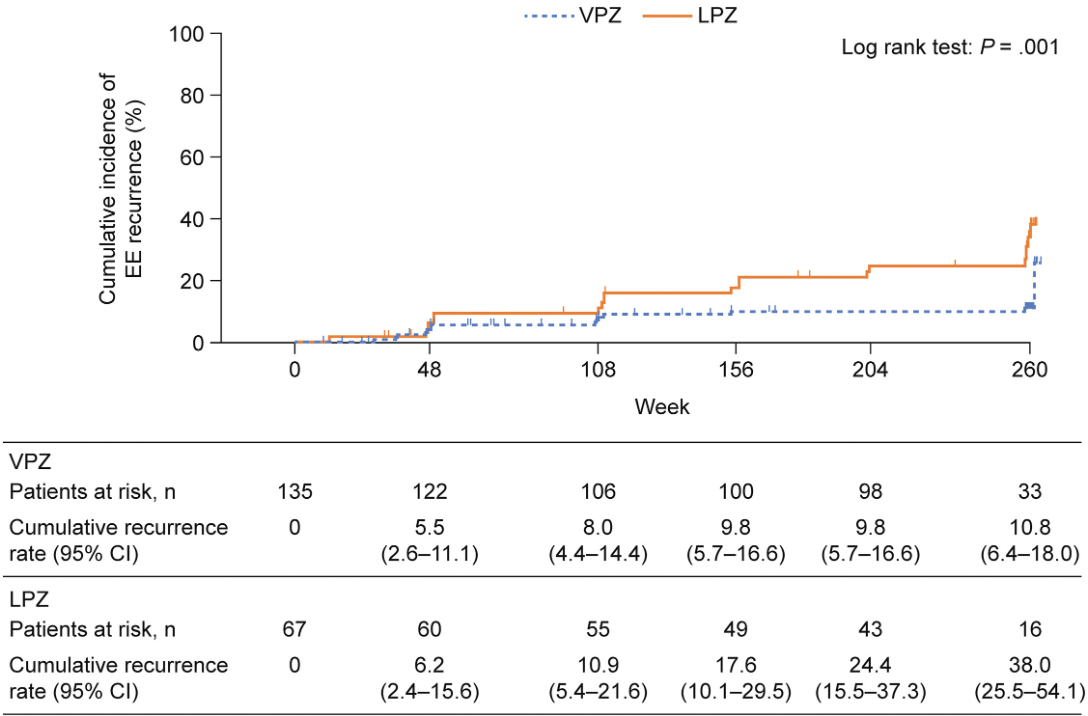
Methods: Open-label study. Patients with erosive esophagitis (EE) received induction therapy (once daily vonoprazan 20 mg or lansoprazole 30 mg; ≤8 weeks). Those with healed EE received maintenance therapy (once daily vonoprazan 10 mg or lansoprazole 15 mg) for 260 weeks (2:1). 

Key findings–Adverse effects:

  • No malignant alterations or gastric neuroendocrine tumors (NETs) were observed; there was 1 adenoma in each group
  • At week 260, significantly more patients taking vonoprazan vs lansoprazole had parietal cell hyperplasia (97.1% vs 86.5%) and foveolar hyperplasia (14.7% vs 1.9%)
  • proportions of patients with ECL cell hyperplasia (4.9% vs 7.7%) and G-cell hyperplasia (85.3% vs 76.9%) were similar
  • Median serum gastrin levels were higher with vonoprazan treatment vs lansoprazole (625 pg/mL vs 200 pg/mL)

Key finding –Efficacy:

  • Overall, the cumulative EE recurrence over 260 weeks was lower in the vonoprazan group (10.8% ) vs the lansoprazole group (38.0%) (P = .001)  
Discussion Points:

  • “Annual endoscopies and biopsies performed in the VISION study are considered objective approaches for detecting upper gastrointestinal diseases and variable lesions, as well as gastric mucosa morphological changes in areas without endoscopically apparent lesions…Although the proportions of patients with parietal cell protrusion and foveolar hyperplasia were higher in the vonoprazan group than in the lansoprazole group over 5 years, the clinical significance of these findings is unclear.”
  • “The safety profiles of vonoprazan and lansoprazole were also comparable, suggesting that long-term use of vonoprazan is as safe as PPIs.”

My take: This study provides some reassurance regarding the risk of using vonoprazan & other potassium-competitive acid blockers. The benefits of controlling erosive esophagitis may outweigh potential safety risks of long-term use. Nevertheless, it will be a while before this class of medications is used extensively in the pediatric age group.

Related blog posts:

Disclaimer: This blog, gutsandgrowth, assumes no responsibility for any use or operation of any method, product, instruction, concept or idea contained in the material herein or for any injury or damage to persons or property (whether products liability, negligence or otherwise) resulting from such use or operation. These blog posts are for educational purposes only. Specific dosing of medications (along with potential adverse effects) should be confirmed by prescribing physician.  Because of rapid advances in the medical sciences, the gutsandgrowth blog cautions that independent verification should be made of diagnosis and drug dosages. The reader is solely responsible for the conduct of any suggested test or procedure.  This content is not a substitute for medical advice, diagnosis or treatment provided by a qualified healthcare provider. Always seek the advice of your physician or other qualified health provider with any questions you may have regarding a condition.

Vonoprazan Treatment of Heartburn in Randomized Study of Patients with Non-Erosive Reflux Disease

L Laine et al. Clin Gastroenterol Hepatol 2024; 22: 2211-2220. Open Access! Vonoprazan is Efficacious for Treatment of Heartburn in Non-erosive Reflux Disease: A Randomized Trial

This was a randomized trial (n=772) in patients diagnosed with non-erosive reflux disease (NERD) comparing vonoprazan (10 mg and 20 mg) versus placebo for heartburn relief. Reflux was NOT confirmed with ambulatory pH monitoring.

Key findings:

  • The percentage of 24-hour heartburn-free days was 27.7% for placebo vs 44.8% for vonoprazan 10 mg (P < .0001) and 44.4% for vonoprazan 20 mg ( P < .0001).
  • The results were similar between both doses of vonoprazan
  • The benefit of vonoprazan appeared to begin as early as the first day of therapy. Treatment effect persisted after the initial 4-week placebo-controlled period throughout the 20-week extension period. 
  • In a post-hoc analysis, there was a very small response in patients without prior PPI response compared to placebo: There was a possible trend to fewer (7%–9%) 24-hour heartburn-free days with vonoprazan in those without prior PPI response

Discussion points: “Post hoc analysis raised the possibility that patients who previously had not responded to PPIs may have a somewhat lower response to vonoprazan. This is not unexpected, given that patients not responding to PPIs are less likely to have heartburn due to acid reflux” and more likely to have functional heartburn. The treatment effect of vonoprazan was less clear in the subgroup of patients with NERD and with severe heartburn “It is conceivable this group included a higher proportion of subjects with functional heartburn, a condition that is generally not responsive to acid inhibition.”

My take: Vonoprazan is more effective than placebo for heartburn in patients with NERD. However, the absence of definite improvement in the patients with lack of prior PPI response along with the lack of difference between the 10 mg and 20 mg vonoprazan groups indicates that this therapy should NOT be used routinely in patients with NERD in the absence of documented reflux based on ambulatory pH studies.

Related blog posts:

Practice Advice for Potassium-Competitive Acid Blockers

A Patel et al. Gastroenterology. 2024: 6: 1228 – 1238. Open Access! AGA Clinical Practice Update on Integrating Potassium-Competitive Acid Blockers Into Clinical Practice: Expert Review

Best Practice Advice (for adults):

  • Potassium-competitive acid blockers are generally not recommended as first line therapy. This rationale is based on cost, greater obstacles to obtaining medication, and fewer long-term safety data.
  • Clinicians may use P-CABs in selected patients with documented acid-related reflux & erosive esophagitis who fail therapy with twice-daily PPIs.
  • Clinicians should use P-CABs in place of PPIs in eradication regimens for most patients with H pylori infection.
  • P-CABs may be beneficial in high-risk bleeding peptic ulcer disease. “Although there is currently insufficient evidence for clinicians to use P-CABs as first-line therapy in patients with bleeding gastroduodenal ulcers and high-risk stigmata, their rapid and potent acid inhibition raises the possibility of their utility in this population.”

Related blog posts:

Is Vonoprazan Better Than Intravenous PPIs for High-Risk Peptic Ulcers?

T Geeratragool et al. Gastroenterol 2024; 167: 778-787. Open Access PDF! Comparison of Vonoprazan Versus Intravenous Proton Pump Inhibitor for Prevention of High-Risk Peptic Ulcers Rebleeding After Successful Endoscopic Hemostasis: A Multicenter Randomized Noninferiority Trial

All patients received IV PPI treatment prior to endoscopy. Key finding from this multicenter randomized open-label adult trial:

  • The 30-day rebleeding rates in vonoprazan and PPI groups were 7.1% (7 of 98) and 10.4% (10 of 96), respectively
  • There were similar outcomes with regard to safety and secondary outcomes

My take: This study shows that oral vonoprazan is not inferior to IV PPI treatment for high-risk peptic bleeding ulcers. Perhaps, a study with more participants would show superiority of vonoprazan given the absolute lower rebleeding rates in this study.

Related blog posts:

Improved Efficacy with Vonoprazan for Severe Esophagitis

Briefly noted:

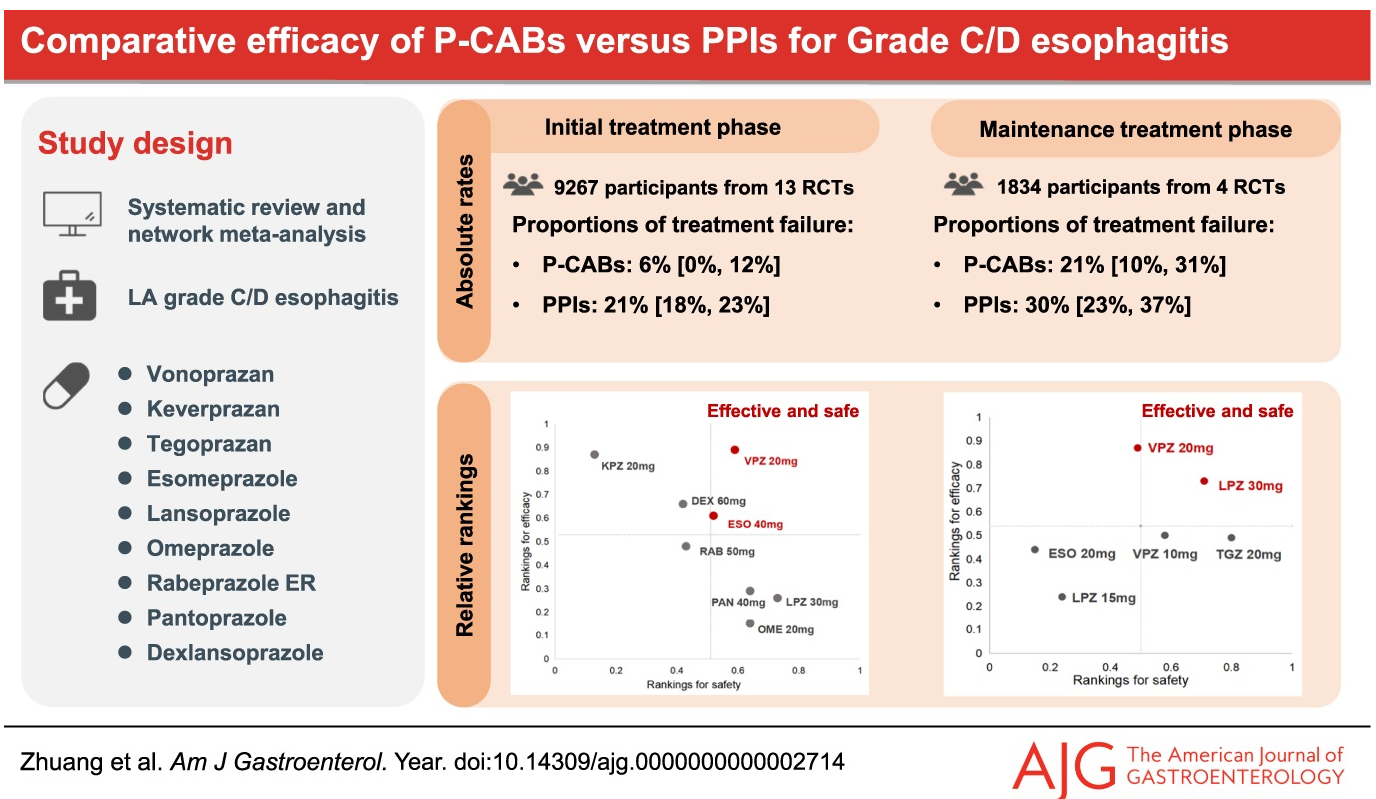
Q Zhuang et al. The American Journal of Gastroenterology  :10.14309/ajg.0000000000002714, March 22, 2024. Comparative Efficacy of P-CAB vs Proton Pump Inhibitors for Grade C/D Esophagitis: A Systematic Review and Network Meta-analysis

In this meta-analysis, 24 studies met criteria. Key findings:

  • Vonoprazan (20 mg) had the lowest rates of treatment failure: 6% in the initial treatment phase, and 21% in the maintenance phase of healing of grade C/D esophagitis
  • Vonoprazan had similar risk of incurring adverse events, severe adverse events, and withdrawal to drug when compared with PPI.

Related blog posts:

Why Vonoprazan Is More Effective For Erosive Esophagitis Than a Proton Pump Inhibitor

L Laine et al. Gastroenterol 2023; 164: 61-71. Open Access! Vonoprazan Versus Lansoprazole for Healing and Maintenance of Healing of Erosive Esophagitis: A Randomized Trial

Editorial: DA Katzka, PJ Kahrilas. Gastroenterol 2023; 164: 14-15. Open Access! Potassium-Competitive Acid Blocker Suppression of Gastric Acid in Erosive Esophagitis: Is Stronger and Longer Better?

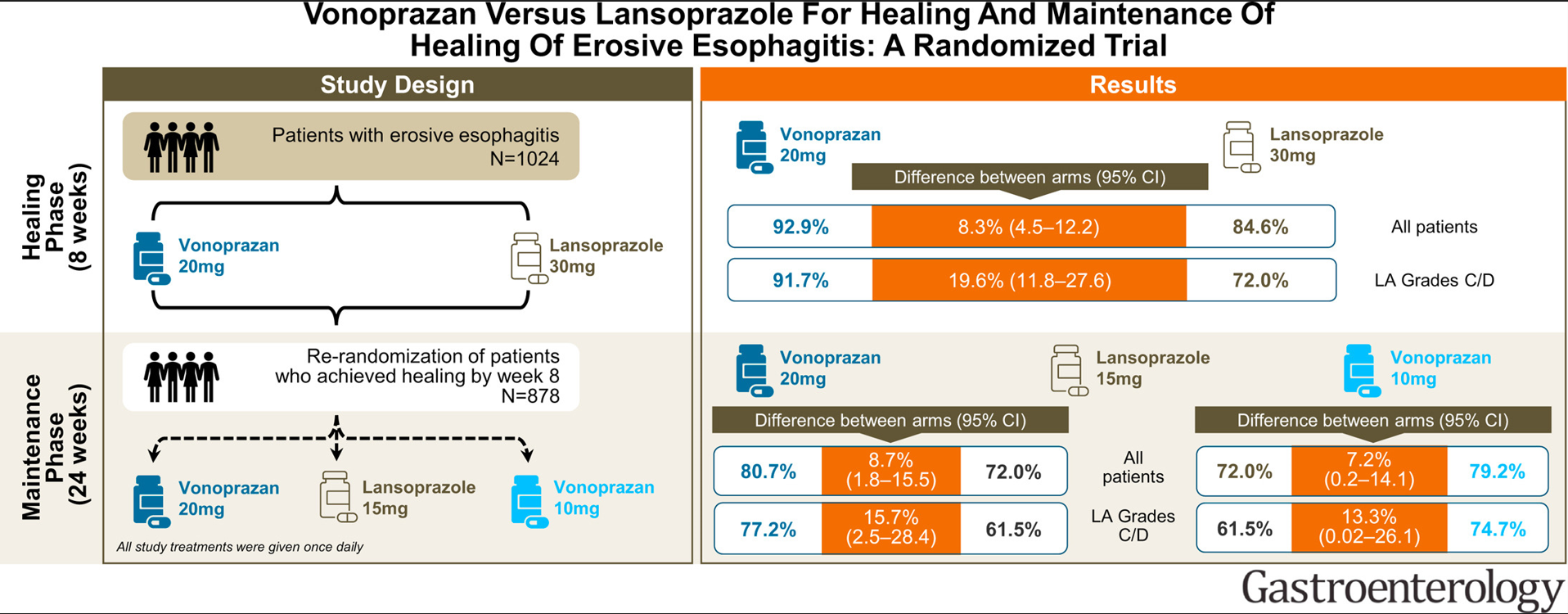
Methods: Adults with erosive esophagitis were randomized to once-daily vonoprazan, 20 mg, or lansoprazole, 30 mg, for up to 8 weeks (healing phase, n=1024). Patients with healing were rerandomized to once-daily vonoprazan, 10 mg, vonoprazan, 20 mg, or lansoprazole, 15 mg, for 24 weeks (maintenance phase, n=878). 

Key findings: (see graphical abstract)

  • In the healing phase, vonoprazan was noninferior to lansoprazole in the primary analysis and superior on the exploratory analysis of healing: 92.9 vs 84.6% (difference, 8.3%). It is noted that studies in Asian populations found smaller differences in healing between these medications.
  • Vonoprazan had superior healing Los Angeles Classification Grade C/D esophagitis at week 2 (difference, 17.6%)
  • Vonoprazan was superior with regard to maintenance of healing Grade C/D esophagitis (20 mg vs lansoprazole (difference, 15.7%) and 10 mg vs lansoprazole (difference, 13.3%).
  • The entire group maintenance healing rates in this trial were lower than in a prior randomized trial in Japan. In the current study at 24 weeks, vonoprazam 20 mg, vonprazan 10 mg and lansoprazole 15 mg had maintenance of healing in 81%, 79%, and 72% respectively compared with 98%, 95%, and 83% in the trial from Japan

The editorial provides a lot of insight into this now FDA-approved therapy for H pylori. Vonoprazan’s application to expand FDA approval is underway: FDA Accepts Review of NDA for Vonoprazan From Phathom Pharmaceuticals (June 3, 2022).

Key points from editorial:

  • Among their shortcomings, PPIs are far from perfect in healing high-grade (Los Angeles class C and D) esophagitis, resulting in the common practice of twice-daily dosing. Furthermore, up to 35% of patients with Los Angeles class C and D esophagitis remain unhealed at 8 weeks, even with twice-daily PPI use.5,6
  • Mechanism of action: Vonoprazan is a potassium-competitive acid blocker (PCAB) . It, reversibly binds to the α-subunit of H+, K+-ATPase to compete with potassium binding. Vonoprazan is acid stable, eliminating the need for enteric coating and allowing for rapid onset of action. Because it achieves high and sustained (half-life is approximately 9 hours) concentrations rapidly in the parietal cell secretory canaliculi, maximal acid inhibition is achieved quickly after a single dose.
  • Because it is not metabolized through the hepatic CYP2C19 or CYP3A4 enzymes, vonoprazan is much less prone to drug–drug interactions.
  • Safety: For the issue of long-term adverse events associated with PPI use…, the proposed mechanisms for these primarily relate to the effects of chronic acid inhibition and/or hypergastrinemia, and there is no reason to think that a PCAB would be any different than a PPI.

My take: There are a lot of individuals with ongoing heartburn & reflux despite PPI treatment. It is likely that vonoprazan will be targeted for patients with more severe erosive esophagitis and refractory symptoms. It is likely that the cost to U.S. patients will be substantially higher than the cost of PPIs.

Related blog posts:

Understanding FDA Approval of Vonoprazan-Based Therapies for Helicobacter Pylori

Pharmacy Times (5/4/22): FDA Approves Pair of Vonoprazan Treatments for Helicobacter Pylori Infection

“The (FDA) has approved 2 vonoprazan-based medications for the treatment of Helicobacter pylori (H. pylori) infection.

Phathom Pharmaceuticals announced the approvals of both the Voquezna Triple Pak (vonoprazan, amoxicillin, clarithromycin) and Voquezna Dual Pak (vonoprazan, amoxicillin) based on positive safety and efficacy data from the phase 3 PHALCON-HP trial.”

WD Chey et al. Gastroenterol 2022; 163: 608-619. Open Access! Vonoprazan Triple and Dual Therapy for Helicobacter pylori Infection in the United States and Europe: Randomized Clinical Trial

Key findings from this randomized, controlled trial with treatment-naive 1046 adults:

  • In all patients, vonoprazan triple and dual therapy were superior to lansoprazole triple therapy (80.8% and 77.2%, respectively, vs 68.5% (both superior)
  • In patients with clarithromycin resistance, vonoprazan triple therapy was effective in 65.8%, dual therapy in 69.6%, vs lansoprazole triple therapy 31.9% (both superior)
  • Vonoprazan increases intragastric pH rapidly “and maintains it to a greater degree than PPI; this has been associated with higher H pylori eradication rates” (in prior studies as well)

The associated editorial: CA Fallone (Open Access!) The Current Role of Vonoprazan in Helicobacter pylori Treatment

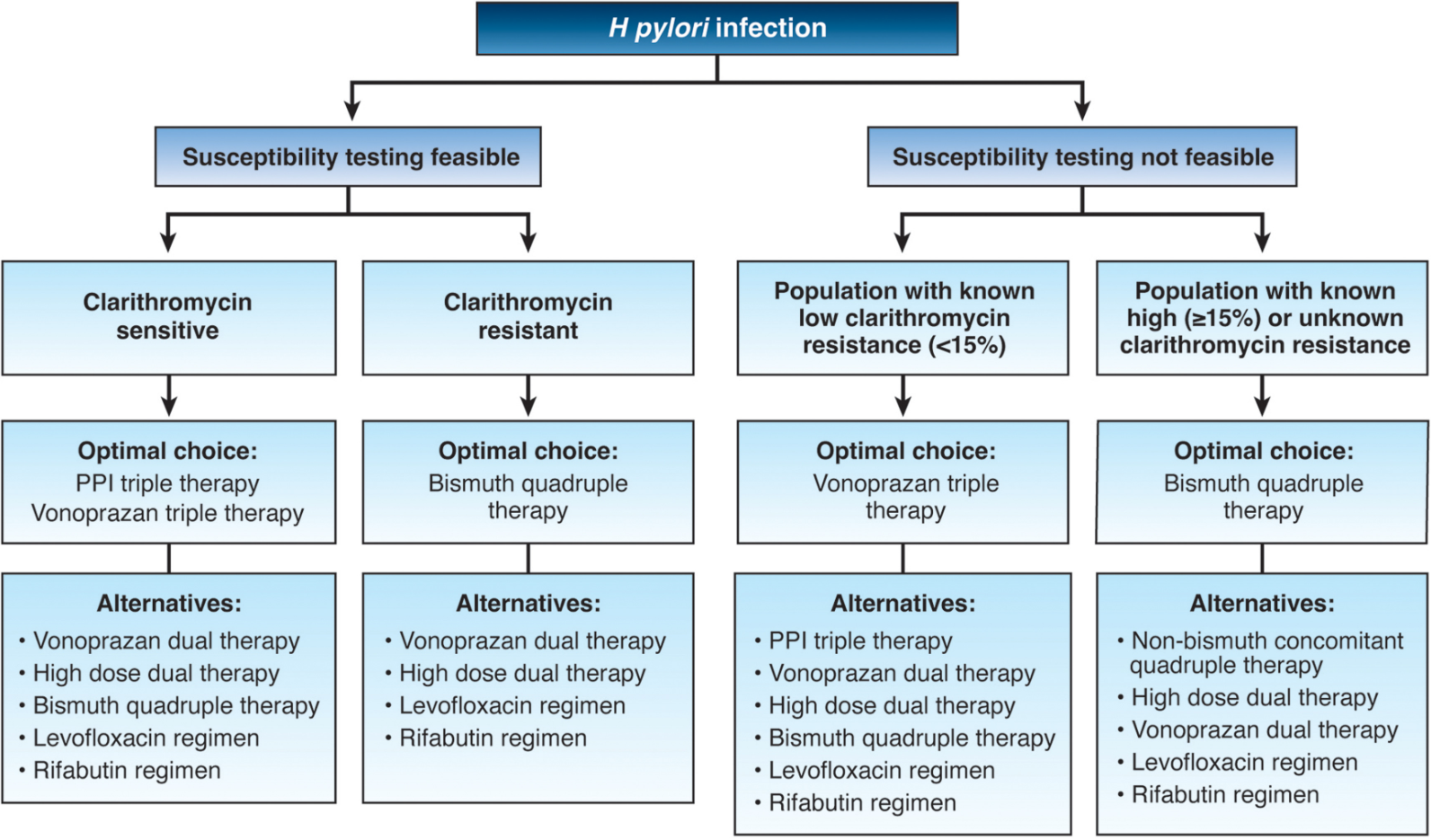
Based on this new information, the author proposes the treatment algorithm below and notes that “the role of increased acid suppression by PPI substitution with vonoprazan should be examined in other H pylori regimens.” The author favors bismuth quadruple therapy in those with clarithromycin resistance as non-bismuth quadruple therapy utilizes an unnecessary antibiotic (clarithromycin).

Other points:

  • Metronidazole resistance is fairly common, but bismuth quadruple therapy can overcome much of the metronidazole resistance
  • Levofloxacin resistance is quite high in certain regions and should only be used with caution, given recent warnings from the US Food and Drug Administration of aortic rupture in susceptible individuals
  • Rifabutin can cause some bone marrow suppression

My take: With the more widespread availability of susceptiblity testing (beyond clarithromycin), I anticipate more targeted treatments. At the same time, vonoprazan-based treatments are likely to be important in increasing eradication rates.

Related blog posts:

Disclaimer: This blog, gutsandgrowth, assumes no responsibility for any use or operation of any method, product, instruction, concept or idea contained in the material herein or for any injury or damage to persons or property (whether products liability, negligence or otherwise) resulting from such use or operation. These blog posts are for educational purposes only. Specific dosing of medications (along with potential adverse effects) should be confirmed by prescribing physician.  Because of rapid advances in the medical sciences, the gutsandgrowth blog cautions that independent verification should be made of diagnosis and drug dosages. The reader is solely responsible for the conduct of any suggested test or procedure.  This content is not a substitute for medical advice, diagnosis or treatment provided by a qualified healthcare provider. Always seek the advice of your physician or other qualified health provider with any questions you may have regarding a condition.