Unknown's avatar

About gutsandgrowth

I am a pediatric gastroenterologist at GI Care for Kids (previously called CCDHC) in Atlanta, Georgia. The goal of my blog is to share some of my reading in my field more broadly. In addition, I wanted to provide my voice to a wide range of topics that often have inaccurate or incomplete information. Before starting this blog in 2011, I would tear out articles from journals and/or keep notes in a palm pilot. This blog helps provide an updated source of information that is easy to access and search, along with links to useful multimedia sources. I was born and raised in Chattanooga. After graduating from the University of Virginia, I attended Baylor College of Medicine. I completed residency and fellowship training at the University of Cincinnati at the Children’s Hospital Medical Center. I received funding from the National Institutes of Health for molecular biology research of the gastrointestinal tract. During my fellowship, I had the opportunity to work with some of the most amazing pediatric gastroenterologists and mentors. Some of these individuals included Mitchell Cohen, William Balistreri, James Heubi, Jorge Bezerra, Colin Rudolph, John Bucuvalas, and Michael Farrell. I am grateful for their teaching and their friendship. During my training with their help, I received a nationwide award for the best research by a GI fellow. I have authored numerous publications/presentations including original research, case reports, review articles, and textbook chapters on various pediatric gastrointestinal problems. In addition, I have been recognized by Atlanta Magazine as a "Top Doctor" in my field multiple times. Currently, I am the vice chair of the section of nutrition for the Georgia Chapter of the American Academy of Pediatrics. In addition, I am an adjunct Associate Clinical Professor of Pediatrics at Emory University School of Medicine. Other society memberships have included the North American Society for Pediatric Gastroenterology Hepatology and Nutrition (NASPGHAN), American Academy of Pediatrics, the Food Allergy Network, the American Gastroenterology Association, the American Association for the Study of Liver Diseases, and the Crohn’s and Colitis Foundation. As part of a national pediatric GI organization called NASPGHAN (and its affiliated website GIKids), I have helped develop educational materials on a wide-range of gastrointestinal and liver diseases which are used across the country. Also, I have been an invited speaker for national campaigns to improve the evaluation and treatment of gastroesophageal reflux disease, celiac disease, eosinophilic esophagitis, hepatitis C, and inflammatory bowel disease (IBD). Some information on these topics has been posted at my work website, www.gicareforkids.com, which has links to multiple other useful resources. I am fortunate to work at GI Care For Kids. Our group has 17 terrific physicians with a wide range of subspecialization, including liver diseases, feeding disorders, eosinophilic diseases, inflammatory bowel disease, cystic fibrosis, DiGeorge/22q, celiac disease, and motility disorders. Many of our physicians are recognized nationally for their achievements. Our group of physicians have worked closely together for many years. None of the physicians in our group have ever left to join other groups. I have also worked with the same nurse (Bernadette) since I moved to Atlanta in 1997. For many families, more practical matters about our office include the following: – 14 office/satellite locations – physicians who speak Spanish – cutting edge research – on-site nutritionists – on-site psychology support for abdominal pain and feeding disorders – participation in ImproveCareNow to better the outcomes for children with inflammatory bowel disease – office endoscopy suite (lower costs and easier scheduling) – office infusion center (lower costs and easier for families) – easy access to nursing advice (each physician has at least one nurse) I am married and have two sons (both adults). I like to read, walk/hike, bike, swim, and play tennis with my free time. I do not have any financial relationships with pharmaceutical companies or other financial relationships to disclose. I have helped enroll patients in industry-sponsored research studies.

CCFA: Updates in Inflammatory Bowel Disease 2017 (Part 4)

Our local CCFA chapter provided a useful physician CME meeting.  The following are my notes. My notes may include some errors in transcription and errors of omission.

Ashish Patel  -Updates in Pediatric Inflammatory Bowel Disease Treatments

Key points:

  • Top-down or step-up models are outdated –use appropriate agent for each patient
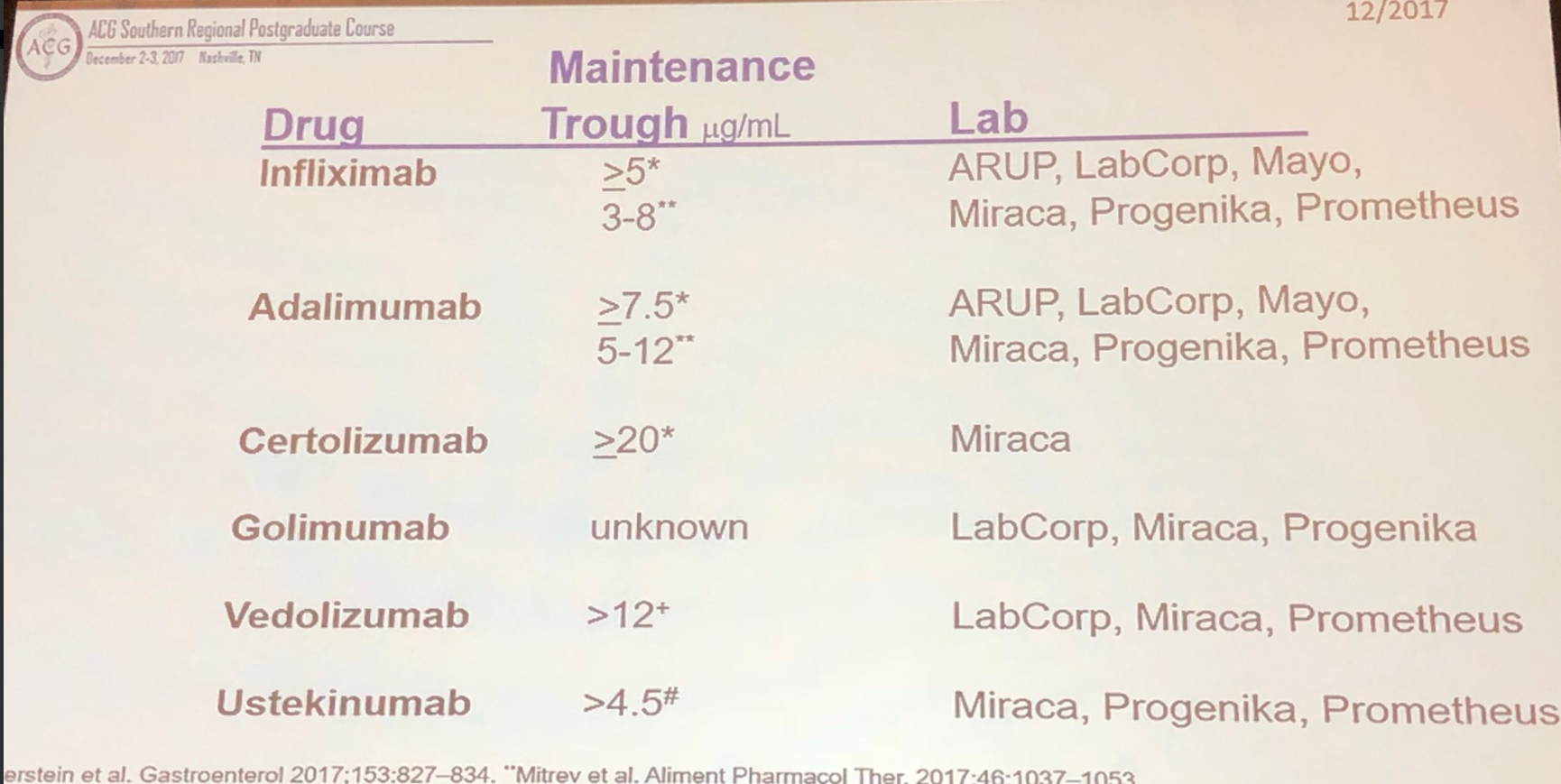
  • Discussed therapeutic drug monitoring.  In pediatrics, checking infliximab (IFX) level after 14 weeks is recommended by ICN per Dr. Patel.
  • Veolizumab -no pediatric FDA indication yet..  Alpha4Beta7 integrin blocker –blocks recruitment of WBC
  • Stelara -off label in pediatrics.  Seems to be helpful for patients who have psoriasis on TNF agents.
  • Exclusive enteral nutrition (EEN) like medical therapies are therapies and not cures.  It has to be maintained to be effective.

Disclaimer: These blog posts are for educational purposes only. Specific dosing of medications (along with potential adverse effects) and changes in diet should be confirmed by prescribing physician.  This content is not a substitute for medical advice, diagnosis or treatment provided by a qualified healthcare provider. Always seek the advice of your physician or other qualified health provider with any questions you may have regarding a condition.

Disappointing Results from Small Study of Specific Carbohydrate Diet

A recent retrospective study (GT Wahbeh et al. JPGN 2017; 65: 289-92) examined seven patients who were receiving a modified specific carbohydrate diet (SCD).  While this is a small stud,y there are several lessons in this report and the thoughtful editorial (pg 266-67): “Alas, Who and What Can We Trust? Patients, Parents, Surrogate Markers of the Specific Carbohydrate Diet” by Stan Cohen (one of my partners).

The participants in the study had a median age of 11 yrs and received their mSCD for a median duration of 26 months.  Key finding: despite lack of symptoms, all subjects had ongoing active disease on endoscopy; the majority had normal biomarkers: CRP, albumin, and hematocrit and only mildly elevated calprotectin (median 201, range 65-312).

Dr. Cohen notes the following lessons from this study:

  • “First, the SCD is very restrictive and young patients often find it difficult to perpetuate”
  • “Families are often presumptive about how well they are doing. Significant signs of malnutrition and lack of weight gain may be ignored.”
  • Patients often “underreport their symptoms and overrerport their adherence.”
  • “Wahbeh et al have taught us…about the lack of effectiveness of a modified SCD [and]…we should use caution in gauging and interpreting patient-reported outcomes and surrogates as well.”

My take: The modified SCD appears to be only partly effective and how this impacts the long-term outcomes for patients is not clear.

Related article: A McCombie. JPGN 2017; 65: 311-13. Summer camp for IBD.  This study of 36 participants: “most reported that camp improved their confidence (86%), acceptance (83%), and overall quality of life (75%). 72% endorsed meeting their fellow campers as the most beneficial experience.  My take: Camp helps ease social isolation associated with a diagnosis of pediatric IBD.

Related blog posts:

Biosimilars: “The Horse is Out of the Barn”

A recent study (J Sieczkowska-Golub et al. JPGN 2017; 65: 285-88) reports on 36 pediatric patients who received CT-P13, an infliximab biosimilar.  Key findings:

  • 34 of 36 (94.4%) completed induction therapy
  • Clinical response based on pCDAI was noted in 31 of 36 (86%)
  • Clinical remission based on pCDAI was noted in 24 of 36 (67%)

The authors concluded that the induction was effective and similar to the reference infliximab.

In the accompanying editorial, Dr. de Ridder and Dr. Winter make some crucial observations:

  • “Although the study…is important, the number of subjects in this study are low and follow-up is short (14 weeks).”
  • “It is still a large step from adults to children.” Children may have important differences in IBD pathogenesis and pharmocokinetics may not be the same as in adults.
  • The studies supporting CT-P13 (Planetas, Planetra, and NOR-SWITCH) were studies of adult patients.
  • “The data in children are scarce.” However, “the horse has already left the barn. In many European countries both naive pediatric patients with IBD and patients who have switched from the originator are treated with CT-P13.”
  • While “caution is still needed,” the lower costs of CT-P13 will “lead to wider availability.”

My take: We still have a lot to learn.  Until more studies are available, switching stable patients could increase risk of losing response.

Related blog posts:

Eiffel Tower

FDA Warning for Obeticholic Acid

Obeticholic acid was approved last year as a treatment for primary biliary cholangitis (PBC). Now (9/21/17), the FDA warns of 19 deaths associated with Obeticholic Acid, particularly when the medication has been used at higher than recommended dosing.

Link: FDA Warning on Obeticholic Acid

An excerpt:

Nineteen cases of death were identified, of which eight provided information about the patient’s cause of death. The cause of death was reported to be worsening of PBC disease in seven cases, with cardiovascular disease cited in the other case. Seven of these eight cases described patients with moderate to severe decreased liver function who received Ocaliva 5 mg daily, instead of a dose no greater than 10 mg twice weekly as recommended in the label prescribing information for patients with this extent of decreased liver function.

NEJM: Analysis of the Graham-Cassidy Plan

NEJM: The Graham-Cassidy Plan -The Most Harmful ACA-Repeal Bill Yet

An excerpt:

The Graham–Cassidy bill would begin by repealing the individual and employer mandates retroactive to 2016. The Congressional Budget Office (CBO) previously estimated that repeal of the individual and employer mandates would immediately increase the number of uninsured Americans by 15 million or more and increase individual market insurance premiums by 20%…

The Graham–Cassidy formula would shift money from states that expanded Medicaid coverage under the ACA or increased take-up among previously eligible groups to those that did not. It would also shift money from high-cost to low-cost areas…

the bill would permit states to waive the ACA requirements that insurance sold in the individual market cover essential health benefits and that insurers not vary premiums on the basis of health status, thereby restoring the ability of insurers to engage in “medical underwriting” and effectively deny coverage or limit services on the basis of preexisting health condition..

All told, we estimate that under Graham–Cassidy, an additional 21 million people would be without insurance coverage in 2020 and later years, and this figure may be conservative..

It replaces effective coverage programs with a block grant that is inadequate in the aggregate and blind to variations in local costs, shifting considerable risk onto states. It would slash the program that provides health insurance coverage for the poor. 


CCFA: Updates in Inflammatory Bowel Disease 2017 (part 3)

More from our recent CCFA Conference.  My notes may include some errors in transcription and errors of omission.

Subra Kugasthasan -RISK Updates

Dr. Kugasthasan’s lecture was excellent.  He reviewed the typical clinical course of Crohn’s disease; in most patients, it has a remitting and relapsing course.  The goal of the CCFA-sponsored RISK study was to determine how early approaches to treatment affect long-term outcomes.  There is likely a window of opportunity to more favorably affect natural history of the disease. In addition, the goal is to determine whether there are predictive markers of severe disease course.  This prospective study analyzed 913 patients.  In this cohort, 835 remained with B1 (inflammatory) phenotype and 90 developed either B2 (stricturing) phenotype or B3 (penetrating) phenotype.

RISK Study AbstractPrediction of complicated disease course for children newly diagnosed with Crohn’s disease: a multicentre inception cohort study (S Kugathasan et al. Lancet 2017; 389: 17108. DOI: http://dx.doi.org/10.1016/S0140-6736(17)30317-3)

Key findings:

  • Early TNF therapy reduced the likelihood of penetrating (B3) but not stricturing (B2) disease
  • Based on analysis of genetic expression at baseline, individuals who are likely to develop B2 or B3 disease can be identified. This assay may be available clinically in a few years

Jahnavi Srinivasan -Multi-Disciplinary Approach to IBD A Surgical Perspective

  • Teeuwen PH et al study spans a long period and there have been many changes since that time. The study’s 9% 30-day mortality rate is very high (current Whipple 30-day mortality ~2%)
  • 3-stage surgery most common now for ulcerative colitis due to sicker patients who now need operation
  • Harder to differentiate UC and CD
  • Try to get patients off steroids; this is a key factor in surgical complications. Nutritional support may be helpful though some effects may be mediated by helping with steroid tapering

Disclaimer: These blog posts are for educational purposes only. Specific dosing of medications (along with potential adverse effects) and changes in diet should be confirmed by prescribing physician.  This content is not a substitute for medical advice, diagnosis or treatment provided by a qualified healthcare provider. Always seek the advice of your physician or other qualified health provider with any questions you may have regarding a condition.

CCFA: Updates in Inflammatory Bowel Disease 2017 (part 2)

Douglas Wolf -New Treatments and New Strategies

  • More proactive approach is recommended; this leads to less surgery, less hospitalization, and less antibodies to infliximab
  • Risk assessment should guide treatment; higher risk indicates a need for more aggressive therapy
  • Higher doses of anti-TNFs appropriate in some cases (eg weekly Humira)
  • For distal colitis/proctitis, budesonide foam is an alternative to cortifoam
  • Azathioprine monotherapy has a low response rate
  • Combination therapy may not be needed if good IFX levels obtained.  Though, it is possible that development of antibodies precludes achieving good levels; thus, combination therapy may increase likelihood of good levels by reducing antibody formation, particularly earlier in course
  • Vedolizumab can be shortened to q4weeks if not improving.
  • CALM study: symptom based management compared to management based treat-to-target relying on CRP, and calprotectin. Improved outcomes with treatment based on CRP, calprotectin in addition to symptoms.
  • Tofacitinib –will be available in 2018 for ulcerative colitis

Chiristina Ha -Treatment Strategies in the Elderly

Dr. Ha referenced Dr. Sandborn who recently stated that combination therapy should be first-line therapy in moderate-to-severe disease –though this may be different in elderly patients.

  • Older age –increases mortality risk
  • Immunosenescence -relative immunodeficiency state associated with aging
  • Pharmokinetic changes with aging
  • Increased susceptibility to drug toxicity (eg. Renal, hepatic)
  • Older patients usually excluded from therapeutic trials
  • Polypharmacy is more common

Treatment:

  • Frequent strategy in elderly has been using 5-ASAs and steroids, even in moderate-to-severe disease. This has been due to increased fear of adverse events with IMM and anti-TNFs.  However, using data from rheumatoid arthritis, older patients’ biggest risk is steroids.
  • Thiopurines have unfavorable risk profile in the elderly.
  • Anti-TNFs are not as effective in the elderly
  • Preliminary data on vedolizumab -very limited data, may work better in older patients
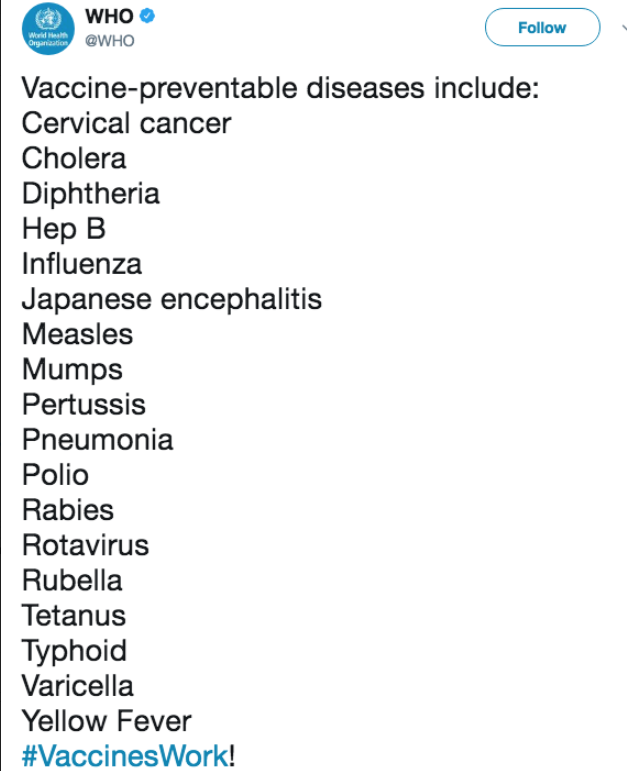
  • Most common infections by be reduced considerably by immunizations. (eg.  ,bacterial pneumonia, herpes zoster)
  • Correct anemia, nutritional deficiencies

Disclaimer: These blog posts are for educational purposes only. Specific dosing of medications (along with potential adverse effects) and changes in diet should be confirmed by prescribing physician.  This content is not a substitute for medical advice, diagnosis or treatment provided by a qualified healthcare provider. Always seek the advice of your physician or other qualified health provider with any questions you may have regarding a condition.

CCFA: Updates in Inflammatory Bowel Disease 2017 (part 1)

Our local CCFA chapter provided a useful physician CME meeting.  The following are my notes/picutres. My notes may include some errors in transcription and errors of omission.

Nancy McGreal  -Complementary Therapies in IBD

Key points:

  1. Curcumin and VSL#3 are likely helpful
  2. Most complementary and alternative medicine (CAM) therapies are not inherently dangerous, but most are unproven
  3. Biggest risks: Nonadherence rates are increased in patient taking CAM.
  4. Despite the low overall risk of most CAM treatments, Dr. McGreal cautioned against the following:
    1. Cannabis is NOT recommended due to neurocognitive effects. It may mask active disease.
    2. FMT investigational. There are unknown risks but FMT could cause metabolic problems. Donor selection is important and we still have a lot to learn.

This final slide is from CCFA about how to order more patient information brochures.

Disclaimer: These blog posts are for educational purposes only. Specific dosing of medications (along with potential adverse effects) and changes in diet should be confirmed by prescribing physician.  This content is not a substitute for medical advice, diagnosis or treatment provided by a qualified healthcare provider. Always seek the advice of your physician or other qualified health provider with any questions you may have regarding a condition.

Physician Burnout Spreading (Part 2)

A recent article (JC Anderson et al. Am J Gastroenterol 2017; 112:1356–1359; doi: 10.1038/ajg.2017.251; published online 8 August 2017) also addresses the topic of physician burnout with a focus on gastroenterology, link: Strategies to Combat Physician Burnout

Excerpts:

  • Physician burnout has reached epidemic proportions, with 54.4% of physicians reporting at least one burnout symptom in 2014, an increase from 45.5% 3 years earlier
  • A Medscape survey in 2016 showed a burnout rate among gastroenterologists of 49%, up from 41% the year before
  • Key drivers of burnout are excessive workload, an inefficient environment and
    inadequate support, problems with work life integration, loss of value and meaning in work, and the loss of autonomy, flexibilityand control in work 
    The cost of burnout is high, as these physicians are more likely to leave medicine, retire early, make more medical errors, and have lower patient satisfaction scores

Combating Physician Burnout:

  • Leadership : Having good leaders affects the well-being ansatisfaction of physicians in health care organizations
  • Reducing Administrative tasks -scribes, mid-level providers 
  • Control over workflow and work hours
  • “Peer support is crucial, nothing else can replace it.
  • “Physicians who spend at least 20% otheir total effort in an activity that they find most meaningful are at a lower risk for burnout”
  • Self-care: Stress management and mindfulness can reduce burnout

Related blog posts:

Physician Burnout Spreading (Part 1)

Last week, I went to our integrated health care network meeting.  Among the topics was physician burnout.  Lately, this is a “hot” topic with a lot of publicity regarding this increasingly-common problem.

At our meeting, some of the keep points -noted below & in the slides that follow:

  • Physician burnout rate is increasing based on most recent studies
  • Many physicians, 42%, would not choose medicine as their career today
  • Manifestations of burnout include “compassion” fatigue

Physicians may be more at risk for burnout due to the following:

  • Frequent personality characteristics: workaholics, accustomed to delayed gratification
  • Practice aspects: long hours, huge responsibilities

How to Prevent Burnout:

  • Lower stress –recharge with outside activities: hobbies, excursions, charitable work, physical activities, and emotional/spiritual
  • Resources: Stop Physician Burnout, Burnout Prevention Matrix  both by  Dike Drummond


Related blog post: Quality Care = Work Satisfaction for Physicians

Related blog posts: