Hepatitis C Reactivation with Chemotherapy

There are a lot of reports describing the potential of adverse outcomes due to hepatitis B reactivation with chemotherapy as well as with treatment of hepatitis C; in addition, there are recommendations to prevent this occurrence (see below). With hepatitis C virus (HCV), the issue of reactivation has not garnered the same type of concern.  A recent study (HA Torres et al. Hepatology 2018; 67: 36-47) indicates that HCV can reactivate with chemotherapy, though this may not result in adverse outcomes. The authors prospectively followed HCV-infected patients receiving cancer therapy from 2012-16.  Reactivation was defined as HCV RNA increase >1 log over baseline and hepatic flare as an increase in ALT >3 times ULN.

Key finding:

  • “Reactivation occurred in 23 (23%)…No patient with reactivation experienced liver failure or liver-related death within 36 weeks after initiation of cancer treatment…most had an unremarkable clinical course.”

Related articleM Persico et al. Hepatology 2018; 67: 48-55.  In the Persico study, the authors examined the association of HCV with non-Hodgkin’s lymphoma. In this observational study, all patients underwent antiviral therapy with sofosbuvir/ledipasvir and chemotherapy.  Compared to a historical control group, the antiviral treatment group had similar overall survival but a significantly higher disease-free survival after 52 weeks.  Thus, the authors note that antiviral treatment combined with chemotherapy, “was shown to be safe and effective in influencing remission of aggressive lymphomas in HCV patients.”

Related blog posts:

View from Bright Angel Trail

Second-Line Treatments for Autoimmune Hepatitis

A recent retrospective study (C Efe et al. Clin Gastroenterol Hepatol 2017; 15: 1950-6) examined both mycophenolate mofetil (MMF, n=121) and tacrolimus (TAC, n=80) as second-line therapies for autoimmnue hepatitis with a median followup of 62 months. Patients were divided into two groups. The first group (n=108) had a complete response to steroids/azathioprine but had side effects.  The second group (n=93) were nonresponders to steroids/azathioprine. Overall, the cohort examined patients as young as 7 years and as old as 76 years.

Key findings:

  • No significant difference in complete response noted in 69.4% of MMF-treated compared with 72.4% in TAC-treated patients.
  • In group 1 patients (responders to azathioprine), MMF and TAC maintained biochemical remission in 91.9% and 94.1% respectively.
  • In group 2 (prior nonresponders), TAC-treated patients had a complete response rate of 56.5% compared with 34% for MMF-treated patients (P=.029).
  • Liver-related deaths and transplantation occurred with similar rates: MMF 13.2% compared with TAC 10.3%.  With each treatment, 10 patients withdrew from treatment due to side effects.

My take: In this study, both agents were effective in those who changed due to side effects.  However, tacrolimus-treated patients had a higher response among prior nonresponders.

Related blog posts:

Bright Angel Trail, Grand Canyon

 

Glecaprevir-Pibrentasvir for Hepatitis C Infections

Before discussing one of the newest therapies for Hepatitis C, I wanted to give a shout out to Barbara McElhanon who along with Joanna Lomas-Mevers provided a quick update to our group on their important research to improve the management of encopresis in children with autism spectrum disorders.

Last August, the FDA announced approval of glecaprevir-pibrentasvir as a pangenomic treatment for Hepatitis C (From blog: Eight Week Pangenomic HCV Treatment Approved).

However, it is only in this past two weeks that some of the data from two large randomized, open-label, multicenter trials have been published: Z Zeuzem et al. NEJM 2018; 378: 354-69.  In total, 1208 patients were treated in the “ENDURANCE-1” and “ENDRUANCE-3” trials.

Key findings:

  • For genotype 1-infected patients, glecaprevir-pibrentasvir resulted in a sustained virologic response rate (at week 12) of 99.1% in the 8-week group and 99.7% in the 12-week group.
  • For genotype 3, glecaprevir-pibrentasvir resulted in a sustained virologic response rate (at week 12) of 95% with both 8-week and 12-week treatment.  A comparison group of sofosbuvir-daclatasvir (12 week treatment) resulted in a sustained virologic response rate (at week 12) of 97%.
  • Serious adverse events were rare.  There were three patients who died during the post-treatment period: two from heroin overdoses and one from ethanol intoxication/methadone toxicity.  Headache and fatigue were the most common reported adverse events.
  • There were no relapses among HCV-1-infected patients who were treated for 8 weeks

In addition to these studies, “recent phase 3 trials have shown that an 8-week regimen of glecaprevir-pibrentasvir in patients without cirrhosis” yielded response of 98% for genotype 2 and 93% for genotypes 4, 5, and 6.

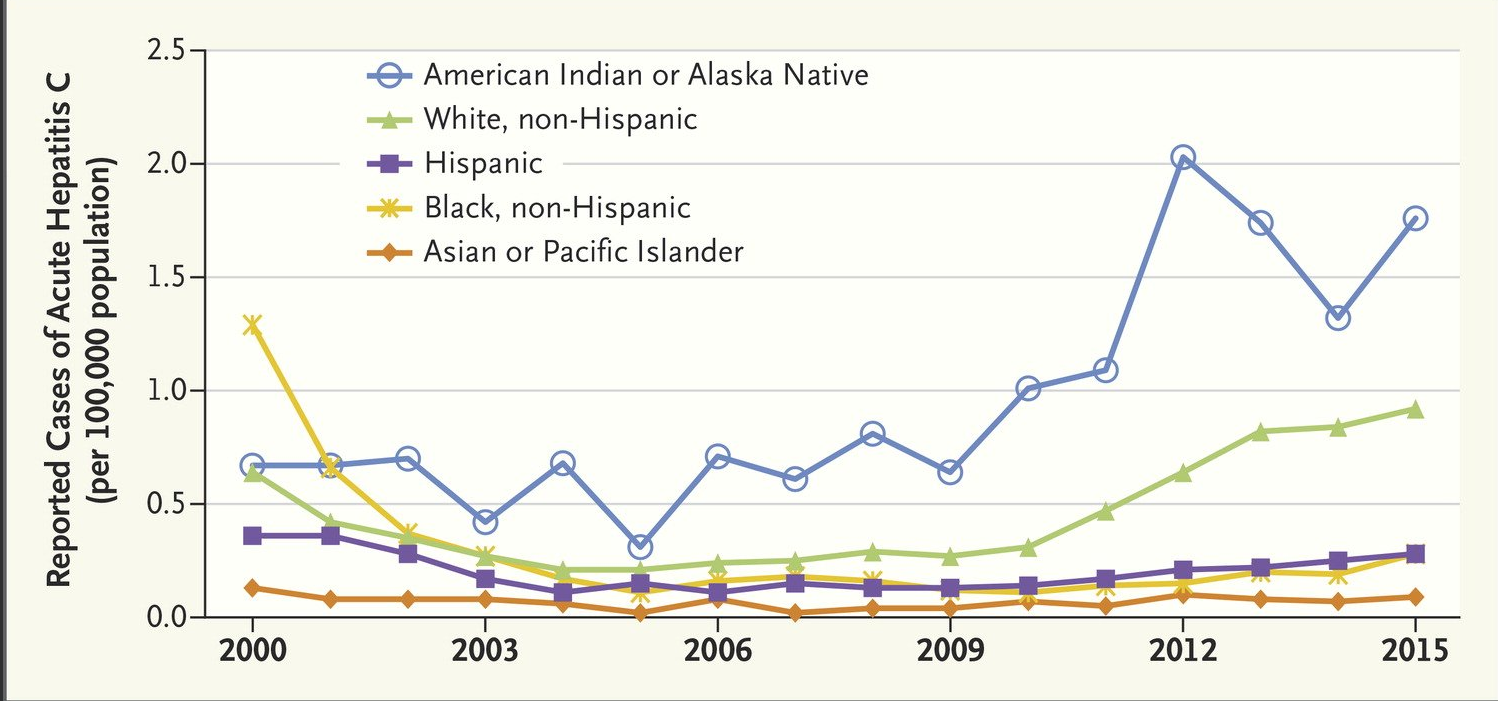
My take: These studies indicate that glecaprevir-pibrentasvir is an effective 8-week therapy for patients with HCV infection.  Despite this terrific advance, unless we find a way to address the opioid crisis which is triggering an HCV epidemic, I am not optimistic that there will be an improvement in the number of individuals with HCV infection.

Related blog posts:

NAFLD Guidance from American Association for the Study of Liver Diseases

Link: AASLD Guidance for the Diagnosis and Management of Nonalcoholic Fatty Liver Disease

This guidance provides a 2018 review of NAFLD and current diagnostic/management recommendations in both adults and children.  Some points from this practice guidance:

  • “Liver-related mortality is the second or third cause of death among patients with NAFLD.” Cardiovascular disease remains the number one and cancer-related mortality is in the top three.
  • “Routine screening for NAFLD in high-risk groups attending primary care, diabetes, or obesity clinics is not advised at this time because of uncertainties surrounding diagnostic tests and treatment options.” Likewise, screening of family members is not recommended.
  • In children: “Because of a paucity of evidence, a formal recommendation cannot be made with regard to screening for NAFLD in children with overweight and obesity.”
  • In patients undergoing evaluation with suspected NAFLD, the authors specifically recommend checking ferritin, iron saturation, and autoantibodies that could indicate autoimmune liver disease.
  • In patients with suspected NAFLD, the authors recommend evaluation for comorbities including dyslipidemia, diabetes, hypothyroidism, polycystic ovary syndrome, and sleep apnea.
  • “Liver biopsy should be considered in patients with NAFLD who are at increased risk of having…advanced fibrosis” and in “whom competing etiologies…cannot be excluded without a liver biopsy.”
  • Pharmacologic therapies are not recommended in those without biospy-proven NASH and fibrosis.  Specifically, the authors suggest consideration of pioglitazone and vitamin E and recommend against metformin, GLP-1 agonists, omega-3 fatty acids, and ursodeoxycholic acid.
  • “Weight loss (7%-10%) is needed to improve the majority of histopathological features of NASH.”
  • In patients with cirrhosis due to NASH, screening for varices is recommended and consideration of screening for HCC.

My take: This practice guidance is quite reasonable.  At this time, more focus on systemic measures to counter overweight and obesity is crucial.  Pharmacologic therapies for NAFLD will need to be effective for the cardiovascular, metabolic, and liver-related problems.

Related blog posts:

Bright Angel Trail, Grand Canyon

Silymarin for Nonalcoholic Steatohepatitis

A recent study (CW Kheong et al. Clin Gastroenterol Hepatol 2017; 15: 1940-9) examined the use of silymarin (milk thistle) in a randomized, placebo-controlled, double-blind trial for nonalcoholic steatohepatitis (NASH). Patients (n=49) who were assigned to silymarin received 700 mg three times a day for 48 weeks; there were 50 patients assigned to placebo..

Key findings: 

  • Silymarin did not significantly improve the primary outcome of achieving a lower NAS score by 30% or more; this occurred in 32.7% of the silymarin group vs. 26.0% in the placebo group.
  • Reduction in fibrosis was noted in the silymarin group (histology drop by 1 point or more): 22.4% compared to 6.0% in the placebo group.

Silymarin has many potential beneficial properties: anti-oxidant, anti-inflammatory, anti-fibrotic, anti-viral, and metabolic functions.

My take: Given the safety of silymarin, if these findings can be confirmed in a larger trial, it would be an exciting advance in the field of fatty liver disease which has no proven pharmacologic therapies.

Related blog post:


Grand Canyon Basin

In the News …Hepatitis A Outbreak in California Linked to Homelessness

From NEJM: Full Link: Hepatitis A Outbreak in California — Addressing the Root Cause

On October 13, 2017, Governor Jerry Brown of California declared a state of emergency in response to a hepatitis A outbreak that began in the homeless population in San Diego. In the past year, more than 649 people throughout California have been infected, 417 have been hospitalized, and 21 have died from hepatitis A, making this the largest outbreak in the United States in the past 20 years. The vast majority of those affected have been homeless. Like two thirds of people who experience homelessness in California, most were unsheltered.

The environmental conditions associated with homelessness — overcrowding in encampments and emergency shelters, exposure to the elements, and limited access to facilities for hygiene and food preparation and storage — facilitate infectious-disease transmission..Infectious diseases are one of many health threats faced by homeless people. Poorly controlled chronic diseases, complications of substance use disorders and smoking, and unintentional injuries and violence are prevalent, difficult to manage, and often severe among homeless adults.

Thinking Clearly About Fecal Microbiota Transplantation & Hepatic Encephalopathy

An intriguing open-label randomized clinical trial (JS Bajaj et al. Hepatology 2017; 66: 1727-38) showed that fecal microbiota transplantation (FMT) was helpful in hepatic encephalopathy.

Background: It is well-recognized that changing bacteria flora can be beneficial in patients with hepatic encephalopathy (HE) associated with cirrhosis.  This has been shown with prior treatments with both lactulose and rifaximin.  It is clear that FMT can improve microbial dysbiosis, particularly in patients with Clostridium difficile.  In this study, the authors randomized 20 patients to either standard of care (SOC) or to SOC & FMT (single enema) with a 5-month follow-up. SOC patients received lactulose and rifaximin.

Key findings:

  • No FMT patients and 5 SOC patients developed further HE
  • Cognition improve in the FMT, but not the SOC, group
  • FMT was associated with increased microbial diversity

Since this was a small study, a bigger trial with longer follow-up is needed.

My take: This intriguing study suggests that FMT, or similar more selected modification of bacterial flora, could be helpful in reducing hepatic encephalopathy among patients with cirrhosis.

Related blog posts:

South Kaibab Trail, Grand Canyon

Nonalcoholic Steatohepatitis Review

A concise and useful review of nonalcoholic steatohepatitis (NASH): AM Diehl, C Day. NEJM 2017; 377: 2063-72

A couple points:

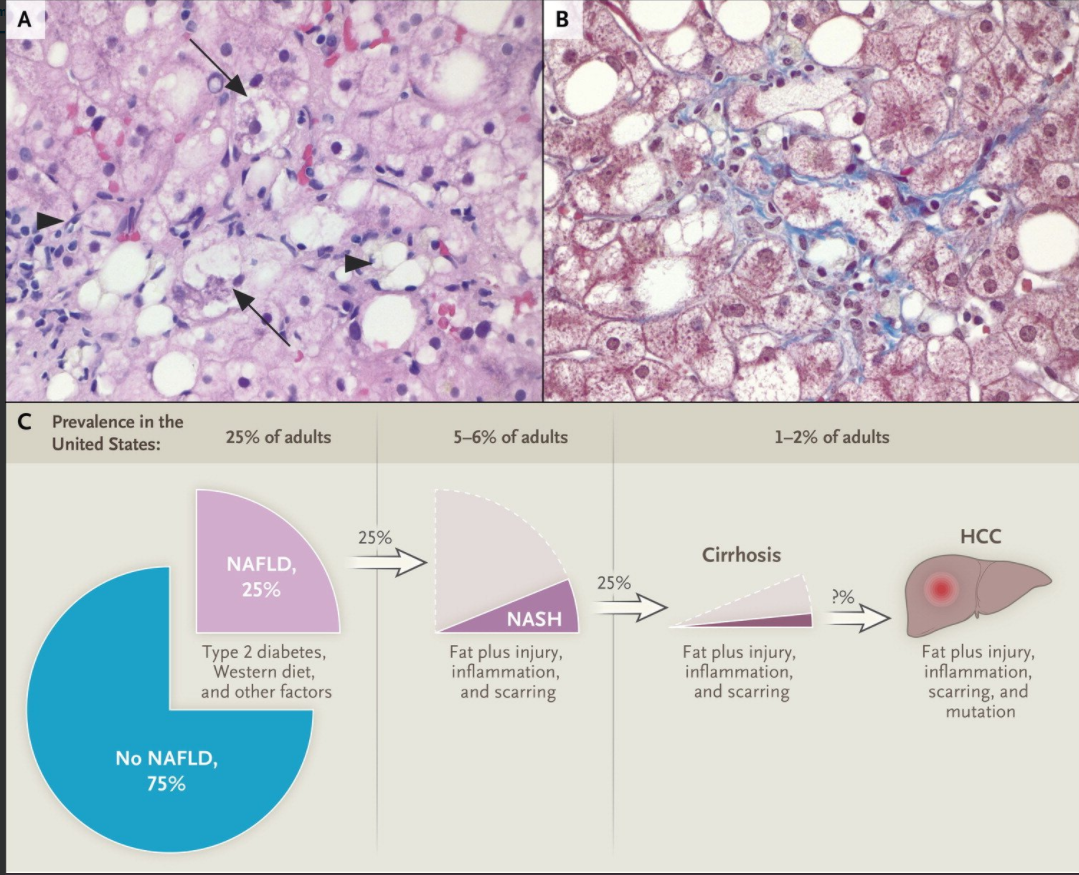
  • About 25% of adults have fatty livers in the absence of excessive alcohol consumption
  • NASH is strongly associated with obesity/overweight which occur in  >80% of patients
  • NASH comorbidities in adults: 72% with dyslipidemia, 44% with type 2 diabetes mellitus
  • In a typical patient with NASH, liver fibrosis progresses “at a rate of approximately one stage per decade, suggesting that F2 fibrosis will progress to cirrhosis within 20 years.” However, there is considerable variability.
  • It is expected that NASH will be the leading reason for liver transplantation by 2020.
  • Cirrhosis related to NASH increases the risk of hepatocellular carcinoma with this occuring in 1-2% per year of patients with cirrhosis.
  • NASH is estimated to cost >$100 billion currently in annual direct medical costs
  • Staging of NASH and differentiation from isoloated steatosis identifies those at high risk for sequelae.
  • In Table 2, the authors list more than 10 pharmacologic agents in phase 2/3 studies

Current lifestyle treatment recommendations (for adults):

  • Lose 7% of body weight if overweight or obese
  • Limit consumption of fructose-enriched beverages
  • Limit consumption of alcohol (no more than 1 drink/day for women and 2 drinks/day for men)
  • Drink two or more cups of caffeinated coffee daily

Related blog entries:


Panels A & B show typical histologic findings: ballooned hepatocytes (arrows), inflammatory infiltrates (arrowheads), and fibrosis Panel C shows the relative distribution of NASH, cirrhosis, and hepatocellular carcinoma in U.S. Adults.

Autoimmune Hepatitis and Hepatocellular Carcinoma

Briefly noted:

A Tansel et al. Clin Gastroenterol Hepatol 2017; 15: 1207-17.  This systematic review and meta-analysis identified 25 studies and 6528 patients examining the relationship between autoimmune hepatitis (AIH) and hepatocellular carcinoma (HCC) .  In these studies the median followup was 8.0 years.  Key findings:

  • The pooled incidence of HCC was 3.06 per 1000 patient-years
  • 92 of 93 patients who had HCC had evidence of cirrhosis before or at the time of their diagnosis

My take: This study demonstrates that AIH patients with cirrhosis are at increased risk for HCC.  In patients with AIH who do not have cirrhosis, there does not appear to be a significant risk of HCC.

Also: Link for Online Resource for Hepatopulmonary Syndrome (Canadian Sponsored site). This site has content for patients and for practitioners, including a useful video.


Related blog posts:

Statin Use for Patients with Cirrhosis

There have been a number of studies suggesting a beneficial effect of statins for individuals chronic liver disease due to HBV infection, HCV infection, and nonalcoholic steatohepatitis. The potential reasons include lower portal hypertension due to increased nitric oxide availability, anti-inflammatory effects through reduction in some cytokines, and antifibrotic effects. In addition, statins may inhibit tumor initiation/hepatocellular carcinoma (HCC).

The background on these prior studies is detailed in a new population-based study (F-M Chang et al Hepatology 2017; 66: 896-907, editorial 697-9) of statins in patients with cirrhosis. In this nested case-control study from Taiwan, the authors examined patients (n=1350) with cirrhosis from 2000 to 2013.  The index cases of cirrhosis were identified among a representative, well-validated general population database of 1,000,000 people.

Key findings:

  • “Statin use decreased the risk of decompensation, mortality, and HCC in a dose-dependent manner.”
  • Risk of decompensation among chronic HBV statin users, HR 0.39
  • Risk of decompensation among chronic HCV statin users, HR 0.51
  • Risk of decompensation among alcohol-related cirrhosis patients taking statins, HR 0.69

My take: In adults with cirrhosis, particularly HBV-related and HCV-related, taking a statin was associated with a 50-60% lower likelihood of decompensation. A prospective study could confirm these findings.

Prague -Charles Bridge