EPA OK with “Polluting Developing Brains”

For those unable to grasp the fact that the current EPA director is harmful to our health, it may not be their fault.  According to this commentary (VA Rauh. N Engl J Med 2018; 378:1171-1174), organophosphates like chlorpyrifos have likely resulted in the loss of ~17 million IQ points among 0 to 5 year olds; by extrapolation, this affects those older than 5 years too. Link: Polluting Developing Brains — EPA Failure on Chlorpyrifos

An excerpt: The regulatory plan developed by the U.S. Environmental Protection Agency (EPA) just before the 2016 elections was excellent: revoke all allowances for foods to contain residue of the organophosphate insecticide chlorpyrifos (“food tolerances”), essentially prohibiting agricultural and all remaining uses of the chemical… A total ban was the logical conclusion after decades of risk assessment showing increasing evidence of threats to human health, and children’s safety in particular…

However, the plan was scrapped in March 2017 by incoming EPA Administrator Scott Pruitt, who overrode the recommendation of agency scientists to ban all commercial use of chlorpyrifos… this action essentially violates the EPA’s statutory duty to protect human health, ignoring explicit child health policy dating back to 1995 that requires all national public health standards to address the special vulnerability of infants and children…

Harmful effects of chlorpyrifos on the developing brain are hardly surprising, given that this chemical was initially developed to attack the nervous system by inhibiting neurotransmitters in the body. First introduced as nerve-gas agents during World War II, organophosphate chemicals were later repurposed by chemical companies as insecticides and other pesticides…

Among the most worrisome findings are the corroborative results from several prospective cohort studies of children, which show an inverse dose–response effect of prenatal exposure to chlorpyrifos on cognition at 7 years of age..

In fact, one review (assuming a population of 25.5 million children 0 to 5 years of age in the United States) calculates a total loss of 16.9 million IQ points due to exposure to organophosphates, of which chlorpyrifos is the most widely used..

Because adult occupational exposures to chlorpyrifos have been clearly linked to Parkinson’s disease, there is good reason to worry that early exposures may set in motion a pathogenic trajectory potentially leading to neurodegenerative disease…

The EPA …may be putting an entire generation of young brains in harm’s way.

Estimated Agricultural Use for Chlorpyrifos, 2015 (Preliminary).
Estimates are from the U.S. Geological Survey National Water-Quality Assessment Project.

TPN Prior to Liver Transplantation for Biliary Atresia

Briefly noted:

D Wendel et al. JPGN 2018; 66: 212-7.  This single center retrospective review examined patients who received home TPN prior to liver transplantation.   These 18 patients, which represented 41% of their entire transplant cohort of 44 between 2010-2015, all had biliary atresia. Key findings:

  • Malnutrition improved or resolved in all but one patient
  • 8 catheter-related infections were noted (3.8/1000 catheter days)
  • There were no deaths in patients receiving TPN

My take: While there is an increased burden of care with TPN, improved nutrition may improve long-term outcomes.

Related blog posts:

Amber Cove, Dominican Republic


Position Paper: Nutrition in Pediatric Inflammatory Bowel Disease

E Miele et al. JPGN 2018; 66: 687-708.

Full text linkNutrition in Pediatric Inflammatory Bowel Disease: A Position Paper on Behalf of the Porto Inflammatory Bowel Disease Group of the European Society of Pediatric Gastroenterology, Hepatology and Nutrition

This position paper from ESPGHAN makes a total of 53  recommendations and 47 practice points.  There are too many to summarize in this blog post, but I will highlight a few.

Vitamins/Minerals:

  • Due to insufficient data, we do not recommend routine measurement or supplementation of zinc and selenium in children with IBD (EL 2).
  • We recommend monitoring vitamin D levels in all children with IBD (EL 2).
  • We recommend monitoring folic acid annually (EL 2).
  • We do not recommend routine measurement or supplementation of vitamin B1, B2, B3, B6, B7 and vitamin C in children with IBD (EL 2).
  • We recommend folic acid supplementation (either 1 mg daily or 5 mg weekly) in children with IBD receiving MTX therapy (EL 2).
  • We recommend that either serum cobalamin levels or methylmalonic acid level in blood or urine should be measured in children with active ileal CD, children with ileal resection of >20 cm and UC children ileal pouch surgery at least annually (EL 4)

Enteral Nutrition:

  • EEN has the same efficacy as oral steroids in the induction of remission of children with active luminal CD (EL 1). EEN is recommended for a period of at least 8 weeks (EL 1).
  • The use of standard polymeric formula, with a moderate fat content, is recommended unless other conditions are present (eg, cow’s milk protein allergy) (EL 1).
  • Due to the highly demanding adherence, EEN should not be considered as an option for long-term maintenance therapy.
  • EEN is not efficacious in the induction and maintenance of remission of pediatric UC (EL 4).
  • PEN is a treatment option to maintain remission in selected patients with mild disease and low risk of relapse (EL 4).
  • A specific carbohydrate diet (SCD) for induction or maintenance of remission in pediatric IBD patients should not be recommended (EL 4). More evidence on the benefit of SCD from RCTs is needed before such a dietary restriction can be recommended to pediatric IBD patients

My take: This position paper provides a lot of useful information and makes some recommendations that are practical.  The use of diets for maintenance therapy does not receive a favorable view.

Related blog posts:

Disclaimer: These blog posts are for educational purposes only. Specific dosing of medications/diets (along with potential adverse effects) should be confirmed by prescribing physician/nutritionist.  This content is not a substitute for medical advice, diagnosis or treatment provided by a qualified healthcare provider. Always seek the advice of your physician or other qualified health provider with any questions you may have regarding a condition.

Childhood Obesity: It is NOT Getting Better

A recent study (AC Skinner et al. Pediatrics 2018; 141: e20173459) examined obesity prevalence data in children 2-19 years of age from a nationally representative sample (n=3340).  Specifically, the authors used NHANES data from 1999-2016. Thanks to John Pohl’s twitter feed for pointing out this reference.

PDF Link: Prevalence of Obesity and Severe Obesity in US Children, 1999-2016

This article is packed with data and breaks down obesity in categories: overweight, class I obesity, class II obesity & class III obesity.  It provides data based on gender, age, and ethnicity.

The trend in obesity prevalence is best captured in Figure 1.

Among girls:

  • In 1999-2000: class I obesity noted in 14.6% –>17.8% in 2015-16
  • In 1999-2000: class II obesity noted in 4.0% –>5.2% in 2015-16
  • In 1999-2000: class III obesity noted in 0.9% –>1.8% in 2015-16

Among boys:

  • In 1999-2000: class I obesity noted in 14.7% –>19.1% in 2015-16
  • In 1999-2000: class II obesity noted in 4.1% –>6.7% in 2015-16
  • In 1999-2000: class II obesity noted in 1.0% –>2.0% in 2015-16

My take: This article indicates that the prevalence of childhood obesity in the U.S. is not improving and does not appear to have leveled off as has been suggested by some studies.

Related blog posts:

Tanyard Creek Park


Oats OK in Celiac Disease

A recent double-blind, randomized, placebo-controlled trial (E Lionetti et al. J Pediatr 2018; 194: 116-22) examined the effect of adding oats to the diets of 79 children and compared this to a control group of 98 children; all participants had biopsy-proven celiac disease (CD).

Background:

  • “A large body of evidence has so far suggested that the consumption of pure oats is safe in the vast majority of patients with celiac disease.”
  • Still concerns persist.  In addition, the purity of oats cannot always be guaranteed.
  • Previous studies were limited by small sample sizes, short follow-up, limited details regarding oat used, and lack of detail about cross-contamination.

This study sought to remedy prior trial deficiencies and examined clinical indices,  serology, and intestinal permeability after 6, 9 and 15 months.

Key finding:

  • There were no statistically significant clinical, serologic, or intestinal permeability variables when comparing the oat group to the control group.

My take: Oats, free of cross contaminants, are safe to incorporate into a gluten-free diet for CD.

Canyon Rim

Disclaimer: These blog posts are for educational purposes only. Specific dosing of medications/diets (along with potential adverse effects) should be confirmed by prescribing physician/nutritionist.  This content is not a substitute for medical advice, diagnosis or treatment provided by a qualified healthcare provider. Always seek the advice of your physician or other qualified health provider with any questions you may have regarding a condition.

How Gluten Free is a Gluten-Free Diet?

A recent analysis (JA Syage et al.The American Journal of Clinical Nutrition, Volume 107, Issue 2, 1 February 2018, Pages 201–207, https://doi.org/10.1093/ajcn/nqx049) (Thanks to Kipp Ellsworth for this reference) of 259 patients with celiac disease (~75% pediatric) showed that a large number with ongoing gluten ingestion based on urine and stool tests of gluten excretion.

Results: The average inadvertent exposure to gluten by CD individuals on a GFD was estimated to be ∼150–400 (mean) and ∼100–150 (median) mg/d using the stool test and ∼300–400 (mean) and ∼150 (median) mg/d using the urine test. The analyses of the latiglutenase data for CD individuals with moderate to severe symptoms indicate that patients ingested significantly >200 mg/d of gluten.

My take (borrowed from authors): These surrogate biomarkers of gluten ingestion indicate that many individuals following a GFD regularly consume sufficient gluten to trigger symptoms and perpetuate intestinal histologic damage.

Free link to full article: Determination of gluten consumption in celiac disease patients on a gluten-free diet

Despite signs like these, a lot of individuals veer off the path.

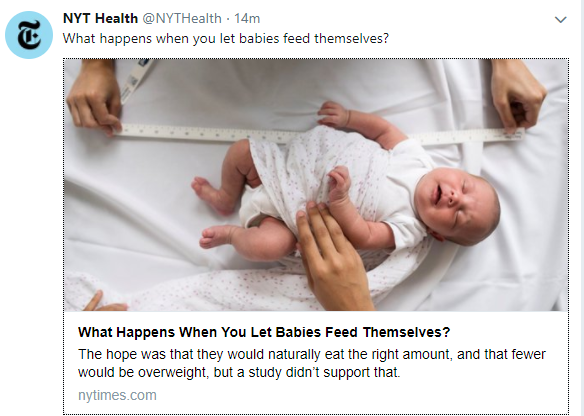
Can Infants Self-Regulate their Feeding and Prevent Obesity?

A terrific summary of a recent prospective study (RW Taylor et al. JAMA Pediatr. 2017;171(9):838-846. doi:10.1001/jamapediatrics.2017.1284): NY Times: What Happens When You Let Babies Feed Themselves?

An excerpt:

Baby-led weaning is an approach to feeding that encourages infants to take control of their eating. It’s based on the premise that infants might be better self-regulators of their food consumption..

A recent randomized controlled trial accomplished what previous work could not. Pregnant women in New Zealand were recruited before they gave birth and randomly assigned to one of two groups…

The study found no significant differences in the children’s body mass indexes at 12 or 24 months. Even when researchers restricted the analyses to the most adherent subjects, there were no significant differences over all in B.M.I…

Nonetheless, there might be merit to giving infants more control over their eating: This study found that baby-led weaning resulted in children who were less fussy about what they ate and who seemed to enjoy their food more…

But if we want to find a larger solution to the issues of overweight American children and obesity, it seems we’re going to have to work harder. Babies aren’t going to solve the problem for us.

My take: This study demonstrates the fallacy of the idea that humans naturally self-regulate the right amount of food intake.

It’s Alimentary (Part 3)

A recent ‘clinical quality forum’ sponsored by The Children’s Care Network (TCCN) and Nutrition4Kids featured several good lectures. The symposium was titled “It’s Alimentary.” What follows are my notes –the full lectures from these talks will be available in the coming weeks on the Nutrition4Kids website. My notes may include some errors in transcription and errors of omission.

The Importance of Intestinal Microbiota in Pediatric Health and Disease” by W Allan Walker (Harvard Medical School, Director of Division of Nutrition) reviewed data showing how changes in the microbiome, likely related to a ‘Western lifestyle’ has resulted in numerous health consequences.

Key points:

  • The hygiene hypothesis has correlated a greatly reduced risk of infections inversely to an increase in immune-mediated diseases including Crohn’s disease, multiple sclerosis, type 1 diabetes mellitus, and metabolic syndrome/obesity.
  • The consequences of improved hygiene are likely mediated by alterations in gut microbiome
  • To counter alterations in a ‘healthy’ microbiome, perhaps most important is normal neonatal colonization.  This, in turn, is related to healthy pregnancy/full term gestation, vaginal delivery, absence of antibiotics in the first year of life (if feasible), and exclusive breastfeeding.
  • A healthy first-year-of-life microbiome leads to improved tolerance (less allergies) and absence of chronic diseases.
  • In those at risk for altered microbiome, probiotics may be beneficial.
  • By 12-18 months, the microbiome has an ‘adult’ pattern of colonization with a bacterial signature that is present for the rest of someone’s life
Related blog posts:

A subsequent segment addressed “Weight Bias in Healthcare Professionals and What We Can Do About It” by Sheethal Reddy (Strong4Life Clinical Psychologist).

Key points:

  • Physicians have been shown to exhibit decreased empathy with obese patients (KA Gudzune et al. Obesity 2013; 21: 2146-52)
  • Bias can not be eliminated but can be better understood. The Implicit Attitude Test can help ascertain one’s level of bias. https://implicit.harvard.edu/implicit
  • Ways to address obesity as a topic: “Is it OK to talk about…”, use of health report cards to review BMI
  • “The most important thing you can be is kind”

Related blog posts:

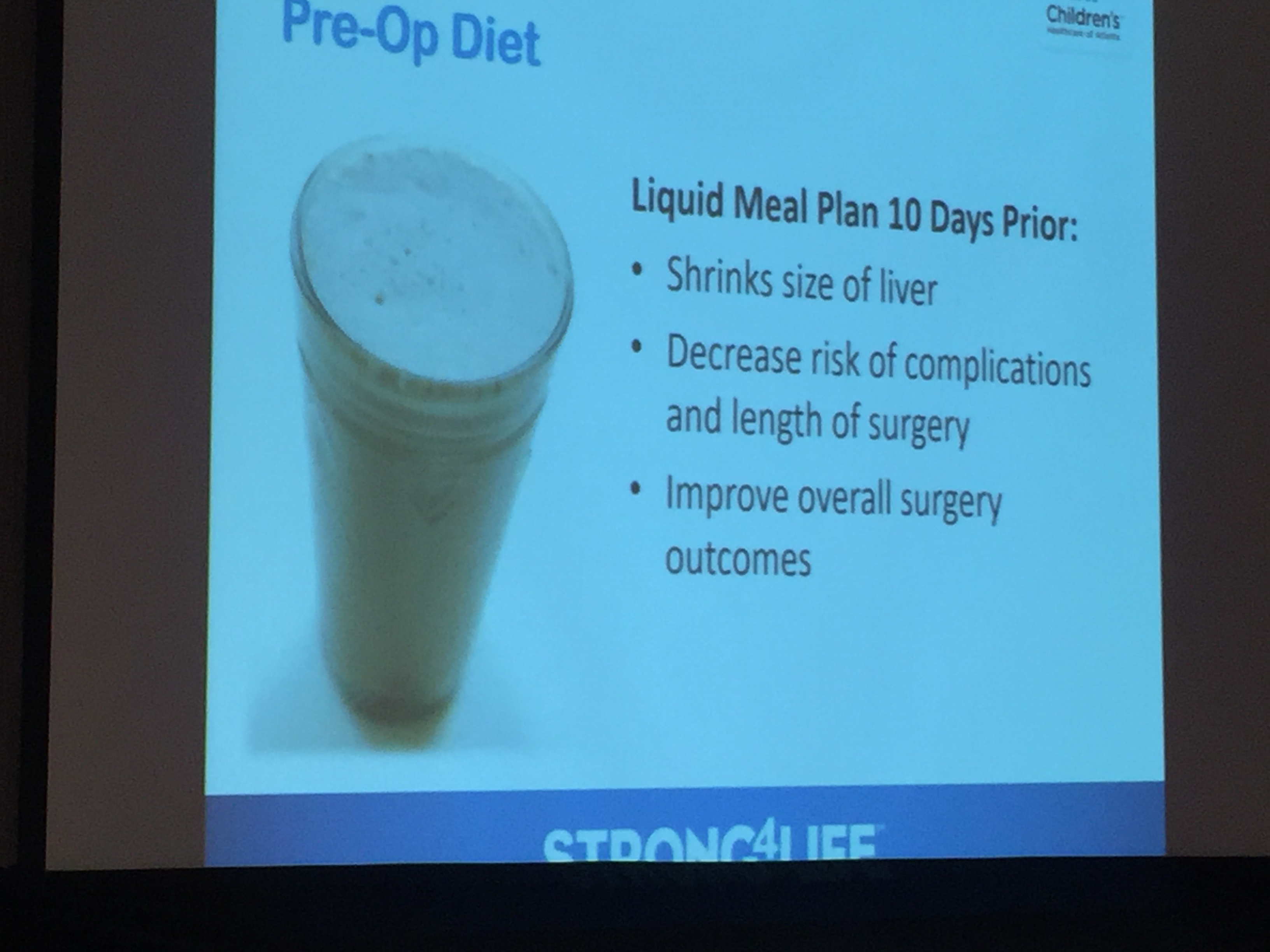
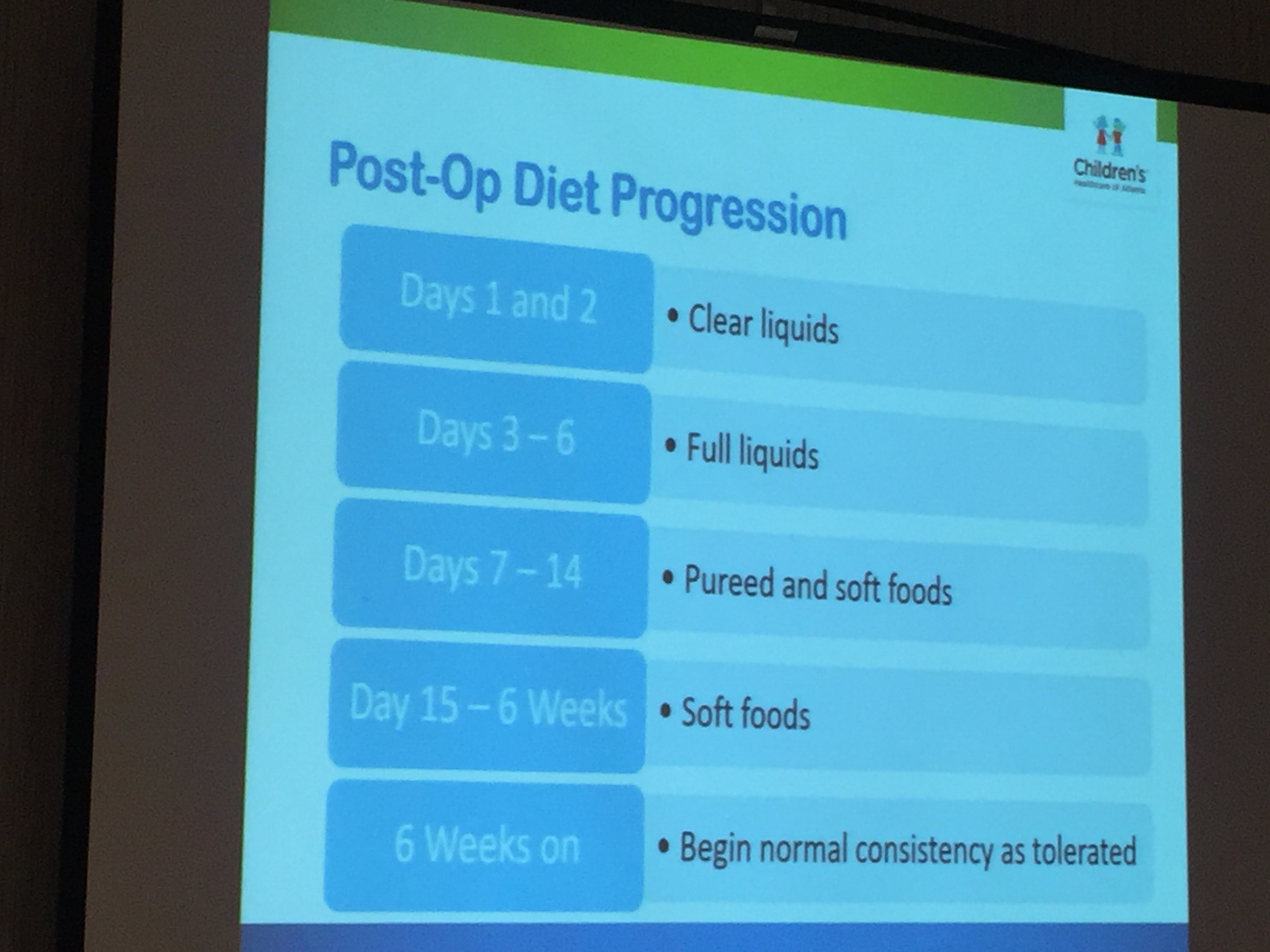
In another talk was related to obesity: “ERAS Nutrition in Bariatric Surgery” by Mark Wulkan (Emory University Professor of Surgery). ERAS is an acronym for Enhanced Recovery After Surgery –pioneered in colorectal surgery (Previous post on ERAS: ERAS-Enhanced Recovery after surgery)

Key points:

  • Using ERAS protocol, hospital length of stay has been shortened from 2 days to 1 day
  • ERAS protocol has been associated with minimal use of narcotics –occasionally for breakthrough pain.
  • Current bariatric surgery favored by Strong4Life team –Laparoscopic Sleeve Gastrectomy

Related blog entries:

Bariatric Surgery Candidates

It’s Alimentary (Part 2)

A recent ‘clinical quality forum’ sponsored by The Children’s Care Network (TCCN) and Nutrition4Kids featured several good lectures. The symposium was titled, “It’s Alimentary.” What follows are my notes –the full lectures from these talks will be available in the coming weeks on the Nutrition4Kids website. My notes may include some errors in transcription and errors of omission.

In my view the best lecture from this symposium was given by Kathleen Zelman (WebMD, Director of Nutrition): Diet and Nutrition Trends Impacting Health

Key points:

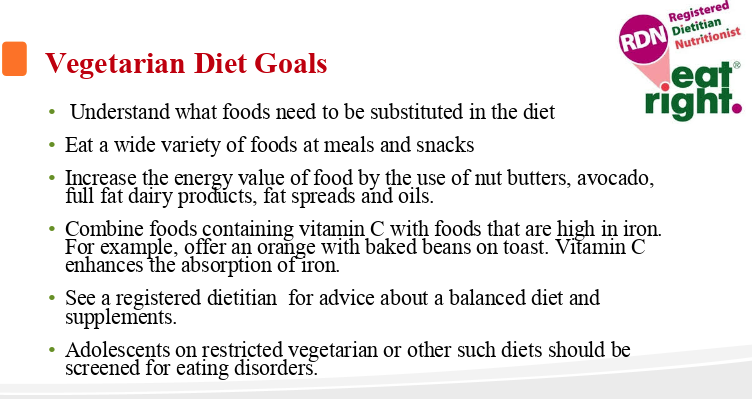
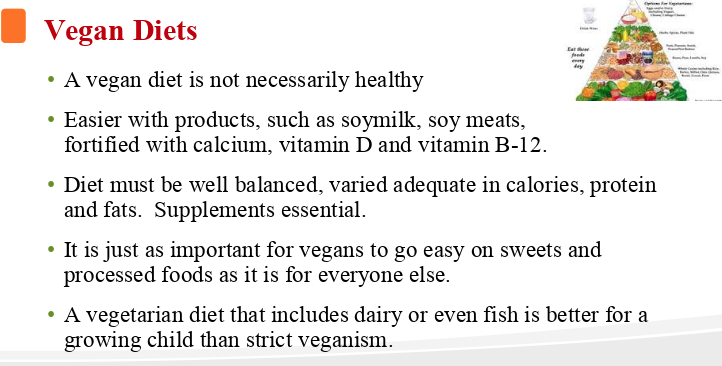
  • There have been more individuals pursuing vegetarian and vegan diets.  Though increasing vegetables/fruits is a good trend, vegan diets are particularly challenging (& potentially dangerous) in children.  In those who take milk and eggs, this diet is much more likely to meet nutrient needs.  These diets necessitate the assistance of a dietician.
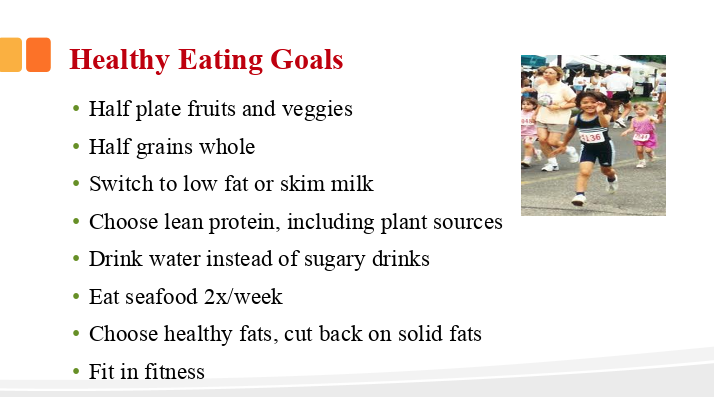
  • Unfavorable trends: increased consumption of highly processed foods and restrictive food fads.  Some processed foods (eg. canned beans) can be a healthy addition to diet.
  • ‘Organic diets are not more nutritious. They are great if you can afford it. Key is eating more vegetables and fruits.’
  • GMOs are safe.
  • MyPlate.gov is a good resource
  • Encourage families to eat together and to shop for a ‘rainbow of colors’

Related posts:

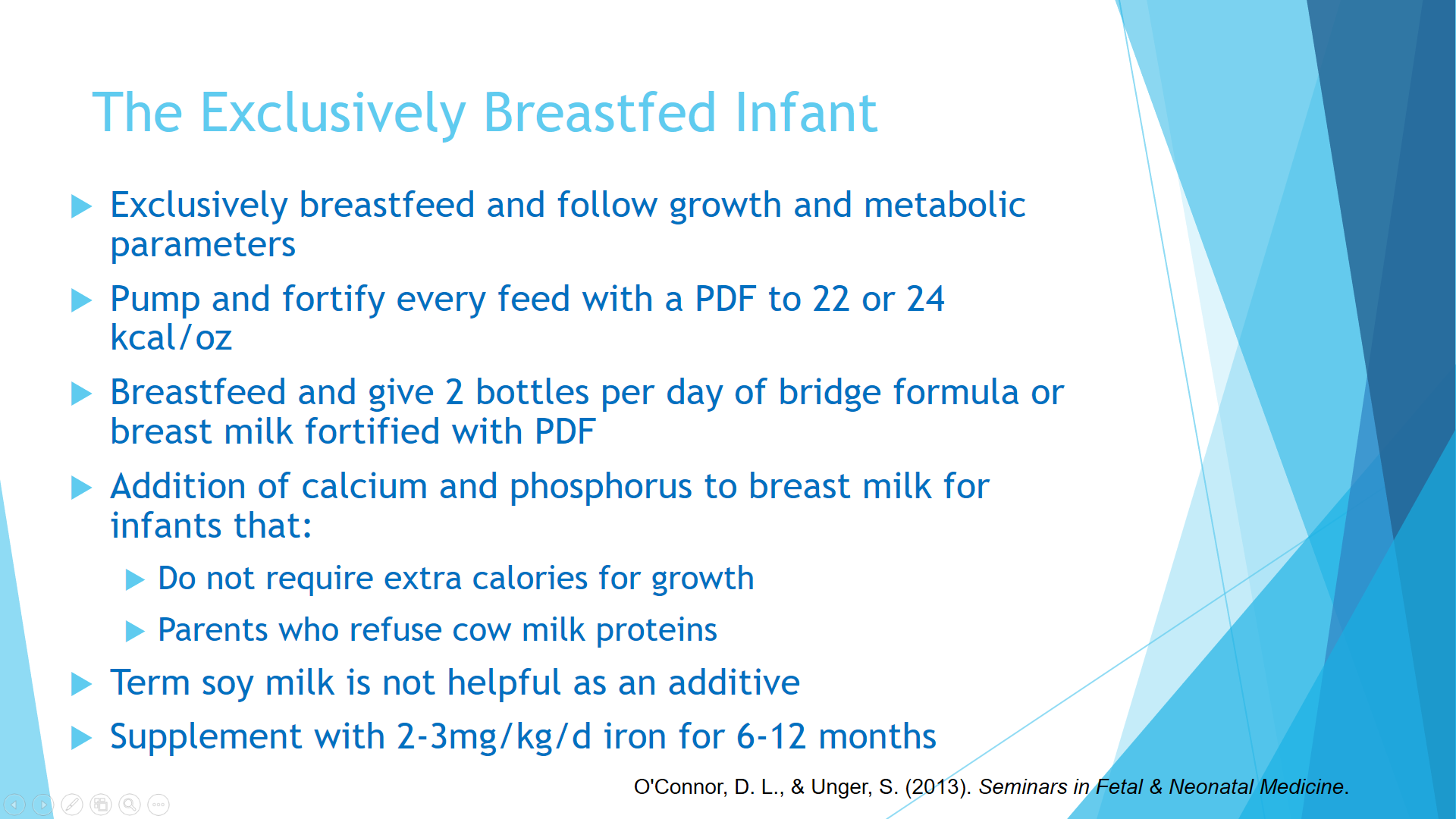
A subsequent lecture on “Nutrition for the Premature Infant” by Heidi Karpen (Emory University, Professor of Pediatrics) provided a good overview of the ongoing efforts to improve nutritional outcomes for premature infants.

Key points:

  • Good nutrition is crucial for better neurodevelopmental outcomes and stronger bones.
  • Despite efforts like instituting TPN on first day of life, most neonates are losing ground during their hospitalization.
  • Breastmilk is best at reducing sepsis, necrotizing enterocoliitis, and improving IQ.  However, it is not perfect  –less protein, less calcium, and less phosphorus than formulas; thus, breastmilk needs to be augmented and/or supplemented.
  • Informal breastmilk donation can be dangerous.  Donor breastmilk needs to be carefully screened.

Related blog posts:


It’s Alimentary (Part 1)

A recent ‘clinical quality forum’ sponsored by The Children’s Care Network (TCCN) and Nutrition4Kids featured several good lectures. The symposium was titled, “It’s Alimentary.”  What follows are my notes –the full lectures from these talks will be available in the coming weeks on the Nutrition4Kids website. My notes may include some errors in transcription and errors of omission.

The Fiber Movement: Why Kids Need It and How to Get It” by Maria Oliva-Hemker (Director of Division of Pediatric Gastroenterology, Johns Hopkins). This was a terrific lecture which pulled together a lot of useful information.   Despite hearing a lot about fiber, this lecture showed me that there is a lot that I still need to learn.

Key points:

  • Institute of Medicine recommends 14 grams of fiber per 1000 kcal of dietary intake.  This is a higher amount of fiber than prior recommendations.
  • Most adults are consuming about 50% of the fiber that they should
  • Whole foods should be encouraged over fiber supplements
  • Increased fiber associated with lower risk of obesity, stroke, coronary heart disease, and diabetes

Related blog posts:

The LEAP Study and Its Implication for the Future of Food Allergies” Kiran Patel (Professor Pediatrics, Division of Allergy and Immunology, Emory University)  This was the second opportunity that I had to hear Dr. Patel in the past 6 months –see An Allergy-Immunology Perspective on GI Diseases

Key points:

  • There has been an increasing incidence of peanut allergies
  • Early introduction of peanuts helps reduce peanut allergies. Suggested algorithm
  • To reduce allergies, placing a best practice alert in electronic record could be necessary as rates of encouraging early peanut introduction in at risk children remains low

Related blog posts:


LEAP study results

Slides with information on introduction of peanuts –this should be discussed with physician before implementation.

Disclaimer: These blog posts are for educational purposes only. Specific dosing of medications/diets (along with potential adverse effects) should be confirmed by prescribing physician/nutritionist.  This content is not a substitute for medical advice, diagnosis or treatment provided by a qualified healthcare provider. Always seek the advice of your physician or other qualified health provider with any questions you may have regarding a condition.