Changing Approach to Neonatal Acute Liver Failure

A recent review (SA Taylor, PF Whittington. Liver Transplantation 2016; 22: 677-85) provides several important concepts for practitioners who may need to manage neonatal acute liver failure.

The most common etiologies (in parenthesis the approximate percentage of cases in their experience):

  • Gestational alloimmune liver disease (GALD) (60-90%)
  • Viral hepatitis (20-30%)-particularly HSV, followed by HHV-6, and rarely CMV
  • Hemophagocytic lymphohistiocytosis (HLH) (<10%)
  • Mitochondrial hepatopathy (<5%)
  • Rare causes include galactosemia, hereditary tyrosinemia type 1, and hereditary fructose intolerance. (<1%)  In addition, bile acid synthetic defect 5-beta-reductase deficiency can cause neonatal liver failure.

While INR ≥2.0 was used in the PALF studies as a primary defining feature of liver failure, since an INR of 2.0 can occur in the normal newborn, the authors recommend using an INR≥ 3.0 for neonatal liver failure.

Their Table 1 helps provide some important differences, Distinguishing features:

  • With GALD, ALT values are typically <100 due to underdeveloped hepatic parenchyma and ferritin is typically >800 and <7000.  IUGR is frequent (70-90%) as is hypoglycemia. Hepatosplenomegaly is uncommon.
  • With viral infections and HLH, ALT values are typically high, ferritin often very high, hepatosplenomegaly is common. IUGR is rare.
  • With mitochondrial disorders, ALT typically is between 100-500, ferritin levels are variable, and IUGR occurs in 20-30%.  A distinguishing feature is lactate: pyruvate ratio and ketone body ratios.
  • By thinking carefully about the reasons for liver failure in the neonatal period and not trying to examine for every possible liver disease, the use of these variables can expedite the evaluation and decrease the cost.  Genetic testing is not recommended due to the slow turnaround time, “and many diseases that are prominent causes of cholestatic disease …just do not cause NALF.”

With regard to treatment, the authors advocate use of IVIG if suspicion for GALD.  If workup (lip biopsy and/or MRI) confirms GALD then exchange transfusion and repeat IVIG is recommended.

My take: This reference should be helpful when managing a neonate with severe liver disease.

Related blog posts:

Set from the Musical "Beautiful"

Set from the Musical “Beautiful”

Concise Review: Fatty Liver in Pediatrics

A recent review (J Schwimmer. Hepatology 2016; 1718-25) provides a succinct up-to-date approach to the common problem of Nonalcoholic Fatty Liver Disease.

As this was a review, much of the material has been covered by this blog and previous publications.  The review discusses the upper limit of normal for alanine aminotransferase and its utility.  Liver imaging is discussed: “MRI is well suited for use in clinical research” whereas “ultrasound does not meet the standard clinical threshold required to be used to diagnose fatty liver…or used as an outcome measure.”

Dr. Schwimmer reviews a prospective study of 347 overweight or obese children with suspected NAFLD (blog review of this study: Screening for NAFLD).  He notes that 24% (n=61) of those who underwent liver biopsy ultimately had other diagnoses, especially autoimmune liver disease (n=11) and celiac disease (n=4). “The clinical challenge is to determine who needs how much of a workup. The greater potential for hepatotoxicity and the more advanced the disease is believed to be, the greater the need to be certain of the diagnosis and to properly grade and stage the disease.”  Currently, “no other diagnostic modality has shown sufficient accuracy to be appropriate for clinical use in the place of biopsy.”

He reviews associated health conditions with NAFLD including obesity, dyslipidemia, hypertension, cardiac dysfunction, and obstructive sleep apnea (~60% of NAFLD patients).

What about treatment? “There is not an available, proven, safe, and effective [pharmacologic] treatment for NAFLD in children…Current treatment is …focused on optimizing lifestyle, including nutrition, physical activity, and mental well-being.”

My take: Despite 20 years of clinical practice, the workup for NAFLD remains a vexing problem.  It is not practical to offer a liver biopsy to 10% of the pediatric population.  So determining who (besides those with more severe presentations) will benefit from an exhaustive workup remains unclear.  In the meanwhile, at a minimum, we need to keep looking for treatable liver conditions (eg. autoimmune hepatitis, celiac disease, Wilson’s disease, and viral hepatitis).

An article with a similar focus (Dr. Schwimmer is the corresponding author): J Pediatric 2016; 172: 9-13.  This report and Dr. Schwimmer’s review both tout the safety of liver biopsy.  Neither report presents much data on costs of either liver biopsies or MRI.

Related blog posts:

Zoo Atlanta 2016

Zoo Atlanta 2016


What to Make of a Low Alkaline Phosphatase

Every now and then I see a low alkaline phosphatase (ALP)–usually this is an inconsequential finding.  A recent study (V Saraff et al. J Pediatr 2016; 172: 181-6) provides insight into this problem.

In a retrospective study spanning 8 years, the authors identified 1526 samples from 323,064 which had an ALP <100 U/L.  Most of these were transient.  Only 18 were identified as having persistently low ALP.  In this group, 13 were tracked down. In this group, among four who had ongoing low ALP, two had mutations in the ALPL gene.

The authors propose, in Figure 3, how to manage a low ALP.  In those with an accurate ALP (not a degraded blood sample) and who were not chronically ill, they suggest looking for symptoms of hypophosphatasia:

  • respiratory failure
  • vitamin B6 responsive seizures
  • elevated calcium, phosphate and/or nephrocalcinosis
  • failure to thrive/short stature
  • fractures/bone pain
  • craniosynostosis
  • chest deformity
  • delayed walking, waddling gait
  • premature loss of teeth/late dentition

In those with likely hypophosphatasia, confirm with a pyridoxal-5′-phosphate and urinary phosphoethanolamine. If these are normal, hypophosphatasia is unlikely.  If these are elevated, the next step per the authors would be checking knee, lateral/AP skull.  If these are suggestive, then undergoing genetic testing is recommended or seeing a bone specialist.

In those with those who do not have symptoms of hypophosphatasia, the authors recommend checking for other causes.  Workup could include zinc, magnesium, thyroid function, blood counts, renal/liver assays, parathyroid hormone, vitamins B12/C/D, celiac serology, and ceruloplasmin.

My take: In those with persistently low alkaline phosphatase, keep this reference handy.

Related blog post (for high alkaline phosphatase): We still see this

Gibbs Gardens

Gibbs Gardens

What I did not know …a few items

  1. 6-Mercaptopurine (6-MP) often can be used when patients are intolerant of azathioprineS Hubener et al. Clin Gastroenterol Hepatol 2016; 14: 445-53.  This retrospective study showed that 15 of 20 patients with autoimmune hepatitis and prior azathioprine intolerance responded to 6-MP.  This is somewhat unexpected as azathioprine is metabolized into 6-MP.  However, rather than 6-thiouracil, the “imidazol component of azathioprine, which is cleaved off…might trigger adverse reactions.”  Another artical on thiopurines (Aliment Pharmacol Ther 2016; 43: 863-883) (thanks to Ben God for this reference) provides a thorough review of the pharmacogenetics and pharmocokinetics of these medications.  While this review reinforces the recommendation to check TPMT before treatment, it notes that only a small proportion of thiopurine toxicity is related to deficient TPMT activity.
  2. There is no formal validated or consensus definitions of mild, moderate, or severe IBD. L Peyrin-Biroulet et al. Clin Gastroenterol Hepatol 2016; 14: 348-54.  While the Lemann index measures the cumulative structural bowel disease, the authors propose criteria which involves three areas of severity: impact of the disease on the patient (eg. clinical symptoms), inflammatory burden (eg. biomarkers, mucosal disease, disease extent), and disease course (eg. structural disease, intestinal resection, perianal disease, extraintestinal manifestations)
  3. Fundic gland polyps (often associated with proton pump inhibitor therapy) are not premalignant lesions. There is an “inverse correlation between the FGPs and gastric neoplasia.” S Varghese et al. Gastroenterol Hepatol; 2016; 12: 153-4.
  4. Parents of newborns do not know how to use car seats.  BD Hoffman et al (J Pediatr 2016; 171: 48-54) showed that 95% of car seats were misused (291 families).  Serious misuse was present in 91%.


Related blog posts: Lemann index: Short Takes on IBD Articles | gutsandgrowth

Gibbs Gardens has >20 million daffodils

Gibbs Gardens has >20 million daffodils

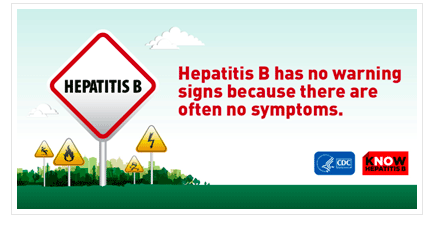
Know Hepatitis B Campaign

The CDC has launched a campaign to improve identification of Hepatitis B, particularly among Asian Americans.  Here’s the link: Know Hepatitis B Campaign

There are plenty of resources on this site.

Key fact:

“While Asian Americans make up about 5% of the total U.S. population, they account for half of the 2.2 million Americans living with chronic hepatitis B. In fact, one in 12 Asian Americans has hepatitis B.”

Related blog posts:

Screen Shot 2016-05-19 at 9.07.29 AM


What Happened to Skepticism re: Lipid Emulsion Position Paper

A recent position paper (from ESPGHAN) (I Hojsak et al. JPGN 2016; 62: 776-92) made me wonder how different people can look at the same data and come to opposite conclusions.

In short, this article systemically reviews intravenous lipid emulsions and the risk of hepatotoxicity.  The review on the data is quite helpful.  The authors conclude that short-term use of the various emulsions currently in use do not result in a significant difference in neonates, infants and children.

The authors acknowledge that the data for long-term use of these emulsions is limited. They state that “there is evidence indicating that just tailoring and adjusting PN in children on long-term PN could improve liver disease, meaning that the focus should not only be on the type of ILE.”

“Although the quality of data are lacking there is some evidence that the use of multicomponent fish oil-containing ILE may contribute to a decrease” in liver toxicity.

What I don’t understand: The authors recommend: “it appears prudent to use multicomponent FO [fish oil]-containing ILE (GR C)” and literally the next sentence: “The present evidence base is inadequate to determine the optimal strategy for intravenous lipid supply.”

My take: I think we need to gather the data before having official position paper  recommendations.

Related blog posts:

2min warning doesn't help

CDC: Increase in Acute Hep B in Appalachia

MMWR 2016; 65: 47-50. Increases in Acute Hepatitis B Virus Infections — Kentucky, Tennessee, and West Virginia, 2006–2013

An excerpt:

  • During 2006–2013, a total of 3,305 cases of acute HBV infection were reported to CDC from Kentucky, Tennessee, and West Virginia. During 2009–2013, incidence of acute HBV infection increased 114% in these three states, but remained stable in the United States overall
  • Among cases in which at least one risk factor was reported, the proportion of persons reporting injection drug use as a risk factor was significantly greater in 2010–2013, compared with 2006–2009 (75% versus 53%; p<0.001)…the increase was statistically significant only among cases occurring in non-urban counties
  • The findings in this report are subject to …limitations. First, NNDSS is a passive surveillance system, and therefore, unreported cases might have been missed. Second, the current case definition for acute HBV infection captures only symptomatic persons and excludes persons with asymptomatic HBV … Third, … certain populations at high risk (e.g., persons who are incarcerated, homeless, and uninsured) with limited access to care could potentially be underrepresented

My take: Increased drug use appears to be driving an increase in acute HBV in Appalachia. “Evidence-based prevention strategies, including increasing hepatitis B vaccination coverage, testing and linkage to care activities, and education campaigns targeting persons who inject drugs are urgently needed.”

Gibbs Gardens, Ball Ground

Gibbs Gardens, Ball Ground

Hepatitis A Vaccine Should Work for 30 Years

A recent study (PR Spradling et al. Hepatology 2016; 63: 703-11) provided data indicating that the Hepatitis A virus (HAV) vaccine would likely work for 30 years after childhood vaccination.  Much has changed since the implementation of the HAV vaccine.  Since 2000, the number of HAV case in the U.S. has dropped almost 90%, from 13,397 to 1781 in 2013 with the lowest incidence in those ≤18 years.

This study (n=183) examined three groups of Alaska Native children who received a two-dose inactivated HAV vaccine.

  • Vaccine starting at age 6 months (group 1)
  • Vaccine starting at age 12 months (group 2)
  • Vaccine starting at age 15 months (group 3)

Key findings:

  • All participants in groups 2 and 3 through age 10 years were seropositive (anti-HAV ≥ 20 mIU/mL), whereas in group 1 it was >90%.
  • At 15-16 years following vaccination, the seropositivity was 50-75% in group 1 and 67-87% in groups 2 and 3.
  • Using modeling, the overall 30-year anti-HAV seropositivity was predicted to be present in 64% of all participants and 84% of those that were seropositive at 15-16 years.

HAV continues to represent an ongoing threat, despite a reduction in the number of cases.  This is particularly due to unvaccinated travelers and unvaccinated adutls.  In vaccinated adults, a study (Vaccine 2015; 33: 5723-27) inidcates that seropositivity would be present in at least 95% after 30 years and 90% after 40 years.

My take: these data provide reassurance that HAV vaccine’s protection will be durable among those who were vaccinated between 6-21 months of life.

Related blog posts:

Culebra, Puerto Rico

Culebra, Puerto Rico

Which patients with asymptomatic gallstones need a cholecystectomy?

Update: re: Yesterday’s post on tax inversion.  NPR report: Pfizer calls off Allergan Merger due to anti-inversion rules instituted by Treasury Dept

—-

“Generally, the clinical course for the majority of gallstones is asymptomatic…Overall, little knowledge exists about the development into symptomatic disease.”  This introduction from a recent study (DM Shabanzadeh et al. Gastroenterol 2016; 150: 156-67-thanks to Ben Gold for sharing his interest in this study) provides the rationale for their study which analyzed 3 randomly selected groups in Denmark (ages 30-70 years) and followed them for a median of 17.4 years.

Out of an initial 6037 participants, 664 had gallstones at baseline (after excluding 189 who had cholecystectomy and 5180 without gallstones). Only 10% were aware that they had gallstones.

Key findings: 

19.6% developed symptomatic disease (8% complicated, 11.6% uncomplicated)

Risks for symptomatic disease: Female sex, Younger age, Stone size >10 mm, Multiple stones

  • Male with small stone: 2/67 (HR 1.0)
  • Male with multiple stones: 4/97 (HR 1.83)
  • Male with large stone: 2/47 (HR 2.79)
  • Male with multiple and large stones: 3/29 (HR 5.12)
  • Female with small stone: 4/102 (HR 2.16)
  • Female with multiples stones (no large stones) 11/120 (HR 3.96)
  • Female with large stone: 12/67 (HR 6.02)
  • Highest risk: female with multiple stones and with largest stone >10 mm: 10/53(HR 11.05)

Interestingly, the 10% who knew that they had gallstones before randomly being selected  into the study had significantly higher rates of all outcomes, especially uncomplicated events.  “This finding may reflect a protopathic bias.” Patients who were aware were more likely to have suffered bilary colic attacks before study entry and thus had a higher risk of events.

My take: First of all, completion of this study over more than 17 years is an astonishing feat, particularly without informing the participants of their gallstone status.  In patients who are truly asymptomatic, my interpretation would be that only those at substantial risk would benefit from cholecystectomy.  This study does not account for other factors that could favor cholecystectomy (in asymptomatic patients) such as hemolytic diseases (e.g. sickle cell), cystic fibrosis, and other conditions in which symptomatic gallbladder disease is more likely to develop.

Related blog posts:

Hunter Museum, Chattanooga

Hunter Museum, Chattanooga