113 Recommendations for Crohn’s Disease Management from ACG

Full Text Link: ACG Clinical Guideline: Management of Crohn’s Disease. GR Lichtenstein et al. Am J Gastroenterol 2018; 113:481–517

A few of the recommendations from Table 1:

  • (Insurance companies –please read this one): #1 Fecal calprotectin is a helpful test that should be considered to help differentiate the presence of IBD from irritable bowel syndrome (IBS) (strong recommendation, moderate level of evidence).
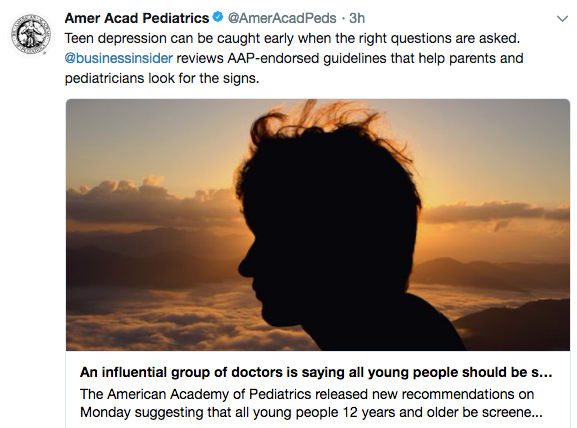
  • #9 Perceived stress, depression, and anxiety, which are common in IBD, are factors that lead to decreased health-related quality of life in patients with
    Crohn’s disease, and lead to lower adherence to provider recommendations. Assessment and management of stress, depression, and anxiety should be
    included as part of the comprehensive care of the Crohn’s disease patient (strong recommendation, very low level of evidence)
  • #24, 25 Anti-TNF agents (infliximab, adalimumab, certolizumab pegol) should be used to treat Crohn’s disease that is resistant to treatment with corticosteroids (strong recommendation, moderate level of evidence). Anti-TNF agents should be given for Crohn’s disease refractory to thiopurines or methotrexate (strong recommendation, moderate level of evidence).
  • #26 Combination therapy of infliximab with immunomodulators (thiopurines) is more effective than treatment with either immunomodulators alone or
    inflximab alone in patients who are naive to those agents (strong recommendation, high level of evidence).
  • #27 For patients with moderately to severely active Crohn’s disease and objective evidence of active disease, anti-integrin therapy (with vedolizumab) with
    or without an immunomodulator is more effective than placebo and should be considered to be used for induction of symptomatic remission in patients with
    Crohn’s disease (strong recommendation, high level of evidence).
  • #30 Ustekinumab should be given for moderate-to-severe Crohn’s disease patients who failed previous treatment with corticosteroids, thiopurines, methotrexate, or anti-TNF inhibitors or who have had no prior exposure to anti-TNF inhibitors (strong recommendation, high level of evidence).
  • #46 Oral 5-aminosalicylic acid has not been demonstrated to be effective for maintenance of medically induced remission in patients with Crohn’s disease,
    and is not recommended for long-term treatment (strong recommendation, moderate level of evidence).
  • # 58 In high-risk patients, anti-TNF agents should be started within 4 weeks of surgery in order to prevent postoperative Crohn’s disease recurrence
    (conditional recommendation, low level of evidence).

From Table 2:

  • #9 Symptoms of Crohn’s disease do not correlate well with the presence of active inflammation, and therefore should not be the sole guide for therapy. Objective evaluation by endoscopic or cross-sectional imaging should be undertaken periodically to avoid errors of under– or over treatment.
  • #23 Routine use of serologic markers of IBD to establish the diagnosis of Crohn’s disease is not indicated.
  • #30 Small bowel imaging should be performed as part of the initial diagnostic workup for patients with suspected Crohn’s disease.
  • #44 Insufficient data exist to support the safety and efficacy of switching patients in stable disease maintenance from one biosimilar to another of the same biosimilar molecule.

Disclaimer: These blog posts are for educational purposes only. Specific dosing of medications/diets (along with potential adverse effects) should be confirmed by prescribing physician/nutritionist.  This content is not a substitute for medical advice, diagnosis or treatment provided by a qualified healthcare provider. Always seek the advice of your physician or other qualified health provider with any questions you may have regarding a condition.

Capsule Endoscopy More Sensitive than MRE for Crohn’s Disease

Briefly noted: B Gonzalez-Suarez et al. IBD 24: 775-80.

In 47 patients with established (n=32) or suspected Crohn’s disease (n=15), MRE was first performed to exclude strictures and then subsequently capsule endoscopy (CE) (with patency capsule in 10 patients). Key finding: Small bowel lesions were found in 36 of 47 with CE compared with 21 of 47 with MRE (76.6% vs 44.7%, P=0.001)

Related blog post: Head-to-Head: Capsule endoscopy compared to colonoscopy

Time Will Tell: Granulomatous Upper GI Inflammation

A recent retrospective study (K Queliza et al. JPGN 2018; 66: 620-23) describes seven patients with granulomatous disease in the upper GI tract who were diagnosed with ulcerative colitis.

This study examined patients at a single center between 2007-2016 with ages ranging from 2 years to 17 years.  Median time of followup is not provided.  Two patients required colectomy.  All patients had non-casseating granulomas identified in either the stomach or duodenum (or both) along with moderate to severe pancolitis.  All of the patients had extensive investigations, generally cross-sectional imaging (MRE or CT) or capsule endoscopy

Key point::

  • “The final classification of IBD was based on expert opinion from gastroenterologists, radiologists, and pathologists upon thorough review of the medical records.”

My take: This study highlights the confusion of the essentially binary classification of IBD into either Crohn’s disease or ulcerative colitis, when in fact there are hundreds of genetic mutations which give rise to inflammatory bowel disease.  Given that granulomas are a hallmark of Crohn’s disease and there are no pathognomic features of ulcerative colitis, only time will tell if these patients have an ulcerative colitis phenotype.  I wonder how many centers would take exception to this classification and describe these patients as ‘indeterminate’ colitis/IBDU (IBD unclassified).

Related blog posts:

Pediatric Home and Office Biologic Infusions -What is Needed

A recent clinical report (E Barfield et al. JPGN 2018; 66: 680-86) will be influential.  This guideline is from the North American Society for Pediatric Gastroenterology, Hepatology, and Nutrition.  Congratulations to my partner, Chelly Dykes, who is one of the coauthors.

Full textAssuring Quality for Non-Hospital Based Biologic Infusions in Pediatric Inflammatory Bowel Disease: A Clinical Report from the North American Society for Pediatric Gastroenterology, Hepatology and Nutrition

For many years, our office has had an office-based infusion center which has provided infusions in a safe and cost-effective manner.  Recently, there have been some situations in which home-based infusions have been proposed either to lower costs and/or for convenience.  This report succinctly describes the hurdles that need to be addressed before recommending this treatment pathway. As noted below, patient safety encompasses a great deal more than infusion reactions. Delays in infusions (which can increase risk of loss of response) due to reactions and lapses in communication are additional issues.

Recommendation 1: Home- or office-based infusions should ensure safe administration of the biologic infusion, provide reliable execution of infusion-related orders (eg, laboratories for therapeutic drug monitoring, dose optimization protocols, etc), and be equipped to recognize and respond to potential complications.

  • Infusion reactions:  ” Infusion reactions associated with infliximab and vedolizumab can range from mild reactions such as fever and chills, dyspnea, pruritus, or urticaria (in approximately 5%–10%), to severe reactions including anaphylaxis, convulsions, and hypotension (<1%)”
  • Emergencies: “In the event of an urgent or emergent reaction during home- or office-based infusions, the in-home services agency (IHSA) nurse needs to be able to contact the appropriate ordering medical team member expeditiously by phone or pager to review/clarify specific concerns or needs to have an established clear policy on how to proceed with managing the reaction.” 
  • Communication: “We identified the lack or inconsistency of on-call coverage by the primary medical team when home- or office-based infusions occur as a significant barrier to safely initiating or continuing home- or office-based infusion programs. Difficulty in reaching a knowledgeable team member is a breach in reliable care and represents serious patient risk.”
  • Related work: “In addition to administering the biologic infusion, executing all other infusion-related orders is an important safety consideration. Implementing unique home infusion protocols is linked to treatment efficacy.”  

Recommendation 2: Pediatric home- or office-based infusions, particularly for patients 12 years and younger, should be staffed by a pediatric nurse professional with Pediatric Advanced Life Support (PALS) certification and clinical experience with pediatric patients.

Recommendation 3: Evidence-based standard of care for biologic therapy maximizing effectiveness and treatment sustainability should be established before initiating home or office-based infusions.

Recommendation 4: Home- or office-based infusion pathways that decrease opportunity loss for patients and families and deliver high-quality, patient-centered care should be supported and reproduced.

Recommendation 5: Pediatric gastroenterologists should ensure appropriate shared liability with IHSAs to deliver high-quality care in home-based infusions for children by executing pragmatic steps as outlined below:

  1. “Document discussion with the patient and family about the indication, risks, and adverse event management …
  2. Refer the patient to an accredited, licensed IHSA based on patient’s insurance coverage. If no accredited, licensed IHSA for the pediatric patient exists, this is grounds for not initiating home- or office-based infusions…
  3. & 4. Use an infusion protocol… with clear directives on recognition of signs/symptoms of reactions and administration of reaction medications and use of EMS or parent transport to an emergency room.
  4. Maintain accurate documentation and communication of therapy type, dose, and frequency.
  5. Provide a reliable communication mechanism for the IHSA to notify provider of changes or infusion-related events
  6. Regularly reviewing ongoing IHSA performance with regard to delivery of services, accurate laboratory ordering and turnaround time, safety and quality concerns and timely redressal of these issues.
  7. Switch to another IHSA if the performance reliability is unsatisfactory. …we acknowledge that changing IHSAs may be difficult.”

Recommendation 6: A more equitable division of labor should be established to offset increased administrative burden placed on the pediatric gastroenterologist and medical team to effectively facilitate and maintain home- or office-based infusions, especially when driven by payer-mandated policies.

Recommendation 7: …Among patients receiving home- or office-based infusions, unreliable follow-up care with the provider as scheduled is grounds for discontinuation of home- or office-based biologic therapy.

Recommendation 8: A proper appeals process should be in place to prevent cost transference from payer to patient in payer-mandated decisions for home- or office-based infusions.

Our office practice:

  • Emergencies: In our office, there is always one physician dedicated to being available to assess patients who are receiving infusions.  This helps insure safety and in addition, helps to make sure that minor medical problems do not needlessly postpone important treatment.
  • Documentation: With our office-based infusions, each infusion is documented by the administering nurse.  This documentation along with labs are embedded in the medical record (EPIC) to help modify treatment.
  • Communication: In our office, prior to each infusion, each patient’s chart is reviewed and specific orders are given.  This assures that needed blood tests/imaging, additional treatments (eg. iron infusion), insurance authorizations, necessary followup, and personalized adjustments are made.  This type of communication needs to be replicated for home-based infusions; hence, the use of home-based infusions could result in a huge increase in uncompensated work for the treating physician.

My take: In my experience, office-based infusions can be provided safely and in a cost-effective manner.  While the convenience of home-based infusion is desirable, before implementing broadly, issues regarding communication, safety protocols, and documentation to allow modifications in therapy need to be proactively addressed. Families may not realize some of the complexities involved in managing infusions and how these issues could affect their child’s long-term response to biologic therapy.

Related blog posts:

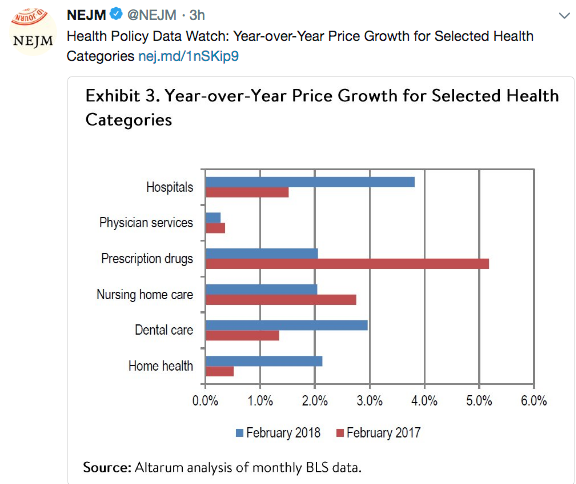
The following image relates to another convenience-related health trend:

Disclaimer: These blog posts are for educational purposes only. Specific dosing of medications/diets (along with potential adverse effects) should be confirmed by prescribing physician/nutritionist.  This content is not a substitute for medical advice, diagnosis or treatment provided by a qualified healthcare provider. Always seek the advice of your physician or other qualified health provider with any questions you may have regarding a condition.

Interchangeability, Immunogenecity and Infliximab Biosimilars

A recent study (G Fiorino et al. IBD 2018; 24: 601-6, editorial by KH Katsanos et al 465-6) provides more data on “full interchangeability” in regards to infliximab (IFX) and biosimilars CT-P13 and SB2. Full abstract below.

Key finding in study:

  • Antibodies to infliximab (ATI) cross-reacted with any type of IFX or IFX-biosimilar

Points from the editorial:

  • “The landmark NOR-SWITCH randomized controlled trial showed that 1-time switching from RMC [Remicade] to CT-P13 is not inferior to continued treatment with the infliximab originator…there are no data regarding multiple switches…Consequently, cross-switching (switching between 2 biosimilars), reverse switching (switching from biosimilar to its originator) or multiple/repeated switching is not currently recommended.”
  • This study, however, shows that “if you have already developed antibodies to 1 infliximab product, there is no point in switching to another infliximab product.”

Abstract:

BackgroundInfliximab (IFX) biosimilars CT-P13 and SB2 have comparable efficacy, safety, and immunogenicity to the originator Remicade (RMC). However, concerns about cross-switching patients between the 3 brands were raised in the absence of cross reactivity data between them. We aimed to determine whether antibodies to infliximab (ATI) in inflammatory bowel disease (IBD) patients cross-react with RMC, CT-P13, and SB2.

MethodsBased on previous ATI status, samples from 34 patients participating in the BIOSIM01 study (13 RMC, 9 CT-P13, and 12 switchers) were selected. Patients were treated with either RMC only, or CT-P13 only, or with RMC switched to CT-P13. Additionally, 28 IFX-naïve patients were assayed as controls. In total, 180 samples were analyzed. ATI trough levels were measured in parallel with 3 different bridging Enzyme Linked Immunosorbent Assays constructed using the 3 drugs. Spearman’s coefficient and percentages of agreement were used to study the correlation between each assay.

ResultsIn total, 76 samples out of 152 IFX-treated patient samples were ATI-positive (30 RMC, 14 CT-P13, and 32 switchers). All resulted ATI-positive when either CT-P13 or SB2 bridging assays were used. The overall percentage of agreement was 100% when compared either with CT-P13 or SB2 assays. No significant differences were found among ATI levels and coefficients (Spearman’s 0.98 to 1.0, P < 0.0001).

ConclusionsATI of RMC-treated, CT-P13-treated or RMC to CT-P13 switched patients show full cross-reactivity with CT-P13 and SB2. Findings suggest that immunodominant epitopes in the reference and CT-P13 drugs are equally present in SB2. Data support full interchangeability between biosimilars in regard to immunogenicity.

My take: In patients doing well with IFX, switching to a biosimilar is not currently recommended.  In patients naive to IFX, use of IFX or biosimilar is expected to have similar efficacy.

Related study: B Kang et al. IBD 2018; 24: 607-16.  This prospective study of 36 pediatric patients did not identify any significant differences in efficacy…or immunogenicity after switching from IFX to CT-P13.

Related blog posts:

IBD Shorts -March 2018

T Piester et al. Inflamm Bowel Dis 2018; 24: 227-34.  Stanford group published data on 49 patients which highlight the utility of a point of care (mobile) infliximab (IFX) dosing calculator: http://med.stanford.edu/gastroenterology/infliximab-calc/  In their cohort, the IFX calculator recommendations were for IFX dosing escalations in 13% of the 222 calculations.  Overall, the IFX calculator was part of a larger quality initiative (QI) to achieve therapeutic drug levels >5 mcg/mL which occurred in 81% during the QI period.

JC deBruyn et al. JPGN 2018; 66: 268-77. This was a retrospective review of infliximab (IFX) in pediatric Crohn’s disease with 180 children. The authors determined that IFX had good therapeutic durability with 91% remaining on IFX after 2 years of treatment.

FS Macaluso et al. Inflamm Bowel Dis 2018; 24: 394-401. In this 2-year study, among 630 patients, 46 had a modestly-dosed immunomodulator added to anti-TNF therapy due to loss of response (31 to IFX or biosimilar, 10 with adalimumab, and 5 with golimumab).  This resulted in a steroid-free remission in 15 (32.6%) and a clinical response in 6 (13.0%). The immunomodulators were azathioprine in 15, 6-mercaptopurine in 5, methotrexate in 20, and mycophenolate mofetil in 6. The median doses for immunomodulators were 1.64 mg/kg/day, 0.84 mg/kg/day, 15.6 mg/week, and 1500 mg/day respectively.

C Reenaers et al. Clin Gastroenter Hepatol 2018; 16: 234-43. This retrospective study examined 7-year outcomes from a STORI cohort of 115 adults with Crohn’s disease (CD) with combination therapy who had infliximab withdrawal after achieving sustained remission. Among those restarting infliximab, treatment failed in 30.1%; 70.2% “had no failure of de-escalation strategy.” Major complicatins occurred in 18.5% of patients. Risk factors for failure included anemia (Hgb <12.5), increased white blood cell count >5.0, and upper GI location of CD.

VM Merrick et al. JPGN 2018; 66: 274-80.  This UK “real-life” review of 37 centers and 524 patients (429 with Crohn’s disease) found a remarkably poor rate of documentation.  They could determine the remission rates in only 71 of these patients (65% 46 of 71).  Thus, in the real-world, presumably in adults and children, most institutions do not know their remission rates.  While the determination of remission still relies on imperfect measures, the centers who participate in ImproveCareNow have high documentation rates –this is also a real-world experience as more than 29,000 patients and more than 900 pediatric GI doctors participate.

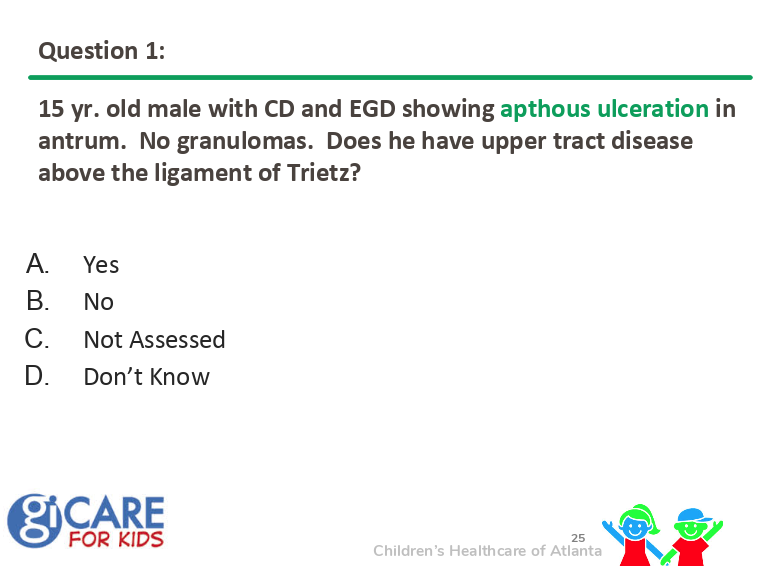
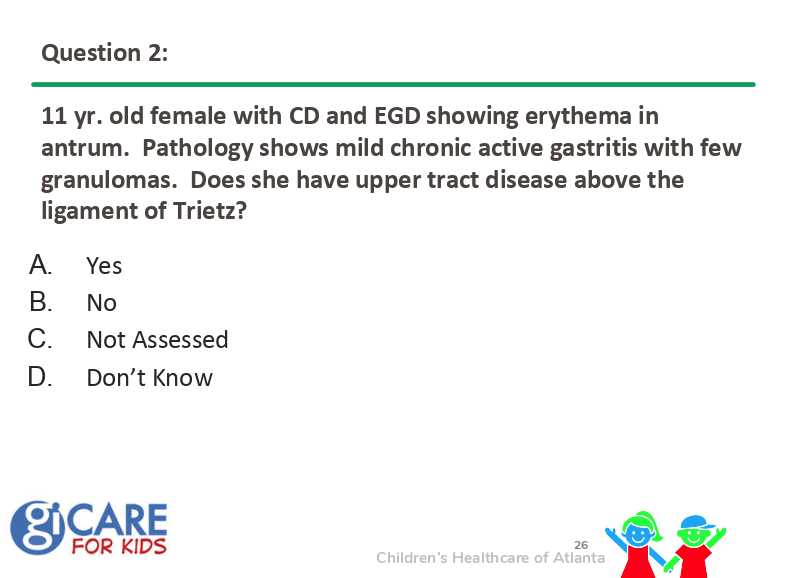
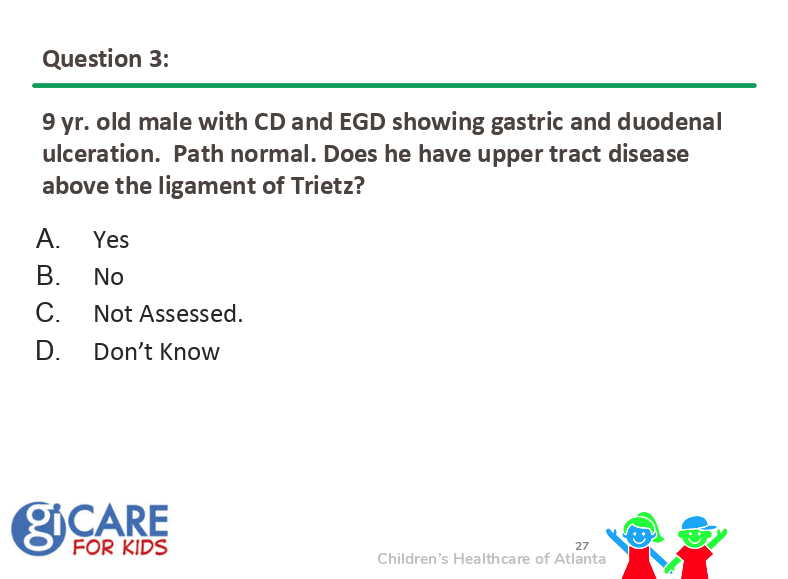
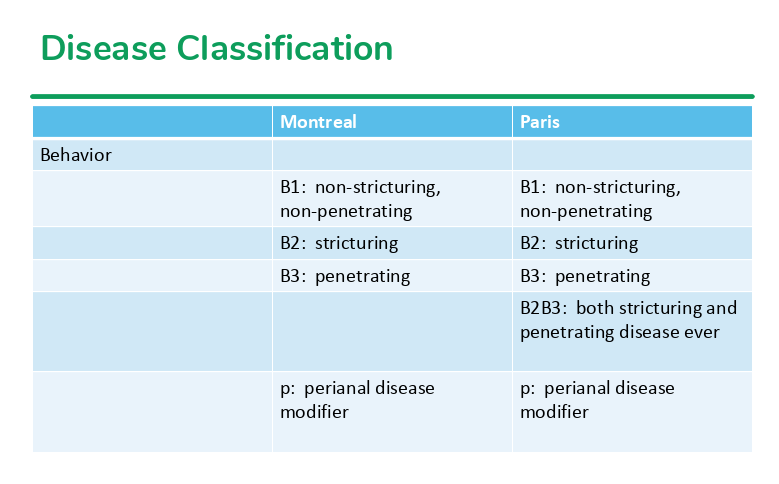
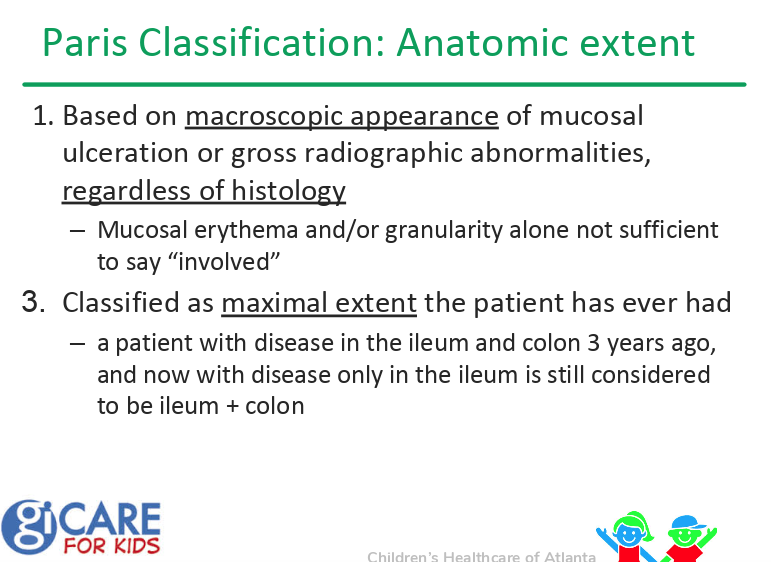
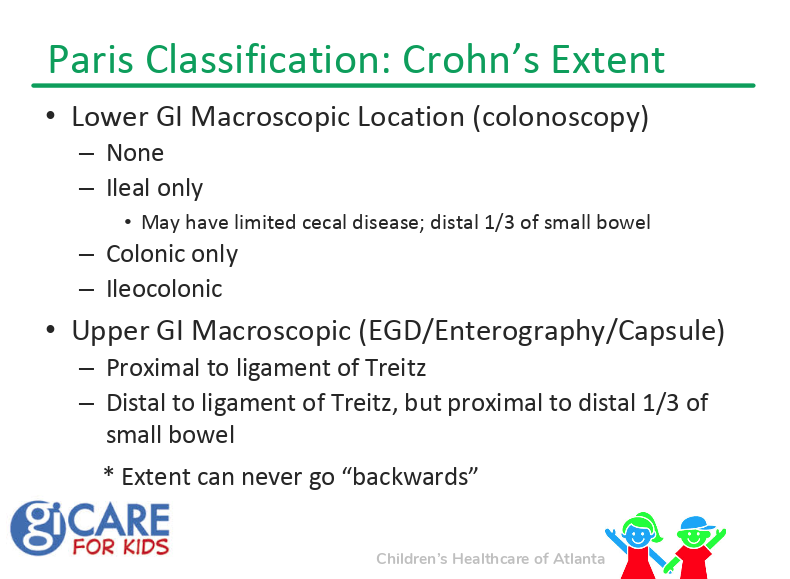
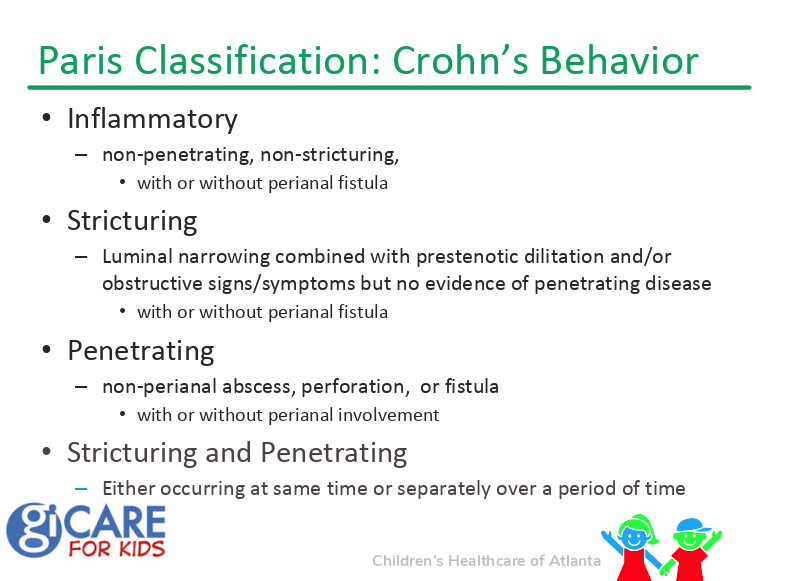
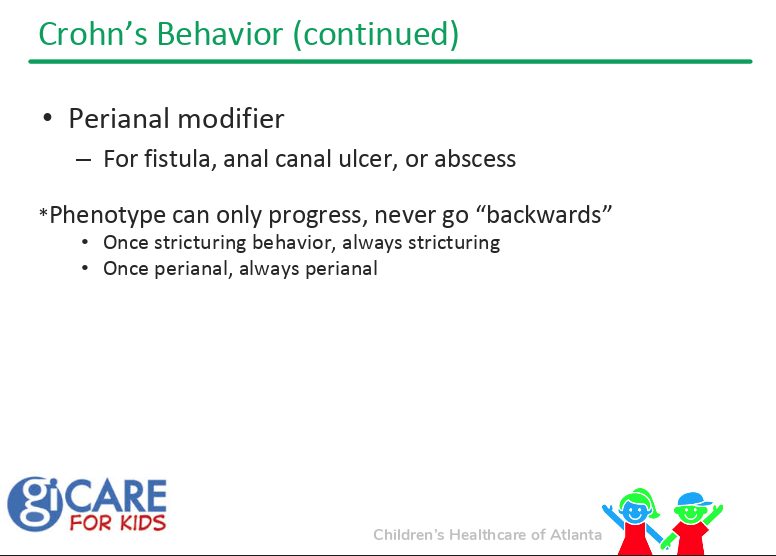
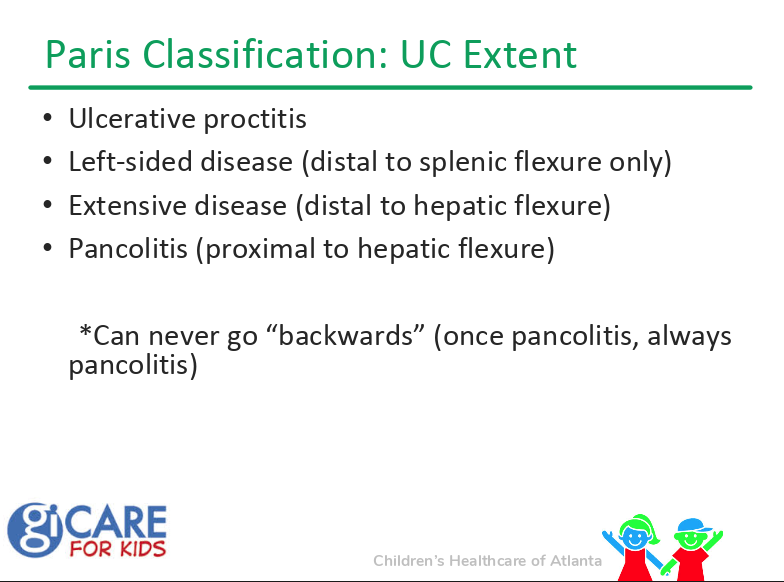
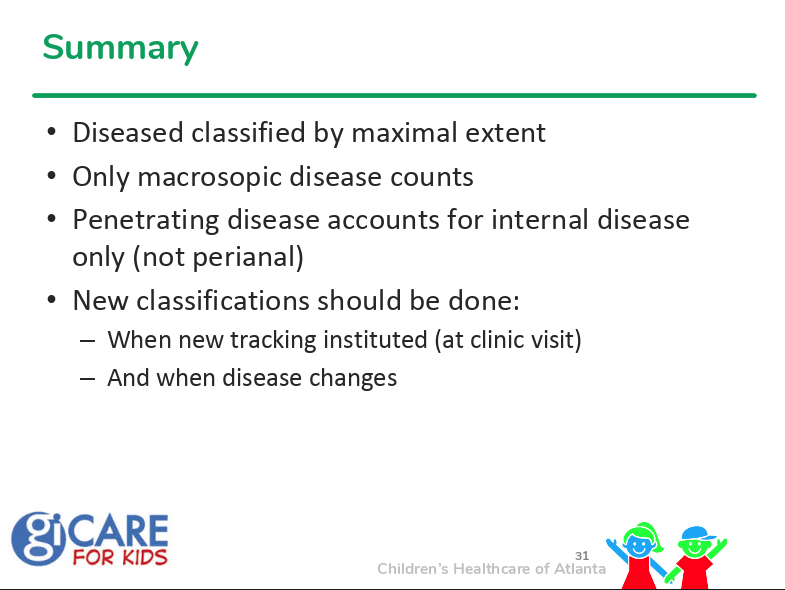
Paris Classification Quiz and Explanation

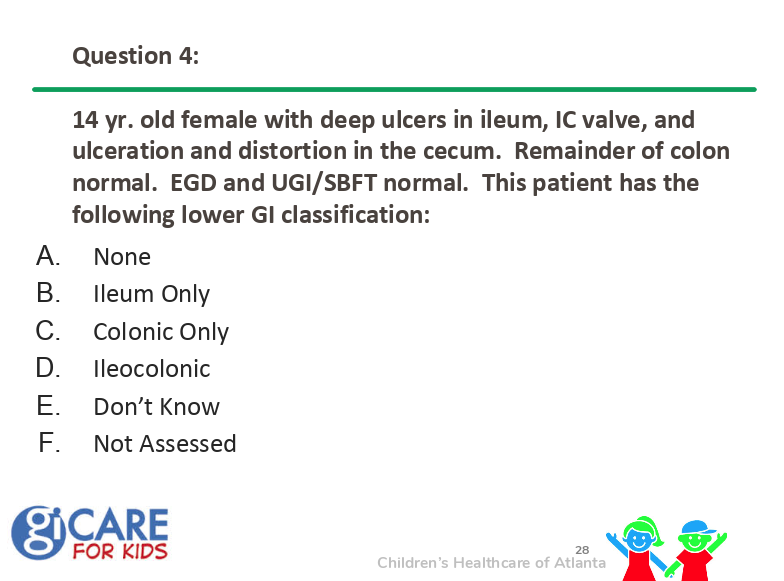
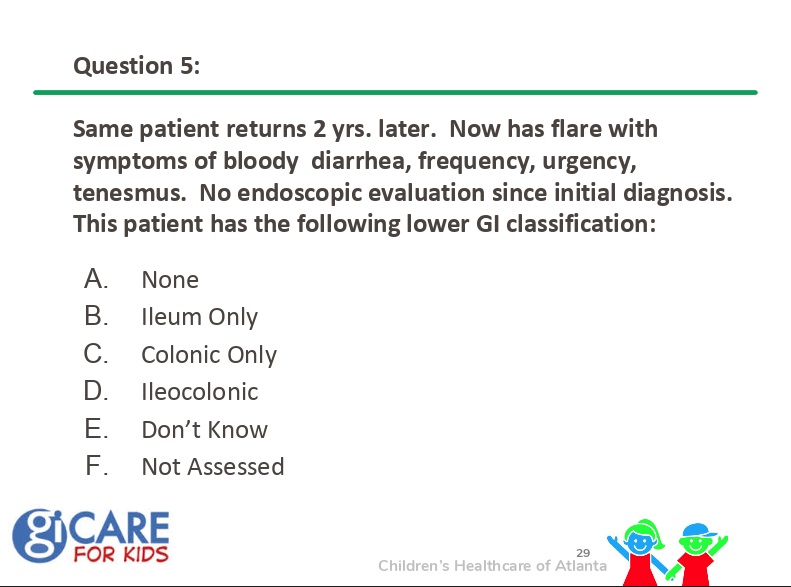
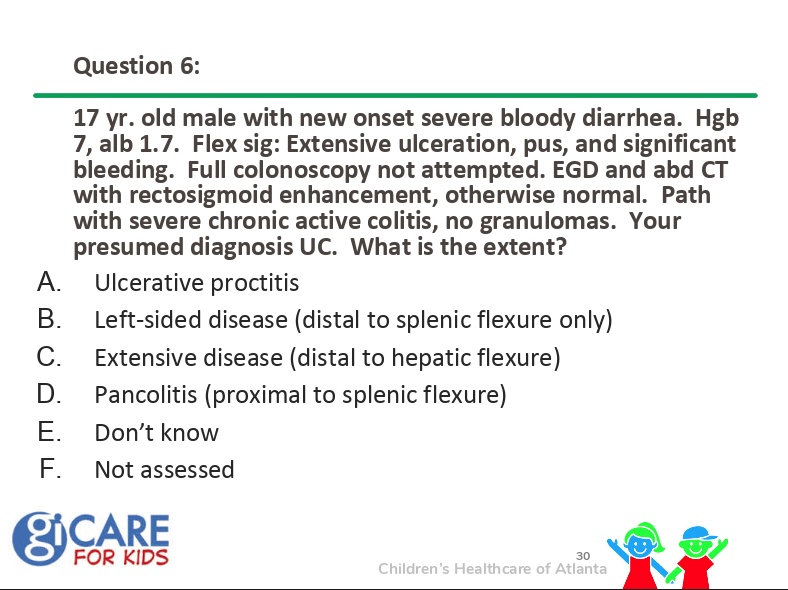
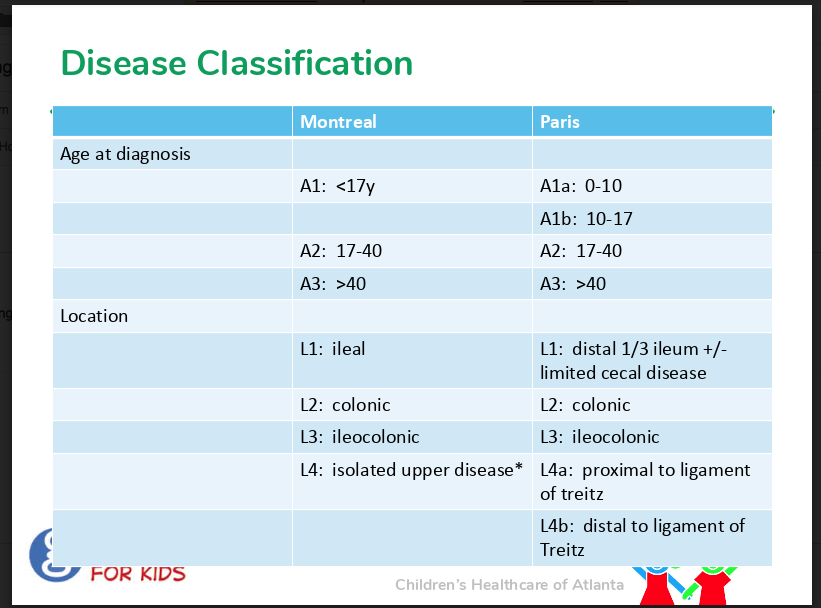
At one of our ImproveCareNow population management meetings, Dr. Chelly Dykes reviewed the Paris Classification and frequent misconceptions in using this system.  To illustrate this point, I am going to post 6 Quiz Slides and then follow that with the answers and explanation.  These quiz slides were derived from previous ImproveCareNow community meetings.

Answers:

  1. A
  2. B (macroscopic disease counts –erythema alone does not count)
  3. A (macroscopic disease counts)
  4. B (not ileum only unless colonic disease extends beyond cecum)
  5. F (though B acceptable)
  6. F (though B acceptable)

Related blog posts:

Briefly noted: Mongersen, Aprepitant, and Anesthetic Outcomes

BG Feagan et al. Gastroenterol 2018; 154: 61-4.  In this study of GED-0301 (Mongersen), an antisense oligodeoxynucleotide affecting Smad7, was randomly assigned to 63 patients with Crohn’s disease (160 mg/day).  Endoscopic improvement was observed in 37%  at week 12. Clinical remission (CDAI<150) was noted in  32% (4 weeks of Rx), 35%  (8 weeks of Rx) and 48% (12 weeks of Rx). No new safety signals were noted.

Related blog posts:

PJ Pasricha et al. Gastroenterol 2018; 154: 65-76.  First of all, I have to say that I like the visual abstracts in many Gastro studies.  In this randomized, double-masked “APRON” study of 126 patients with chronic nausea or gastroparesis receiving Aprepitant, a neurokinin-1 receptor antagonist, or placebo, the key findings were the following:

  • Aprepitant did not reduce symptoms of nausea significantly compared to placebo
  • Apreptiant-treated patients had improvements in secondary outcomes of symptom severity for nausea (1.8 vs 1.0, P=.005 on Gastroparesis Clinical Symptom Index) and overall symptoms (1.3 vs. 0.7, P=.001)

Related blog post:

B Bielawska et al. Gastroenterol 2018; 154: 77-85. Using data (administrative databases) and propensity matching from more than 3 million outpatient colonoscopies (2005-2012), the authors noted that the use of anesthesia assistance (AA) was associated with an increased risk of aspiration pneumonia (OR 1.63) but not perforation (OR 0.99). Though this study is limited by its retrospective design and reliance on administrative data, the authors state “the potential for residual confounding by indication for AA [is] extremely unlikely, especially because AA use in Ontario appears to be driven by institutional policy or business model rather than by patient factors.”

Related blog posts:

Bright Angel Trail

Iron Metabolism Improves after Anti-TNF Therapy for Crohn’s Disease

A previous study has shown that low vitamin D levels improved with anti-TNF therapy for Crohn’s disease in the absence of supplemental vitamin D.  Similarly, a recent study (MA Atkinson, MB Leonare, R Herskovitz, RN Baldassano, MR Denburg. JPGN 2018; 66: 90-4) showed improvement in iron metabolism with anti-TNF therapy.

In 40 children and adolescents with Crohn’s disease, the authors measured serum hepcidin-25 and hemoglobin at baseline and then 10 weeks after anti-TNF therapy.

Key findings:

  • Median hepcidin concentrations decreased (27.9–>23.2 ng/mL) and mean hemoglobin increased (10.6–>10.9).
  • Disease activity and markers of inflammation also decreased.

My take: This study shows that improvement in inflammation is associated with meaningful improvement in anemia.  However, most patients will need additional treatment for anemia, particularly as anemia may be related to blood loss in addition to anemia of chronic disease/inflammation.

Related blog posts:


Crohn’s Disease Diagnosis Identified After Colectomy in Presumed Ulcerative Colitis

A recent retrospective single-center study (I Jones et al. JPGN 2018; 66: 69-72) identified a high rate of inflammatory bowel disease (IBD) reclassification.  From 2003-2014, 570 children were diagnosed with IBD, including 190 with ulcerative colitis.  29 of these patients underwent colectomy.  Among this select group, 24% (7/29) were subsequently reclassified as having Crohn’s disease, sometimes several years later.  Only two of the seven reclassified patients were younger than 10 years of age at the time of colectomy.

My take: This rate of Crohn’s disease following colectomy is higher than in previous reports (generally 5-10%).  The larger point is that the diagnosis of ulcerative colitis is more uncertain in the pediatric population, particularly in those in the first decade of life.

Related blog posts:

Near Bright Angel Trail, Grand Canyon