The Future of Medicine: AI’s Role vs Human Judgment

Pranav Rajpurkar and Eric J. Topol. NY Times Feb 2, 2025: The Robot Doctor Will See You Now

An excerpt:

“The medical community largely anticipated that combining the abilities of doctors and A.I. would be the best of both worlds, leading to more accurate diagnoses and more efficient care…That assumption might prove to be incorrect. A growing body of research suggests that A.I. is outperforming doctors, even when they use it as a tool…

Simply giving physicians A.I. tools and expecting automatic improvements doesn’t work. Physicians aren’t completely comfortable with A.I. and still doubt its utility, even if it could demonstrably improve patient care…

Medical training will need to adapt to help doctors understand not just how to use A.I., but when to rely on it and when to trust their own judgment…But the promise for patients is obvious: fewer bottlenecks, shorter waits and potentially better outcomes. For doctors, there’s potential for A.I. to alleviate the routine burdens so that health care might become more accurate, efficient and — paradoxically — more human.”

In a related Substack article (open access: Opinion | When A.I. Alone Outperforms the Human-A.I. Partnership), Dr. Topol and Dr. Rajpurkar list several studies showing that AI alone may be better than physicians with AI under some circumstances:

My take (borrowed from the authors): “The future of medicine won’t be shaped by a simple choice between human or artificial intelligence, but by our ability to understand their respective strengths and limitations, and to orchestrate their collaboration in ways that truly benefit patient care.”

Related blog posts:
Early Management of Caustic Ingestions in Children

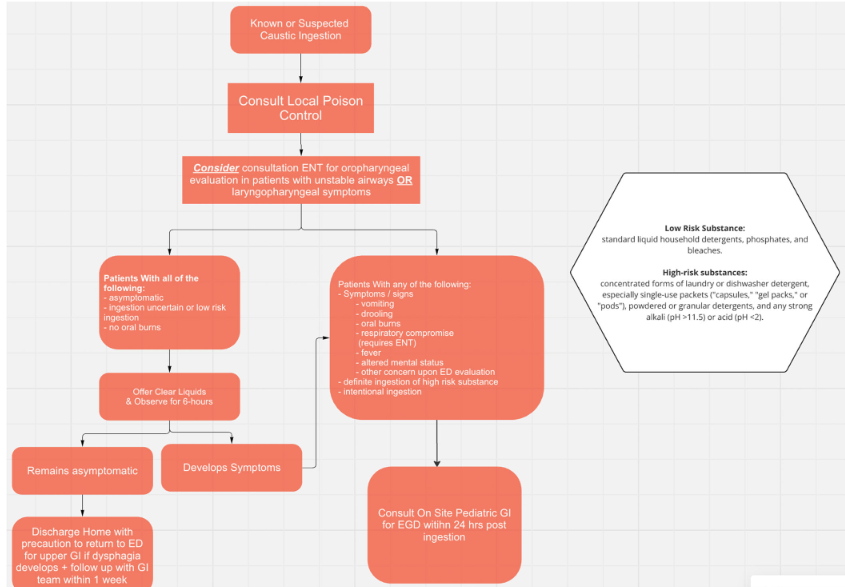
Briefly noted: ES Gordon, E Barfiedl, BD Gold. J Pediatr Gastroenterol Nutr. 2025;1–12. Early management of acute caustic ingestion in pediatrics

Congratulations to my partner Dr. Gold and his coauthors.

Key points:

  • In symptomatic patients, EGD within 24‐hours is most optimal to evaluate the degree of injury and for prognostication
  • Further research is needed on the use of steroids, antibiotics, and acid‐suppression
  • Early placement of NGT under direct visualization during endoscopy may help prevent stricture formation and allow for enteral nutrition in cases of significant injury (Zargar grade 2b and above)

Related blog posts:

Henoch-Schonlein Purpura Findings in the Duodenum

L Torelli et al. J Pediatr Gastroenterol Nutr. 2025;80:242–244. Gastrointestinal involvement in Henoch–Schönlein purpura

A 10 yo underwent an EGD due to nausea, melena and abnormal CT (showing thickening in the  the duodenum and first jejunal loop. Two days later, she developed a cutaneous rash appeared on her legs, buttocks, and elbows.

Mucosal congestion with shallow ulcerations in the descending duodenum.

Related blog posts:

Urgent Need for New Chemical Regulations For Kids

The Consortium for Children’s Environmental Health. NEJM 2025; 392: 299-305. Manufactured Chemicals and Children’s Health — The Need for New Law

This review article explains the worsening toll that chemicals in our environment are exacting on the health of children.

Here are some of the key excerpts:

  • “An estimated 350,000 manufactured chemicals, chemical mixtures, and plastics are currently listed in global inventories.3 Most are produced from fossil fuels — gas, oil, and coal. Production has expanded 50-fold since 1950, is currently increasing by about 3% per year, and is projected to triple by 2050.4 Environmental pollution5,6 and human exposure7 are widespread.”
  • In the past half-century, “the incidence of childhood cancers has increased by 35%.10 Male reproductive birth defects have doubled in frequency.11 Neurodevelopmental disorders now affect 1 in 6 children, and autism spectrum disorder is diagnosed in 1 in 36.12 Pediatric asthma has tripled in prevalence.13 Pediatric obesity has nearly quadrupled in prevalence and has driven a sharp increase in type 2 diabetes among children and adolescents.14 In adults, by contrast, illness, disability, and death due to cardiovascular disease, stroke, and many cancers have decreased.15,16
  • “Research in environmental pediatrics has flourished over the past 25 years. Two key catalysts of this growth were the 1993 publication of the National Research Council report, Pesticides in the Diets of Infants and Children21 which elucidated the biologic bases of children’s heightened susceptibility to toxic chemicals, and the passage in 1996 of the Food Quality Protection Act (FQPA), the U.S. law on pesticides. The FQPA made protecting children’s environmental health a national priority and required generation of data on chemical hazards to children, stimulating substantial expansion of federally funded research in environmental pediatrics…Prenatal exposures are particularly hazardous…diseases associated with early-life exposures can manifest any time during the life span.23
  • “Prospective, birth-cohort epidemiologic studies that measure chemical exposures in pregnant persons and fetuses and follow children longitudinally over many years are particularly powerful platforms for discovering associations between synthetic chemicals and disease because they link exposures to outcomes in individual children and eliminate recall bias.”
  • “Widespread childhood exposure to a toxic chemical can damage the health, economic viability, and security of an entire society. For example, each year from the 1950s through the 1970s, about 100,000 tons of tetraethyl lead were added to gasoline in the United States to enhance automotive performance, causing massive environmental lead contamination and extensive human exposure… The average IQ among U.S. children was reduced by an estimated 2 to 5 points,32 the number of children with an IQ above 130 decreased by more than 50%, and the number with an IQ below 70 (the criterion used in the International Classification of Diseases to define intellectual disability) increased by more than 50%…reducing toxic chemical exposures can produce major economic benefits…because each additional IQ point is associated with an increase of 1.8 to 2.4% in lifelong earning potential.
  • “Chemicals should no longer be presumed harmless until proven otherwise…National chemical policies should take into consideration findings from animal and mechanistic toxicology studies, which are highly predictive of human health risks, including risks to children.49

My take: Pollution from chemicals and plastics is worsening and resulting in worsening health/intellectual outcomes for children. I doubt any legislation will be forthcoming to improve the situation. It is unfortunate that protecting profits is prioritized over protecting our health.

Related blog posts:

A ‘good demon’ at The Grand Palace in Bangkok

Understanding Alpha-Gal Syndrome: Key Symptoms and Findings

E Lesmana et al. Clin Gastroenterol Hepatol 2025; 23: 69-78. Open Access! Clinical Presentation and Outcomes of Alpha-Gal Syndrome

This was a retrospective chart review of patients who underwent serological testing for suspected Alpha-Gal Syndrome (AGS) between 2014 and 2023 at Mayo Clinic. Of 1260 patients who underwent testing,124 tested positive for AGS. –matched with 380 seronegative control subjects. 40 patients had long-term followup data available

Key findings:

  • AGS patients reported a higher frequency of tick bites (odds ratio [OR], 26.0)
  • AGS patients reported a higher prevalence of urticaria (56% vs 37%; P = .0008)
  •  A total of 47% experienced at least 1 GI symptom, such as diarrhea, nausea, vomiting, abdominal pain, abdominal cramps, bloating, heartburn, and constipation, in descending order of frequency
  • 11% of AGS patients presented solely with GI symptoms
  • After institution of red meat restriction, 22 of 40 were asymptomatic at followup, 14 of 40 were improved, and 4 of 40 reported no improvement. 7 of the asymptomatic group were able to resume a diet without restrictions.

Discussion point:

  • “Symptom onset in AGS typically occurs more than 4 hours after allergen exposure, with studies emphasizing a tight association with delayed reactions within the 3- to 6-hour range.”

My take: This study provides some more granular data on Alpha-gal and highlights the importance of asking about tick bites and urticaria in patients with possible AGS.

Related blog posts:

Wat Arun (Temple of Dawn). Bangkok

IBD Briefs: Upadacitinib in Children, Predicting Crohn’s Disease, and Autoimmune Diseases Associated with IBD

J Runde et al. J Pediatr Gastroenterol Nutr. 2025;80:133–140. Upadacitinib is associated with clinical response and steroid-free remission for children and adolescents with inflammatory bowel disease

In this single-center retrospective study, n=20 (3 CD, 13 UC, 4 IBD-U), steroid-free clinical remission (SF-CR) was seen in 75% (16/20) following induction and maintained in 65% (11/17) reaching Week 24 of therapy

J Gaifem et al. Nature Immunology 2024; 25: 1692-1703. Open Access! A unique serum IgG glycosylation signature predicts development of Crohn’s disease and is associated with pathogenic antibodies to mannose glycan.

“Analysis of preclinical serum samples, up to 6 years before IBD diagnosis (from the PREDICTS cohort), revealed the identification of a unique glycosylation signature on circulating antibodies (IgGs)…[which] elicits a proinflammatory immune pathway through the activation and reprogramming of innate immune cells.”

LR Jolving et al. Inflamm Bowel Dis 2025; 31: 87-94. Children and Adolescents Diagnosed With Inflammatory Bowel Disease Are at Increased Risk of Developing Diseases With a Possible Autoimmune Pathogenesis

Using Danish registry and 50-fold matched controls, there was a significant increase for a large number of autoimmune diseases: The adjusted hazard ratio after full follow-up was 4.72 for psoriatic arthritis, 5.21 for spondyloarthritis, 2.77 for celiac disease, 2.15 for rheumatoid arthritis, 1.69 and 1.64 for type 1 and type 2 diabetes, respectively. For thyroid disease, it was 1.16.

Related blog posts:

La Fortuna, Costa Rica

Gastrointestinal Issues in Rett Syndrome: Key Findings

FD Ihekweazu, KJ Motil. J Pediatr Gastroenterol Nutr. 2025;80:46–56. Gastrointestinal manifestations of Rett syndrome: An updated analysis using the Gastrointestinal Health Questionnaire

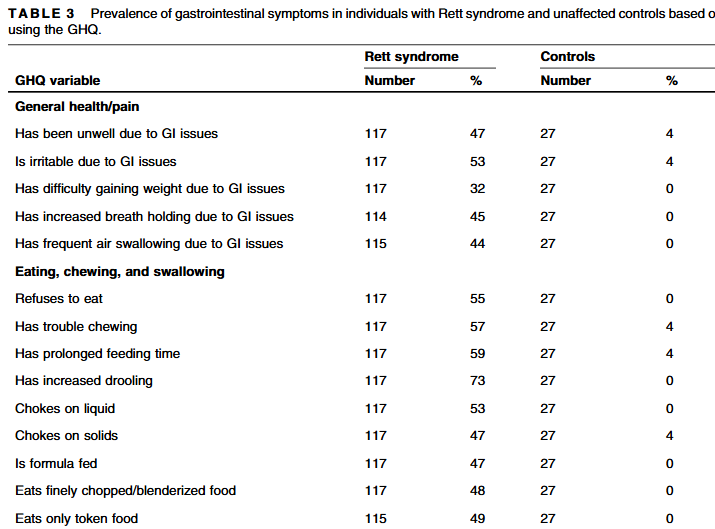
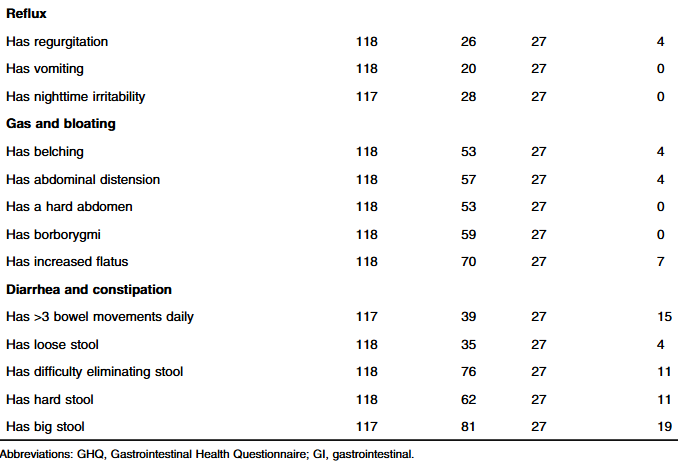
Methods: Parents of 118 females with Rett syndrome (RTT) and 27 unaffected females completed the GHQ.

Key findings:

  • GI symptoms were common in females with RTT, including constipation (81%), gas and bloating (70%), issues with eating, chewing and swallowing (73%), and irritability because of stomach or intestinal problems (53%).
  • Females with RTT commonly used proton pump inhibitors (52%) and laxatives (64%). 
All with p values of <0.001 with the exception of has >3 BM/day which had p value of 0.004

My take: “GI problems are common in RTT and pose a significant medical burden to caregivers.” As such, it is a good idea to screen for treatable disorders including swallow dysfunction, constipation, and reflux.

Related blog posts:

Improving Laryngopharyngeal Symptoms with Laryngeal Recalibration

E Walsh et al. Am J Gastroenterol 2024; 119: 2198-2205. Laryngeal Recalibration Therapy Improves Laryngopharyngeal Symptoms in Patients With Suspected Laryngopharyngeal Reflux Disease (Thanks to Ben Gold for this reference)

For a lot of patients with rheumatologic complaints like joint pain, treatment often consists of sending patients to physical therapy rather than using pharmaceuticals. This type of approach is under-utilized in gastroenterology. A recent study, however, suggests that an analogous approach is likely beneficial in patients with chronic laryngopharyngeal symptoms.

Background: Laryngopharyngeal symptoms such as cough, throat clearing, voice change, paradoxic vocal fold movement, or laryngospasm are hyper-responsive behaviors resulting from local irritation (e.g., refluxate) and heightened sympathetic tone. Laryngeal recalibration therapy (LRT) guided by a speech-language pathologist (SLP) provides mechanical desensitization and cognitive recalibration to suppress hyper-responsive laryngeal patterns.

Methods: Adults (n=65, mean age 55 years) with chronic laryngopharyngeal symptoms referred for evaluation of GERD to a single center were prospectively followed. Inclusion criteria included ≥2 SLP-directed LRT sessions (60 minutes sessions). “Mechanical desensitization focuses on well-known laryngeal suppression techniques (i.e. pursed lip breathing to suppress throat clearing or cough) or changing voice production by means of acoustic and aerodynamic techniques…Cognitive recalibration uses relaxation and conceptualization of symptoms to rework thought patterns around chronic laryngeal behaviors.”

Key findings:

  • Overall, 55 participants (85%) met criteria for symptom response. 17 (26%) had complete resolution, 19 (29%) had near-complete resolution, and 19 (29%) had a moderate response
  • Specifically, symptom response was similar between those with isolated laryngopharyngeal symptoms (13/15, 87%) and concomitant laryngopharyngeal/esophageal symptoms (42/50, 84%)

My take: Historically, patients with laryngopharyngeal symptoms have been difficult to treat. Many do not respond to reflux therapies. This study highlights a different approach and shows that the benefit of working with highly-skilled SLPs.

Snow day in Atlanta (Jan 10, 2025)

Related blog posts:

Adverse Childhood Experiences Increase Anxiety and Disorders of Gut-Brain Interaction

J Fritz et al. J Pediatr Gastroenterol Nutr. 2025;80:100–107. The relationship between adverse childhood experiences and disorders of the gut–brain interaction

Methods: Retrospective review of patients aged 3–18 years with ACE scores documented between October 1, 2019 and April 30, 2022. from two large primary care medical groups in Southern Maine within the MaineHealth system. ACE screening tool was taken at a routine WCC at a primary care office. From these patients, we identified from the medical record whether patients were referred to a general pediatric GI clinic in Southern Maine. 

Key findings:

  • Four hundred and one (44.7%) were diagnosed with a DGBI.
  • With each additional adverse experience, patients were 1.09 times more likely to have a DGBI diagnosis (p ≤ 0.001). An anxiety diagnosis mediated 73% of this relationship (p = 0.012).

Limitations:

There are many limitations to this study. The vast majority of patients with DGBIs were likely never referred to a pediatric GI clinic. While anxiety was found to mediate the relationship between ACEs and DGBIs, perhaps an alternative explanation was that anxiety increased the likelihood of GI referral. In addition, the authors note that” patients who are perceived as anxious by their gastroenterologist are more likely to receive a DGBI diagnosis.27 The nature of a symptom-based diagnosis for DGBI was also a limitation as not all patients had sufficient documentation to apply Rome criteria for inclusion.”

My take: Despite the limitations of this study, it appears that ACEs are associated with DGBIs mediated mainly by anxiety.

Related blog posts:

From Manuel Antonio Park
View from Manuel Antonio

Position Paper: Pediatric Refractory Constipation Management

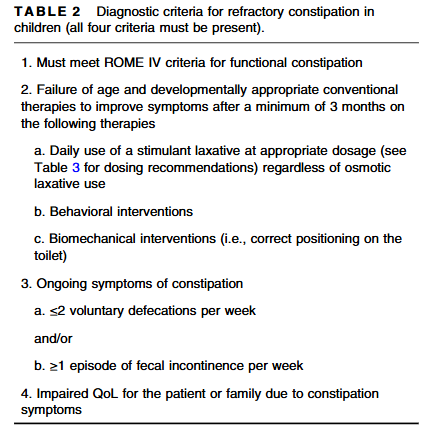
AL Kilgore et al. JPGN 2024; https://doi.org/10.1002/jpn3.12390. Open Access! Evaluation and management of pediatric refractory constipation: Recommendations from the NASPGHAN neurogastroenterology and motility committee

Selected Recommendations:

Evaluations:

  • Screen for thyroid disease and celiac disease (though acknowledges that the data regarding an association between celiac disease and constipation are inconsistent)
  • The use of an AXR in RC should be reserved for those patients unable to provide a reliable medical history and/or unable to allow for a physical exam (including a DRE), or to evaluate for mechanical obstruction or colonic distention when considering surgical interventions
  • A contrast enema (CE) can be used to screen for HD or to assess colorectal anatomy
  • There is no evidence to recommend the routine use of defecography in children
  • Abdominal ultrasound has a good agreement with digital rectal exam (DRE) to evaluate for fecal impaction but should not be performed in place of DRE
  • ARM should be used to screen for the presence of a RAIR. If anal spasms and prolonged sphincter relaxation are detected during ARM, an assessment for spinal abnormalities can be considered
  • An LS MRI should be performed in pediatric patients with RC associated with physical or neurological signs of spinal anomalies, signs of neurogenic bladder on urodynamics, or when the anorectal manometry (ARM) is abnormal suggesting spinal cord abnormalities
  • Colonic transit time (CTT) via radiopaque markers should be completed for patients with RC with equivocal medical history and to screen for the need to perform colonic manometry (CM)
  • Colonic manometry (CM) should be performed only after medical therapy has been exhausted and surgical therapy is being considered. CM should be used to guide the timing and type of surgery to address RC. CM should be used to guide when to perform an ostomy takedown
  • Rectal biopsies should not be used routinely in patients with RC and are indicated exclusively in patients with a suspected diagnosis of HD

Pharmaceuticals:

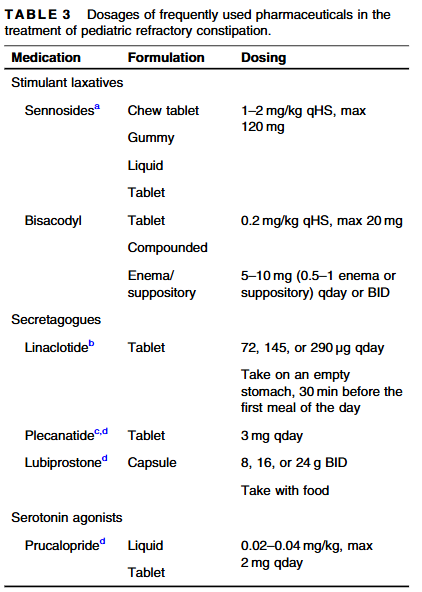
  • High-dose sennoside (or Bisacodyl) is a mainstay of management of RC and should be optimized for the individual patient before considering further management options
  • A secretagogue (or prucalopride) should be considered as an adjunct to a high-dose stimulant laxative when treating RC with poor response to optimized high-dose stimulant laxatives or when high-dose stimulant laxatives are not tolerated
  • There is no clear role of anal botox in the treatment of patients with RC without a diagnosis of IAS achalasia
  • Early intervention with daily stimulant laxatives in the treatment of FC is encouraged to try to prevent the disease progression from functional constipation (FC) to RC
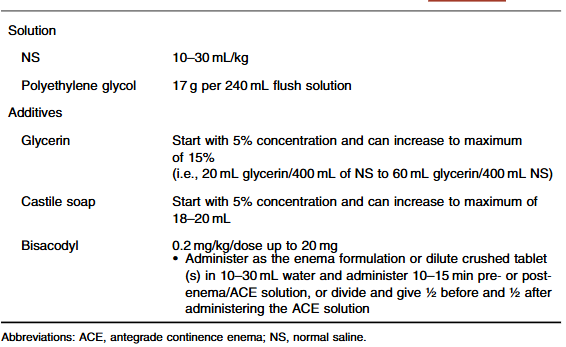
  • Antegrade and Retrograde Treatments:
Routine dosages of frequently used antegrade and retrograde solutions and additives
  • The last part of the recommendations include antegrade continence enemas, surgical approaches, and complicated algorithms (see Figure 1 and Figure 2)

My take: These recommendations address a widespread problem for pediatric gastroenterologists and are useful for those with and without an interest in motility disorders.

Related blog posts:

Disclaimer: This blog, gutsandgrowth, assumes no responsibility for any use or operation of any method, product, instruction, concept or idea contained in the material herein or for any injury or damage to persons or property (whether products liability, negligence or otherwise) resulting from such use or operation. These blog posts are for educational purposes only. Specific dosing of medications (along with potential adverse effects) should be confirmed by prescribing physician.  Because of rapid advances in the medical sciences, the gutsandgrowth blog cautions that independent verification should be made of diagnosis and drug dosages. The reader is solely responsible for the conduct of any suggested test or procedure.  This content is not a substitute for medical advice, diagnosis or treatment provided by a qualified healthcare provider. Always seek the advice of your physician or other qualified health provider with any questions you may have regarding a condition.